
For users still holding onto an iPhone 8 in 2024, the question isn’t just about nostalgia—it’s practical. The device was once a powerhouse, but technology has moved fast. With Apple’s latest models offering advanced computational photography and multi-lens systems, the leap from iPhone 8 to iPhone 14 seems massive on paper. But does it translate to meaningful improvements in daily use? Especially when it comes to photography—the one feature most people rely on daily.
The answer depends on how you use your phone, what kind of photos you take, and whether the benefits justify the cost. Let’s break down the camera differences between these two devices with real-world context, not just specs.
Camera Hardware: A Generational Leap
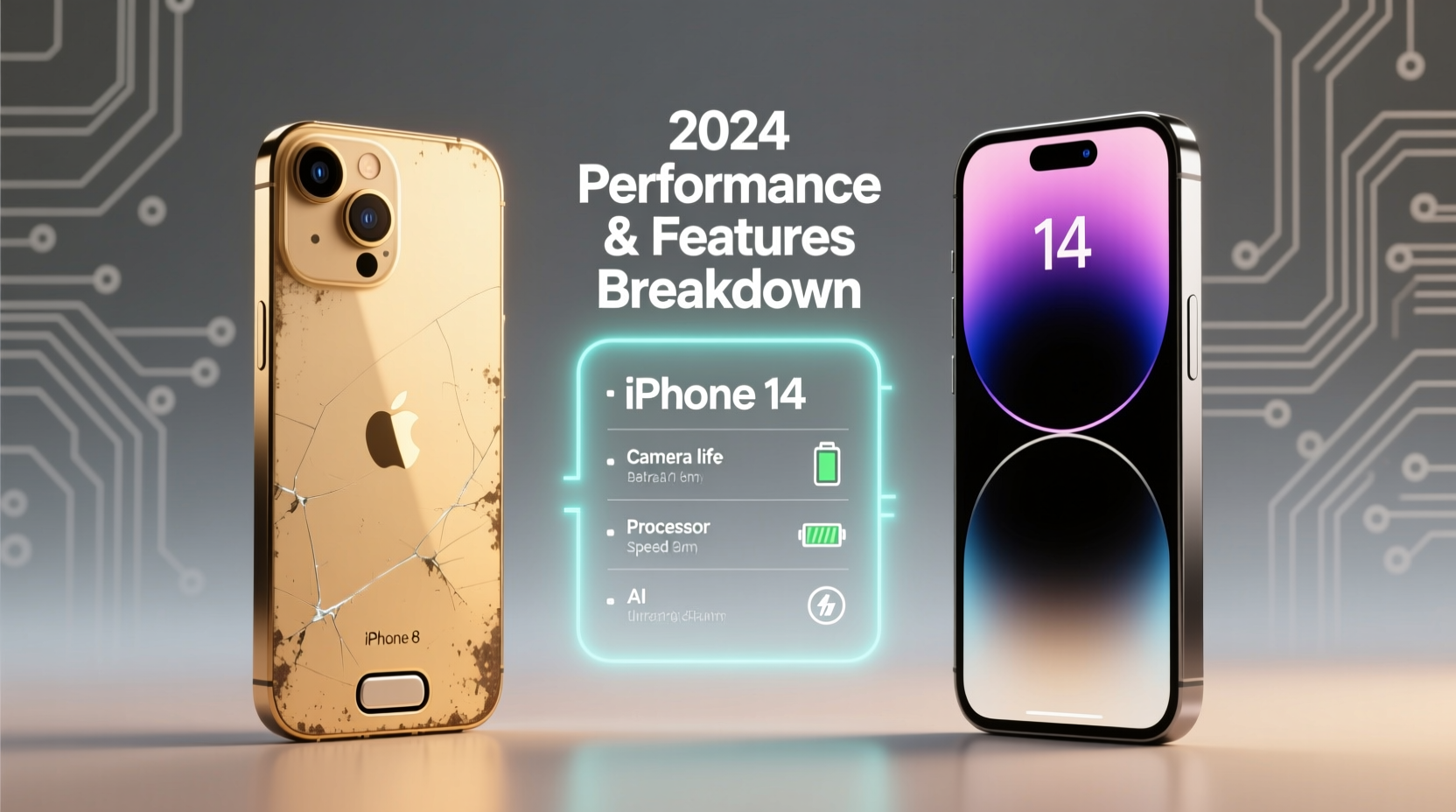
The iPhone 8 launched in 2017 with a single 12MP rear camera, f/1.8 aperture, optical image stabilization (OIS), and no Night mode or Deep Fusion. It was excellent for its time, delivering sharp, color-accurate images in daylight. However, low-light performance was limited, and zooming meant digital cropping—no telephoto lens.
In contrast, the iPhone 14 (2022) features a dual-camera system: a 12MP main sensor with a larger aperture (f/1.5), second-generation sensor-shift OIS, and a 12MP ultra-wide lens (f/2.4). More importantly, it includes advanced software like Photographic Styles, Smart HDR 4, Deep Fusion, and Night mode on both lenses. The front-facing TrueDepth camera also supports Night mode and better dynamic range.
Image Quality Comparison: Daylight, Low Light, and Beyond
In optimal daylight, both phones can produce pleasing images. The iPhone 8 captures natural colors and good detail, especially when properly exposed. But the iPhone 14 pulls ahead with superior dynamic range, better shadow recovery, and more accurate skin tones thanks to Smart HDR 4 and machine learning enhancements.
Where the gap widens dramatically is in challenging conditions:
- Low light: The iPhone 14’s larger sensor and f/1.5 aperture capture significantly more light. Combined with longer-exposure Night mode (up to 3 seconds), it produces brighter, cleaner images with less noise.
- Backlit scenes: The iPhone 14 handles high-contrast environments far better, preserving highlights and lifting shadows without over-processing.
- Zoom and framing: While the iPhone 8 relies solely on digital zoom, the iPhone 14’s ultra-wide lens allows creative wide-angle shots, ideal for landscapes, architecture, or group photos in tight spaces.
“Modern iPhones don’t just take pictures—they interpret scenes. The difference isn’t megapixels; it’s intelligence.” — David Kim, Mobile Photography Specialist at Imaging Labs NYC
Detailed Feature Comparison
| Feature | iPhone 8 | iPhone 14 |
|---|---|---|
| Rear Cameras | Single 12MP, f/1.8 | Dual: 12MP Main (f/1.5) + 12MP Ultra-Wide (f/2.4) |
| Front Camera | 7MP, f/2.2 | 12MP, f/1.9, Night Mode support |
| Night Mode | No | Yes (rear and front) |
| Deep Fusion | No | Yes (improves texture and detail) |
| Smart HDR | HDR (basic) | Smart HDR 4 (scene-aware processing) |
| Video Recording | 4K up to 60fps | 4K up to 60fps + Cinematic Mode (1080p), Action Mode stabilization |
| Computational Photography | Limited | Advanced (Photographic Styles, Scene Detection) |
This table underscores that the iPhone 14 isn't just incrementally better—it introduces capabilities the iPhone 8 simply cannot match, especially in video and low-light stills.
Real-World Example: Family Dinner Photos
Consider Sarah, a long-time iPhone 8 user who upgraded to the iPhone 14 in early 2024. She often takes photos of her kids during evening meals, where indoor lighting is warm and uneven. On her iPhone 8, these shots were consistently underexposed, with noisy backgrounds and washed-out faces. She’d often need to edit them heavily or reshoot using a flash—which ruined the ambiance.
After switching to the iPhone 14, she noticed immediate improvements. Night mode activates automatically, brightening the scene while preserving mood. Faces are naturally lit, and colors remain true. She now shares unedited photos directly to family groups, confident they’ll look good. For her, the upgrade wasn’t about specs—it was about capturing moments without frustration.
Is the Upgrade Worth It in 2024?
The answer hinges on three factors: your current needs, budget, and expectations.
If you primarily take well-lit, casual snapshots and don’t mind occasional editing, the iPhone 8 might still suffice—especially if paired with third-party apps to enhance performance. However, if you value consistency across lighting conditions, want better selfies, or enjoy creative photography, the iPhone 14 delivers tangible benefits.
Additionally, consider longevity. The iPhone 8 runs iOS 16 as its final update, meaning it no longer receives new features or security patches beyond 2023. The iPhone 14 will likely receive updates through 2028 or later, ensuring compatibility with future apps and services.
Upgrade Checklist: Ask Yourself These Questions
- Do I regularly take photos in low light or indoors?
- Am I frustrated by blurry or dark images?
- Do I wish I could zoom without losing quality?
- Do I record videos of events (birthdays, pets, travel)?
- Do I want my phone to last another 3–4 years?
- Am I using workarounds (editing apps, external lights) to compensate?
If you answered “yes” to three or more, the iPhone 14 upgrade is likely worthwhile—not just for the camera, but for overall usability and peace of mind.
Frequently Asked Questions
Can the iPhone 8 still take good photos in 2024?
Yes—but only in ideal conditions. In bright daylight with steady hands, the iPhone 8 produces clean, detailed images. However, it struggles with motion blur, low light, and dynamic range compared to modern smartphones. For casual social media use, it may still work, but expect limitations.
Does the iPhone 14 camera make me a better photographer?
Not exactly—but it removes technical barriers. You don’t need perfect lighting or a tripod to get great results. Features like automatic Night mode, scene detection, and improved autofocus help you capture better images consistently, even without photography skills.
Is there a noticeable difference in selfie quality?
Significant. The iPhone 14’s front camera has a wider aperture (f/1.9 vs f/2.2), supports Night mode, and uses advanced HDR processing. Selfies are sharper, better lit in dark rooms, and more natural-looking, especially in backlit situations like window-side portraits.
Final Verdict: Time to Move On?
The iPhone 8 was a milestone device, but five years in tech is an eternity. The camera advancements between 2017 and 2022 weren’t just iterative—they were transformative. Computational photography, AI-driven enhancements, and improved sensors have redefined what a smartphone camera can do.
In 2024, choosing to stay on the iPhone 8 means accepting trade-offs: inconsistent photo quality, lack of modern features, and diminishing software support. Upgrading to the iPhone 14 doesn’t just give you a better camera—it gives you confidence that your phone won’t hold you back when moments matter.
If photography plays any meaningful role in how you use your phone—whether documenting family, creating content, or simply staying present without worrying about failed shots—the upgrade is absolutely worth it.




 浙公网安备
33010002000092号
浙公网安备
33010002000092号 浙B2-20120091-4
Comments
No comments yet. Why don't you start the discussion?