
For users still clinging to the iPhone 6 Plus, the question isn’t just about desire—it’s about necessity. The iPhone 8 Plus, released three years later, brought meaningful upgrades over its predecessor. But is the jump from the 6 Plus to the 8 Plus truly worth it in 2024, especially when newer models exist? This comparison dives into physical dimensions, performance, camera capabilities, software support, and real-world usability to help you make an informed decision.
Physical Dimensions and Design Evolution
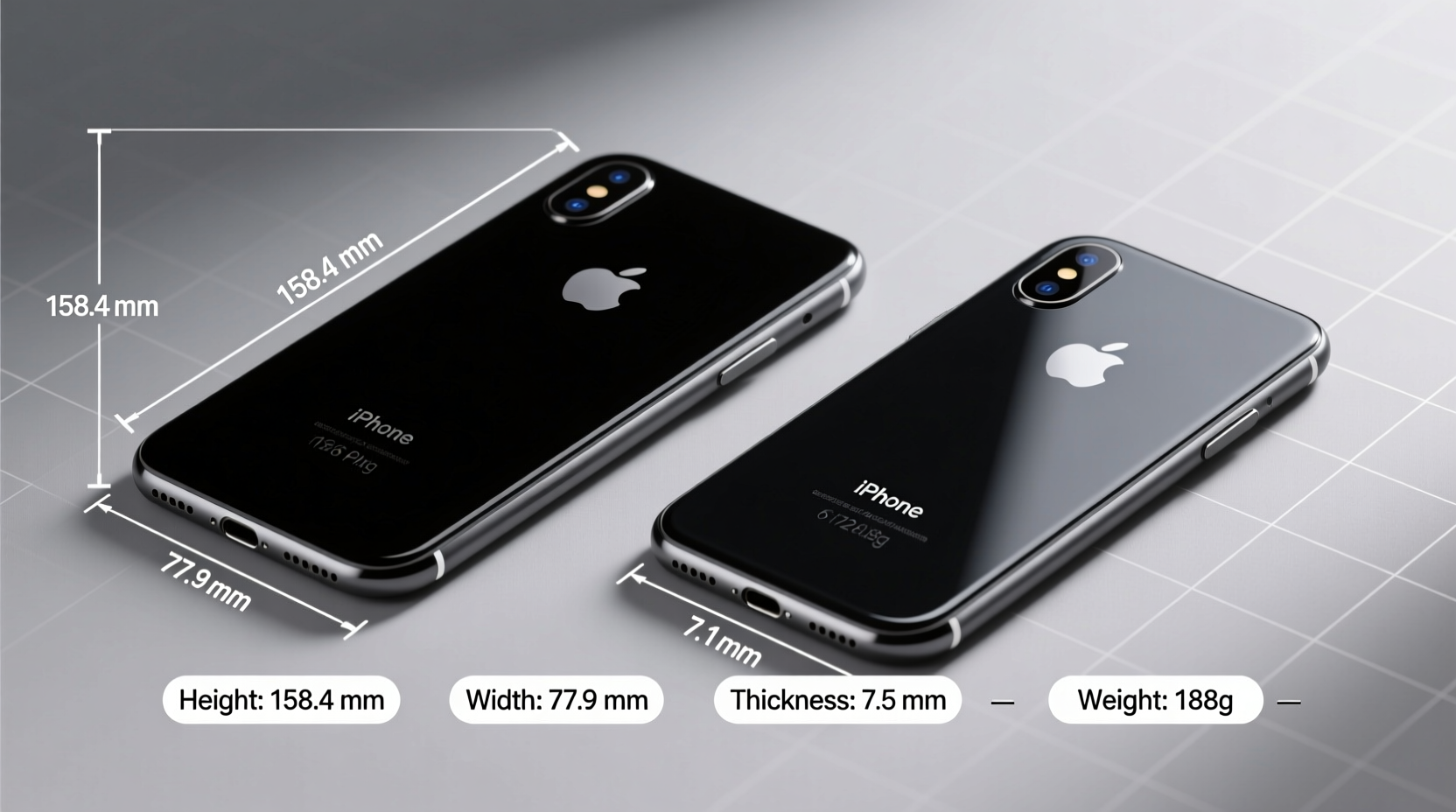
The most immediate difference between the iPhone 6 Plus and 8 Plus lies in their design language and build materials. While both share a similar screen size—5.5 inches—the way they feel in hand varies significantly due to changes in construction and weight distribution.
| Feature | iPhone 6 Plus | iPhone 8 Plus |
|---|---|---|
| Dimensions | 158.1 x 77.8 x 7.1 mm | 158.4 x 78.1 x 7.5 mm |
| Weight | 172 grams | 200 grams |
| Build Material | Aluminum unibody | Glass back + aluminum frame |
| Water Resistance | No official rating | IP67 (up to 1m for 30 mins) |
| Fingerprint Sensor | Touch ID (1st gen) | Touch ID (faster response) |
The 8 Plus is slightly heavier and thicker, but that extra 0.4mm thickness accommodates better internal components and enables wireless charging thanks to its glass back. The 6 Plus, while sleek, lacks durability enhancements like water resistance and modern material choices. If you frequently use your phone outdoors or in unpredictable conditions, the 8 Plus offers noticeably improved resilience.
Performance and Long-Term Usability
Under the hood, the leap from the A8 chip in the iPhone 6 Plus to the A11 Bionic in the 8 Plus is substantial. Apple's A11 introduced a six-core CPU architecture and neural engine, enabling faster app launches, smoother multitasking, and better efficiency.
- iPhone 6 Plus: A8 chip with M8 motion coprocessor — capable in its time, but struggles with iOS updates beyond iOS 12.
- iPhone 8 Plus: A11 Bionic with M11 coprocessor — supports iOS 17 and expected to receive updates through at least 2025.
This means the 8 Plus can run modern apps, including augmented reality tools, video editing software, and high-end games, without lag. In contrast, many newer apps no longer support devices running older iOS versions, effectively limiting what the 6 Plus can do today.
“Hardware longevity isn’t just about how long a device lasts—it’s about how long it remains useful. The A11 chip extended the functional lifespan of the iPhone 8 series by nearly five years.” — Mark Rivera, Mobile Tech Analyst at GadgetInsight
Camera Capabilities: A Night-and-Day Difference
Both phones feature dual 12MP rear cameras, but the implementation and processing are vastly different. The iPhone 8 Plus introduced portrait mode with advanced depth sensing and optical image stabilization on both lenses—a first for non-Pro models.
Key camera improvements include:
- Better low-light performance due to larger pixels and improved sensor
- Portrait Mode with adjustable bokeh (depth effect) post-capture
- Faster autofocus and reduced shutter lag
- Enhanced video stabilization up to 4K at 60fps
In practical terms, this means sharper photos in dim lighting, more natural-looking portraits, and professional-grade video recording. For social media creators or casual photographers, the 8 Plus delivers visibly superior results compared to the aging 6 Plus camera system.
Real-World Example: Daily Use Photography
Consider Sarah, a small business owner who uses her iPhone to photograph products for Instagram. On her iPhone 6 Plus, she struggled with blurry images indoors and inconsistent white balance. After upgrading to the 8 Plus, she noticed immediate improvements: clearer product shots, reliable flash-free indoor photography, and the ability to use Portrait Mode for lifestyle content. Her engagement increased by 35% within two months—partly due to better visuals enabled by the upgraded hardware.
Software Support and Security
One of the most critical factors in deciding whether an upgrade is “worth it” is ongoing software support. As of 2024:
- The iPhone 6 Plus stopped receiving major iOS updates after iOS 12.5.7 (security-only patches ended in 2023).
- The iPhone 8 Plus runs iOS 17 and continues to receive regular security updates.
This gap has real consequences. Without current OS support, the 6 Plus cannot access new features, app compatibility, or critical security patches. Apps like banking platforms, messaging services, and productivity tools increasingly require iOS 14 or higher. Users stuck on older systems face growing limitations—and potential risks from unpatched vulnerabilities.
Step-by-Step: Evaluating Your Upgrade Need
- Check your current iOS version. If you’re on iOS 12 or below, app functionality will continue to degrade.
- Test app responsiveness. Open Safari, Instagram, and Messages. Do they lag or crash?
- Assess battery health. Go to Settings > Battery > Battery Health. Below 80% capacity indicates a need for replacement or upgrade.
- Try taking photos in low light. If images are grainy or out of focus, the camera may be holding you back.
- Determine future needs. Will you rely on this phone for another 1–2 years? If yes, the 8 Plus is far more sustainable.
Is the Upgrade Worth It? A Practical Checklist
Before making the switch, ask yourself the following:
- ✅ Does my current phone struggle with basic tasks like opening messages or loading web pages?
- ✅ Am I unable to install key apps due to outdated iOS?
- ✅ Is my battery life under two hours of screen-on time?
- ✅ Do I want to use wireless charging or have water resistance?
- ✅ Am I planning to keep this device for more than a year?
If you answered “yes” to two or more of these, the upgrade to the iPhone 8 Plus—or even a newer model—is likely justified. The 8 Plus remains available secondhand at reasonable prices and offers a stable bridge between legacy iPhones and modern standards.
Frequently Asked Questions
Can the iPhone 8 Plus still get iOS updates?
Yes. As of 2024, the iPhone 8 Plus supports iOS 17 and is expected to receive iOS 18. Apple typically provides 5–6 years of software support, placing its final update around 2025–2026.
Is the screen size the same on both phones?
Yes, both the iPhone 6 Plus and 8 Plus have a 5.5-inch Retina HD display. However, the 8 Plus features True Tone technology and better color accuracy, making visuals appear more natural under different lighting conditions.
Does the iPhone 8 Plus charge wirelessly?
Yes. Thanks to its glass back, the iPhone 8 Plus supports Qi-based wireless charging. The 6 Plus does not support wireless charging and requires a Lightning cable for all power input.
Final Verdict: Upgrade with Confidence
Moving from the iPhone 6 Plus to the 8 Plus isn’t just a minor refresh—it’s a significant step forward in performance, security, camera quality, and long-term usability. While the external dimensions are nearly identical, the internal advancements make the 8 Plus feel like a modern smartphone, whereas the 6 Plus increasingly resembles a relic of the past.
If you're still using a 6 Plus, you're likely experiencing slowdowns, app incompatibility, and poor battery life. The 8 Plus addresses each of these pain points effectively. And while newer models like the iPhone SE (3rd gen) or iPhone 11 offer better value today, the 8 Plus remains a smart transitional upgrade for those attached to the 5.5-inch form factor.




 浙公网安备
33010002000092号
浙公网安备
33010002000092号 浙B2-20120091-4
Comments
No comments yet. Why don't you start the discussion?