
The iPhone 6s Plus was a landmark device when it launched in 2015—offering solid performance, a capable dual-camera system, and a large display that appealed to power users. The iPhone 8 Plus, released just two years later in 2017, built upon that foundation with meaningful upgrades. But now, in today’s mobile landscape where software demands grow and app ecosystems evolve, is upgrading from an iPhone 6s Plus to an iPhone 8 Plus still a worthwhile move?
This isn’t just about specs on paper. It’s about real-world performance, longevity, camera quality, and whether the investment makes sense for someone still relying on a 6s Plus in 2024 or beyond.
Performance and Hardware: A Noticeable Leap
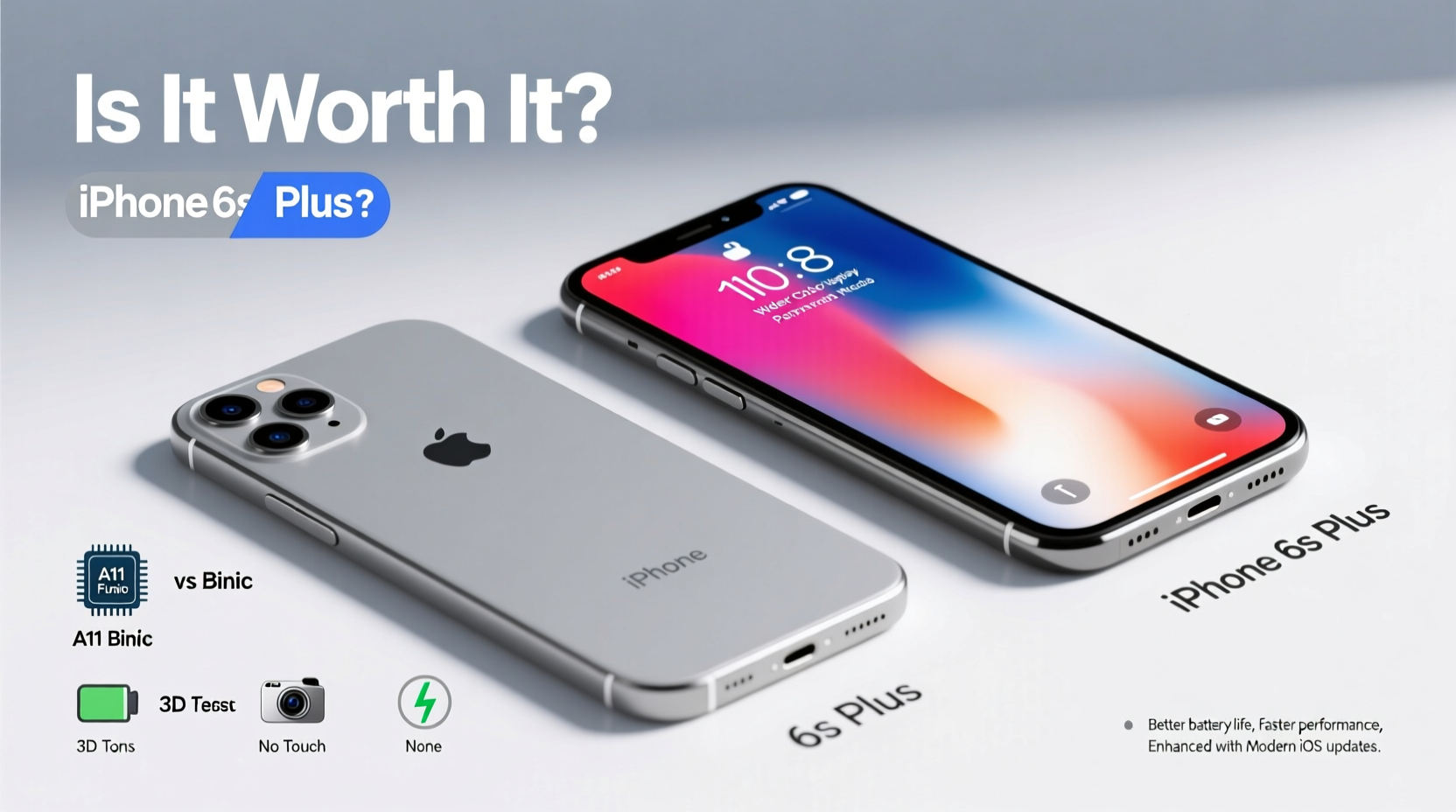
The core difference between these two phones lies in their processors. The iPhone 6s Plus runs on Apple’s A9 chip, while the iPhone 8 Plus features the A11 Bionic—a significant generational jump. The A11 delivers up to 70% faster CPU performance and a massive 80% improvement in GPU speed over the A9.
In practical terms, this means smoother multitasking, faster app launches, and better handling of graphics-intensive applications like mobile games or photo editing tools. Users upgrading from the 6s Plus often report that apps no longer stutter during transitions, and Face ID-ready experiences (though not supported on either) are mirrored by improved Touch ID response times due to faster processing.
Additionally, the iPhone 8 Plus supports wireless charging, a feature absent in the 6s Plus. While this may seem minor, it adds convenience if you own or plan to use Qi-compatible chargers. The 8 Plus also has better water resistance (IP67 rating), meaning it can survive brief submersion in up to 1 meter of water for 30 minutes—something the 6s Plus lacks entirely.
Camera Comparison: Sharper Photos, Smarter Features
Both phones feature a dual 12MP rear camera setup with wide and telephoto lenses, enabling 2x optical zoom and Portrait Mode. However, the implementation differs significantly.
The iPhone 8 Plus improves low-light performance thanks to larger pixels and better image signal processing. Its Smart HDR (introduced via iOS updates) enhances dynamic range, preserving highlights and shadows more effectively than the 6s Plus. Night mode isn't available on either device, but the 8 Plus handles dim environments noticeably better.
Front-facing cameras remain unchanged—both have a 7MP FaceTime HD camera—but the 8 Plus benefits from better tone mapping and reduced noise in selfies.
“Even without night mode, the A11's image processing engine allows the 8 Plus to extract more detail from shadows than its predecessor.” — Mark Tran, Mobile Imaging Analyst at TechPulse Weekly
Detailed Feature Comparison
| Feature | iPhone 6s Plus | iPhone 8 Plus |
|---|---|---|
| Release Year | 2015 | 2017 |
| Processor | A9 Chip | A11 Bionic |
| RAM | 2GB | 3GB |
| Rear Camera | Dual 12MP (w/ basic Portrait Mode) | Dual 12MP (Smart HDR, improved low light) |
| Water Resistance | None | IP67 (up to 1m for 30 mins) |
| Wireless Charging | No | Yes (Qi-compatible) |
| iOS Support (Last Update) | iOS 15 (ended) | iOS 17 (current as of 2024) |
| Battery Life (Video Playback) | Up to 14 hours | Up to 13 hours |
| Storage Options | 16GB, 64GB, 128GB | 64GB, 256GB |
Note: Despite similar battery life ratings, the 8 Plus generally maintains performance longer under heavy usage due to more efficient power management.
Software Longevity and Security Updates
This is perhaps the most critical factor in 2024. The iPhone 6s Plus stopped receiving major iOS updates after iOS 15. That means no new features, limited app compatibility, and increasingly rare security patches. Many modern apps—from banking platforms to social media tools—now require iOS 16 or higher, locking out 6s Plus users.
In contrast, the iPhone 8 Plus supports iOS 17, which brings enhanced privacy controls, StandBy mode, improved autocorrect, and greater customization. More importantly, it continues to receive regular security updates, protecting against emerging threats.
If you rely on your phone for digital payments, email, or work-related tasks, staying on unsupported software poses real risks. Upgrading ensures continued access to secure, up-to-date functionality.
Real-World Example: Sarah’s Upgrade Decision
Sarah had been using her iPhone 6s Plus since 2016. By early 2023, she noticed her banking app would crash repeatedly, and WhatsApp stopped supporting her device. She hesitated to upgrade, thinking “it still turns on.” After visiting an Apple Store, she learned her phone hadn’t received a security update in over a year.
She traded in her 6s Plus and bought a used iPhone 8 Plus for $180. Immediately, she regained access to all her apps, experienced faster message syncing, and could finally charge wirelessly on her desk pad. Most importantly, her new device received iOS 17, giving her confidence in its safety and usability through at least 2025.
Is the Upgrade Worth It Today?
The answer depends on your current needs and expectations.
If your 6s Plus still meets basic needs—calls, texts, light browsing—and you don’t use many modern apps, the upgrade might feel unnecessary. However, if you’ve noticed sluggishness, app incompatibility, or concerns about security, moving to the 8 Plus offers tangible improvements.
Consider this: the iPhone 8 Plus remains compatible with iOS 17 and is expected to support iOS 18 in late 2024. This gives it at least one more year of official updates, possibly two. For a secondhand device often priced under $200, that’s strong value.
Action Checklist Before Upgrading
- Check which apps you currently use and verify their minimum iOS requirements.
- Back up your 6s Plus data via iCloud or iTunes.
- Determine your budget—refurbished 8 Plus models start around $150–$200.
- Verify battery health on your current device; if it’s below 80%, replacement cost may rival upgrade savings.
- Explore trade-in options through Apple or third-party retailers.
Frequently Asked Questions
Can the iPhone 8 Plus run iOS 18?
As of mid-2024, Apple has not officially confirmed iOS 18 support for the iPhone 8 Plus. However, based on historical patterns, it is highly likely the 8 Plus will be included, making it one of the oldest devices to run the next OS version.
Is the battery better on the 8 Plus?
While rated similarly, the 8 Plus typically delivers more consistent performance over time due to optimized power efficiency. Additionally, newer batteries in refurbished units tend to hold charge better than aging 6s Plus batteries.
Should I skip to a newer model instead?
If your budget allows, yes. Devices like the iPhone SE (3rd gen) or iPhone XR offer faster chips, longer software support, and 5G connectivity. But if you’re seeking minimal cost with maximum functional gain, the 8 Plus remains a smart bridge between legacy and modern iOS experiences.
Final Thoughts: A Calculated Step Forward
Upgrading from the iPhone 6s Plus to the 8 Plus isn’t about chasing the latest tech—it’s about maintaining relevance in a world that increasingly demands capable, secure smartphones. The improvements in processor speed, camera intelligence, wireless charging, and ongoing software support make the 8 Plus a legitimate successor.
For users clinging to a 6s Plus out of habit or frugality, this upgrade represents one of the last practical steps before needing to consider newer form factors or Face ID-based devices. At accessible price points in the used market, the 8 Plus delivers reliability, continuity, and peace of mind.




 浙公网安备
33010002000092号
浙公网安备
33010002000092号 浙B2-20120091-4
Comments
No comments yet. Why don't you start the discussion?