
In 2024, the iPhone 8 Plus and iPhone 7 Plus are no longer new devices, but many users still rely on them daily. With iOS updates continuing to support these models—albeit with diminishing returns—it's reasonable to ask: if you're currently using an iPhone 7 Plus, is upgrading to the 8 Plus still worthwhile? The answer isn’t a simple yes or no. It depends on your usage patterns, expectations, and how long you plan to keep the device.
This analysis dives into the key differences between the two phones—performance, camera quality, build, wireless charging, and software longevity—to determine whether the upgrade makes practical sense today.
Performance and Processor: A Noticeable Leap
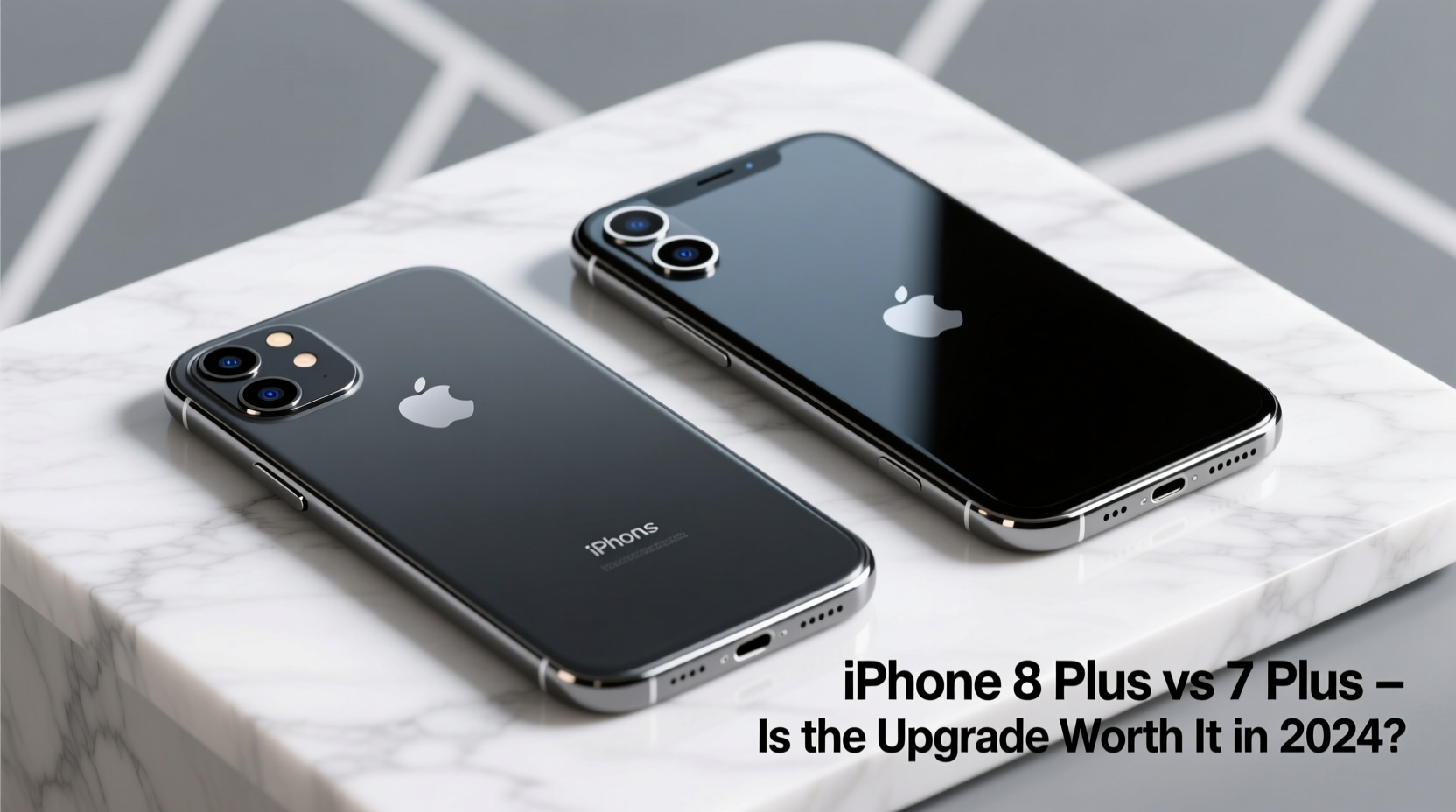
The most significant upgrade from the iPhone 7 Plus to the 8 Plus lies under the hood. The 7 Plus runs on the Apple A10 Fusion chip, while the 8 Plus features the A11 Bionic chip. Though both were groundbreaking in their time, the A11 introduced neural network capabilities and improved multi-core performance by roughly 25%.
In real-world use, this means the 8 Plus handles multitasking more smoothly, launches apps faster, and manages intensive tasks like photo editing or augmented reality (AR) applications with greater ease. For users still on the 7 Plus experiencing occasional lag or app reloads, the jump to the 8 Plus would feel immediately noticeable.
However, for basic tasks—messaging, browsing, social media, and light photography—the A10 in the 7 Plus remains competent in 2024. iOS 17 runs adequately on both, though future updates may begin to strain the older chip sooner.
Camera Comparison: Subtle but Meaningful Improvements
Both phones feature dual 12MP rear cameras: wide and telephoto lenses with 2x optical zoom and Portrait Mode. However, the 8 Plus includes several enhancements that improve photo quality, especially in challenging lighting.
- Larger and faster sensors allow for better low-light performance.
- Improved image signal processor enables smarter noise reduction and color accuracy.
- True Tone flash adjusts white balance based on ambient light.
- Smarter autofocus results in quicker subject lock and reduced blur.
In side-by-side comparisons, the 8 Plus consistently delivers sharper images with better dynamic range. Portrait Mode benefits from more accurate edge detection and depth mapping, particularly around hair and complex shapes.
“Even small sensor upgrades can make a big difference in real-world photography. The 8 Plus captures more detail in shadows and highlights—a subtle but meaningful edge.” — David Lin, Mobile Photography Analyst
For casual photographers, the difference may not justify the upgrade. But for those who value photo quality and share images regularly, the 8 Plus offers a tangible improvement.
Build and Design: Glass Back Enables Wireless Charging
Externally, the 7 Plus and 8 Plus look nearly identical. Both have aluminum frames, physical Home buttons with Touch ID, and similar dimensions. The crucial difference is material: the 8 Plus replaces the 7 Plus’s aluminum back with glass, enabling one critical modern feature—wireless charging.
This change might seem minor, but in 2024, wireless charging is standard across mid-to-high-end smartphones. If you own or plan to use a Qi-compatible charger, car dock, or MagSafe accessories (via third-party adapters), the 8 Plus gains immediate utility.
On the downside, the glass back is more prone to cracking than aluminum. Drop protection becomes more important, increasing long-term ownership costs.
Detailed Feature Comparison
| Feature | iPhone 7 Plus | iPhone 8 Plus |
|---|---|---|
| Release Year | 2016 | 2017 |
| Chipset | A10 Fusion | A11 Bionic |
| Rear Cameras | Dual 12MP (f/1.8 + f/2.8) | Dual 12MP (f/1.8 + f/2.8), improved ISP |
| Front Camera | 7MP (f/2.2) | 7MP (f/2.2), better processing |
| Battery Life | ~13 hours mixed use | ~14 hours mixed use |
| Charging | Lightspeed only | Lightspeed + Qi wireless charging |
| Water Resistance | IP67 (1m for 30 min) | IP67 (same rating) |
| Storage Options | 32GB, 128GB, 256GB | 64GB, 256GB |
| iOS Support (Expected End) | Ended with iOS 16 | Likely through iOS 17, possibly iOS 18 |
Note: While both phones have the same IP67 rating, real-world durability tests suggest the 8 Plus maintains seals slightly better over time due to improved internal gasketing.
Real-World Example: Sarah’s Upgrade Decision
Sarah has used her iPhone 7 Plus since 2017. By late 2023, she noticed apps taking longer to load, photos looking grainy in dim light, and her phone failing to charge reliably after multiple drops. She considered upgrading but hesitated due to cost.
She found a refurbished iPhone 8 Plus for $180—$60 more than a replacement 7 Plus. After switching, she immediately appreciated the smoother performance, clearer night shots, and convenience of wireless charging at her office desk. Over six months, she reported fewer app crashes and better battery consistency.
For Sarah, the upgrade was worth it—not because the 8 Plus is powerful by today’s standards, but because it extended her smartphone usability another 1–2 years without jumping to a newer, pricier model.
Software Longevity: The Deciding Factor in 2024
As of 2024, the iPhone 7 Plus no longer receives major iOS updates. It maxes out at iOS 16, meaning no new features, security patches beyond 2023, and growing app incompatibility. Many developers now require iOS 17 or later, limiting access to updated banking, social, and productivity apps.
The iPhone 8 Plus, however, supports iOS 17 and is expected to receive iOS 18—Apple’s final update before dropping 32-bit compatibility entirely. This extra year of support could be crucial for users who rely on secure, up-to-date software.
Frequently Asked Questions
Can the iPhone 8 Plus run iOS 18?
Preliminary reports suggest yes—though official confirmation from Apple is pending. Given Apple’s historical support cycle, the A11-based 8 Plus is likely to be included in iOS 18, making it the last supported version for this device.
Is the battery life significantly better on the 8 Plus?
Not dramatically. The 8 Plus has a slightly larger battery and more efficient power management, offering about 30–60 minutes more screen-on time. Real-world usage shows modest gains, not a leap.
Should I upgrade from 7 Plus to 8 Plus in 2024?
Only if you need wireless charging, better camera quality, or continued iOS support. If your 7 Plus still works well and meets your needs, hold off. Consider moving directly to an iPhone XR or newer for a more future-proof experience.
Final Verdict: Is the Upgrade Worth It?
The iPhone 8 Plus is objectively better than the 7 Plus, but in 2024, the gap matters less than it once did. For most users, the decision comes down to three factors: software support, hardware reliability, and specific feature needs like wireless charging.
If you’re still on a 7 Plus and facing performance issues or app incompatibility, upgrading to a used 8 Plus is a cost-effective way to extend your iPhone lifecycle by another 12–18 months. However, if you're considering a longer-term device, stepping up to an iPhone XR, 11, or SE (3rd gen) would offer far better value, including Face ID, faster processors, and full iOS 18+ support.
The 8 Plus isn’t a future-proof phone, but it bridges the gap between legacy hardware and modern usability better than its predecessor.




 浙公网安备
33010002000092号
浙公网安备
33010002000092号 浙B2-20120091-4
Comments
No comments yet. Why don't you start the discussion?