
When Apple released the iPhone 8 Plus in 2017, it arrived without the dramatic redesign of the iPhone X. Instead, it offered subtle but meaningful upgrades over its predecessor, the iPhone 7 Plus. For buyers today—especially those shopping secondhand—the decision between these two models isn’t as straightforward as it once seemed. With both phones now discontinued and widely available used, the real question becomes: does the iPhone 8 Plus offer enough improvement to justify paying more, or is the older 7 Plus still the smarter, more economical choice?
This isn’t just about specs on paper. It’s about real-world usability, longevity, resale value, and how each phone handles modern apps and iOS updates. Let’s break down the differences and similarities to help you decide where your money is best spent.
Design and Build: Glass vs Aluminum
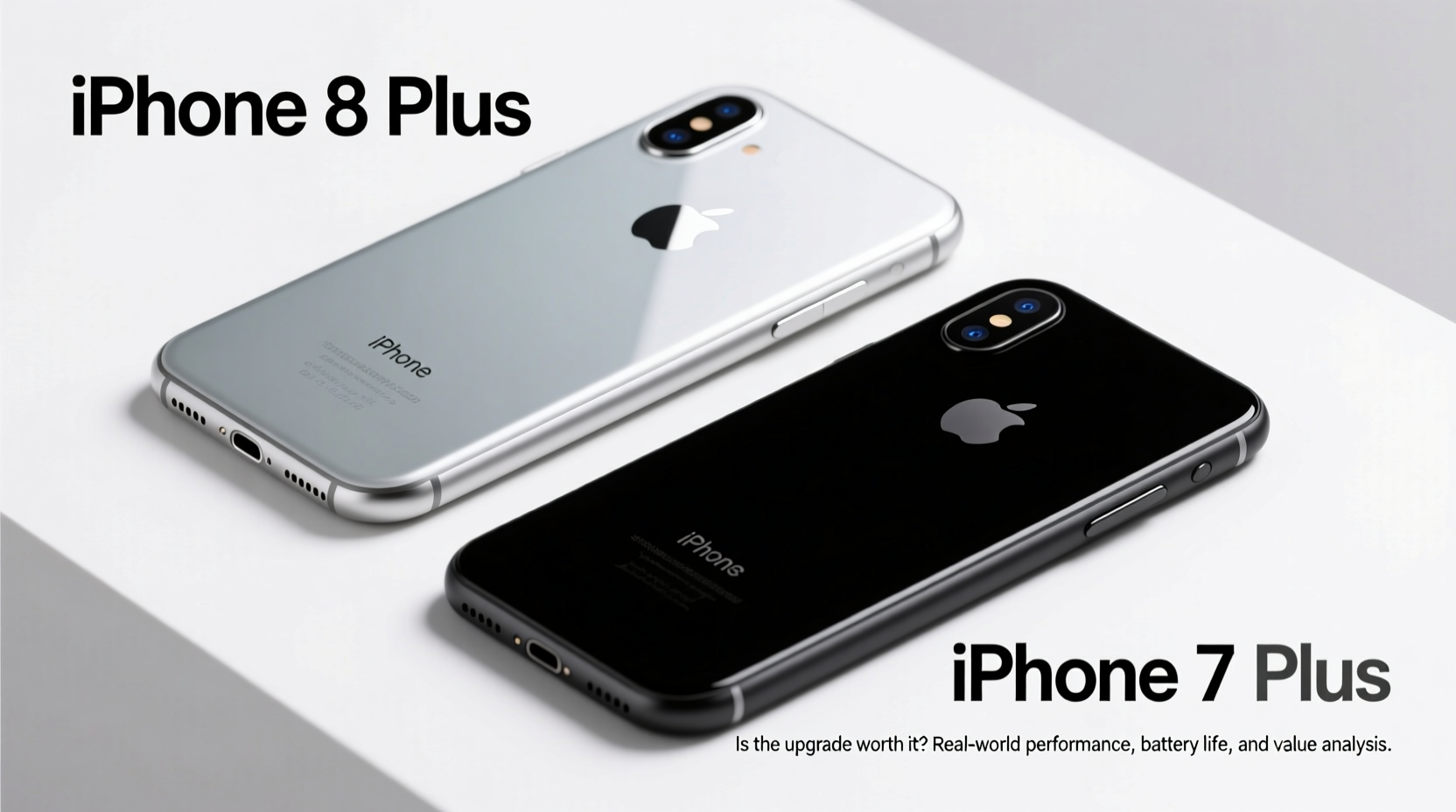
One of the most noticeable changes between the iPhone 8 Plus and 7 Plus is the material used on the back. The 7 Plus features an aerospace-grade aluminum body, while the 8 Plus swaps the metal for glass. This might sound like a downgrade at first—glass is more prone to cracking and scratching—but it enables a key feature: wireless charging.
The glass back allows the 8 Plus to support Qi wireless charging, a convenience that the 7 Plus lacks entirely. If you’ve adopted a wireless charging pad at home or in your car, this alone could be a deciding factor. However, the trade-off is increased fragility. Used 8 Plus units with cracked backs are common, which can affect both aesthetics and resale value.
Both phones share the same dimensions, weight (within a gram), and IP67 water resistance rating, meaning they can survive brief submersion in up to 1 meter of water. So from a durability standpoint, they’re nearly identical—except for that glass vulnerability.
Performance: A10 vs A11 Bionic – Real-World Impact
The iPhone 7 Plus runs on the A10 Fusion chip, while the 8 Plus uses the newer A11 Bionic. On paper, the A11 is around 25% faster in CPU tasks and significantly better in GPU performance. In daily use, this translates to smoother multitasking, quicker app launches, and better handling of graphics-intensive games.
But here’s the reality: both chips are still capable of running iOS 16 (the last version supported by these devices) with acceptable performance. Basic tasks like browsing, messaging, and social media feel nearly identical on both phones. Where the A11 pulls ahead is in sustained performance and future-proofing.
“The A11 Bionic was Apple’s first custom-designed neural engine, setting the foundation for smarter photo processing and AR capabilities.” — David Kim, Mobile Hardware Analyst
If you plan to keep your phone for two years or more, even as a secondary device, the 8 Plus will likely remain responsive longer. The 7 Plus may start to show lag with heavier apps or future iOS updates, though it’s still serviceable for light users.
Camera Comparison: Similar Specs, Different Processing
Both phones feature dual 12MP rear cameras—one wide, one telephoto—with optical zoom, portrait mode, and optical image stabilization on the wide lens. At first glance, their photo quality appears nearly identical. But the A11 chip in the 8 Plus brings improved image signal processing, resulting in better detail, dynamic range, and low-light performance.
In side-by-side tests, the 8 Plus captures slightly sharper images with more natural color grading. Portrait mode benefits from enhanced depth mapping, leading to more accurate edge detection. Video recording also sees a small boost, with better noise reduction and stabilization in 4K footage.
Front-facing cameras are unchanged: both have a 7MP FaceTime camera. So selfies and video calls won’t differ much.
Camera Performance Summary
| Feature | iPhone 7 Plus | iPhone 8 Plus |
|---|---|---|
| Rear Cameras | Dual 12MP (f/1.8 + f/2.8) | Dual 12MP (f/1.8 + f/2.8) |
| Portrait Mode | Yes | Yes, improved depth sensing |
| Video Recording | 4K at 30fps | 4K at 60fps, better stabilization |
| Low-Light Photos | Good | Better detail and less noise |
| Front Camera | 7MP | 7MP |
Battery Life and Charging: Incremental Improvements
Apple claimed the 8 Plus has slightly better battery life than the 7 Plus—up to two hours more talk time under ideal conditions. In practice, the difference is marginal. Both phones deliver around 12–14 hours of mixed usage, which is still respectable by today’s standards.
Where the 8 Plus gains a clear advantage is in charging flexibility. Thanks to its glass back and support for wireless charging, you can place it on any Qi-compatible pad. You can also fast charge it (with a compatible adapter and cable), reaching 50% in about 30 minutes. The 7 Plus supports neither feature.
However, fast charging requires purchasing additional hardware—an 18W USB-C power adapter and a USB-C to Lightning cable—neither of which come in the box. So while the capability exists, it adds cost.
Real-World Example: Sarah’s Upgrade Dilemma
Sarah had a five-year-old iPhone 6s and wanted something reliable for her commute and weekend travels. She found a lightly used iPhone 7 Plus for $180 and a similar-condition 8 Plus for $230. Both had 90% battery health and came with cases.
She chose the 8 Plus for the wireless charging and slightly better camera. Over six months, she appreciated being able to drop her phone on a charging pad at night instead of plugging it in. She also noticed her vacation photos looked crisper, especially in dim lighting.
“The extra $50 felt steep at first,” she said, “but I’ve used the wireless charging every day. It’s the little conveniences that make it worth it.”
Her experience highlights that value isn’t always about upfront cost—it’s about long-term usability and personal habits.
Is the Upgrade Worth It? A Practical Checklist
Before deciding, ask yourself the following:
- Do you already own or plan to use a wireless charger? → Favors 8 Plus
- Are you sensitive to phone lag or run demanding apps? → Favors 8 Plus
- Is your budget tight and you only need basic functionality? → Favors 7 Plus
- Do you prioritize camera quality for social media or travel? → Favors 8 Plus
- Are you buying unlocked and concerned about future iOS support? → Favors 8 Plus
- Will this be a backup phone used occasionally? → Favors 7 Plus
Frequently Asked Questions
Can both phones run the latest iOS?
No. The iPhone 7 Plus and 8 Plus both support up to iOS 16. They are not compatible with iOS 17 or later. This means no new features introduced in recent years, such as StandBy mode or advanced autocorrect. However, core apps like Messages, Safari, and Camera still function well.
Which holds better resale value?
The iPhone 8 Plus generally retains slightly higher resale value due to its newer chip and wireless charging. However, since both are outdated, the difference is minimal—usually $20–$40 depending on condition and storage.
Is the 7 Plus too old to use in 2024?
Not necessarily. Millions still use 7 Plus devices daily. As long as the battery is healthy and storage isn’t full, it handles email, calls, maps, and streaming without major issues. Just don’t expect peak performance from newer games or augmented reality apps.
Final Verdict: When to Choose Which
The iPhone 8 Plus is objectively the better device. It has a faster processor, improved camera processing, wireless charging, and fast charging support. If you can find one in good condition for under $250, it’s a solid pick for a budget-friendly iOS experience.
But the iPhone 7 Plus remains a compelling option—if you can save $40–$60 and don’t care about wireless charging, it delivers 90% of the experience. For someone who primarily texts, browses, and watches videos, the performance gap won’t matter much.
Your decision should hinge on three factors: budget, usage patterns, and access to accessories. If you value convenience and plan to keep the phone beyond a year, the 8 Plus is worth the modest premium. If you need a temporary phone or are equipping a teen or elderly relative, the 7 Plus offers excellent value.
“Sometimes the best tech upgrade isn’t the newest model—it’s the one that fits your life without breaking the bank.” — TechLife Weekly
Take Action Today
Whether you go for the iPhone 8 Plus or stick with the 7 Plus, make sure to check battery health, verify the device is unlocked, and buy from reputable sellers. Use this comparison to negotiate confidently and avoid overpaying for minor differences. And if you’ve made the switch—or decided to hold onto your 7 Plus—we’d love to hear your experience. Share your thoughts and help others make smarter choices in the comments below.




 浙公网安备
33010002000092号
浙公网安备
33010002000092号 浙B2-20120091-4
Comments
No comments yet. Why don't you start the discussion?