
For users still clinging to the iPhone 6 Plus, the idea of upgrading may feel both exciting and unnecessary. After all, Apple’s older devices are known for their longevity. But with newer models like the iPhone 8 Plus offering significant internal upgrades while maintaining a familiar design, the question arises: is making the jump truly worth it? The answer depends on your usage patterns, expectations, and how much you value performance, camera quality, and long-term software support.
Design and Build: Familiar Feel, Subtle Improvements
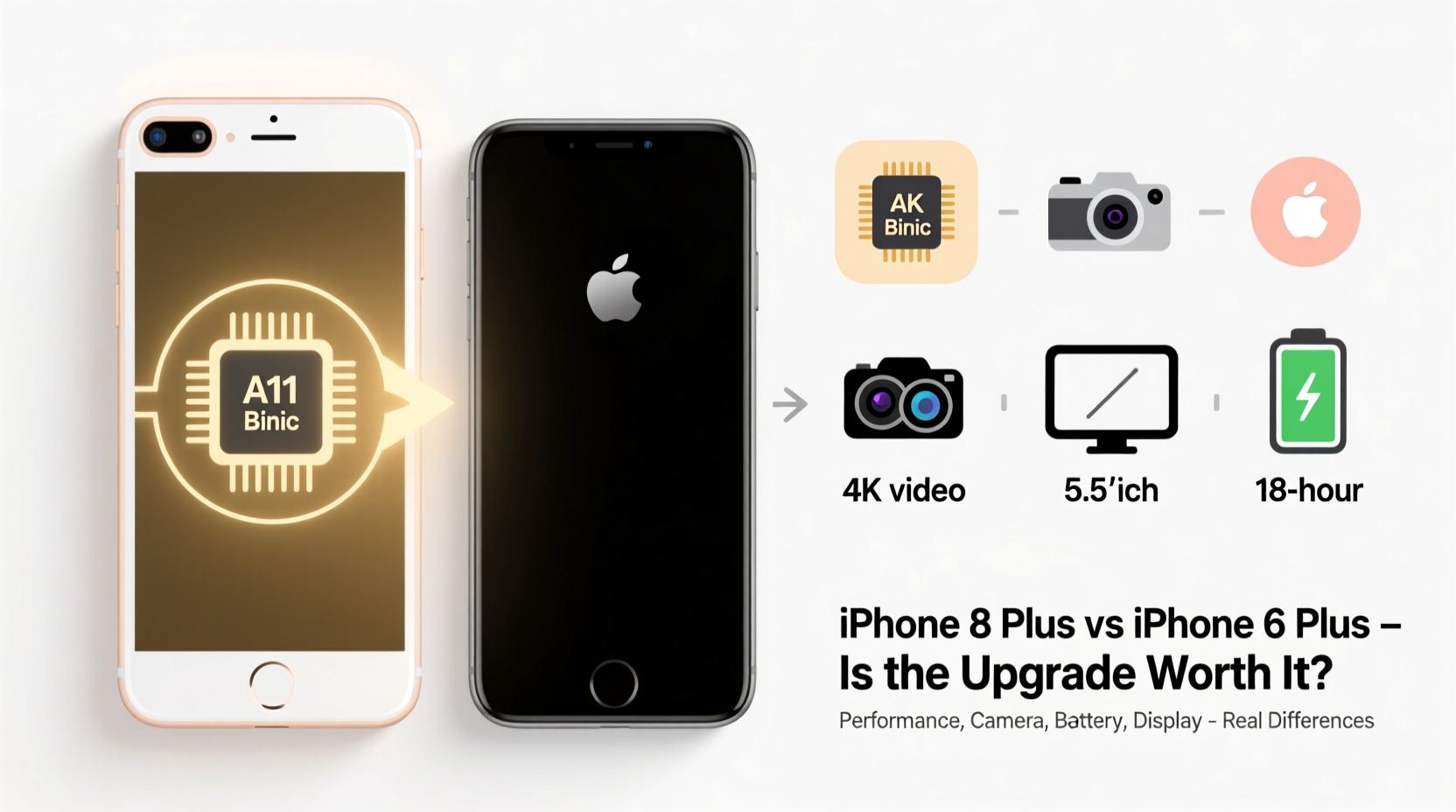
At first glance, the iPhone 8 Plus and iPhone 6 Plus look nearly identical. Both feature aluminum bodies, large 5.5-inch displays, and physical Home buttons. However, closer inspection reveals meaningful differences. The iPhone 8 Plus uses a stronger glass back—necessary for wireless charging—which also makes it slightly heavier at 200 grams compared to the 6 Plus’s 172 grams. This added weight gives the 8 Plus a more premium, solid feel in hand.
The display on the 8 Plus benefits from True Tone technology, which adjusts white balance based on ambient lighting for a more natural viewing experience. While the screen resolution remains the same (1920x1080), the 8 Plus delivers better color accuracy, higher brightness, and improved contrast. For users who spend hours reading, browsing, or watching videos, these enhancements add up over time.
Performance: A Generational Leap Under the Hood
The most dramatic difference lies beneath the surface. The iPhone 6 Plus runs on the A8 chip, a capable processor in its day but now significantly outpaced by modern standards. In contrast, the iPhone 8 Plus features the A11 Bionic chip—a six-core CPU with neural engine support. Benchmarks show the A11 delivering roughly **twice the CPU performance** and **three times the GPU power** of the A8.
This translates directly into real-world use. Apps launch faster, multitasking is smoother, and graphics-intensive games run without lag. More importantly, the A11 ensures better future-proofing. As iOS evolves, apps become more demanding. Users of the 6 Plus may already notice slowdowns when switching between apps or loading photos. The 8 Plus handles these tasks effortlessly, even years after release.
“Upgrading from an iPhone 6 Plus to an 8 Plus feels like moving from dial-up to broadband—it’s not just faster, it’s fundamentally more responsive.” — James Lin, Mobile Performance Analyst
Camera Comparison: Night and Day Difference
Both phones have dual 12MP rear cameras, but that’s where similarities end. The iPhone 8 Plus introduced Portrait Mode with advanced depth sensing and lighting effects, a feature absent on the 6 Plus. More critically, the 8 Plus features larger sensors, optical image stabilization (OIS) on both lenses, and a brighter f/1.8 aperture on the wide-angle lens.
In low-light conditions, the difference is striking. Photos taken on the 8 Plus retain detail, color, and dynamic range, while those from the 6 Plus often appear grainy and underexposed. Video recording also sees a major upgrade: the 8 Plus supports 4K at 60fps and advanced video stabilization, whereas the 6 Plus maxes out at 1080p at 30fps.
| Feature | iPhone 6 Plus | iPhone 8 Plus |
|---|---|---|
| Processor | A8 | A11 Bionic |
| Rear Camera | 8MP (single) | 12MP + 12MP (dual, OIS) |
| Front Camera | 1.2MP | 7MP |
| Video Recording | 1080p @ 30fps | 4K @ 60fps |
| Battery Life | ~12 hours mixed use | ~14–15 hours mixed use |
| Charging | Limited to wired | Wired + Wireless (Qi-compatible) |
| iOS Support | Ended with iOS 12 | Supported up to iOS 16 |
Real-World Example: Sarah’s Upgrade Journey
Sarah had been using her iPhone 6 Plus since 2015. By 2021, she noticed her phone struggled to keep up. Messages took seconds to load, Instagram crashed frequently, and taking group photos in dim lighting resulted in blurry shots. She hesitated to upgrade, partly due to cost and partly because “it still turns on.”
After trading in her 6 Plus for an iPhone 8 Plus, her experience transformed. Apps opened instantly. She started using Portrait Mode for family photos and was amazed at the professional-looking results. Most surprisingly, she found herself using her phone more confidently—streaming videos during commutes, editing photos on the go, and even trying AR apps that previously wouldn’t run. For Sarah, the upgrade wasn’t about luxury; it restored functionality she didn’t realize she’d lost.
Battery and Longevity: Beyond Daily Charge Cycles
Battery degradation is inevitable, especially in devices used for five+ years. The iPhone 6 Plus originally offered around 12 hours of mixed usage, but after years of charging cycles, many units now struggle to last a full workday. The iPhone 8 Plus starts with better endurance and includes optimizations like adaptive charging and battery health monitoring (introduced in iOS 11.3).
Additionally, the 8 Plus supports wireless charging—a small convenience that adds up. You can place the phone on a Qi pad overnight instead of plugging in a cable. Over months, this reduces wear on the Lightning port, a common failure point on aging iPhones.
Checklist: Is It Time to Upgrade?
- Does your phone take more than 5 seconds to open common apps?
- Have you stopped receiving iOS updates?
- Is your battery dying before midday?
- Do photos come out blurry or dark, even in decent light?
- Are you avoiding downloading new apps due to storage or speed concerns?
If you answered yes to two or more, upgrading to the 8 Plus—or a similar modern device—will likely improve your daily experience.
Cost-Benefit Analysis: Is the Investment Justified?
The iPhone 8 Plus launched at $799, but today, refurbished or second-hand units sell for $150–$250, depending on condition and storage. Compare that to the cost of repairing a failing 6 Plus—battery replacements, screen fixes, or data recovery—and the math often favors upgrading.
Moreover, the 8 Plus received software support until iOS 16, released in 2022, meaning it stayed secure and compatible with modern apps for years longer than the 6 Plus. Even if you don’t buy new, opting for a lightly used 8 Plus gives you access to a broader ecosystem—better app compatibility, enhanced security, and integration with AirPods, Apple Watch, and iCloud services.
Frequently Asked Questions
Can the iPhone 6 Plus still run current apps?
Some basic apps work, but many newer versions require iOS 13 or later, which the 6 Plus doesn’t support. Social media, banking, and navigation apps may function poorly or not at all.
Does the iPhone 8 Plus support Face ID?
No, the 8 Plus retains the Touch ID fingerprint sensor. Face ID was introduced with the iPhone X. If facial recognition is important, consider later models.
Will my accessories work with the 8 Plus?
Most cases and chargers are compatible due to similar dimensions and the Lightning port. However, wireless charging requires a separate investment in a Qi pad.
Final Verdict: When Upgrading Makes Sense
For casual users who make calls, send texts, and occasionally browse the web, sticking with the iPhone 6 Plus might suffice—provided the battery holds charge and basic functions remain stable. But for anyone relying on their phone for photography, productivity, or staying connected through modern apps, upgrading to the iPhone 8 Plus delivers tangible improvements.
The leap in processing power, camera capability, battery efficiency, and software support transforms the user experience. It’s not just about having a newer phone; it’s about regaining reliability, speed, and confidence in a device that plays a central role in daily life.




 浙公网安备
33010002000092号
浙公网安备
33010002000092号 浙B2-20120091-4
Comments
No comments yet. Why don't you start the discussion?