
Choosing between the iPhone 8 Plus and the iPhone SE (2020) isn't just about price or brand loyalty—it's a decision rooted in how you use your phone every day. One has a large, immersive display and dual cameras; the other packs flagship-level performance into a compact, affordable body. At first glance, the iPhone SE seems like a step back in screen size and design. But with Apple’s A13 Bionic chip under the hood, it outperforms the older 8 Plus in raw processing power. So, is the SE truly worth downgrading to a smaller screen? The answer depends on what matters most to you: portability and speed, or media consumption and camera versatility.
Design and Display: Big Screen vs Pocket-Friendly Compactness
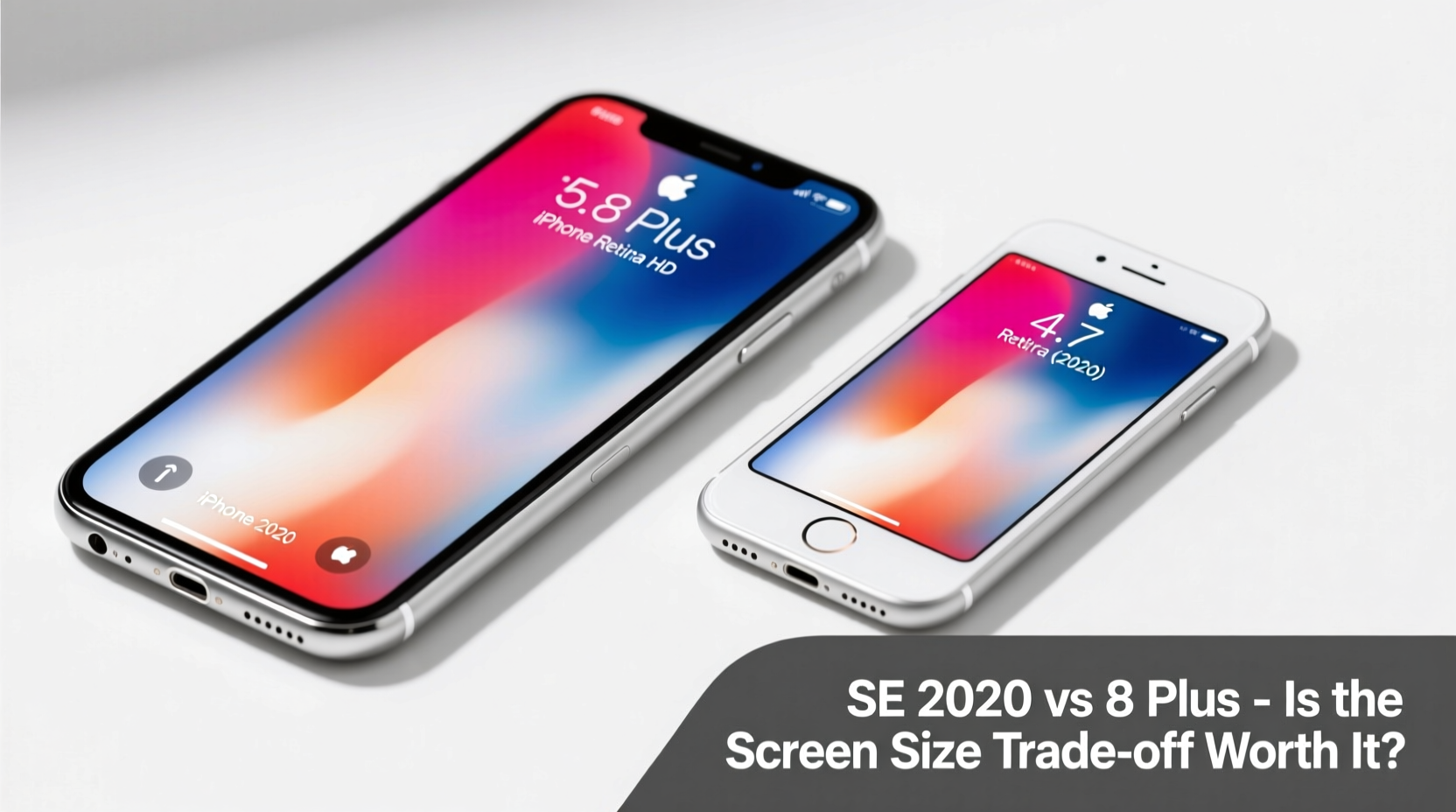
The most immediate difference between these two phones is their size and form factor. The iPhone 8 Plus features a 5.5-inch Retina HD LCD display with 1920x1080 resolution, offering ample space for multitasking, video streaming, and gaming. Its larger footprint makes it ideal for users who prioritize visual real estate. In contrast, the iPhone SE 2020 uses the same 4.7-inch Retina HD display as the original iPhone 8, delivering lower resolution and less screen area but significantly improved one-handed usability.
The SE’s compact design harks back to pre-iPhone X aesthetics—thick bezels, a home button with Touch ID, and an overall nostalgic feel. For many, this is a welcome return to simplicity. It slips easily into pockets, requires less stretching to reach screen corners, and feels lighter during extended use. The 8 Plus, while still manageable, demands two hands for efficient navigation.
Performance and Software Longevity
Despite its age, the iPhone 8 Plus runs iOS efficiently thanks to its A11 Bionic chip. However, the iPhone SE (2020) comes equipped with the A13 Bionic—the same processor found in the iPhone 11 series—making it substantially faster in both everyday tasks and intensive applications. Benchmarks show the A13 outperforming the A11 by nearly 40% in CPU tasks and over 70% in GPU performance.
This performance gap translates into real-world advantages. Apps launch quicker on the SE, photo processing is snappier, and augmented reality experiences run more smoothly. More importantly, software support is likely to be longer for devices powered by newer chips. While both phones may receive updates through iOS 18 or 19, the SE will likely remain responsive and capable further into the future.
“Processor longevity often matters more than screen size when judging long-term value.” — David Chen, Mobile Analyst at TechInsight Weekly
Camera Capabilities: Single Lens vs Dual Setup
The iPhone 8 Plus boasts a dual-camera system: 12MP wide and 12MP telephoto lenses, enabling 2x optical zoom and Portrait Mode with depth control. This setup gives photographers greater flexibility, especially in low-light conditions and when capturing portraits with background blur.
The iPhone SE (2020), despite using only a single 12MP wide lens, leverages the power of the A13 chip to simulate depth effects via software-based Portrait Mode. While functional, it lacks the accuracy and natural bokeh of the 8 Plus’s optical solution. Zoom capabilities are also limited to digital cropping, which degrades image quality.
However, the SE excels in computational photography. Its Smart HDR and noise reduction algorithms produce vibrant, well-balanced photos in daylight that rival those from the 8 Plus. In low light, Night Mode—absent on the 8 Plus—gives the SE a clear edge, brightening dark scenes without excessive grain.
| Feature | iPhone 8 Plus | iPhone SE (2020) |
|---|---|---|
| Display Size | 5.5 inches | 4.7 inches |
| Resolution | 1920x1080 | 1334x750 |
| Processor | A11 Bionic | A13 Bionic |
| Rear Cameras | Dual 12MP (wide + telephoto) | Single 12MP (wide) |
| Portrait Mode | Optical depth sensing | Software-based |
| Night Mode | No | Yes |
| Battery Life (Video Playback) | Up to 14 hours | Up to 13 hours |
| Starting Storage | 64GB | 64GB |
| Water Resistance | IP67 | IP67 |
Battery Life and Daily Usability
Battery endurance is where the iPhone 8 Plus traditionally shines. With a larger physical battery, it delivers up to 14 hours of video playback compared to the SE’s 13 hours. In real-world mixed usage—browsing, messaging, social media—the 8 Plus often lasts a full day with moderate drain, while the SE may require a midday charge for heavy users.
Yet the A13 chip’s efficiency helps narrow this gap. Despite the smaller battery, the SE manages impressive standby times and optimized background task handling. Additionally, both support fast charging (with adapter sold separately) and wireless charging, so refueling isn’t a major differentiator.
Where the SE gains ground is in durability of daily use. Its smaller size means less strain on wrists during prolonged scrolling, reading, or video calls. Users with smaller hands or those who dislike phablets find the SE far more comfortable for extended sessions.
Real-World Example: Sarah’s Upgrade Dilemma
Sarah, a freelance writer in her early 30s, owned an iPhone 8 Plus for three years. She loved the big screen for editing articles and watching documentaries during commutes. When her battery started degrading, she considered upgrading. Her tech-savvy brother recommended the iPhone SE (2020) for its speed and lower cost.
She hesitated—how could a smaller, cheaper phone compete? After testing both side by side, she noticed apps opened faster on the SE, and Night Mode made her evening city shots dramatically better. Though she missed the dual cameras, she realized she rarely used zoom or Portrait Mode. The compact size fit perfectly in her jacket pocket, and Touch ID worked flawlessly with face masks.
She made the switch—and hasn’t looked back. “I thought I needed a big screen,” she said. “But what I actually needed was a phone that kept up with me. The SE does that better than my old Plus ever did.”
Frequently Asked Questions
Can the iPhone SE (2020) handle modern apps and games?
Absolutely. Powered by the A13 Bionic chip, the SE runs all current iOS apps smoothly, including graphics-intensive games like Genshin Impact and complex productivity tools like Procreate Pocket. Its performance matches that of much more expensive iPhones from its era.
Is the smaller screen a problem for video and reading?
It depends on personal preference. The 4.7-inch display is noticeably smaller, making videos feel more cramped and requiring more scrolling when reading long articles. However, the screen quality is sharp, and for short bursts of content, the difference is negligible. Many users adapt quickly, especially if they value portability.
Does the iPhone SE support Face ID or 5G?
No. The SE (2020) uses Touch ID via the home button and lacks 5G connectivity. It supports LTE, Wi-Fi 6, and Bluetooth 5.0. If biometric convenience or next-gen network speeds are priorities, later SE models or iPhone 11 and above would be better choices.
Final Verdict: Is the Downgrade Worth It?
The iPhone SE (2020) isn’t a direct successor to the 8 Plus—it’s a different kind of device altogether. You’re not just trading screen size; you’re choosing between legacy design with multimedia strengths and modern performance in a minimalist package.
If you watch a lot of videos, edit photos frequently, or rely on optical zoom, the 8 Plus remains a compelling option—especially if purchased secondhand at a deep discount. But if you value speed, responsiveness, long-term software support, and a phone that fits comfortably in one hand, the SE delivers exceptional value.
The screen size “downgrade” only feels like a loss if you assume bigger is always better. In reality, many users discover they prefer the SE’s focused experience once they try it. Sometimes, doing more with less isn’t a compromise—it’s progress.




 浙公网安备
33010002000092号
浙公网安备
33010002000092号 浙B2-20120091-4
Comments
No comments yet. Why don't you start the discussion?