
When Apple released the iPhone 8 in 2017, many users questioned whether it was worth upgrading from the still-popular iPhone 7 Plus. The 7 Plus had set a high bar with its dual-camera system and optical zoom — features that made it a favorite among mobile photographers. The iPhone 8, while similar in design, promised subtle but meaningful upgrades. One of the most debated claims? That its camera was significantly better. But is this improvement real, or is it mostly marketing noise?
To cut through the hype, we need to examine not just the technical specs, but how those changes translate into actual photo quality, low-light performance, dynamic range, and everyday usability.
Camera Hardware: What Changed?
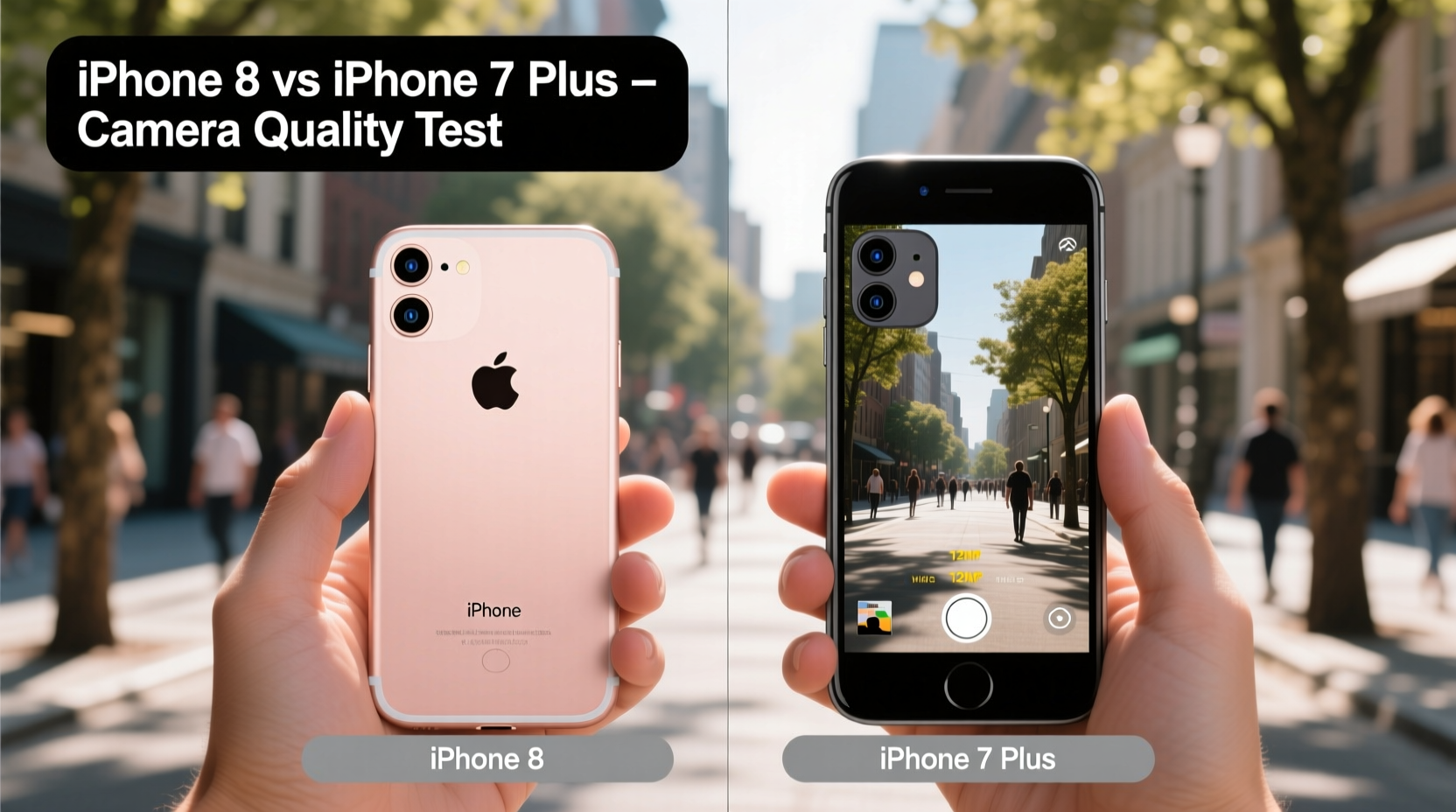
The iPhone 7 Plus launched with a dual-lens rear camera setup: a 12MP wide-angle lens (f/1.8 aperture) and a 12MP telephoto lens (f/2.8), enabling 2x optical zoom and Portrait Mode. It was Apple’s first foray into depth-sensing photography and marked a major leap in smartphone imaging.
The iPhone 8 kept the same dual-lens configuration on the Plus model, but Apple introduced key internal improvements:
- Larger and faster sensor with better pixel efficiency
- Improved color filter and deeper pixels for enhanced light capture
- Optical image stabilization (OIS) now on both wide and telephoto lenses (only on wide for 7 Plus)
- Smart HDR support (though fully realized in later iOS updates)
- Faster autofocus with Focus Pixels across more of the frame
While the megapixel count didn’t change, the underlying sensor technology did. Apple emphasized “better pixels over more pixels,” focusing on light sensitivity and processing rather than raw resolution.
“Sensor improvements and computational photography are quietly revolutionizing smartphone cameras. The gains aren’t always visible on paper, but they show up in your photos.” — David Nakamura, Mobile Imaging Analyst at TechLens Weekly
Image Quality: Real-World Differences
On the surface, photos from the iPhone 7 Plus and iPhone 8 look very similar — same color science, balanced exposure, and natural skin tones. However, when examined closely, especially in challenging lighting, differences emerge.
Low-Light Performance
This is where the iPhone 8 pulls ahead. Thanks to the improved sensor and OIS on both lenses, it captures noticeably less noise in dim environments. Nighttime shots, indoor scenes, and backlit portraits benefit from longer exposure times without blur, thanks to stabilized optics.
The iPhone 7 Plus often increases ISO too aggressively in dark settings, resulting in grainy shadows and loss of detail. The iPhone 8 handles shadow recovery better, preserving texture in darker areas without introducing artifacts.
Dynamic Range and Highlight Retention
Both phones use tone mapping to balance bright skies and dark foregrounds, but the iPhone 8 shows improved highlight roll-off. Bright windows, sunsets, and reflective surfaces retain more detail. This becomes apparent when editing photos — the 8 gives you more room to recover blown-out skies in post-processing.
Portrait Mode Consistency
The 7 Plus introduced Portrait Mode, but edge detection could be inconsistent — especially around flyaway hair or glasses. The iPhone 8, powered by the A11 Bionic chip, processes depth maps faster and more accurately. You’ll notice fewer halos and better subject isolation, particularly in medium-light conditions.
Side-by-Side Comparison Table
| Feature | iPhone 7 Plus | iPhone 8 |
|---|---|---|
| Rear Camera Setup | Dual 12MP (Wide + Telephoto) | Dual 12MP (Wide + Telephoto) |
| Aperture (Wide) | f/1.8 | f/1.8 |
| Aperture (Telephoto) | f/2.8 | f/2.8 |
| OIS | Wide only | Wide and Telephoto |
| Sensor Improvements | Standard | Larger pixels, better low-light response |
| Processor | A10 Fusion | A11 Bionic (Faster image signal processing) |
| Smart HDR | No | Limited (improved in iOS 12+) |
| Portrait Mode Accuracy | Good, occasional errors | Better edge detection, fewer artifacts |
| Video Recording | 4K at 30fps, 1080p at 60fps | 4K at 60fps, improved stabilization |
Real Example: A Day in the Park
Consider Sarah, a travel blogger using her iPhone 7 Plus for content creation. She upgraded to the iPhone 8 before a weekend trip to Golden Gate Park. Her goal: capture candid portraits, landscape shots, and golden-hour videos.
In the morning, she shot a portrait under dappled sunlight. The 7 Plus struggled with contrast between shaded faces and bright highlights, clipping some details. The iPhone 8 preserved more midtone balance and recovered shadows more naturally.
Later, during a foggy bridge scene, she used the telephoto lens. With the 7 Plus, slight hand movement caused blur due to lack of OIS on the telephoto lens. The iPhone 8 produced a sharper image, even at 2x zoom, because stabilization compensated for micro-movements.
At dusk, she filmed a 4K time-lapse. The iPhone 8’s 60fps recording and smoother exposure transitions gave her footage a cinematic feel, while the 7 Plus showed more flicker and judder in changing light.
Was the upgrade transformative? Not dramatically. But over dozens of shots, the consistency, reliability, and subtle quality gains added up — especially in video and low-light work.
Is the Upgrade Worth It? A Practical Checklist
If you're deciding whether to upgrade from the iPhone 7 Plus to the iPhone 8, ask yourself these questions:
- Do you frequently shoot in low light or indoors? → iPhone 8 wins
- Do you rely on optical zoom for portraits or distant subjects? → iPhone 8’s stabilized telephoto lens helps
- Are you shooting 4K video regularly? → 60fps on iPhone 8 is a clear step up
- Is battery life or design a bigger priority than camera? → Consider other models
- Are you happy with your 7 Plus photos in good lighting? → You may not need to upgrade
Frequently Asked Questions
Can you tell the difference between iPhone 8 and 7 Plus photos on social media?
In most daylight scenarios, no — the differences are subtle. However, if you view full-resolution images on a large screen or do heavy editing, the iPhone 8’s superior dynamic range and noise control become apparent.
Does the iPhone 8 have Night Mode?
No. Night Mode was introduced with the iPhone 11 series. However, the iPhone 8’s improved sensor and stabilization allow for better low-light shots than the 7 Plus, even without a dedicated mode.
Is Portrait Mode better on the iPhone 8?
Yes, but incrementally. The A11 chip enables faster depth calculations, leading to fewer edge mistakes and more consistent bokeh. Still, both phones struggle in very low light or with complex backgrounds.
Final Verdict: Real Improvement, Not Just Hype
The camera upgrade from iPhone 7 Plus to iPhone 8 isn’t revolutionary, but it’s meaningful. Apple didn’t add new lenses or bump megapixels — instead, they refined the foundation. Better sensors, dual-lens stabilization, faster processing, and improved video capabilities make the iPhone 8 a more capable photographic tool, especially in suboptimal conditions.
The gains aren’t flashy, but they’re practical. For someone who takes hundreds of photos a year, values video quality, or shoots in mixed lighting, the iPhone 8 delivers a noticeable step up. For casual users satisfied with their 7 Plus, the difference may not justify the cost of an upgrade.
In the end, this isn’t about hype — it’s about incremental engineering excellence. The iPhone 8’s camera is better in ways that matter most when you’re trying to capture life as it happens.




 浙公网安备
33010002000092号
浙公网安备
33010002000092号 浙B2-20120091-4
Comments
No comments yet. Why don't you start the discussion?