
In 2024, the smartphone market has evolved dramatically, yet older devices like the iPhone 8 and Samsung Galaxy A8 still circulate in secondhand markets and budget-conscious households. While neither model competes with today’s flagships, their continued presence raises an important question: does brand prestige—like Apple’s ecosystem loyalty—still hold weight when compared to the practical affordability of a once-midrange Android device? This isn’t just about specs; it’s about value, longevity, and how personal priorities shape tech decisions.
Performance and Real-World Usability in 2024
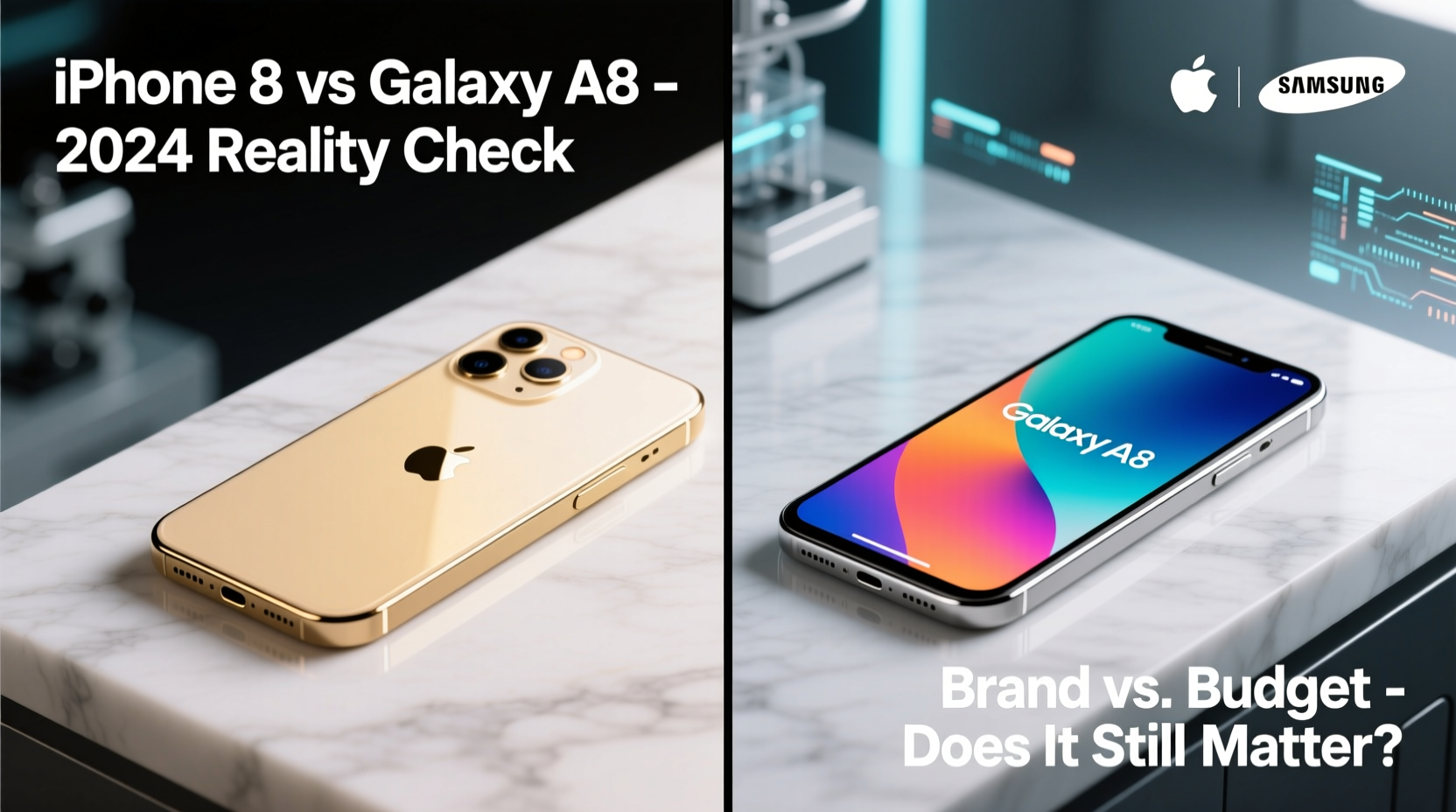
Both phones were released over five years ago—the iPhone 8 in 2017 and the Galaxy A8 in early 2018. By modern standards, their hardware is outdated, but real-world usability depends on software optimization and user habits.
The iPhone 8 runs on Apple’s A11 Bionic chip. Despite its age, iOS remains tightly optimized for Apple’s silicon, allowing the device to handle basic tasks like messaging, email, web browsing, and even some light social media use surprisingly well—even in 2024. However, app loading times are slower, multitasking is limited, and newer versions of iOS (iOS 17 included) show noticeable lag on this hardware.
The Galaxy A8, powered by an Exynos 7885 or Snapdragon 6150 (depending on region), launched as a mid-tier device. In 2024, it struggles significantly. It maxes out at Android 9 (Pie), meaning no security updates since 2020 and incompatibility with many current apps. Google Play Services now require newer APIs, and streaming platforms like Netflix may not function properly due to DRM restrictions on outdated OS versions.
Software Support and Longevity
This is where the iPhone 8 pulls ahead decisively. Apple’s commitment to long-term software updates means the iPhone 8 received iOS 16 and partial support in iOS 17—nearly six years of operating system upgrades. That’s unmatched in the Android world, especially among midrange devices.
Samsung offered only two major Android updates for the Galaxy A8, capping it at Android 10 in select regions (though most units never left Android 9). Without security patches since 2020, using the A8 online poses genuine risks—from unpatched vulnerabilities to phishing exposure through outdated browsers.
“Apple’s update policy turns older devices into functional tools longer than any Android counterpart under $300.” — David Lin, Mobile Analyst at TechLongevity Group
For users relying on banking apps, health trackers, or secure communications, the iPhone 8’s extended lifecycle offers tangible benefits that outweigh raw hardware specs.
Hardware Comparison: Specs vs. Daily Experience
| Feature | iPhone 8 | Galaxy A8 (2018) |
|---|---|---|
| Release Year | 2017 | 2018 |
| Processor | A11 Bionic (6-core) | Exynos 7885 / Snapdragon 6150 |
| Rear Camera | 12 MP, f/1.8 | 16 MP, f/1.7 |
| Front Camera | 7 MP, f/2.2 | 16 MP, f/1.9 |
| RAM | 2 GB | 4 GB |
| Storage Options | 64GB / 256GB | 32GB / 64GB (expandable via microSD) |
| Battery Capacity | 1,821 mAh | 3,000 mAh |
| Charging | Wired + Qi wireless | Wired only |
| OS in 2024 | iOS 17 (with limitations) | Android 9 (insecure, unsupported) |
On paper, the Galaxy A8 appears stronger: more RAM, larger battery, higher-resolution front camera, and expandable storage. But real-world experience diverges sharply. The iPhone 8’s efficient processor and iOS optimization make better use of limited RAM. Meanwhile, the A8’s 4 GB becomes irrelevant without updated software to manage background processes effectively.
Brand Ecosystem vs. Budget Reality
Apple’s ecosystem creates powerful inertia. Users invested in iCloud, AirPods, Apple Watch, or MacBooks find switching costly and inconvenient. Even with aging hardware, the iPhone 8 integrates seamlessly with modern Apple services. iMessage, FaceTime, Find My, and iCloud backups continue functioning reliably—features that matter more than gigahertz to loyal users.
Samsung’s ecosystem, while growing with Galaxy Buds, Watches, and DeX, wasn’t accessible on the 2018 A8. Its standalone utility is now minimal. For someone buying a used phone purely for calls, texts, and occasional YouTube, the Galaxy A8 might seem like a bargain at $50. But hidden costs emerge: lack of app support, poor browser performance, and potential security flaws.
Mini Case Study: Maria’s Dilemma
Maria, a retiree in Phoenix, needed a simple phone after dropping her iPhone 11. Her son found a used Galaxy A8 online for $40—cheaper than repairing her screen. She set it up, appreciated the larger screen and brighter display, but quickly ran into problems. Her bank app wouldn’t install. Gmail kept crashing. After two weeks, she switched back to her repaired iPhone, paying $120 out of pocket. “It was frustrating,” she said. “The Samsung looked nice, but nothing worked right. My old iPhone just… works.”
Maria’s experience reflects a broader truth: usability trumps price when core functions fail.
Step-by-Step Guide: Choosing Between Legacy Devices in 2024
If you’re considering either phone today, follow this decision path:
- Assess your primary needs: Is this for emergency use, a backup, or daily driver?
- Check app requirements: Will your essential apps (banking, messaging, health) run on iOS 17 or Android 9?
- Evaluate ecosystem ties: Do you use AirPods, iCloud, or Samsung SmartThings?
- Test real performance: Try both devices with your typical usage pattern—open five apps, switch between them, load a video.
- Consider security: Avoid any phone without recent security updates if used for sensitive tasks.
- Factor in repair cost: Battery replacements for iPhone 8 are widely available (~$60); parts for A8 are scarce.
Expert Insight: The Hidden Cost of Cheap Phones
“The true cost of a budget phone isn’t the sticker price—it’s the time lost dealing with crashes, the risk of data breaches, and the forced upgrade within months.” — Lena Patel, Consumer Tech Advisor at Digital Rights Watch
Patel emphasizes that short-term savings can lead to long-term frustration. A $50 phone that fails in three months costs more in hassle and replacement than a $100 device that lasts a year.
FAQ
Can the iPhone 8 still get software updates in 2024?
Yes. The iPhone 8 supports iOS 17, though performance is degraded. It will likely not receive iOS 18, marking the end of its update cycle.
Is the Galaxy A8 safe to use in 2024?
Not recommended for daily use. With no security patches since 2020, it’s vulnerable to malware, phishing, and app incompatibility. Suitable only for offline tasks like music playback or as a kid’s media device.
Which phone holds resale value better?
The iPhone 8 retains value far better. Functional units sell for $70–$100 in 2024; Galaxy A8 units typically go for $20–$40, if they sell at all.
Final Verdict: Brand Matters—But Not for the Reasons You Think
Brand loyalty often gets criticized as irrational, but in the case of the iPhone 8 versus the Galaxy A8, Apple’s brand strength stems from tangible engineering choices: longer software support, tighter hardware-software integration, and ecosystem continuity. These factors create real utility long after launch.
The Galaxy A8, despite being newer and technically “better” on paper, fails in 2024 because Samsung didn’t prioritize long-term support for mid-tier models at the time. Today, that decision catches up with users.
So yes—brand matters. But not because of logos or marketing. It matters because brand philosophy shapes how long a device remains useful. In a world drowning in e-waste, choosing a phone that lasts five years instead of two isn’t just economical; it’s responsible.




 浙公网安备
33010002000092号
浙公网安备
33010002000092号 浙B2-20120091-4
Comments
No comments yet. Why don't you start the discussion?