
In 2024, smartphones from 2017 and 2018 may seem like relics in a world dominated by foldables and AI-powered cameras. Yet, many users still rely on devices like the iPhone 8 and Samsung Galaxy S9. Both were flagship models in their day, and even now, they occasionally surface in secondhand markets or as backup phones. But how do they truly stack up today? More importantly, if you're using an iPhone 8 and considering switching to a Galaxy S9—or vice versa—is the upgrade actually worthwhile?
This isn’t just about nostalgia. It’s about practicality, longevity, and whether these older models can still handle modern apps, security updates, and daily wear and tear. Let’s break down the key differences and real-world usability to help you decide.
Performance and Hardware: Built for a Different Era
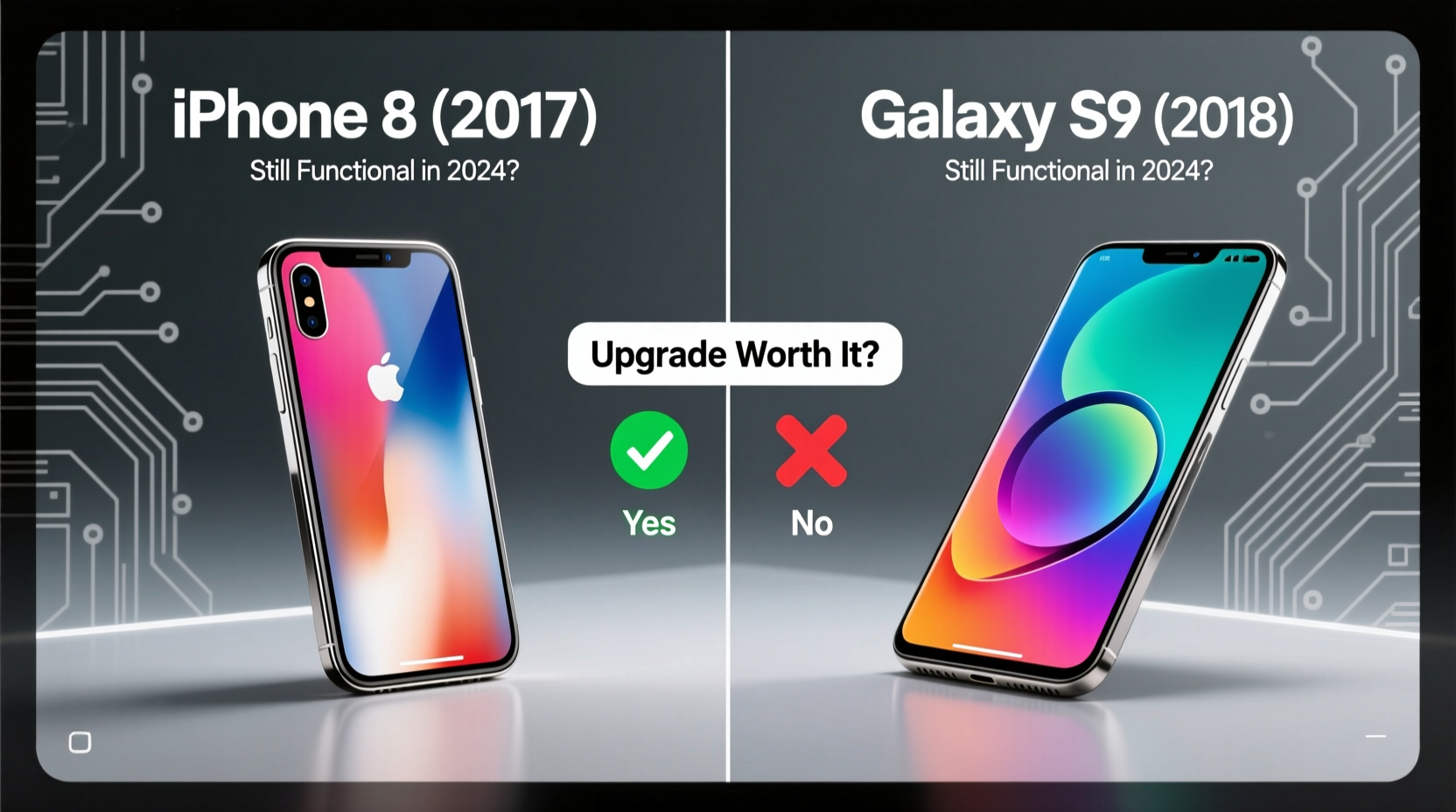
The iPhone 8 launched in September 2017 with Apple’s A11 Bionic chip, while the Galaxy S9 arrived in early 2018 powered by either the Exynos 9810 or Snapdragon 845, depending on the region. At the time, both chips were top-tier. However, five to six years later, the gap between then and now is stark.
The A11 Bionic was revolutionary for its time—Apple claimed it was 25% faster than the A10 Fusion. Similarly, the Snapdragon 845 offered strong multitasking and gaming performance in 2018. But today, even mid-range processors outperform them. Tasks like launching large apps (e.g., Google Maps, Instagram, or Chrome), loading high-resolution web pages, or running background services feel noticeably slower.
RAM is another critical factor. The iPhone 8 has only 2GB of RAM, while the Galaxy S9 comes with 4GB. This gives the S9 a clear edge in multitasking. You can switch between more apps without reloading, which matters in 2024 when apps are heavier than ever.
Software Support and Security: The Real Lifeline
Software support is where the iPhone 8 shines compared to the Galaxy S9. Apple continues to support the iPhone 8 with iOS updates—it received iOS 17 in 2023 and will likely get iOS 18 in 2024. While performance may dip slightly with each update, core functionality remains intact.
Samsung, on the other hand, ended major Android version updates for the Galaxy S9 after Android 10. It received security patches until 2022, meaning it hasn’t had official protection against new threats for over two years. Using an unsupported phone in 2024 exposes you to potential vulnerabilities, especially when logging into banking apps or entering personal data.
“Even if a phone feels fast, outdated software is the biggest risk. No amount of hardware can compensate for missing security patches.” — David Lin, Mobile Security Analyst at CyberShield Labs
For users prioritizing privacy and long-term reliability, the iPhone 8’s continued iOS support makes it the safer choice today—even if its hardware is older.
Camera Comparison: Quality vs. Features
The iPhone 8 features a 12MP rear camera with optical image stabilization (OIS), while the Galaxy S9 also has a 12MP sensor but adds variable aperture (f/1.5–f/2.4) and improved low-light processing. In 2018, the S9’s camera was considered superior in dim lighting due to its adaptive aperture.
Fast forward to 2024, and computational photography has changed everything. Modern smartphones use AI to enhance dynamic range, reduce noise, and improve focus. Neither the iPhone 8 nor the S9 benefits from these advancements. Photos taken in daylight are still acceptable, but low-light shots appear grainy and lack detail.
The iPhone 8 lacks portrait mode for non-face subjects and doesn’t support advanced editing features available in newer iOS versions. The S9, while offering better bokeh simulation and AR emoji, suffers from slower processing and inconsistent HDR performance.
| Feature | iPhone 8 | Galaxy S9 |
|---|---|---|
| Processor | A11 Bionic | Exynos 9810 / Snapdragon 845 |
| RAM | 2GB | 4GB |
| Latest OS | iOS 17 (supported) | Android 10 (unsupported) |
| Rear Camera | 12MP, OIS | 12MP, variable aperture |
| Battery Capacity | 1,821 mAh | 3,000 mAh |
| Current Security Updates | Yes (as of 2024) | No (ended 2022) |
Real-World Example: Daily Use in 2024
Consider Maria, a freelance writer who used her iPhone 8 daily for emails, note-taking, and light social media browsing. By 2023, she noticed Safari freezing on complex websites, Instagram crashing during uploads, and longer app launch times. She switched to a used Galaxy S9 thinking the extra RAM and larger battery would help.
It did—initially. The S9 handled multitasking better, and the screen was brighter. But within weeks, she couldn’t update key apps like WhatsApp or Google Drive because they required newer Android versions. Worse, she received phishing warnings from her bank app, citing “insecure device configuration.” She eventually upgraded to a newer phone, realizing that raw specs don’t matter if the ecosystem won’t support you.
Maria’s experience highlights a crucial point: in 2024, compatibility and security matter more than isolated hardware strengths.
Is the Upgrade Worth It? A Step-by-Step Decision Guide
If you’re deciding between upgrading from an iPhone 8 to a Galaxy S9 (or vice versa), follow this timeline to make a smart choice:
- Assess your current usage: Are you primarily using messaging, email, and basic browsing? Or do you rely on cloud storage, video calls, and productivity apps?
- Check app compatibility: Open the App Store or Google Play and verify if essential apps still support your device’s OS version.
- Test performance: Try opening five apps in succession and switch between them. Does the phone reload each time?
- Evaluate security status: On Android, check security patch date. On iOS, confirm you’re on the latest available version.
- Consider cost vs. benefit: Even if a used S9 costs $50, spending that on a newer budget phone (like a Pixel 6a or iPhone SE 2022) delivers far better value.
FAQ
Can I still use the iPhone 8 as a daily driver in 2024?
Yes, but with limitations. It runs iOS 17 and receives security updates, so it’s safe for basic tasks. However, expect slowdowns with heavy apps, limited storage options, and no Face ID or modern camera features.
Is the Galaxy S9 waterproof enough for everyday use?
The S9 has an IP68 rating, meaning it can survive short submersion. However, seals degrade over time. After six years, water resistance is not guaranteed. Avoid exposing it to moisture.
Which phone holds battery life better today?
The Galaxy S9 has a larger battery (3,000 mAh vs. 1,821 mAh), but age affects both. After 6+ years, most original batteries have degraded to 60–70% capacity. Expect iPhone 8 users to charge twice daily; S9 users might last one full day with light use.
Final Verdict: Upgrade Wisely
Comparing the iPhone 8 and Galaxy S9 in 2024 isn’t really about choosing between two viable options. It’s about recognizing when to let go. The iPhone 8, thanks to Apple’s long software support, remains marginally more usable. But the Galaxy S9, despite better hardware on paper, falls short due to abandoned software updates.
If you're clinging to either device, ask yourself: What do you gain by staying? Slower performance, shrinking app support, and growing security risks aren’t worth saving $100. Today’s budget smartphones—like the iPhone SE (2022), Google Pixel 6a, or Samsung Galaxy A54—offer modern processors, multi-year updates, and vastly superior cameras.
Staying on an old phone out of habit or frugality only delays the inevitable. Technology evolves not just for novelty, but for safety, efficiency, and access.




 浙公网安备
33010002000092号
浙公网安备
33010002000092号 浙B2-20120091-4
Comments
No comments yet. Why don't you start the discussion?