
When the Samsung Galaxy A8 Star launched in 2018, it entered a competitive mid-range market just as Apple’s iPhone 8 remained a popular flagship holdover from the previous year. For users considering a switch—especially those moving from iOS to Android—the decision wasn’t just about specs on paper. It was about daily usability, ecosystem loyalty, long-term value, and whether the upgrade truly improved their mobile experience. This article dissects the real-world differences between the iPhone 8 and the Samsung A8 Star to answer one critical question: Was making the switch actually worth it?
Design and Build: Glass, Metal, and Ergonomics
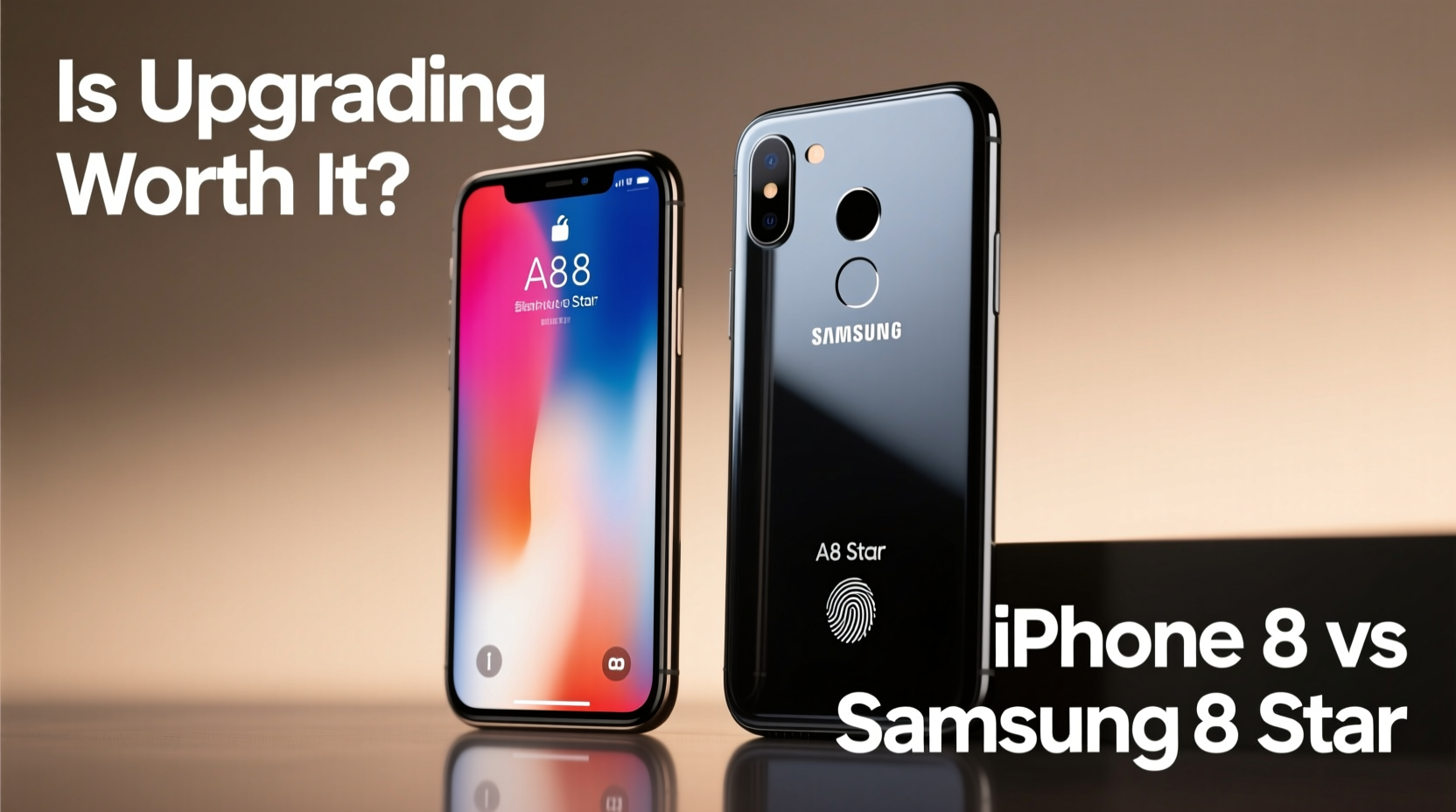
The iPhone 8 marked Apple’s return to glass-backed design, offering a premium feel with its aluminum frame and dual-sided glass. Its compact 4.7-inch form factor made it easy to handle with one hand, a rarity among larger phones released after 2017. Despite its small size, it retained physical buttons and Touch ID, appealing to users who valued tactile feedback.
In contrast, the Samsung A8 Star embraced the trend of large, bezel-less displays. With a 6.3-inch Super AMOLED screen and an elongated 18.5:9 aspect ratio, it delivered immersive viewing but at the cost of portability. The phone featured a glass front and back with a plastic frame, giving it a sleek look but less structural rigidity than the iPhone 8. Its fingerprint sensor was relocated to the back—unusual for Samsung at the time—and lacked the refined placement seen on other flagships.
Performance and Software Experience
Under the hood, the iPhone 8 ran Apple’s A11 Bionic chip—a powerhouse even by today’s standards for mid-tier tasks. Paired with iOS optimization, it delivered smooth multitasking, fast app launches, and consistent updates. At launch, it shipped with iOS 11 and received support through iOS 16, offering five years of software updates, a key advantage over most Android devices.
The A8 Star used Qualcomm’s Snapdragon 660, a capable mid-range processor for its time. While sufficient for everyday apps and light gaming, it couldn’t match the A11 Bionic in raw speed or longevity. On the software side, Samsung shipped the phone with Android 8.0 (Oreo) and promised only two major OS upgrades—ending at Android 10. This shorter support window meant earlier obsolescence compared to the iPhone 8.
“Software longevity is often more important than initial performance. A device that stays updated longer provides better security and feature access.” — David Lin, Mobile Systems Analyst
Camera Comparison: Real-World Photography
The iPhone 8 featured a single 12MP rear camera with optical image stabilization (OIS), a rarity in its class. Apple’s computational photography, color science, and video recording capabilities set a high bar. Its portrait mode, though software-based (no telephoto lens), produced natural bokeh effects, and 4K video recording at 60fps was unmatched in its category.
The A8 Star introduced a dual-camera setup: a 24MP primary sensor and a 16MP RGB depth sensor. While higher megapixels suggested better quality, the reality was mixed. In daylight, photos were sharp but sometimes oversharpened or overexposed. Low-light performance lagged due to lack of OIS and weaker noise processing. Portrait mode relied heavily on edge detection, often creating unnatural halos around subjects.
| Feature | iPhone 8 | Samsung A8 Star |
|---|---|---|
| Rear Camera | 12MP, f/1.8, OIS | 24MP + 16MP depth |
| Front Camera | 7MP, f/2.2 | 24MP, f/2.0 |
| Video Recording | 4K @ 60fps | 1080p @ 30fps |
| Portrait Mode | Software-enhanced | Dual-sensor assisted |
| Low-Light Performance | Strong (with OIS) | Moderate (no OIS) |
Despite marketing claims, the iPhone 8 consistently delivered more reliable and balanced photo results across lighting conditions. The A8 Star’s front camera, while higher resolution, often struggled with skin tone accuracy and dynamic range.
Battery Life and Charging
The iPhone 8 packed a modest 1,821mAh battery. While efficient thanks to iOS and the A11 chip, it rarely lasted beyond a full day under heavy use. It supported wireless charging—a first for Apple at this price—but lacked fast charging out of the box unless paired with a separate adapter.
The A8 Star countered with a 3,700mAh battery, nearly double the capacity. In practice, this translated to 1.5–2 days of moderate use. It supported fast charging via Adaptive Fast Charging, reaching 50% in about 30 minutes. However, Samsung’s software optimizations weren’t as tight as Apple’s, leading to occasional background drain.
Mini Case Study: Sarah’s Upgrade Journey
Sarah had used her iPhone 8 since 2017. By 2019, she felt limited by the small screen and aging battery. Tempted by social media ads showcasing the A8 Star’s “infinity display” and high-resolution selfie camera, she switched carriers and upgraded.
Initially impressed by the screen size and battery life, Sarah soon noticed downsides. Apps like WhatsApp and Instagram ran slower, especially when switching between them. She missed iOS’s fluid animations and the reliability of iMessage. After six months, the phone began receiving fewer updates, and performance dipped further. By 2021, she was unable to install newer versions of productivity apps due to Android version limitations.
She eventually returned to an iPhone SE (2020), citing ecosystem consistency and long-term reliability as deciding factors. “The bigger screen was nice,” she said, “but I traded stability for size. It wasn’t worth it.”
Checklist: Was Upgrading Worth It? Ask Yourself These Questions
- Do I need a larger screen for videos or multitasking?
- Am I comfortable leaving the iOS ecosystem (iMessage, FaceTime, iCloud)?
- How important are long-term software updates to me?
- Do I rely heavily on video recording or low-light photography?
- Is fast charging and multi-day battery life a priority?
- Will I keep this phone for more than two years?
If most of your answers lean toward iOS strengths—software support, camera consistency, ecosystem integration—then staying with the iPhone 8 (or upgrading within Apple’s lineup) may have been the smarter move. If screen size and battery endurance were top priorities, the A8 Star offered tangible benefits—albeit with trade-offs in longevity.
Frequently Asked Questions
Could the Samsung A8 Star run modern apps smoothly in 2024?
No. Due to its Snapdragon 660 and capped at Android 10, many newer apps either don’t support the OS version or run poorly. Security patches ended years ago, making it risky for online banking or sensitive tasks.
Did the iPhone 8 receive better camera updates over time?
Yes. Apple pushed significant camera improvements through software updates, enhancing HDR, noise reduction, and Smart HDR in later iOS versions. The A8 Star received minimal camera tuning after launch.
Was the A8 Star waterproof like the iPhone 8?
No. The iPhone 8 has an IP67 rating (water-resistant up to 1 meter for 30 minutes). The A8 Star lacks any official water resistance, increasing vulnerability to spills or rain damage.
Final Verdict: Was the Upgrade Worth It?
For most users, especially those already invested in Apple’s ecosystem, upgrading from the iPhone 8 to the Samsung A8 Star was not a clear improvement. While the A8 Star offered a larger screen, better battery, and faster charging, it fell short in performance consistency, software support, camera reliability, and long-term usability.
The iPhone 8, despite its smaller size and older design language, proved more future-proof. Its superior chipset, extended update cycle, and robust build allowed it to remain functional and secure well into the 2020s. Meanwhile, the A8 Star, once considered a compelling mid-range option, became outdated faster than expected.
Upgrades should enhance—not compromise—your daily experience. Choosing a phone isn’t just about what looks impressive in a store. It’s about how well it serves you over time. In this matchup, the iPhone 8 holds up not because it’s flawless, but because it prioritizes longevity over fleeting trends.




 浙公网安备
33010002000092号
浙公网安备
33010002000092号 浙B2-20120091-4
Comments
No comments yet. Why don't you start the discussion?