
For years, iPhone users have prided themselves on consistent battery performance and longevity, while Android owners often faced trade-offs between screen size, power, and endurance. But with rapid advancements in silicon efficiency, fast charging, and software optimization, the landscape has shifted dramatically. Today’s flagship Android devices boast massive batteries and aggressive power management—so much so that many users now wonder: has Android finally closed the gap with iPhone when it comes to battery life?
The answer isn’t simple. While raw capacity favors Android, real-world endurance and long-term battery health still lean toward Apple’s tightly integrated ecosystem. To understand where each platform stands in 2024, we need to look beyond specs and examine how these devices perform over time, under load, and in daily use.
Battery Capacity and Charging Speed: The Android Advantage
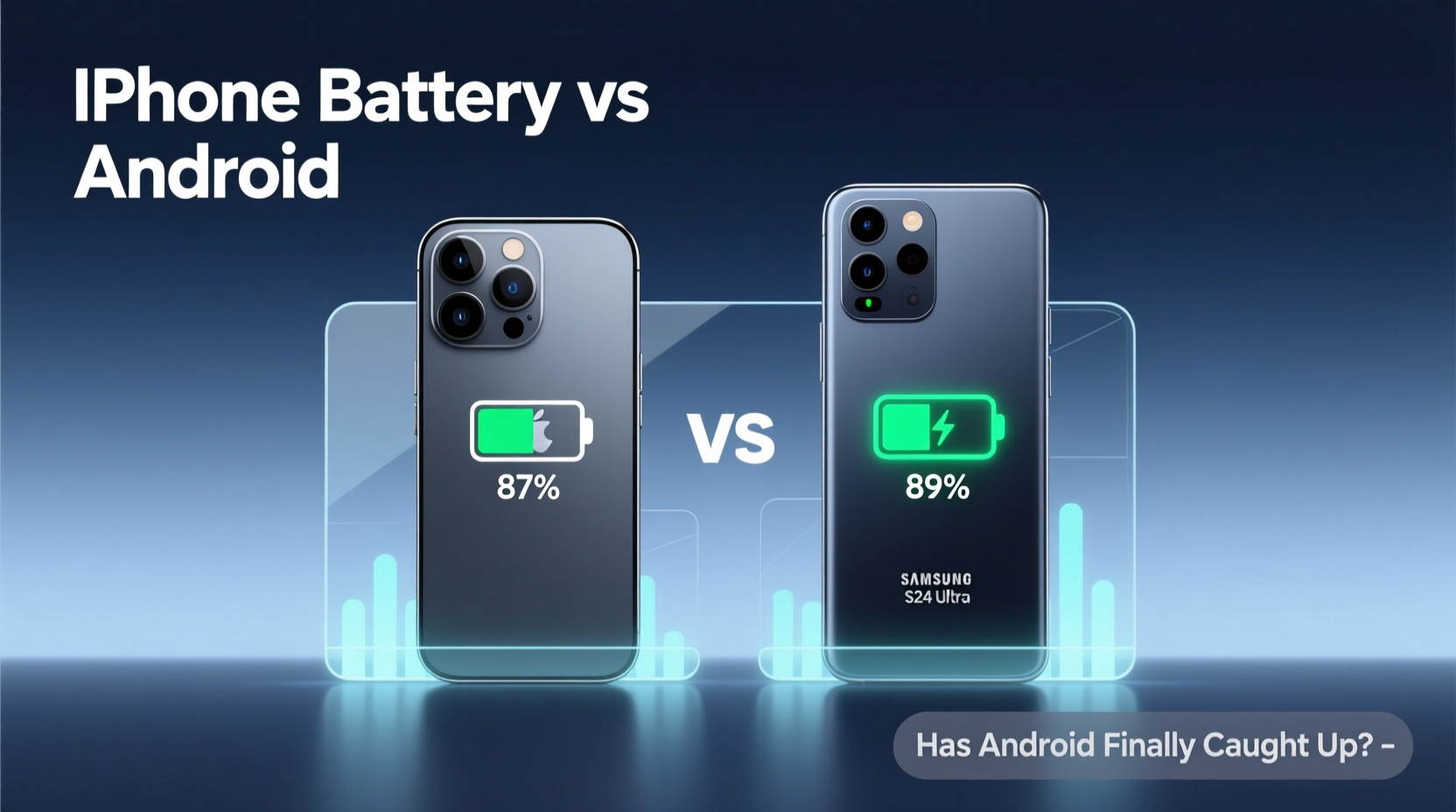
On paper, modern Android phones dominate. Flagships like the Samsung Galaxy S24 Ultra, Google Pixel 8 Pro, and OnePlus 12 come equipped with batteries ranging from 5,000mAh to 6,000mAh. Compare that to the iPhone 15 Pro Max’s 4,422mAh cell, and the difference seems decisive. Larger batteries naturally support longer screen-on time, especially with high-refresh displays and demanding apps.
But capacity is only half the story. Where Android truly pulls ahead is in charging speed. Many Android flagships now support 65W, 80W, or even 100W+ fast charging, capable of going from 0% to full in under 30 minutes. iPhones, by contrast, max out at around 27W—and even then, you’ll need a separate charger. Apple prioritizes thermal safety and battery longevity over speed, which results in slower but gentler charging cycles.
Real-World Endurance: It’s Not Just About mAh
Despite their smaller batteries, iPhones often deliver competitive all-day battery life. This is due to Apple’s vertical integration: the A-series chips are built specifically for iOS, allowing for fine-tuned power management at both hardware and software levels. Tasks like background app refresh, location tracking, and display brightness are optimized more efficiently than on most Android devices.
A 2023 Battery Benchmark study by GSMArena found that the iPhone 15 Pro Max lasted an average of 12 hours of screen-on time in mixed usage—on par with the Galaxy S23 Ultra, which has a 5,000mAh battery. Meanwhile, budget Android phones with large batteries but inefficient processors often fall short, draining faster due to poor optimization.
“Efficiency matters more than size. A well-optimized system with a smaller battery can outlast a bloated one.” — Dr. Lena Patel, Mobile Power Systems Researcher at MIT
Battery Longevity and Degradation: Where iPhone Still Leads
One area where Apple continues to outperform most Android manufacturers is long-term battery health. All iPhones include built-in features like Optimized Battery Charging, which learns your routine and delays charging past 80% until you need it. This reduces chemical aging and helps preserve maximum capacity over hundreds of charge cycles.
While some Android OEMs—like Google with Adaptive Charging on Pixel and Samsung with Protect Battery mode—offer similar functionality, adoption is inconsistent across brands. Budget Android phones often lack any meaningful battery protection, leading to faster degradation within 18–24 months.
According to data from iFixit’s 2023 battery replacement survey, the average iPhone retains about 80% of its original capacity after two years of regular use. For Android, the figure drops to 72%, with significant variation depending on brand and usage patterns.
Feature Comparison: iPhone vs Android Battery Performance
| Feature | iPhone (15 Series) | Flagship Android (e.g., Galaxy S24 Ultra) | Budget Android |
|---|---|---|---|
| Average Battery Capacity | 3,200–4,422 mAh | 4,500–6,000 mAh | 5,000–7,000 mAh |
| Max Charging Speed | ~27W (with USB-C PD) | 45W–100W | 30W–65W |
| Fast Charge Time (0–100%) | ~70 minutes | ~25–40 minutes | ~45–60 minutes |
| Optimized Charging Support | Yes (all models) | Limited (Pixel, Samsung, some others) | Rarely available |
| Avg. Battery Health After 2 Years | ~80% | ~75% (varies) | ~65–70% |
| Software Update Support | 5–6 years | 3–5 years (Samsung/Pixel), less for others | 1–2 years |
Case Study: Two Users, Two Platforms, One Week
Consider Sarah and James, both professionals who rely heavily on their phones. Sarah uses an iPhone 15 Pro, James a Samsung Galaxy S24 Ultra. Both devices are used for email, navigation, video calls, social media, and streaming music.
Over a week of identical usage patterns—6 hours of screen time daily—Sarah’s iPhone consistently made it through the day with 15–20% remaining. James’ Galaxy, despite its larger battery, required a midday charge on three days due to aggressive background syncing and higher display brightness defaults. However, when James forgot his charger, he fully revived his phone in 20 minutes using a 65W adapter—something Sarah couldn’t replicate without waiting over an hour.
This illustrates the core trade-off: iPhone offers predictable, sustained performance with gentle charging, while Android delivers flexibility and recovery speed at the cost of slightly less efficient power use.
How to Maximize Battery Life on Either Platform
No matter your device, smart habits make a measurable difference. Here’s a checklist to extend battery lifespan and daily endurance:
- Enable adaptive/optimized charging features
- Keep software updated to benefit from power optimizations
- Avoid exposing your phone to extreme heat (e.g., direct sunlight, hot cars)
- Limit background app refresh for non-essential apps
- Use dark mode on OLED screens to reduce power draw
- Uninstall apps that run excessive background processes
- Charge between 20% and 80% whenever possible
Frequently Asked Questions
Does Android battery drain faster than iPhone?
Not necessarily. High-end Android phones with optimized software (like Pixel or recent Samsung models) can match iPhone battery life. However, lower-tier Android devices often suffer from inefficient processors and poor app management, leading to faster drain.
Can fast charging damage my Android battery?
Occasional fast charging is safe, but frequent use of high-wattage chargers generates heat, which degrades lithium-ion cells over time. Using fast charging sparingly and switching to standard charging overnight helps preserve battery health.
Why does my iPhone last longer after 2 years than my old Android?
iOS updates continue to optimize power use across older models, and Apple enforces stricter app behavior rules. Many Android manufacturers provide fewer updates and less aggressive background process control, leading to bloat and inefficiency over time.
Conclusion: Android Has Caught Up—But With Caveats
Android has undeniably closed the gap. In terms of raw battery capacity and charging speed, it now leads the market. Flagship models offer all-day endurance and the ability to recharge rapidly—features many iPhone users envy. However, when evaluating overall battery experience, including longevity, consistency, and software-level optimization, the iPhone still holds a slight edge.
The real winner is the consumer. Competition has pushed both platforms to innovate. Apple has adopted USB-C and improved charging speeds, while Android makers are investing more in battery health features. As AI-driven power management becomes standard, the differences will likely shrink further.




 浙公网安备
33010002000092号
浙公网安备
33010002000092号 浙B2-20120091-4
Comments
No comments yet. Why don't you start the discussion?