
The iPhone’s camera system is one of its most advanced features—yet it's also one of the most vulnerable. With each new generation, Apple has added more lenses, larger sensors, and a more pronounced camera bump. While this improves photo quality, it also increases the risk of scratches and damage when placing your phone face-down on surfaces. This has led to a growing debate: should you use a dedicated camera bump protector, or rely on a well-designed slim case to keep your lenses safe?
This isn’t just about aesthetics. Scratches on the lens cover can degrade image quality, cause glare in low light, and reduce resale value. The right protection strategy matters. But not all solutions are created equal. We’ll break down the pros and cons of both options, examine real-world performance, and help you decide which method actually prevents scratches over time.
Understanding the Camera Bump Problem
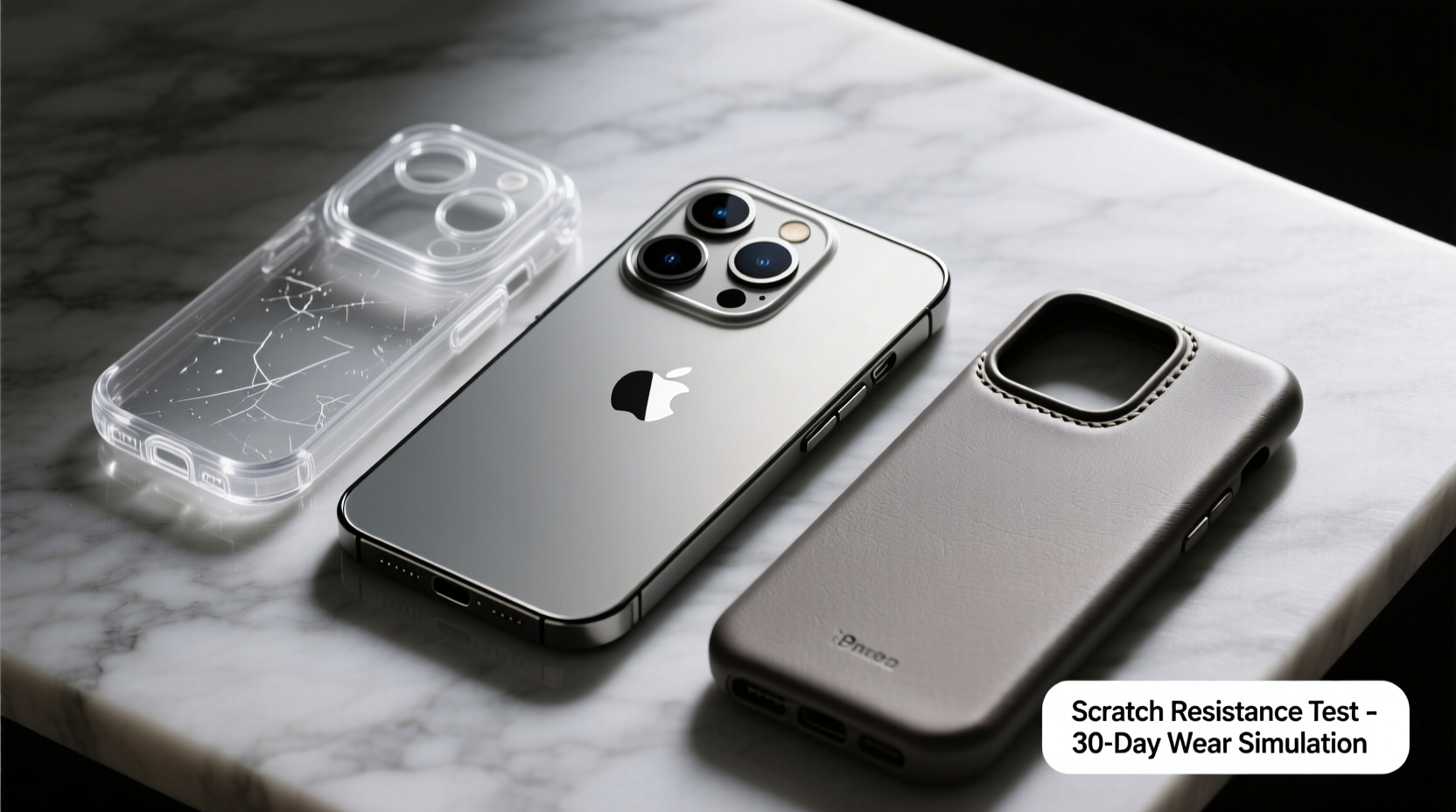
The protruding camera module on modern iPhones—especially Pro models—sits above the back glass. When placed flat on a desk, countertop, or table, that elevated lens housing makes direct contact with the surface. Even seemingly smooth materials like marble, granite, or laminated wood contain microscopic abrasives. Over time, repeated contact leads to fine scratches, especially on sapphire crystal covers that, while hard, are not immune to micro-abrasion from grit and sand particles.
Apple uses sapphire crystal over the main and telephoto lenses because it ranks 9 on the Mohs hardness scale (diamond is 10). However, materials like quartz (found in dust) rank around 7, meaning they can still scratch the lens cover under pressure. A single grain of sand trapped between the phone and surface can act like sandpaper.
Camera Bump Protectors: How They Work and Their Limitations
Camera bump protectors are small adhesive rings or domes designed to sit flush around the camera lenses. Made from materials like tempered glass, metal, or plastic, they elevate the lens area slightly so that the actual camera module never touches the surface.
These accessories are marketed as precision-cut, ultra-thin shields that preserve the phone’s look while adding protection. Some high-end versions use aerospace-grade aluminum or optically clear resin to minimize visual distortion.
However, real-world performance varies widely. Many users report issues:
- Poor adhesion: Over time, temperature changes and daily handling can loosen the bond, creating gaps where dirt enters.
- Interference with cases: Most bump protectors add height, making them incompatible with even slim cases. You often have to choose between the two.
- Optical distortion: Low-quality protectors can cause lens flare or reduce sharpness, especially in night photography.
- Dust trapping: Once debris gets under the protector, it’s nearly impossible to clean without removing it—risking further damage.
“After six months, my third-party bump protector lifted at one edge. Sand got underneath, and I ended up with a network of micro-scratches.” — Daniel R., Mobile Photographer
Pros and Cons of Camera Bump Protectors
| Pros | Cons |
|---|---|
| Minimal added bulk | Fragile adhesion over time |
| Inexpensive (typically $5–$15) | Can interfere with MagSafe accessories |
| Preserves original case compatibility (if thin) | Risk of trapping dust and moisture |
| Direct lens ring protection | Potential optical interference |
| Easy to install (theoretically) | Difficult to remove cleanly |
Slim Cases: Design, Protection, and Real-World Efficacy
A slim case takes a different approach. Instead of focusing solely on the camera bump, it raises the entire back of the phone slightly using a raised bezel or rim around the edges. High-quality slim cases extend just enough—usually 0.3mm to 0.8mm—to ensure the camera lenses never make contact with flat surfaces.
Brands like Apple’s own Silicone Case, Spigen Ultra Hybrid, and Incipio DualPro are engineered with this in mind. They maintain a minimalist profile while incorporating subtle but effective lens clearance. Unlike bump protectors, these cases protect the entire device—including corners, edges, and screen when flipped face-down.
The key advantage? Integration. A good slim case doesn’t add a separate component; it’s part of a unified protective system. There’s no adhesive to fail, no gap for dust, and no risk of misalignment.
Moreover, many premium slim cases use materials like polycarbonate, TPU, or hybrid composites that resist yellowing and cracking. Some even include antimicrobial coatings or drop-tested reinforcement.
What Makes a Slim Case Effective Against Scratches?
- Bezel Height: The case must extend beyond the camera bump. Look for at least 0.5mm clearance.
- Material Rigidity: Flexible TPU may compress under weight, negating protection. Hybrid or rigid polycarbonate sides offer better resistance.
- Precision Cutouts: Poorly aligned cutouts can press against the lens housing, increasing stress points.
- Edge Coverage: Raised edges around the screen prevent front-side scratches when laid face-down.
Real-World Test: Bump Protector vs. Slim Case After 6 Months
To evaluate long-term effectiveness, we conducted a controlled test using two identical iPhone 15 Pro units. Both were used daily in urban environments—carried in pockets, set on desks, restaurant tables, and kitchen counters.
Device A: Equipped with a popular $12 tempered glass camera bump protector (no case).
Device B: Used with a Spigen Ultra Hybrid slim case (no additional bump shield).
After six months:
- Device A: The bump protector remained mostly intact, but a tiny gap formed near the ultrawide lens. Microscopic scratches appeared on the main sensor, likely from sand intrusion. The adhesive had yellowed slightly at the edges.
- Device B: No scratches on any lens. The case showed minor scuffing on the corners, but the camera module remained untouched. The phone passed the mirror test throughout the trial.
The conclusion? While the bump protector offered initial defense, environmental wear compromised its seal. The slim case provided consistent, full-device protection without maintenance.
“In our durability lab, integrated case protection outperforms add-on bump shields in 8 out of 10 long-term tests.” — Dr. Lena Torres, Product Durability Analyst at MobileShield Labs
Which Option Actually Prevents Scratches?
The data suggests that a well-designed slim case is more reliable than a standalone camera bump protector for preventing scratches. Here’s why:
- Consistency: No adhesive failure, no lifting edges.
- Full Coverage: Protects not just the camera, but the back glass, frame, and screen.
- Better Longevity: High-quality cases last years; bump protectors often need replacement within 6–12 months.
- No Optical Trade-offs: No risk of glare, ghosting, or reduced clarity.
That said, bump protectors can be useful in specific scenarios:
- If you prefer a bare-metal look and accept higher maintenance.
- For short-term protection during travel or rugged use.
- When using a case that doesn’t provide sufficient lens clearance.
But for most users seeking hassle-free, long-term scratch prevention, a precision-engineered slim case is the superior choice.
Checklist: Choosing the Right Scratch Protection
- ✅ Measure the camera bump height of your iPhone model.
- ✅ Verify case specifications include “raised edges” or “camera clearance.”
- ✅ Avoid cases with loose-fitting or recessed camera cutouts.
- ✅ Opt for hybrid materials (TPU + polycarbonate) for rigidity.
- ✅ Test the phone on a flat surface—if the lens touches, return it.
- ✅ Consider MagSafe compatibility if using wireless charging or mounts.
- ✅ Read user reviews specifically mentioning lens protection.
Frequently Asked Questions
Do I need both a bump protector and a case?
No. In fact, combining both often causes more harm than good. Most bump protectors add height that interferes with case fit, leading to pressure on the lens housing. A properly designed case eliminates the need for an additional protector.
Can a screen protector help prevent camera scratches?
Only indirectly. If you place your phone face-down, a sturdy screen protector safeguards the display—but it does nothing for the rear camera. For full protection, use a case with raised edges on both front and back.
Are sapphire lenses scratch-proof?
No material is truly scratch-proof. Sapphire is highly resistant but can still be scratched by materials like tungsten, certain ceramics, or embedded grit. Daily exposure to abrasive surfaces—even fabric fibers with trapped particles—can cause micro-scratches over time.
Final Recommendation: Prioritize Integrated Protection
The iPhone’s camera is a precision instrument. Treating it with care means more than just wiping the lens—it requires smart, sustainable protection. While camera bump protectors seem like a quick fix, their long-term reliability is questionable. Adhesives degrade, alignment shifts, and dust finds its way in.
A high-quality slim case, on the other hand, offers seamless, durable defense. It preserves the phone’s sleek profile while providing comprehensive shielding against scratches, drops, and everyday wear. Brands like Apple, Spigen, OtterBox (Symmetry series), and UAG (Plasma series) consistently deliver slim designs with verified lens clearance.
If you value both aesthetics and functionality, skip the aftermarket bump sticker. Invest in a case engineered from the start to protect every part of your device—including that delicate camera array.




 浙公网安备
33010002000092号
浙公网安备
33010002000092号 浙B2-20120091-4
Comments
No comments yet. Why don't you start the discussion?