
For years, iPhone users relied on iCloud Photo Stream to seamlessly sync recent photos across devices. It was simple, automatic, and didn’t eat into iCloud storage. But in 2019, Apple quietly retired Photo Stream, leaving many confused and frustrated. What happened? Why replace a feature that worked well? And how does the modern Camera Roll and iCloud Photos ecosystem compare?
This shift wasn’t arbitrary. It reflected broader changes in Apple’s cloud strategy, user behavior, and the evolution of photo management. Understanding the transition from Photo Stream to today’s system reveals not just technical updates, but also how our relationship with digital memories has changed.
What Was Photo Stream — And Why Did People Love It?
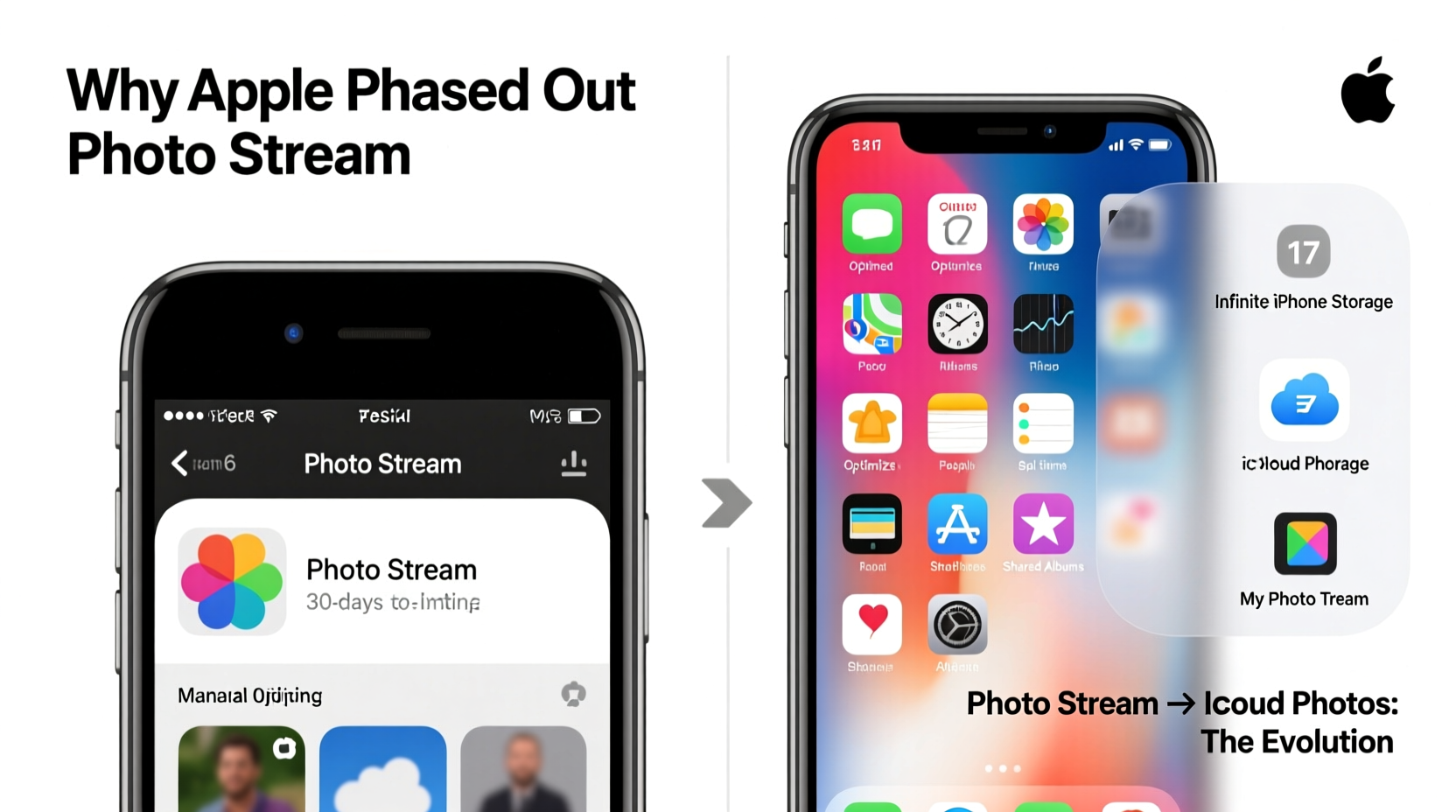
iCloud Photo Stream launched in 2011 as part of iOS 5. Its purpose was straightforward: automatically push the last 1,000 photos taken on one device to all other Apple devices signed into the same iCloud account. These synced images appeared in a dedicated \"Photo Stream\" album and stayed for 30 days. Crucially, they didn’t count against your iCloud storage limit.
Users appreciated its simplicity. If you took a photo on your iPhone, it would appear moments later on your iPad or Mac. No manual upload, no syncing via computer—just instant access. It was ideal for people who wanted to view recent shots across devices without committing to full photo library backup.
Camera Roll vs. Photo Stream: Key Differences
The confusion between Camera Roll and Photo Stream stems from overlapping functions—but they were fundamentally different systems.
| Feature | Camera Roll | Photo Stream (Legacy) |
|---|---|---|
| Storage Location | Local device + iCloud (if enabled) | iCloud only (synced to devices) |
| Storage Impact | Counts toward iCloud plan if synced | Did not count against iCloud storage |
| Synchronization Scope | All photos (if iCloud Photos is on) | Last 1,000 photos, 30-day retention |
| Cross-Device Access | Yes, instantly with iCloud Photos | Yes, but delayed and limited |
| Manual Control | Full control over deletion and organization | Limited; auto-deletion after 30 days |
While the Camera Roll stores every photo you take, Photo Stream acted more like a temporary bridge. It never replaced full backups—it supplemented them.
Why Apple Retired Photo Stream
In June 2019, Apple announced the end of iCloud Photo Stream, effective July 2023. The company cited the rise of iCloud Photos as the primary reason. As Greg Joswiak, Apple’s Senior Vice President of Marketing, explained:
“iCloud Photos offers a better experience—full library sync, intelligent search, shared albums, and optimization across all your devices.” — Greg Joswiak, Apple
Several factors drove this decision:
- Redundancy: With iCloud Photos, users could keep their entire library synced across devices, making the limited 1,000-photo window of Photo Stream obsolete.
- Infrastructure Efficiency: Maintaining two syncing systems increased backend complexity. Consolidating into one streamlined service reduced overhead.
- User Behavior Shifts: More people now back up entire libraries rather than rely on partial syncs. Unlimited photo storage plans (before 2015) and improved compression made full syncing practical.
- AI and Search Enhancements: iCloud Photos supports facial recognition, scene detection, and natural language search—features Photo Stream couldn’t support.
Put simply: Photo Stream was a transitional tool for an era when cloud storage was expensive and connectivity spotty. Today, faster networks and larger iCloud plans make full synchronization not just possible, but preferable.
How iCloud Photos Replaced Photo Stream — A Step-by-Step Transition
If you’re still adjusting to life after Photo Stream, here’s how to replicate—and improve upon—its functionality using modern tools.
- Enable iCloud Photos: Go to Settings > [Your Name] > iCloud > Photos and toggle on “iCloud Photos.” This uploads your entire library, including the Camera Roll.
- Optimize Device Storage: In the same menu, choose “Optimize iPhone Storage” to keep smaller versions locally while storing full-resolution copies in the cloud.
- Access Recent Photos Anywhere: On any Apple device, open the Photos app. Your latest shots appear instantly under “Recents,” replacing the old Photo Stream album.
- Use Shared Albums for Collaboration: Instead of relying on automatic push, create a Shared Album to exchange photos with family or friends—without cluttering personal libraries.
- Review & Delete Strategically: Unlike Photo Stream, which auto-deleted after 30 days, iCloud gives you control. Regularly curate your library to avoid bloating storage.
Real Example: Sarah’s Photo Workflow Before and After
Sarah, a freelance photographer and parent of two, used Photo Stream religiously. She’d take baby photos on her iPhone, then view them on her iPad during naptime. When Photo Stream disappeared, she initially panicked—until she discovered iCloud Photos’ advantages.
Now, her workflow is smoother: photos upload automatically, she can search by date (“June 2023 beach trip”) or person (“Emma laughing”), and she shares curated albums with grandparents. Her storage usage increased slightly, but the trade-off in convenience and reliability was worth it.
She admits the learning curve existed, but within a month, she preferred the new system. “It’s like upgrading from a flip phone to an iPhone,” she says. “Once you get used to the power, you don’t miss the old way.”
Common Misconceptions and Mistakes to Avoid
Many users misunderstand the current photo ecosystem. Here are frequent errors and how to fix them:
- Mistake: Turning off iCloud Photos to save space
Result: No sync, risk of permanent loss if device is damaged.
Solution: Use Optimize Storage instead. - Mistake: Assuming deleted photos are gone everywhere
Photos stay in Recently Deleted for 30 days unless manually emptied.
Solution: Review this folder monthly. - Mistake: Relying solely on iPhone storage
If you lose your phone, you lose everything.
Solution: Always enable iCloud Photos or use a secondary backup like a computer or external drive.
Frequently Asked Questions
Can I still access my old Photo Stream albums?
Yes, but not as active streams. Any photos that were in your My Photo Stream before July 2023 were automatically moved to your main photo library. You can find them in the “Photos” tab or search by date.
Does iCloud Photos use a lot of data?
Initially, yes—uploading a large library can take time and bandwidth. However, once synced, only new photos upload, typically over Wi-Fi. To minimize cellular use, go to Settings > Cellular > Photos and disable cellular data for the Photos app.
Is there a free alternative to iCloud Photos?
Google Photos offers free high-quality uploads (though compressed), cross-platform access, and smart search. However, Apple’s ecosystem provides tighter integration, better privacy controls, and seamless editing across devices.
Conclusion: Embracing the Future of iPhone Photography
Apple didn’t eliminate Photo Stream out of disregard for users—it evolved the system to meet modern demands. The Camera Roll, powered by iCloud Photos, now offers smarter, more reliable, and more powerful photo management than ever before.
The shift required adjustment, but the result is a unified, intelligent photo experience that anticipates your needs. Whether you're capturing memories, sharing moments, or preserving family history, today’s tools are more capable than the patchwork solutions of the past.




 浙公网安备
33010002000092号
浙公网安备
33010002000092号 浙B2-20120091-4
Comments
No comments yet. Why don't you start the discussion?