
Low-light photography has become a defining benchmark for smartphone cameras. In 2025, both Apple and leading Android manufacturers have pushed computational photography to new heights. The battle between iPhone and Android devices in dim environments is no longer just about hardware—it’s a complex interplay of sensors, software, AI processing, and user experience. Whether you're capturing cityscapes at dusk or indoor moments without flash, understanding the strengths and limitations of each platform can guide your next phone purchase.
Sensor Technology and Hardware Evolution
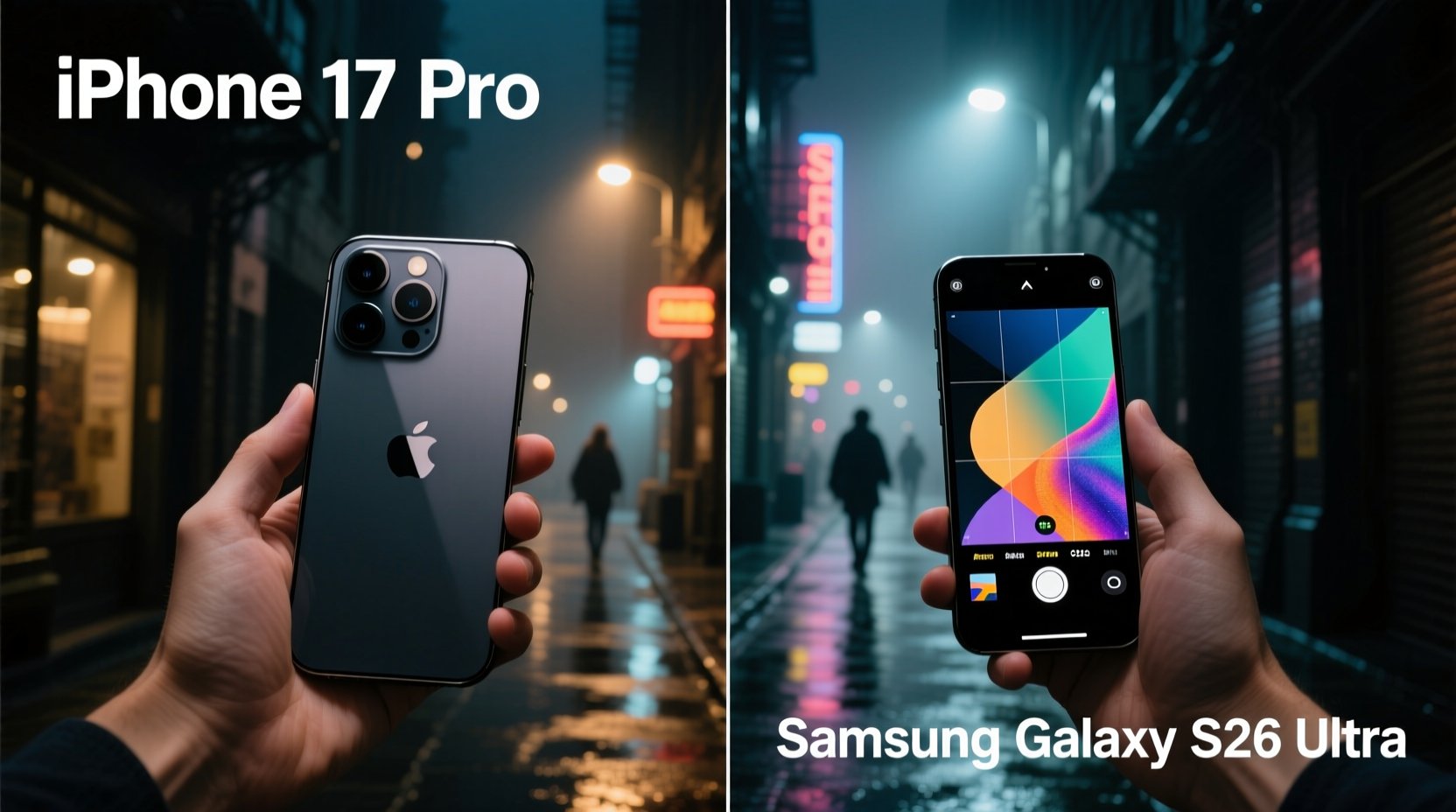
In recent years, sensor size has emerged as a critical factor in low-light performance. Larger sensors capture more photons, reducing noise and improving dynamic range. While Apple has historically prioritized balanced performance across lighting conditions, Android OEMs like Samsung, Google, and OnePlus have aggressively pursued larger sensors.
The iPhone 16 Pro Max, released in late 2024, features an upgraded 48MP main sensor with a 1/1.14-inch format—Apple’s largest yet. It uses pixel binning (combining four pixels into one) to produce brighter 12MP images in low light. Meanwhile, flagship Android phones such as the Samsung Galaxy S25 Ultra and Google Pixel 9 Pro XL boast sensors up to 1/1.3 inches with advanced microlens arrays and dual-pixel autofocus systems optimized for darkness.
Hardware alone doesn’t tell the full story. Apple tightly integrates its custom A18 Bionic chip with the camera system, enabling real-time signal processing that minimizes lag during Night mode shots. Android flagships use Tensor G4 (Google), Snapdragon 8 Gen 4 (Samsung, OnePlus), and Exynos 2500 chips, all capable of high-speed image processing but varying in efficiency and thermal management under sustained use.
Computational Photography: Apple’s Consistency vs Android’s Innovation
Computational photography—the use of algorithms to enhance image quality—has redefined what smartphones can do after the shutter clicks. Both platforms rely heavily on multi-frame stacking, where several exposures are captured and merged into a single optimized photo.
iPhones use Deep Fusion and Smart HDR 6, now enhanced with machine learning models trained on billions of nighttime images. These tools work silently in the background, adjusting texture, color fidelity, and shadow detail with minimal user input. The result is consistent output: colors remain natural, highlights are preserved, and skin tones stay accurate even under mixed lighting.
Android approaches vary by brand. Google’s Pixel series leads in algorithmic refinement, leveraging its Super Res Zoom and Magic Eraser technologies within Night Sight. The Pixel 9 Pro applies AI-driven denoising that reconstructs fine details often lost in shadows. Samsung’s Nightography mode uses adaptive ISO and AI-powered scene recognition to adjust white balance dynamically. OnePlus emphasizes speed, offering near-instant Night mode captures—a practical advantage in fleeting moments.
“Google’s Pixel has set the standard for AI-based noise reduction in ultra-low light. But Apple find the sweet spot between realism and over-processing.” — Dr. Lena Park, Computational Imaging Researcher at MIT Media Lab
Real-World Performance Comparison
To assess actual performance, consider three common scenarios: urban nightscapes, indoor family gatherings, and handheld astrophotography.
- Urban Nightscapes: Android phones, particularly Samsung and Pixel models, tend to brighten scenes more aggressively. This can make streets appear vibrant but sometimes oversaturates neon signs or washes out dark clothing. iPhones preserve deeper blacks and deliver better contrast, mimicking human vision more closely. <
- Indoor Gatherings: Under warm artificial lighting, iPhones maintain truer skin tones. Some Android devices lean toward cooler whites unless manually corrected. However, Pixel’s Face Unblur feature excels when subjects move slightly during long exposures.
- Astrophotography: Both platforms support dedicated starry sky modes. The iPhone 16 Pro Max limits exposure to 10 seconds (to reduce heat), while certain Android phones allow up to 30 seconds. Longer exposures yield more stars but increase risk of noise and overheating.
Mini Case Study: Concert Photography in Low Light
At a recent indie music show in Brooklyn, two photographers used an iPhone 16 Pro and a Samsung Galaxy S25 Ultra. Lighting was erratic—mostly red and blue stage LEDs with deep shadows. The iPhone produced cleaner mid-tones and avoided clipping in red hues, crucial for preserving mood. The Galaxy applied stronger sharpening and pulled more detail from silhouettes, though grain appeared around edges. Post-event polling among social media followers showed a slight preference for the iPhone’s atmospheric accuracy, while professionals appreciated the Galaxy’s editable RAW files for post-processing flexibility.
Feature-by-Feature Comparison Table
| Feature | iPhone 16 Pro Max | Samsung Galaxy S25 Ultra | Google Pixel 9 Pro XL |
|---|---|---|---|
| Main Sensor Size | 1/1.14\" | 1/1.3\" | 1/1.2\" |
| Night Mode Max Exposure | 10 seconds | 15 seconds | 12 seconds |
| AI Denoising Engine | Neural Engine (A18) | NPU + GPU Fusion | Tensor G4 Dedicated Core |
| Low-Light Video (4K) | Yes (Cinematic Mode Enhanced) | Yes (AI Stabilization) | Yes (Motion Mode Low-Light Optimized) |
| Manual Controls in Night Mode | Limited (iOS restrictions) | Full Pro Mode Access | Partial (via third-party apps) |
| User Experience Simplicity | ★★★★★ | ★★★☆☆ | ★★★★☆ |
How to Maximize Low-Light Results: Step-by-Step Guide
Regardless of device, technique plays a major role in achieving sharp, clear photos in darkness. Follow this timeline for optimal results:
- Stabilize Your Phone (0–2 seconds): Rest it on a surface or use both hands. Even slight shake degrades multi-frame stacking.
- Tap to Focus (2–3 seconds): Select the brightest subject in view to help the camera meter correctly.
- Wait for Night Mode Prompt (3–5 seconds): On iPhone, look for the moon icon; on Android, check for “Night” label. Adjust timer if manual control is available.
- Capture and Hold (5–15 seconds): Keep still until processing completes. Avoid covering the lens or blocking sensors.
- Review Before Retaking (15+ seconds): Zoom in on faces and shadow areas. If blurry, try again with shorter exposure or flash assist (if acceptable).
Checklist: Choosing the Right Phone for Night Photography
- ✅ Prioritize sensor size and pixel binning capability
- ✅ Test Night mode speed and stability in-store if possible
- ✅ Check video performance in low light—important for vloggers
- ✅ Evaluate color accuracy under mixed lighting (e.g., LED + incandescent)
- ✅ Consider availability of manual controls for advanced users
- ✅ Assess battery drain during extended Night mode use
- ✅ Review third-party app support (e.g., ProCamera, Adobe Lightroom)
Frequently Asked Questions
Do iPhones have worse low-light performance than Android?
No, not categorically. While some Android phones push brightness further, iPhones excel in color accuracy, dynamic range, and consistency. The difference is often stylistic rather than technical superiority.
Can I take good low-light photos without Night mode?
Possible, but limited. Without computational enhancement, most smartphone sensors struggle with noise and slow shutter speeds. Using external lighting or stabilizing the shot helps, but Night mode remains essential for usable results below 30 lux.
Does zoom affect low-light quality?
Yes significantly. Optical zoom lenses gather less light than wide sensors. Hybrid or digital zoom in darkness amplifies noise. For best results, get closer physically or use ultra-wide only when ambient light supports it.
Conclusion: Who Wins in 2025?
The question isn't whether iPhone or Android wins outright in low light—it's about matching technology to priorities. Apple delivers a polished, predictable experience ideal for users who value natural colors and seamless integration. There’s little guesswork: point, shoot, and trust the outcome.
Android offers diversity. Google provides the most intelligent processing, Samsung gives versatility across lenses, and OnePlus focuses on responsiveness. Enthusiasts who edit photos or shoot in challenging conditions may prefer Android’s openness and customization.
If consistency and ecosystem harmony matter most, the iPhone 16 series stands strong. For those chasing maximum detail, longer exposures, and cutting-edge AI enhancements, top-tier Android phones hold an edge—provided you’re willing to navigate settings and trade-offs.
Ultimately, both platforms have made extraordinary progress. In 2025, the average consumer can expect excellent low-light photos from any flagship device. The true winner is the photographer: armed with better tools than ever before, capable of capturing life’s dimmest moments with clarity and emotion.




 浙公网安备
33010002000092号
浙公网安备
33010002000092号 浙B2-20120091-4
Comments
No comments yet. Why don't you start the discussion?