
In the last decade, smartphone photography has undergone a revolution. With each new iPhone release, Apple pushes computational photography further—offering features like Night mode, Deep Fusion, and Photographic Styles. Meanwhile, DSLRs and mirrorless cameras remain staples in professional studios and on press shoots. But with an iPhone capable of capturing stunning 48MP photos and 4K cinematic video, many are asking: are dedicated cameras still relevant?
The answer isn’t binary. While smartphones have closed the gap for casual and even semi-professional use, DSLRs and modern mirrorless systems still hold critical advantages in specific scenarios. Understanding where each excels helps photographers—amateur or pro—make informed decisions about their gear.
Image Quality: Beyond Megapixels
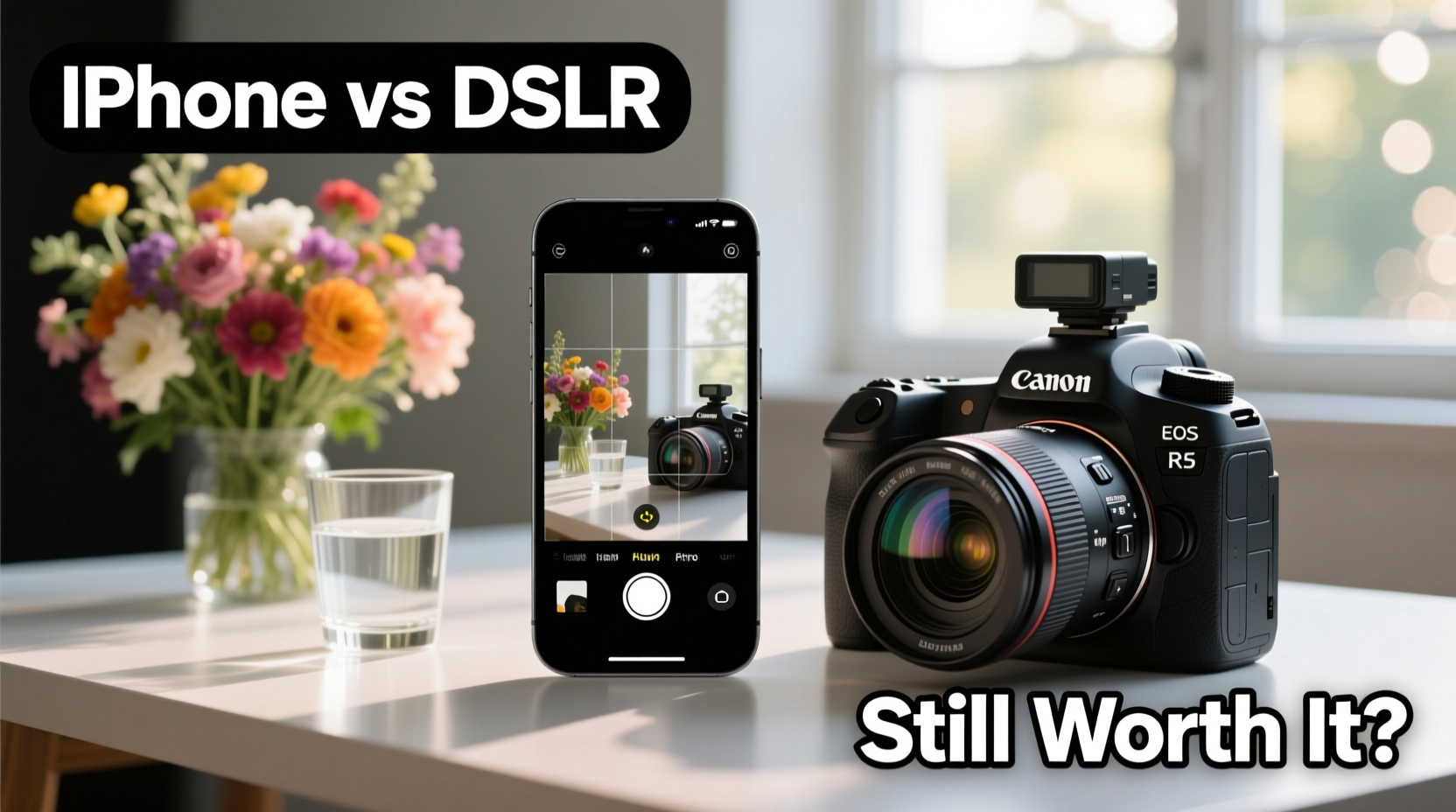
Megapixels alone don’t define image quality. Sensor size, dynamic range, low-light performance, and lens quality play equally important roles. The iPhone’s 48MP main sensor is impressive, but its physical size is tiny—about 1/1.3 inches—compared to a full-frame DSLR sensor that can be over 70 times larger.
This difference becomes evident in challenging lighting. In high-contrast scenes, such as sunsets or indoor events with mixed lighting, DSLRs preserve more detail in shadows and highlights. Their superior dynamic range allows for greater flexibility in post-processing, especially when shooting in RAW format.
Low-light performance remains a major differentiator. DSLRs with large sensors and fast lenses (e.g., f/1.4 or f/1.8) capture significantly more light, producing cleaner images with less noise. While iPhones use advanced software stacking to simulate longer exposures, they still struggle with motion blur and color accuracy in dim environments.
Lens Flexibility and Optical Control
One of the most significant limitations of iPhone photography is fixed optics. The iPhone offers multiple lenses—ultra-wide, wide, and telephoto—but all are compact, fixed focal lengths with limited aperture control. You can’t swap lenses based on creative needs.
In contrast, DSLRs support interchangeable lenses. A wildlife photographer might use a 600mm super-telephoto, while a portrait artist chooses a 85mm f/1.2 for creamy bokeh. This optical versatility enables precise control over perspective, depth of field, and compression—elements essential to professional visual storytelling.
| Feature | iPhone Camera | DSLR/Mirrorless |
|---|---|---|
| Sensor Size | ~1/1.3\" (main) | APS-C to Full Frame |
| Interchangeable Lenses | No | Yes |
| Max Aperture Control | Limited (software-based depth) | Fully manual (e.g., f/1.2–f/22) |
| Zoom Type | Digital + minor optical | True optical zoom via lens |
| RAW Support | ProRAW (limited) | Full RAW across all settings |
Workflow and Professional Integration
For professionals, a camera isn’t just about taking pictures—it’s part of a broader ecosystem. DSLRs integrate seamlessly with studio strobes, wireless triggers, external microphones, and professional-grade monitors. They offer reliable tethering to computers for live shooting during product photography or fashion sessions.
Smartphones, despite improvements, lack robust connectivity options. While you can use apps to trigger an iPhone remotely, syncing multiple devices or achieving perfect timing in a multi-camera setup is far more complex than with DSLRs using radio triggers or sync cables.
“Even with incredible phone cameras, I wouldn’t shoot a wedding or editorial campaign solely on an iPhone. The margin for error is too high.” — Sarah Lin, Professional Wedding Photographer
Battery life also favors DSLRs. A single DSLR battery can last hundreds of shots, while an iPhone’s battery depletes quickly when shooting in ProRAW or 4K, especially in cold weather. For long shoots, this becomes a logistical burden.
Real-World Example: Travel Photography in Morocco
Consider a travel photographer documenting a bustling market in Marrakech. Lighting shifts rapidly—from dark alleys to sun-drenched plazas. Vendors move quickly, and moments are fleeting.
An iPhone user benefits from instant sharing, lightweight gear, and excellent point-and-shoot automation. They can snap vibrant, well-exposed JPEGs and upload them directly to Instagram. However, when reviewing images later, they notice crushed shadows in backlit scenes and softness in cropped telephoto shots.
The DSLR user, equipped with a 24-70mm f/2.8 lens, captures every scene in RAW. They adjust ISO manually, use spot metering for tricky light, and achieve tack-sharp focus with phase-detection AF. Later, in Lightroom, they recover highlight details from a sunlit spice stall and print a 24x36” canvas without grain.
Both sets of photos tell the story, but only one offers the technical fidelity required for commercial licensing or large-format display.
When a DSLR Still Makes Sense
Despite the iPhone’s convenience, there are clear scenarios where a DSLR—or modern mirrorless camera—remains indispensable:
- Commercial and editorial work requiring print-ready resolution and color accuracy.
- Events and sports where burst shooting at 10+ fps with predictive autofocus is crucial.
- Portraits with shallow depth of field, where optical bokeh outperforms software simulation.
- Videography with professional grading needs, where log profiles (like Canon C-Log or Sony S-Log) provide maximum dynamic range.
- Creative control over shutter speed, aperture, and focus in manual modes.
Step-by-Step: Choosing the Right Tool for Your Needs
- Define your primary use case: Social media? Print exhibitions? YouTube videos? Family memories?
- Evaluate lighting conditions: Do you often shoot indoors, at night, or in mixed lighting?
- Assess editing needs: Do you want full control over RAW files, or are JPEGs sufficient?
- Consider workflow: Do you need to shoot hundreds of images in a day? Share instantly?
- Test before investing: Rent a DSLR for a weekend or borrow a friend’s kit to compare results.
FAQ
Can an iPhone replace a DSLR for real estate photography?
For basic listings, yes—especially with HDR and ultra-wide mode. But for luxury properties, a DSLR with a tilt-shift lens provides architectural accuracy, better dynamic range, and higher-resolution images that impress discerning clients.
Is learning DSLR settings worth the effort in 2024?
Absolutely. Understanding exposure, white balance, and focus gives you creative authority. Even if you primarily use your iPhone, knowing these principles improves every photo you take.
Do professional photographers still use smartphones?
Yes—many use iPhones for behind-the-scenes content, quick social media updates, or scouting locations. But for client deliverables, most rely on dedicated cameras for consistency and quality.
Conclusion: Tools, Not Trends
The iPhone camera is a marvel of engineering—a pocket-sized device that outperforms many standalone cameras from a decade ago. For everyday photography, content creation, and mobile-first workflows, it’s more than capable.
But professional cameras aren’t obsolete. They offer unmatched optical quality, creative control, and reliability under pressure. The choice isn’t about which is “better,” but which is right for your goals.
If you’re shooting for passion, convenience, or social engagement, the iPhone may be all you need. But if you’re pursuing photography as a craft or profession—where nuance, detail, and scalability matter—a DSLR or mirrorless system remains a worthy investment.




 浙公网安备
33010002000092号
浙公网安备
33010002000092号 浙B2-20120091-4
Comments
No comments yet. Why don't you start the discussion?