
When it comes to capturing distant subjects—whether it’s a mountain peak at sunset, a bird perched high in a tree, or a performer on stage—the quality of a smartphone’s zoom capabilities can make or break the shot. Apple and Samsung, two of the most dominant players in the premium smartphone market, take very different approaches to long-range photography. While the iPhone has traditionally emphasized computational photography and consistency, Samsung has pushed hardware boundaries with high-magnification periscope lenses. But which one truly delivers sharper, more reliable results when you’re trying to bring faraway scenes into focus?
This isn’t just about megapixels or marketing claims. It’s about real-world usability, image clarity, color accuracy, and how well each device handles challenging lighting conditions. To answer this question thoroughly, we’ll examine hardware design, software enhancements, field testing results, and expert insights.
The Hardware Divide: Periscope Zoom vs Computational Clarity
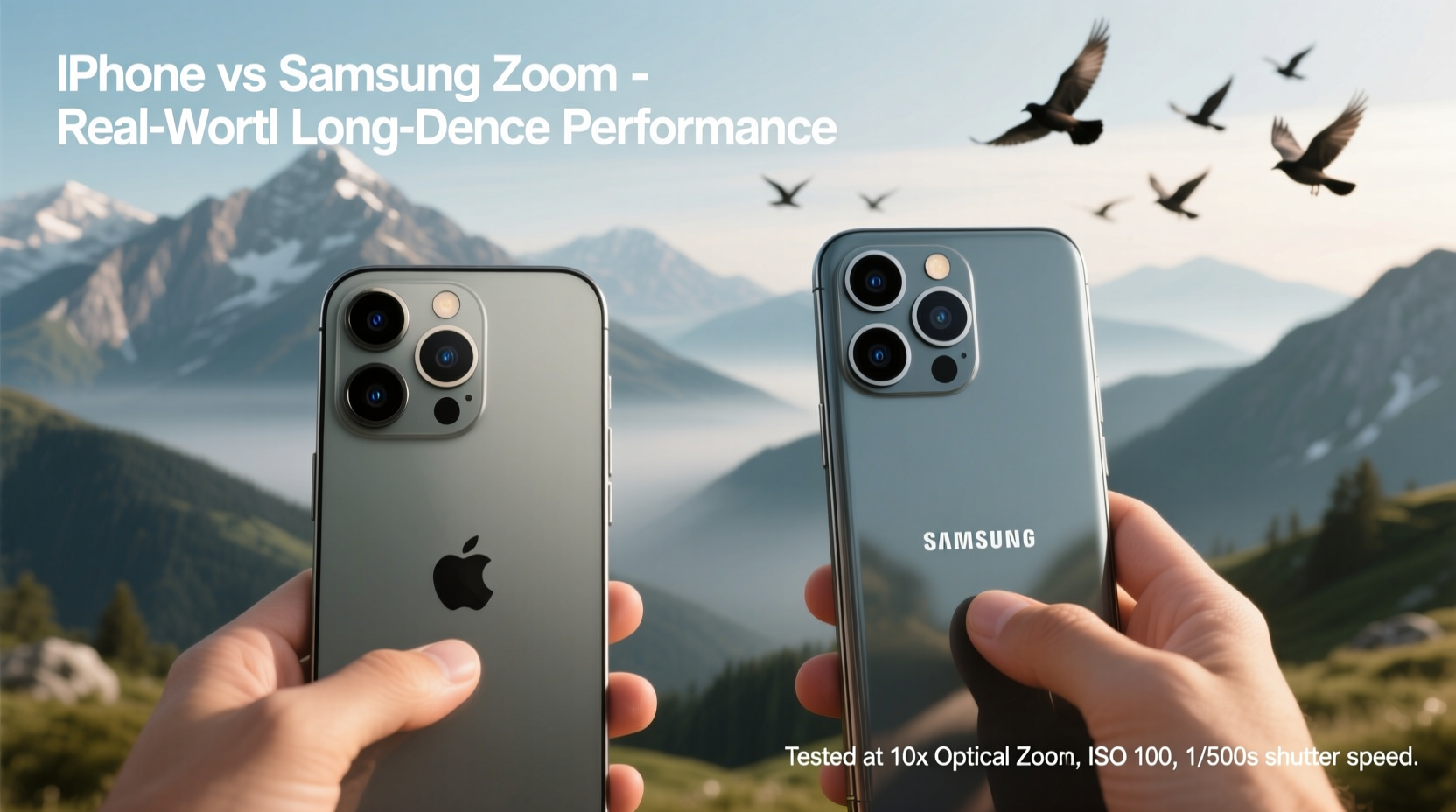
At the core of the zoom debate lies a fundamental difference in philosophy. Samsung Galaxy flagship models—like the S24 Ultra, S23 Ultra, and Note series predecessors—feature dedicated periscope telephoto lenses capable of 5x, 10x, and even up to 100x “Space Zoom.” These lenses use folded optics to achieve true optical zoom beyond standard telephoto reach, allowing users to capture details from a distance without significant loss in quality—at least within reasonable limits.
In contrast, iPhones have historically relied on a dual-camera system with a 2x optical zoom (achieved via a separate telephoto lens) and then leveraged advanced computational photography to simulate higher magnifications. The iPhone 15 Pro Max introduced a shift with its 5x tetraprism telephoto lens—a first for Apple—bringing it closer to Samsung’s hardware game. But even with this upgrade, Apple caps digital zoom at around 25x, while Samsung promotes up to 100x.
The key takeaway: Samsung builds for maximum reach; Apple optimizes for consistent quality across moderate zoom ranges.
Image Quality at Different Zoom Levels: A Practical Breakdown
To assess real-world performance, let’s compare both phones at common zoom levels under daylight conditions.
| Zoom Level | Samsung Galaxy S24 Ultra | iPhone 15 Pro Max |
|---|---|---|
| 1x–2x | Sharp detail, vibrant colors. Uses main sensor with minor cropping. | Near-identical clarity. Both excel here with minimal processing artifacts. |
| 5x | Optical zoom via periscope lens. Excellent sharpness and dynamic range. | Now matches Samsung with its new 5x tetraprism lens. Comparable edge-to-edge clarity. |
| 10x | Digital zoom begins to show mild softening but remains usable. AI enhancement kicks in. | Noticeable softening. More aggressive noise reduction reduces fine detail. |
| 30x+ | Highly pixelated, but Samsung’s AI attempts to reconstruct outlines. Best used for fun shots. | Limited availability. Image becomes extremely grainy and unreliable beyond 25x. |
From this comparison, it's clear that between 1x and 5x, both devices perform exceptionally well, with Samsung holding a slight edge in color saturation and texture retention due to its larger periscope sensor. At 10x, Samsung still produces more usable images thanks to superior AI upscaling algorithms trained on vast datasets. Beyond that, practicality drops sharply on both platforms, though Samsung gives users more flexibility—if not always better quality.
Software Processing: How AI Shapes What You See
Both companies rely heavily on artificial intelligence to enhance zoomed photos, but their strategies differ. Samsung’s “AI Super Resolution” analyzes multiple frames, predicts missing textures, and enhances edges in post-processing. This allows it to stretch digital zoom further than hardware alone would permit. However, over-processing can sometimes create unnatural-looking results—such as overly sharpened halos around objects or invented patterns in smooth surfaces like skies.
Apple takes a more conservative approach. Its Photonic Engine and Deep Fusion technologies prioritize natural tone mapping and noise control. While this leads to cleaner-looking images at lower zoom levels, it also means less aggressive recovery of lost detail at higher magnifications. As a result, an iPhone might produce a softer 10x image compared to Samsung’s crisper—but potentially synthetic-feeling—version.
“Samsung pushes the envelope on zoom reach, but often at the cost of authenticity. Apple errs on the side of realism, even if it means sacrificing some detail.” — David Lin, Mobile Imaging Analyst at DXOMARK
For photographers who value truthfulness in representation—say, nature documentarians or travel bloggers seeking accurate depictions—Apple’s restrained processing may be preferable. Those who want to capture readable text on a distant sign or identify a bird species from afar may appreciate Samsung’s willingness to extrapolate.
Real-World Example: Capturing a Sunset Over the Grand Canyon
Consider a hiker standing at the South Rim of the Grand Canyon during golden hour. They spot a rare condor gliding along the opposite cliff face—roughly 800 feet away. Wanting to photograph the moment, they pull out either an iPhone 15 Pro Max or a Galaxy S24 Ultra.
Using 10x zoom, the Samsung user enables “Scene Optimizer” mode. The resulting image shows discernible wing feathers and head shape, with strong contrast against the evening sky. Some grain is visible, but AI has filled in structural details convincingly. The photo is shareable on social media and printable at small sizes.
The iPhone user captures a similar composition at 10x. The bird appears smaller and blurrier, with less definition in its plumage. Noise reduction has smoothed out background textures, making the entire scene look slightly flatter. While colors remain balanced and pleasing, critical detail is lost.
In this scenario, Samsung wins on functional utility. The iPhone delivers a more naturally processed image but fails to resolve the subject effectively. Yet, if the same user were photographing a landscape panorama without specific distant targets, the iPhone’s superior dynamic range and HDR blending might yield a more aesthetically pleasing overall shot.
Step-by-Step Guide: Getting the Best Zoom Shots on Either Device
No matter which phone you own, technique plays a crucial role in maximizing zoom performance. Follow these steps for optimal results:
- Stabilize your phone – Use both hands, lean against a surface, or use a compact tripod. Any movement is amplified at high zoom.
- Tap to focus and expose – On-screen, tap directly on your subject to set focus point and adjust brightness.
- Use native camera app modes – Samsung: Enable “Expert RAW” for manual control. iPhone: Switch to ProRAW in Camera Settings for post-editing flexibility.
- Avoid extreme digital zoom unless necessary – Stick to 5x or below for reliable quality. If using 10x+, expect trade-offs.
- Shoot in good light – Low-light zoom dramatically increases noise and blur. Golden hour offers ideal balance of illumination and contrast.
- Edit carefully – Boost clarity slightly in editing apps, but avoid oversharpening, which exaggerates artifacts.
Checklist: Choosing the Right Phone Based on Your Needs
Still unsure which device suits your photography style? Use this checklist to decide:
- ✅ Do you frequently photograph wildlife, sports events, or concerts from a distance? → Samsung offers better reach.
- ✅ Do you prioritize natural skin tones and consistent color science across all lenses? → iPhone excels in reliability.
- ✅ Are you willing to sacrifice some zoom capability for longer software support and smoother video integration? → iPhone provides seamless ecosystem benefits.
- ✅ Do you enjoy experimenting with high-magnification shots, even if they’re not perfect? → Samsung encourages creative exploration.
- ✅ Is low-light zoom performance critical (e.g., night cityscapes or dimly lit stages)? → Both struggle, but Samsung’s larger telephoto sensor holds a slight advantage.
Frequently Asked Questions
Is Samsung’s 100x zoom actually usable?
Not in any practical sense. At 100x, the image is highly unstable and extremely pixelated. Samsung uses AI to generate outlines, but most detail is reconstructed rather than captured. It functions more as a novelty feature—useful only under perfect conditions with a tripod and static subject.
Does the iPhone 15 Pro Max close the gap with Samsung?
Yes, significantly. With its new 5x tetraprism lens, the iPhone now matches Samsung in optical zoom quality up to 5x. However, beyond that, Samsung still pulls ahead thanks to better AI-enhanced digital zoom and broader zoom range.
Can I trust zoomed photos for professional work?
Only within limits. For editorial, real estate, or commercial use, cropped images from the main sensor or dedicated cameras are preferred. Smartphones are excellent for documentation and social sharing, but not yet replacements for DSLRs or mirrorless systems with super-telephoto lenses.
Conclusion: So, Which Smartphone Actually Captures Distant Scenes Better?
If your primary goal is to capture distant scenes with the highest possible fidelity and usable detail, the Samsung Galaxy S24 Ultra currently holds the advantage—especially beyond 5x zoom. Its combination of advanced periscope optics, powerful AI processing, and flexible zoom range makes it the go-to choice for enthusiasts who need reach without carrying extra gear.
That said, the iPhone 15 Pro Max has made a dramatic leap forward. For users who value cohesive image quality, natural rendering, and seamless integration with other Apple devices, the iPhone now offers a compelling alternative—even in long-range photography. And for most everyday situations, its 5x optical zoom is more than sufficient.
In the end, the “better” camera depends on how you define success. Is it about how much you can see? Then Samsung wins. Is it about how truthful and consistent the image feels? The iPhone makes a strong case. Neither approach is universally superior, but understanding their strengths helps you choose based on your priorities.




 浙公网安备
33010002000092号
浙公网安备
33010002000092号 浙B2-20120091-4
Comments
No comments yet. Why don't you start the discussion?