
Choosing the right iPhone case isn’t just about aesthetics—it’s a balance between protection, usability, and personal preference. In recent years, two dominant styles have emerged: the full-body case and the minimalist silicone bumper. While both promise to safeguard your device, they do so in fundamentally different ways. The debate isn't merely about thickness or design; it's about whether comprehensive coverage is necessary—or excessive—when a slimmer, more flexible alternative already performs well under everyday conditions.
The question remains: Is investing in a full-body case an act of prudent caution, or is it over-engineering for risks that rarely materialize? And can a silicone bumper genuinely offer enough defense against drops, scratches, and daily wear?
Understanding the Two Contenders
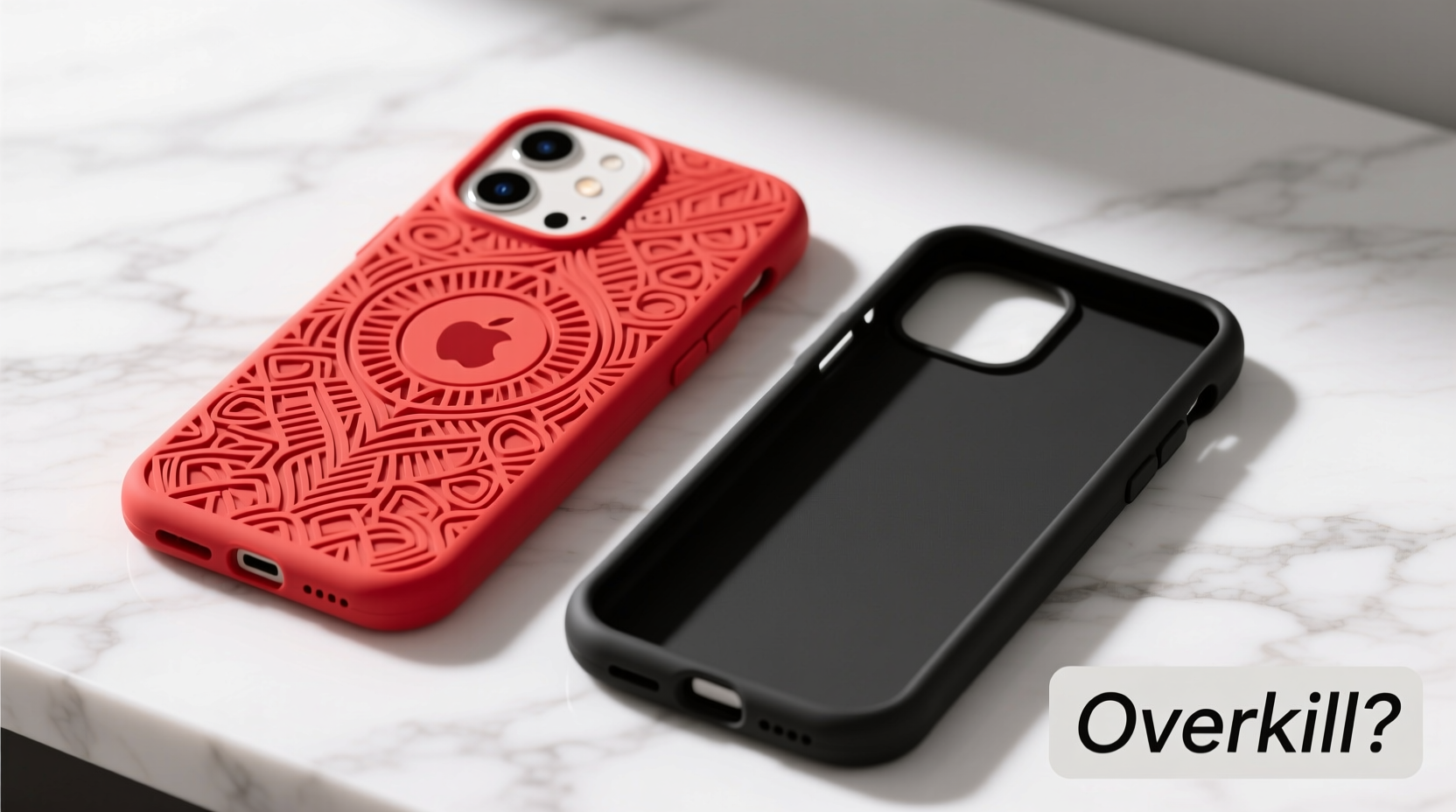
Before diving into the debate, it’s essential to clarify what each type of case actually provides.
A full-body case typically wraps around the entire phone, covering not only the sides and corners but also extending above the screen and camera module. These cases often use rigid polycarbonate or TPU (thermoplastic polyurethane) with reinforced edges and sometimes include built-in screen protectors or kickstands. Brands like OtterBox, UAG, and Spigen are known for this category, marketing them as “military-grade” or “drop-tested up to 10 feet.”
In contrast, a silicone bumper case focuses on protecting only the frame and corners of the iPhone. It leaves the back exposed or lightly cushioned and doesn’t obstruct the screen or camera lenses. Apple’s own Silicone Case with MagSafe falls into this category—flexible, form-fitting, and designed to complement the phone’s native design rather than conceal it.
Protection vs. Practicality: A Realistic Assessment
Full-body cases excel in high-risk environments. Construction workers, outdoor adventurers, or parents juggling kids and phones may benefit from maximum coverage. These cases absorb impact across all surfaces and often feature raised bezels to prevent direct contact between glass and surface during drops.
However, for the average user—someone who carries their phone in a bag, uses it at a desk, or pockets it carefully—the level of protection offered by a full-body case might exceed actual need. Studies from insurance providers like Asurion suggest that while 1 in 3 smartphone owners experience damage annually, most incidents involve minor drops (under 3 feet), screen cracks, or liquid exposure—not catastrophic multi-surface impacts.
Silicone bumpers address the most vulnerable parts: the edges and corners, where iPhones naturally land during tumbles. High-quality silicone has shock-absorbing properties and deforms slightly on impact, dissipating energy. When combined with modern iPhone build quality—including Ceramic Shield fronts and aerospace-grade aluminum—this level of defense proves sufficient for daily life.
“Most consumers don’t need battlefield-level protection. For typical usage, edge-focused defense with responsive materials like silicone strikes the ideal balance.” — Dr. Lena Torres, Materials Engineer at Mobile Safety Labs
Comparative Breakdown: Full-Body vs. Bumper Case
| Feature | Full-Body Case | Silicone Bumper Case |
|---|---|---|
| DROP PROTECTION | Excellent (tested up to 10+ ft) | Good (effective up to 4–5 ft) |
| SCRATCH RESISTANCE | High (covers back and sides) | Moderate (back often exposed) |
| WEIGHT & BULK | Heavy, adds noticeable thickness | Lightweight, nearly invisible |
| HAPTIC FEEDBACK | Buttons feel muffled or stiff | Responsive, tactile buttons |
| MAGSAFE COMPATIBILITY | Often disrupted unless specifically designed | Preserved (especially Apple-certified) |
| COST | $40–$80+ | $35–$50 |
| AESTHETICS | Covers branding, alters look | Enhances design, color-matched options |
When a Full-Body Case Makes Sense
There are legitimate scenarios where going all-in on protection pays off:
- Workplace hazards: Jobs involving heights, machinery, or frequent movement increase drop risk.
- Outdoor activities: Hiking, biking, or traveling on rugged terrain justify extra layers.
- Kids or pets: Households with active children or animals often see accidental throws or stomps.
- Previous repair history: If your iPhone has been fixed once, owners tend to become more protective.
But for office workers, students, or commuters navigating predictable routines, the incremental benefit diminishes. Overprotection can introduce new problems—like reduced portability, difficulty cleaning dust from crevices, or interference with wireless charging alignment.
Mini Case Study: Sarah, Urban Professional
Sarah, a 32-year-old graphic designer in Seattle, switched from an OtterBox Defender to Apple’s MagSafe Silicone Case after six months of frustration. “I was tired of my phone feeling like a brick in my purse,” she said. “I dropped it twice—once from waist height onto carpet, another time off my desk onto hardwood. Both times, no damage. The silicone absorbed the shock, and I love how thin it feels now.” Her decision reflects a growing trend among city dwellers who value elegance and efficiency without sacrificing baseline durability.
Step-by-Step Guide: Choosing Your Ideal Case
- Assess your lifestyle: Do you work in dynamic environments or mostly indoors?
- Review past damage: Have you cracked screens or bent frames before?
- Test grip comfort: Hold both case types—does one make handling easier?
- Evaluate tech compatibility: Does your case support MagSafe, Qi2, or lens clearance?
- Check hygiene needs: Can you clean the case easily? Silicone wipes down faster than textured hard shells.
- Decide on aesthetics: Do you want your iPhone’s finish visible, or are you okay with full coverage?
- Budget accordingly: Premium full-body cases cost significantly more—ask if the ROI justifies it.
FAQ
Can a silicone bumper survive a 6-foot drop?
It depends on the landing angle and surface. Lab tests show mixed results: concrete usually causes damage, but grass or wood may result in survival, especially if corners hit first. Most manufacturers rate silicone bumpers for 4–5 foot drops under controlled conditions.
Do full-body cases yellow over time?
Yes, especially clear models. UV exposure and skin oils degrade TPU, leading to discoloration within 6–12 months. Silicone bumpers, particularly matte finishes, resist yellowing far better.
Are bumper cases compatible with screen protectors?
Absolutely. In fact, combining a bumper with a high-adhesion tempered glass protector creates a balanced defense system—edge shock absorption plus front-face resilience.
Conclusion: Right-Sizing Protection to Your Life
The notion that more coverage equals better protection is intuitive but not universally true. In many cases, a full-body case represents overkill—an investment in guarding against worst-case scenarios that statistically few users encounter. Meanwhile, modern silicone bumpers leverage advanced materials science to deliver targeted, effective defense without compromising the iPhone’s design integrity or functionality.
Rather than defaulting to maximum armor, consider calibrating your choice to your actual habits. For most people, a well-designed silicone bumper offers the sweet spot between safety, convenience, and style. It respects the engineering Apple put into the device while adding just enough reinforcement to handle real-world slips and bumps.




 浙公网安备
33010002000092号
浙公网安备
33010002000092号 浙B2-20120091-4
Comments
No comments yet. Why don't you start the discussion?