
Every iPhone owner faces a simple but critical decision: how to protect their investment. With sleek designs and premium materials, modern iPhones are both beautiful and fragile. The debate between using a case, a screen protector, or both is more than just about aesthetics—it’s about long-term durability, functionality, and cost savings. While some users swear by minimalist setups, others armor their phones like battle-ready devices. But can you actually rely on just one form of protection without risking costly damage?
The short answer: it depends. But understanding the distinct roles each plays—and the real-world scenarios they guard against—can help you make an informed choice.
The Role of an iPhone Case
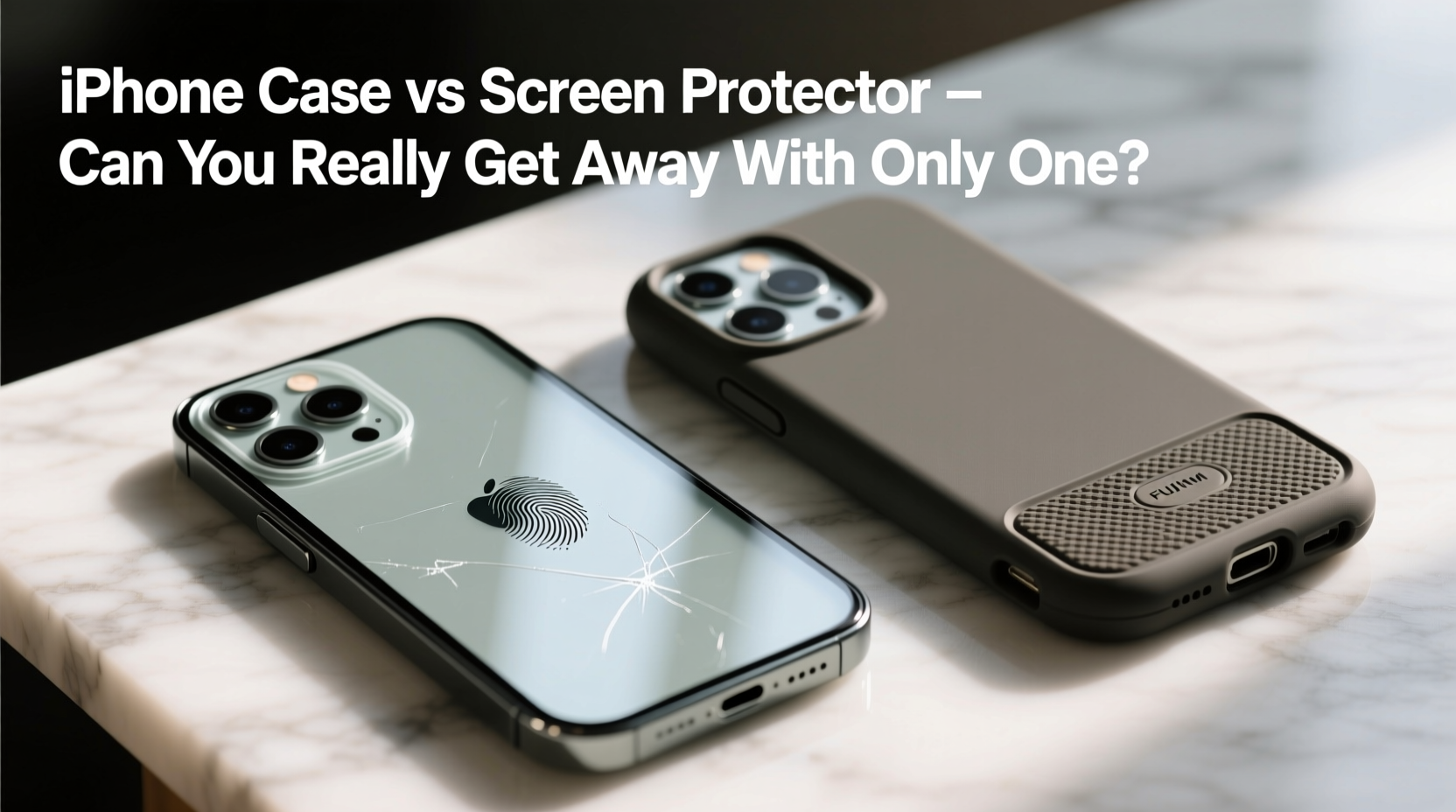
An iPhone case primarily protects the body and edges of the phone. Most drops occur from hand-level or pocket height, often resulting in impacts to the corners, sides, or back panel. Cases absorb shock through materials like TPU (thermoplastic polyurethane), silicone, or polycarbonate. Premium options may include air cushions or reinforced corners for added drop resistance.
Beyond impact protection, cases also guard against scratches from keys, coins, or rough surfaces. They improve grip, reducing slipperiness—a common cause of accidental drops. Some even offer functional upgrades like built-in wallets, kickstands, or MagSafe compatibility.
The Purpose of a Screen Protector
The screen is the most vulnerable and expensive part of any smartphone. A cracked display not only hampers usability but can cost hundreds to repair. This is where screen protectors come in. Typically made from tempered glass or plastic film, they act as a sacrificial layer that takes the brunt of scratches, scuffs, and minor impacts.
Tempered glass protectors are the most popular, offering near-native touch sensitivity and strong resistance to shattering. Even if they crack, they often hold together, preventing sharp shards and maintaining usability until replacement. Film-based protectors, while thinner and less obtrusive, offer less impact absorption but excel at resisting everyday abrasions.
Apple’s Ceramic Shield technology has improved front-screen durability, but it doesn’t make the display immune to cracks—especially from angled drops onto concrete or tile.
“Even with advanced glass tech, real-world testing shows that 70% of screen failures occur from corner or edge impacts—exactly where screen protectors help most.” — Dr. Lena Park, Materials Scientist at Mobile Durability Labs
Can You Skip One? Real-World Scenarios
Let’s consider two common user types:
- The Minimalist: Prefers the bare-metal feel of the iPhone, values design purity, and avoids accessories unless absolutely necessary.
- The Pragmatist: Prioritizes longevity and resale value, willing to trade slight bulk for peace of mind.
A minimalist might argue that careful handling eliminates the need for protection. But statistics tell a different story. According to a 2023 consumer report, over 60% of iPhone owners experience at least one drop-related incident within the first year of ownership. Of those, nearly half result in visible damage—most commonly cracked screens or dented frames.
In controlled lab tests, iPhones dropped from 4 feet onto concrete had a 78% chance of screen fracture when unprotected—even with Ceramic Shield. Adding a quality screen protector reduced that risk to 32%. With both a case and protector, failure rates dropped to under 15%.
Mini Case Study: Sarah’s Commute
Sarah, a graphic designer in Chicago, uses her iPhone daily for client calls, photo editing, and navigation. She opted for a slim leather case but skipped the screen protector, believing Apple’s build quality was sufficient. After three months, she dropped her phone while exiting the L train. The device landed screen-down on concrete. Result: a spiderweb crack across the display. Repair cost: $279.
She later switched to a rugged case with full-edge coverage and a tempered glass protector. Six months later, after another fall—from higher up, this time—the screen protector cracked, but the underlying display remained intact. Replacement cost: $15.
This illustrates a key principle: protection isn’t about preventing every drop. It’s about minimizing consequences when accidents happen.
Comparison: Protection Trade-Offs
| Protection Type | Pros | Cons | Best For |
|---|---|---|---|
| iPhone Case Only | Protects body, improves grip, prevents back/corner damage | Screen remains exposed to direct impact and scratches | Users who handle phones carefully, use pouches |
| Screen Protector Only | Shields display, maintains slim profile, preserves original look | No defense against body impacts; phone can still crack internally | Minimalists who prioritize screen clarity |
| Case + Protector | Full coverage, highest drop survival rate, better resale value | Slight bulk, potential interference with wireless charging | Most users, especially parents, travelers, outdoor workers |
When You Might Get Away With Just One
There are exceptions. If you consistently use your phone on tables, avoid carrying it loosely, or store it in a padded bag, your risk profile is lower. In such cases, prioritizing a screen protector makes sense—since the display is the most expensive component to fix.
Likewise, some rugged cases integrate screen protection via lip overhangs or built-in shields. These can reduce the need for a separate film or glass layer, though they’re less effective against direct surface scratches.
Step-by-Step: Building Your Protection Strategy
- Assess your lifestyle: Do you work outdoors, commute heavily, or have kids? Higher activity = greater need for full protection.
- Evaluate your environment: Hard floors, gravel, or frequent travel increase risk.
- Set a budget: Factor in potential repair costs—not just accessory prices.
- Choose a case type: Slim for style, rugged for durability, wallet-style for convenience.
- Pick a screen protector: Tempered glass for impact, anti-glare film for outdoor use.
- Install correctly: Clean the screen thoroughly and align precisely to avoid bubbles or weak adhesion.
- Maintain regularly: Replace cracked protectors immediately; clean case interiors to prevent grit buildup.
Frequently Asked Questions
Does Apple recommend using a case and screen protector?
Apple does not officially require either, but its warranty excludes accidental damage. Support pages suggest using “a protective case” to help avoid damage, implicitly acknowledging the value of protection despite not selling their own comprehensive solutions.
Won’t a case and protector ruin my iPhone’s design?
Some people believe so, but many modern options are ultra-slim, transparent, and precision-engineered to preserve aesthetics. Brands like Spigen, ESR, and UAG offer models that protect without overwhelming the device’s look.
Are cheap screen protectors worth it?
Low-cost protectors often lack proper hardness ratings (measured in H, e.g., 9H) or oleophobic coatings. They may yellow, peel, or fail under stress. Investing $10–$20 in a reputable brand ensures better clarity, responsiveness, and durability.
Final Verdict: Don’t Gamble With Your Device
You can technically get away with only one—either a case or a screen protector—but doing so increases risk disproportionately to the savings. Think of it like insurance: you hope you never need it, but when you do, you’ll regret skipping it.
The screen protector defends your interface—the part you interact with constantly. The case guards the structure—preventing internal damage, antenna issues, and battery strain from impacts. Together, they form a complete defense system.
If budget or aesthetics are concerns, prioritize a high-quality screen protector and pair it with a minimal case that offers corner cushioning. Avoid going completely bare, especially during the first year when resale value matters most.




 浙公网安备
33010002000092号
浙公网安备
33010002000092号 浙B2-20120091-4
Comments
No comments yet. Why don't you start the discussion?