
Carrying an iPhone in your pocket or bag seems simple—until you start thinking about what else you need on a daily basis. Keys, phone, wallet. Three essentials that often clutter pockets and bags. Enter the wallet case: a hybrid solution promising convenience by combining protection and storage. But at what cost? The added thickness, weight, and rigidity can make your sleek smartphone feel more like a mini-briefcase. So, is the trade-off worth it?
This isn’t just about aesthetics or comfort—it’s about lifestyle alignment. Whether you’re a minimalist who hates carrying extras or someone who frequently forgets their wallet at home, the decision between a standard iPhone case and a wallet case comes down to personal priorities. Let’s explore the realities behind the bulk and help you determine if a wallet case fits your life.
The Anatomy of Bulk: What Makes Wallet Cases Thicker
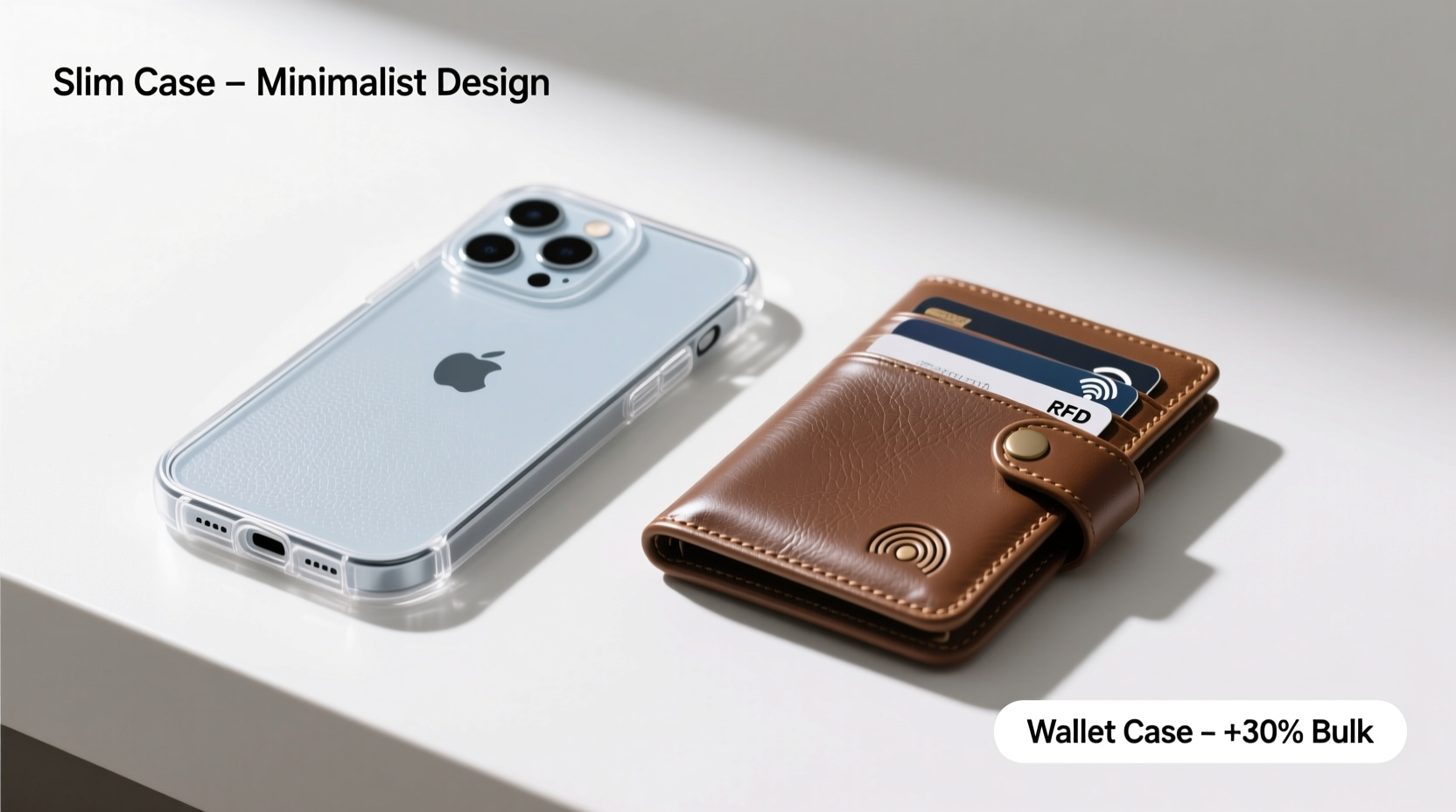
A traditional iPhone case serves one primary function: protect your device from drops, scratches, and minor impacts. Most are designed with slim profiles using materials like TPU, silicone, or polycarbonate. In contrast, a wallet case integrates card slots and sometimes cash compartments directly into the back or flip cover. This integration inevitably increases volume.
On average, a standard protective case adds 1–2mm of thickness. A wallet case, depending on design and capacity, can add anywhere from 4mm to over 10mm—especially when loaded with cards. When combined with the iPhone’s native depth (e.g., 7.85mm for the iPhone 15), this pushes total thickness beyond 18mm in some models.
The added mass affects not only how the phone feels in hand but also how it fits in pockets, especially slimmer jeans or tight-fitting trousers. Users report increased strain on pocket seams and discomfort during prolonged sitting. Moreover, the uneven weight distribution—especially with flip-style wallets—can make one-handed use awkward.
Convenience vs. Comfort: The Daily Trade-Off
The strongest argument for wallet cases is convenience. For people who regularly leave their wallets at home or misplace them, having ID, credit cards, and phone in one place reduces friction. Commuters, cyclists, gym-goers, and urban professionals often find value in eliminating the need for a separate wallet.
However, convenience has diminishing returns when physical comfort suffers. Try pulling a thick wallet case out of a back pocket while seated—it’s cumbersome. Try typing with one hand when the phone wobbles due to a protruding card slot—it’s inefficient. And try sliding it into a crowded coat pocket next to keys and a transit pass—it might not fit.
There’s also the risk of damage. Cards stored in poorly designed cases can warp or demagnetize due to proximity to the iPhone’s NFC chip or MagSafe components. Some users report issues with Apple Pay failing after long-term use in certain wallet cases, likely due to interference.
“Hybrid accessories solve real problems, but they rarely do so without compromise. The key is identifying which compromises you’re willing to live with.” — Daniel Reeves, Tech Lifestyle Analyst at Mobile Trends Report
Comparison Table: Standard Case vs. Wallet Case
| Feature | Standard iPhone Case | Wallet Case |
|---|---|---|
| Thickness (average) | 1–2mm added | 4–10mm added (varies with cards) |
| Weight Increase | +10–20g | +40–80g (with cards) |
| Pocket Fit | Fits most pants and jacket pockets | May stretch or bulge pockets; harder to remove |
| Card Capacity | None | Typically 2–4 cards; some hold cash |
| Dropping Risk | Low – secure grip | Moderate – bulkier, less balanced |
| Apple Pay Compatibility | No interference | Risk of signal blockage or card damage over time |
| Lifestyle Fit | Minimalists, frequent pocket users | Those avoiding separate wallets, urban commuters |
Real-Life Scenario: The Commuter’s Dilemma
Take Mark, a 32-year-old software developer in Chicago. He walks 20 minutes to work each morning, rides the 'L' train, and often stops for coffee. Before switching to a wallet case, he carried a slim leather wallet in his front pocket and his iPhone in his jacket. On two occasions, he left his wallet at a café. After the second incident, he invested in a premium MagSafe-compatible wallet case.
At first, it felt liberating—no more forgotten wallets. But within weeks, he noticed new issues. His jacket pocket strained under the added thickness. Sitting during meetings, the phone dug into his thigh. Worse, after three months, one of his credit cards stopped working at contactless terminals. A customer service rep suggested magnetic interference from the phone.
He eventually reverted to a standard case and a compact bifold wallet. “I’d rather remember two things than risk losing functionality or damaging my cards,” he said. “The bulk wasn’t the main issue—it was the hidden costs.”
Step-by-Step Guide: Choosing the Right Option for You
Deciding between a standard case and a wallet case shouldn’t be arbitrary. Follow this practical timeline to assess your needs:
- Week 1: Track Your Habits – Note how often you use your wallet, where you carry it, and whether you’ve ever forgotten it. Awareness is the foundation of good decisions.
- Week 2: Test a Wallet Case (Borrow or Buy) – Try a reputable model for seven days. Pay attention to pocket fit, ease of access, and any discomfort during extended use.
- Week 3: Evaluate Performance – Did any cards malfunction? Was the phone harder to handle? Did you actually use the convenience, or did it complicate things?
- Week 4: Make Your Decision – Choose based on data, not impulse. If you used the wallet case less than three times, a standard case plus a minimalist wallet may be better.
Checklist: Questions to Ask Before Buying a Wallet Case
- Do I frequently forget or misplace my wallet?
- Am I willing to carry extra thickness and weight daily?
- Will I only store 2–3 essential cards to avoid bulging?
- Does the case support MagSafe without blocking signals?
- Is the material durable enough to withstand daily friction?
- Can I easily access cards without removing the phone?
- Have I tested it in my most common pockets (jeans, jacket, etc.)?
Frequently Asked Questions
Can wallet cases damage my credit cards?
Yes, especially if they lack RFID shielding or place cards too close to the iPhone’s internal magnets. Prolonged exposure can demagnetize strips or interfere with contactless chips. High-quality cases mitigate this with proper spacing and materials.
Are wallet cases compatible with Apple Pay?
Most are, but there can be conflicts. If your phone detects a card already in the case, it may default to that instead of your selected Apple Pay card. Some users disable the “Double-click Side Button” feature to prevent accidental triggers.
Do wallet cases affect wireless charging?
Thicker models or those with metal components may reduce charging efficiency. However, MagSafe-compatible wallet cases are designed to align properly and charge effectively—even with cards inside.
Final Thoughts: Is the Bulk Worth It?
The answer depends entirely on your definition of convenience. If losing your wallet disrupts your day and you value consolidation above all, a well-designed wallet case could be a smart investment. But if you prioritize ergonomics, device longevity, and seamless usability, a standard case paired with a slim wallet remains the superior choice for most.
Technology should simplify life—not create new frustrations. The extra bulk of a wallet case isn’t just physical; it carries hidden trade-offs in functionality, durability, and daily comfort. Before making a decision, ask yourself: Am I solving a real problem, or just adding complexity?




 浙公网安备
33010002000092号
浙公网安备
33010002000092号 浙B2-20120091-4
Comments
No comments yet. Why don't you start the discussion?