
If you've recently opened the iPhone Mail app and noticed that the trash can icon has disappeared—replaced by an “Archive” label—you’re not alone. This change often catches users off guard, especially if they're used to permanently deleting emails with a swipe. The good news is, this isn’t a software glitch or malfunction. It’s a deliberate setting within iOS that determines how your Mail app handles messages when you swipe left or tap the bottom action button. Understanding why this happens—and how to change it back—is essential for regaining control over your inbox.
How the iPhone Mail App Handles Swipe Actions
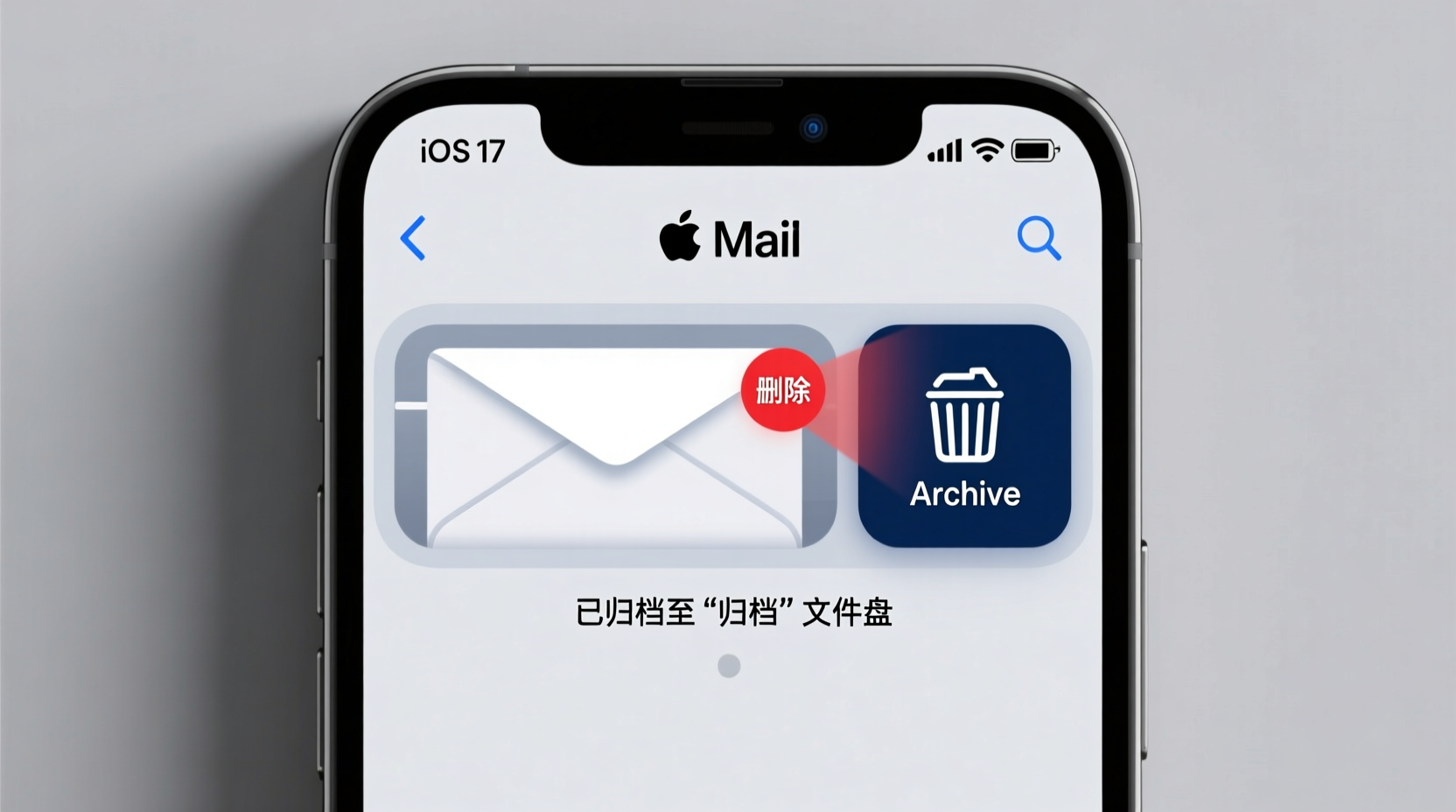
The iPhone Mail app uses swipe gestures to allow quick actions on individual messages. By default, swiping left on an email reveals two buttons: one for marking as unread or flagging, and another for either archiving or trashing, depending on your settings. The primary reason your trash button turned into an \"Archive\" option is due to a preference setting called “Trash Message” under Mail settings. When this is set to “Archive,” the trash icon disappears and is replaced with an archive function.
This behavior varies depending on your email provider (iCloud, Gmail, Outlook, etc.) and how your account syncs with IMAP or Exchange protocols. For example, Gmail users may find that “Archive” is the default behavior because it aligns with Gmail’s web interface philosophy—where archiving removes the message from the inbox but keeps it in the “All Mail” folder rather than sending it to Trash immediately.
Changing the Swipe Action Back to Trash
To restore the trash button functionality, you need to adjust a specific setting in the iPhone's Mail preferences. Follow these steps to make the change:
- Open the Settings app on your iPhone.
- Scroll down and tap Mail.
- Navigate to the Accounts section and select Default Account if needed.
- Tap Advanced at the bottom of the list.
- Look for the option labeled Move Discarded Messages Into.
- Select Trash instead of Archive.
Once changed, return to the Mail app and swipe left on any message. You should now see the trash can icon again, allowing you to delete emails directly. This setting applies globally across all your mailboxes unless specified otherwise per account.
Per-Account Settings for Greater Control
Some users manage multiple email accounts (e.g., work and personal) and may want different behaviors for each. iOS allows customization on a per-account basis:
- Go to Settings > Mail > Accounts.
- Select the specific email account (e.g., iCloud, Gmail).
- Tap Account, then scroll to Advanced.
- Adjust Deleted Mailbox and Move Discarded Messages Into independently.
This flexibility ensures that, for instance, your personal Gmail account archives messages while your corporate Exchange account deletes them permanently.
Differences Between Archive and Trash in iPhone Mail
Understanding what happens when you archive versus trash a message is crucial for managing storage and organization effectively.
| Action | What Happens | Email Location After Action | Recovery Options |
|---|---|---|---|
| Archive | Removes message from Inbox; stores elsewhere. | Saved in “All Mail” (Gmail), “Archive” mailbox (iCloud), or server-defined folder. | Searchable and retrievable via mailbox navigation. |
| Trash | Moves message to Trash folder; may auto-delete after 30 days. | Held in Trash for a period before permanent deletion. | Recoverable until manually emptied or auto-purged. |
“Many users don’t realize that archiving isn't deletion—it's reorganization. Knowing the difference helps prevent accidental data loss.” — Jordan Lee, Mobile Productivity Consultant
Real Example: Sarah’s Inbox Confusion
Sarah, a freelance designer, relies heavily on her iPhone to manage client communications. One morning, she swiped left on a spammy promotional email intending to delete it, only to find it gone from her inbox but still appearing in search results later. Confused, she assumed the app was malfunctioning. After some research, she discovered that her Gmail account had been set to “Archive” mode. She had unknowingly moved hundreds of old messages into the “All Mail” folder instead of deleting them. Once she adjusted her settings to use “Trash,” she regained confidence in her ability to clean up her inbox decisively.
This scenario highlights how subtle changes in default behavior can lead to confusion—even among experienced users. Taking a few minutes to review your Mail settings can prevent long-term clutter and misunderstanding.
Best Practices for Managing Email Actions
To maintain consistency and avoid surprises, consider adopting the following checklist:
- Verify the “Move Discarded Messages Into” setting is set to your preferred action.
- Review per-account settings if using multiple providers.
- Ensure your Trash mailbox is configured to auto-empty after 30 days.
- Familiarize yourself with where archived messages are stored for each account.
- Use filters or rules on the web version of your email service to automate cleanup.
Common Mistakes to Avoid
- Assuming all accounts behave the same: iCloud, Gmail, and Outlook handle archiving differently.
- Ignoring Trash retention policies: Some servers keep deleted items for weeks; others purge faster.
- Not backing up important emails: Once permanently deleted, recovery is nearly impossible.
Frequently Asked Questions
Does archiving save storage space on my iPhone?
No. Archiving simply moves the message out of your inbox. The email remains on the server and continues to occupy space just like any other stored message. To free up space, you must move messages to Trash and ensure they are permanently removed from the server.
Can I undo an archive action?
Yes. Open the “Mailboxes” list, navigate to “All Mail” (for Gmail) or “Archive” (for iCloud), locate the message, and move it back to your inbox or another folder. There’s no time limit, as long as the message hasn’t been deleted from the server.
Why does my iPhone show Archive even though I selected Trash?
This may occur if your email provider overrides local settings. For example, Gmail’s IMAP configuration sometimes prioritizes its own defaults. In such cases, go to Gmail’s web settings and confirm that “When I mark a message as deleted” is set to “Move to Trash.” Then restart the Mail app on your iPhone.
Final Thoughts and Recommended Action
The shift from a trash button to an archive function in the iPhone Mail app is not random—it reflects Apple’s effort to support diverse email workflows while giving users granular control. However, without awareness, this change can disrupt habits and create confusion about whether messages are truly gone.
Taking ownership of your email experience starts with reviewing your settings and aligning them with your workflow. Whether you value the safety net of archiving or the finality of deletion, the choice should be yours—not dictated by defaults.




 浙公网安备
33010002000092号
浙公网安备
33010002000092号 浙B2-20120091-4
Comments
No comments yet. Why don't you start the discussion?