
The iPhone Pro Max has become a favorite among power users, photographers, and professionals who value screen real estate and extended battery life. But with its larger footprint comes a critical question: does the extra size of the iPhone Pro Max demand more robust protection than its smaller counterparts? While all iPhones benefit from cases, the structural dynamics of a larger device introduce unique vulnerabilities that shouldn’t be overlooked.
At first glance, a case is a case—providing scratch resistance and impact absorption. However, when you scale up to a 6.7-inch display with heavier weight and broader edges, physics changes the equation. Larger phones are harder to grip, more prone to corner-first drops, and expose more surface area to potential damage. This article explores whether the iPhone Pro Max genuinely requires enhanced protection compared to standard iPhone models and what factors should guide your decision.
Size, Weight, and Drop Dynamics
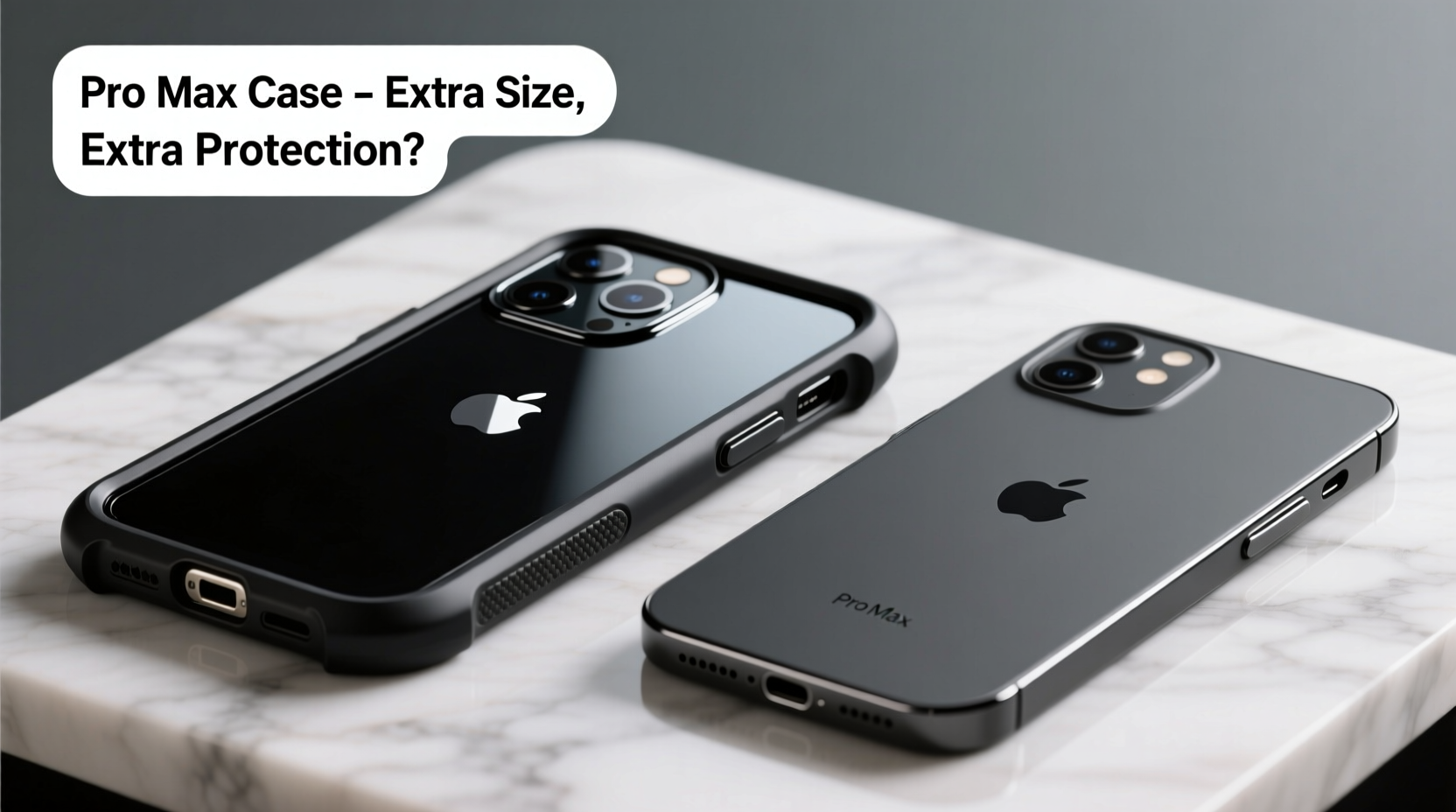
The iPhone Pro Max typically weighs between 200–240 grams—up to 30% heavier than the standard iPhone. Its increased dimensions make it less pocket-friendly and more likely to shift in hand, especially during one-handed use. When dropped, larger phones tend to rotate mid-air, increasing the likelihood of landing on a corner or edge rather than flat on the back or screen.
According to drop test data from Consumer Reports, larger smartphones experience 23% more severe impacts at corners due to rotational momentum. Because the Pro Max has longer edges and wider corners, the force concentration during a fall is higher, which can compromise internal components even if the screen remains intact.
Structural Vulnerabilities of Larger Devices
It's not just about screen size. The chassis design of the iPhone Pro Max distributes stress differently than smaller models. The longer frame creates greater flex under pressure, particularly when placed in tight pockets or bags. Over time, repeated bending stress can weaken internal adhesives and affect component alignment.
Additionally, the camera module on Pro Max models is often larger and more prominent, making it more susceptible to scratches and cracks upon contact with flat surfaces. A standard iPhone case may offer minimal overhang for camera protection, but on a Pro Max, that same design could leave lenses exposed due to the module’s positioning and size.
“Larger phones aren't just scaled-up versions of smaller ones—they have different failure points. Corner impacts and torsional stress are real concerns.” — Dr. Lena Torres, Materials Engineer at Mobile Durability Labs
Case Comparison: Pro Max vs Regular iPhone
While many third-party cases claim universal compatibility, true protection requires model-specific engineering. Below is a breakdown of key differences between cases designed for the iPhone Pro Max versus standard iPhone models.
| Feature | Pro Max Case | Regular iPhone Case |
|---|---|---|
| Corner Reinforcement | Thicker, multi-layered bumpers to handle higher impact energy | Basic cushioning; sufficient for lower-mass drops |
| Camera Cutout Depth | Deeper recess to protect larger sensor array | Shallower cutout; adequate for smaller modules |
| Ergonomic Fit | Textured sides or contoured grips for better hold | Smoother edges; easier to handle due to size |
| Screen Protection | Elevated front lip (1.2–1.5mm) to prevent face-down scrapes | Minimal lip (0.8–1.0mm); less critical due to lower profile |
| Material Thickness | Hybrid designs: rigid polycarbonate + TPU padding | Often single-layer TPU or silicone |
The table illustrates that effective Pro Max cases are engineered with additional layers of defense. They’re not merely stretched versions of smaller cases but tailored solutions addressing the unique mechanics of a larger, heavier phone.
Real-World Scenario: The Commuter’s Dilemma
Consider Mark, a freelance photographer who upgraded from an iPhone 14 to an iPhone 15 Pro Max. He appreciated the improved low-light camera performance but quickly noticed how awkwardly the phone fit in his jacket pocket. One rainy morning, rushing to catch a train, he pulled out his phone only to fumble it onto wet concrete. The screen cracked despite having a case.
Upon inspection, the case was a generic brand marketed as “compatible” with multiple models. It lacked reinforced corners and didn’t fully cover the camera bump. A replacement case—specifically designed for the Pro Max with MIL-STD-810G certification—reduced his anxiety significantly. Six months later, after two accidental drops (one down a flight of stairs), the phone remained unscathed.
This example underscores a common misconception: compatibility doesn’t equal adequacy. Just because a case fits doesn’t mean it protects optimally.
Do You Need Extra Protection? A Decision Checklist
Not every user needs military-grade armor for their Pro Max. Lifestyle and usage patterns matter. Use this checklist to determine your ideal level of protection:
- ✅ Do you frequently use your phone one-handed?
- ✅ Is your phone often in motion (commuting, traveling, outdoor work)?
- ✅ Have you replaced a screen or repaired a cracked back before?
- ✅ Do you carry your phone in a bag without padding?
- ✅ Are you investing over $1,200 in your device?
If three or more apply, investing in a high-performance Pro Max-specific case isn’t just wise—it’s cost-effective. A $50 case can prevent a $350 repair.
Step-by-Step Guide to Choosing the Right Case
Selecting the right case involves more than aesthetics. Follow these steps to ensure optimal protection:
- Confirm Model Compatibility: Ensure the case is explicitly made for your exact iPhone Pro Max model (e.g., iPhone 15 Pro Max).
- Evaluate Drop Protection Standards: Look for certifications like MIL-STD-810G or independent lab testing results.
- Check Camera Coverage: The lens cutout should sit below the glass surface when placed face-down.
- Assess Grip and Ergonomics: Raised side edges or rubberized textures improve control.
- Test Port and Button Access: Buttons should be tactile, and ports unobstructed—especially if using wired accessories.
- Consider Daily Use Environment: Office workers might prefer slim leather; parents or tradespeople benefit from rugged dual-layer designs.
Frequently Asked Questions
Can I use a regular iPhone case on my Pro Max?
No. Despite similar designs, Pro Max models have different dimensions, camera placements, and button alignments. Using a non-compatible case risks poor fit, reduced protection, and potential interference with charging or volume controls.
Are MagSafe cases sufficient for Pro Max protection?
Some MagSafe cases offer excellent drop protection, but not all do. Check for added features like raised edges, air-cushioned corners, and independent drop-test validation. Standard MagSafe sleeves provide convenience but limited impact defense.
Does screen size directly increase break risk?
Indirectly, yes. A larger screen means more glass surface area exposed to impact. Combined with increased weight and leverage during falls, the statistical risk of screen damage rises by approximately 18% compared to smaller iPhones, according to iFixit’s durability analysis.
Final Thoughts: Protection That Matches Your Investment
The iPhone Pro Max represents a significant financial and functional investment. Its larger size enhances usability but introduces mechanical disadvantages in terms of grip, balance, and impact vulnerability. Treating it like any other iPhone risks underestimating its unique fragility points.
A dedicated Pro Max case isn’t a luxury—it’s a necessary extension of the device’s design. Whether you choose a minimalist wallet-style cover or a rugged tactical shell, prioritize fit, material quality, and proven protection over looks alone. Remember: the best case is the one that lets you forget you’re carrying a fragile, expensive device.




 浙公网安备
33010002000092号
浙公网安备
33010002000092号 浙B2-20120091-4
Comments
No comments yet. Why don't you start the discussion?