
The iPhone XR, released in 2018, was a standout for its time—offering flagship-level performance at a more accessible price point. Fast forward to today, and the latest iPhone Pro Max models represent Apple’s pinnacle of innovation. But if you're still using an iPhone XR, is upgrading to a current Pro Max truly necessary? Or can the XR hold up in 2024 and beyond? The answer depends on your usage, expectations, and budget.
Performance and Longevity: Chipset Differences That Matter
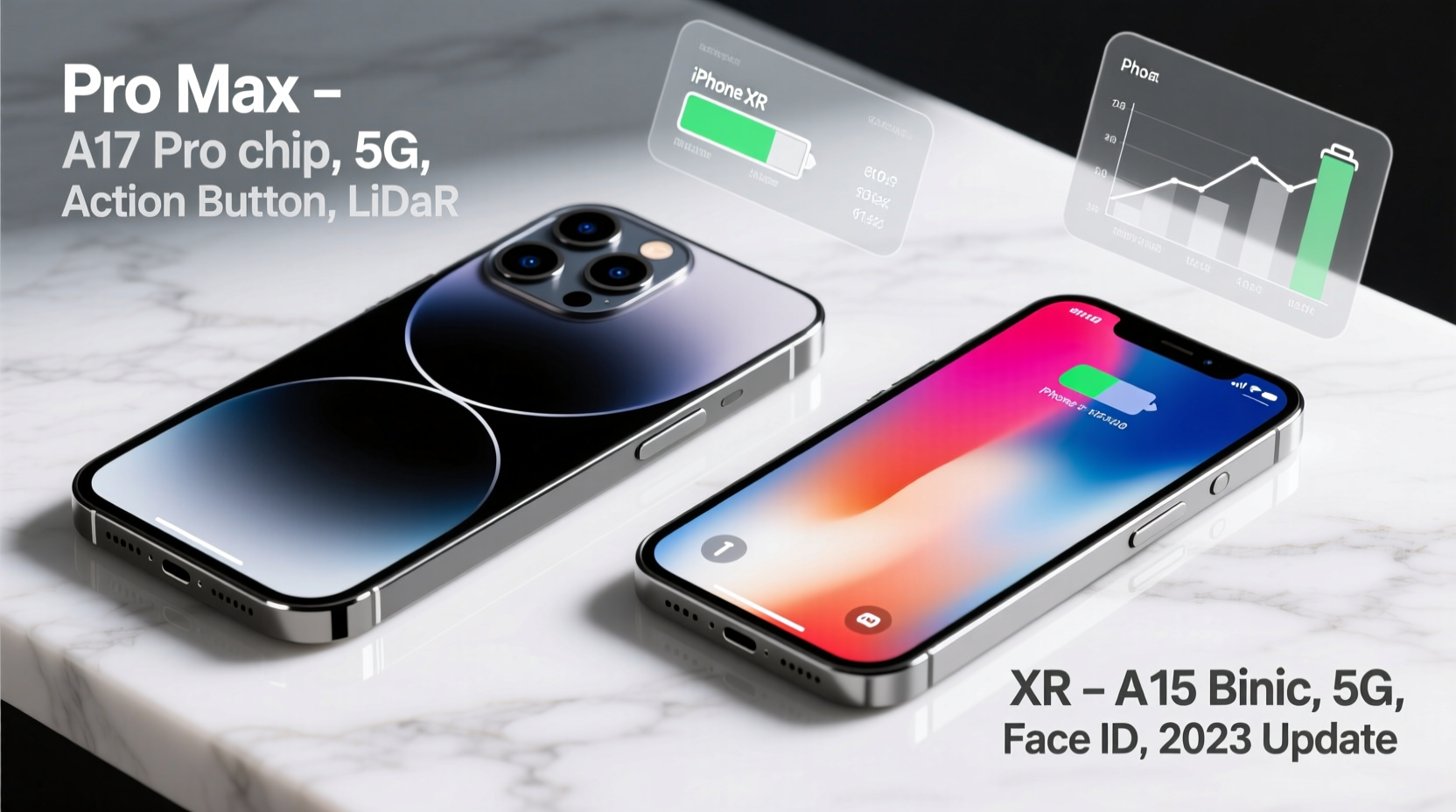
The heart of any smartphone is its processor. The iPhone XR runs on the A12 Bionic chip—a powerful system-on-a-chip for its era. At launch, it handled multitasking, gaming, and iOS updates with ease. However, newer iPhones feature the A17 Pro or A16 Bionic chips, depending on the model year. These processors deliver significantly faster CPU and GPU performance, better neural engine capabilities, and improved energy efficiency.
In real-world use, this means apps open quicker, games run smoother at higher frame rates, and AI-powered features like photo enhancement and voice processing are far more responsive. More importantly, future software support favors newer devices. While the XR still receives basic security updates, it may not support upcoming iOS versions beyond 2024–2025. In contrast, a new Pro Max will likely be supported for five to six years from release.
Camera Quality: Night Mode, Zoom, and Pro Features
One of the most dramatic differences lies in photography. The iPhone XR has a single 12MP rear camera with a wide lens. It captures decent photos in daylight but struggles in low light due to the lack of Night mode (introduced later via software but limited without a secondary sensor). It also lacks optical zoom and Portrait mode for all but human subjects.
The iPhone Pro Max, on the other hand, typically includes a triple-camera system: ultra-wide, wide, and telephoto lenses. This setup enables versatile shooting—2x optical zoom in, 3x or even 5x on recent models, macro photography, and advanced computational photography. Night mode activates across all lenses, and features like Photonic Engine, Deep Fusion, and Smart HDR 5 produce richer detail and dynamic range.
“Mobile photography isn’t just about megapixels—it’s about flexibility and computational intelligence. The Pro Max gives creators professional-grade control.” — Lena Park, Mobile Photographer & Tech Reviewer
If you frequently take photos in varied lighting conditions or enjoy creative editing, the Pro Max’s camera system is a generational leap. Even casual users notice the difference in portrait depth accuracy and low-light clarity.
Battery Life and Charging: All-Day Use vs Extended Power
Battery life is where the XR still holds surprising ground. With moderate use, it reliably lasts a full day. But the latest Pro Max models boast some of the longest battery life in iPhone history—often stretching into two days under light usage.
Moreover, Pro Max devices support fast charging (up to 50% in 30 minutes with a 20W+ adapter) and MagSafe wireless charging. The XR supports basic Qi wireless charging but charges slower and doesn’t align magnetically. Over time, faster charging and better power management add convenience, especially for travelers or heavy users.
Display Technology: LCD vs OLED – What You’re Missing
The iPhone XR uses an LCD display marketed as “Liquid Retina,” which is sharp and color-accurate for an LCD. However, it can't match the visual impact of the Pro Max’s Super Retina XDR OLED screen. OLED panels offer deeper blacks, higher contrast ratios, and superior brightness—critical for HDR video and outdoor visibility.
Additionally, newer Pro Max models feature ProMotion technology with adaptive 120Hz refresh rates. This makes scrolling, gaming, and animations feel buttery smooth. The XR’s 60Hz fixed rate feels dated by comparison, especially when switching between devices.
| Feature | iPhone XR | iPhone Pro Max (Latest) |
|---|---|---|
| Display Type | Liquid Retina LCD | Super Retina XDR OLED |
| Refresh Rate | 60Hz | Adaptive 120Hz (ProMotion) |
| Rear Cameras | Single 12MP (Wide) | Triple: Ultra-Wide, Wide, Telephoto |
| Zoom Capability | Digital only (max 5x) | 3x–5x Optical, up to 25x Digital |
| Processor | A12 Bionic | A16/A17 Pro |
| Battery Life | Up to 16 hours video playback | Up to 29 hours video playback |
| Charging | Qi Wireless, 5W wired | MagSafe, 20W+ Fast Charging |
| Water Resistance | IP67 (1m for 30 mins) | IP68 (6m for 30 mins) |
Real-World Example: Sarah’s Upgrade Dilemma
Sarah has used her iPhone XR since 2019. She’s cautious with spending and thought she could stretch another year. But last month, her phone started lagging during video calls, apps crashed more often, and her photos from a family vacation were blurry in dim lighting. After testing a friend’s iPhone 15 Pro Max, she noticed how effortlessly it switched between apps, captured vibrant night shots, and lasted through a full weekend trip unplugged.
She upgraded—and immediately felt the difference. Her workflow improved, her social media content looked sharper, and she no longer worries about battery anxiety. For Sarah, the upgrade wasn’t just about luxury; it restored reliability and confidence in her device.
Is the iPhone XR Still Good?
Yes—but with caveats. If you're a light user who mainly texts, browses, and takes occasional photos in daylight, the XR remains functional. It runs iOS 17 adequately and supports essential apps. However, you’ll miss out on:
- Advanced camera modes (macro, Night mode on all lenses)
- Smooth scrolling and responsive touch input (120Hz)
- Faster app launches and multitasking
- Long-term software support
- Better audio recording and speaker quality
For students, seniors, or budget-conscious users, the XR might suffice. But if you depend on your phone for work, creativity, or staying connected, its limitations become apparent quickly.
Upgrade Checklist: Are You Ready for a Pro Max?
Ask yourself these questions before making the jump:
- Do you regularly experience slow performance or app crashes?
- Are you frustrated by poor low-light photos or lack of zoom?
- Do you charge your phone multiple times a day?
- Have you noticed newer iOS features missing from your device?
- Are you planning to keep your phone for 3+ years?
If three or more apply, upgrading makes practical sense. The Pro Max isn’t just a status symbol—it’s built for sustained performance and evolving digital demands.
Frequently Asked Questions
Can the iPhone XR handle iOS 17 smoothly?
It supports iOS 17, but performance varies. Some users report slower app launches, delayed keyboard response, and reduced background app retention. It works, but not optimally.
How much does an iPhone Pro Max cost compared to keeping the XR?
New Pro Max models start around $1,099. Refurbished or previous-gen models can be found for $700–$900. Weigh this against repair costs (battery replacement: ~$69), potential downtime, and lost productivity.
Will the iPhone XR stop working soon?
No. It will continue functioning, but app developers may phase out support for older hardware. Security updates could end within the next 1–2 years.
Final Verdict: Worth It for Power Users, Optional for Casuals
The iPhone Pro Max offers tangible improvements in every area: speed, camera, battery, display, and longevity. For professionals, creatives, or anyone who relies heavily on their phone, the upgrade is absolutely worth it. The enhanced user experience, future-proofing, and daily convenience justify the investment.
However, if you're satisfied with basic functionality and aren’t chasing the latest tech, the iPhone XR is still a capable device—just nearing the end of its prime lifecycle.




 浙公网安备
33010002000092号
浙公网安备
33010002000092号 浙B2-20120091-4
Comments
No comments yet. Why don't you start the discussion?