
With each new iPhone release, Apple pushes mobile videography further into professional territory. The introduction of ProRes video recording on select iPhone models marked a significant shift—offering filmmakers and content creators access to high-bitrate, studio-grade footage directly from their phones. But how much does this upgrade actually improve video quality compared to standard 4K recording? And more importantly, is it worth the trade-offs in storage, processing power, and editing complexity?
The answer isn’t as simple as “better quality = better choice.” Real-world usability, post-production needs, and target audience all play critical roles in determining whether ProRes on iPhone delivers meaningful value over regular 4K.
Understanding ProRes: What It Is (and Isn’t)
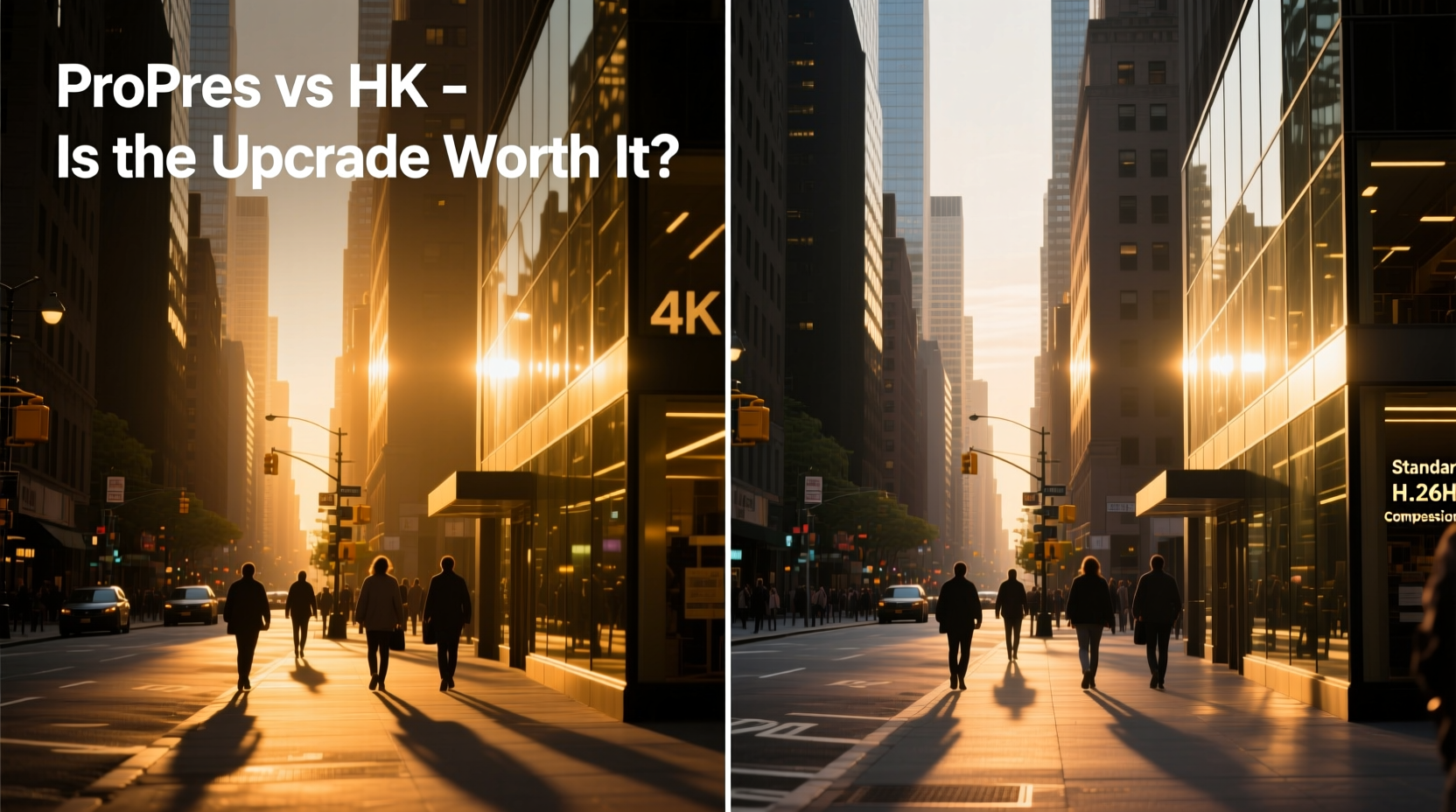
ProRes is a video codec developed by Apple designed for post-production workflows. Unlike H.264 or HEVC (used in standard iPhone 4K recordings), which compress video heavily to save space, ProRes prioritizes preserving image data during recording. This results in larger files but far greater flexibility when color grading, stabilizing, or applying effects in editing software like Final Cut Pro or Adobe Premiere.
On supported iPhones (iPhone 13 Pro and later), you can record in ProRes at 4K up to 60fps with 10-bit color depth and Log gamma (Dolby Vision HDR). These features allow for smoother gradients, reduced banding, and better dynamic range handling—especially useful in high-contrast scenes.
“ProRes isn’t about making your video look better out-of-camera—it’s about giving you more control in post.” — Sarah Kim, Cinematic Content Director at FrameLab Studios
However, without proper monitoring and grading, ProRes footage may appear flat or washed out initially. That’s intentional. The benefit lies not in immediate visual appeal but in long-term creative flexibility.
File Size & Storage: The Hidden Cost of ProRes
One of the most immediate drawbacks of ProRes is its massive file size. While standard 4K HEVC at 30fps consumes roughly 150–200MB per minute, ProRes 4K at the same frame rate uses approximately 2.5GB per minute. That’s over ten times larger.
This has practical implications:
- You’ll fill up even 512GB iPhone storage in under 20 minutes of continuous recording.
- Transferring files wirelessly becomes impractical; direct USB-C or Thunderbolt transfer is recommended.
- Editing requires powerful hardware—older MacBooks or budget PCs may struggle with real-time playback.
If your final output is social media (Instagram Reels, TikTok, YouTube Shorts), where compression is inevitable, capturing such large files offers diminishing returns. The platform will re-encode your video anyway, stripping away much of the fidelity ProRes preserves.
Storage Comparison: 4K H.265 vs. ProRes (Per Minute)
| Format | Resolution | Frame Rate | Avg. File Size/Min |
|---|---|---|---|
| H.265 (HEVC) | 4K | 30fps | 180 MB |
| H.265 (HEVC) | 4K | 60fps | 300 MB |
| ProRes (HQ) | 4K | 30fps | 2.5 GB |
| ProRes (LT) | 4K | 30fps | 1.3 GB |
| ProRes Proxy | 1080p | 30fps | 600 MB |
Note: Apple offers multiple ProRes profiles—High Quality (HQ), LT (Light), and Proxy—to balance quality and file size. For most creators, ProRes LT offers a reasonable compromise if you still need the benefits of 10-bit color and minimal compression artifacts.
When ProRes Actually Matters: Practical Use Cases
Not every project demands ProRes. In fact, for many users, standard 4K recording is more than sufficient. However, there are specific scenarios where ProRes provides tangible advantages:
- Professional editing workflows: When delivering to clients or broadcasting, having clean, editable footage ensures color correction and VFX integration go smoothly.
- High dynamic range environments: Shooting outdoors with bright skies and deep shadows benefits from 10-bit color and Log gamma, allowing recovery of highlights and shadows.
- Multi-cam productions: Matching footage across devices is easier when working with uncompressed or lightly compressed sources.
- Archival purposes: If you’re creating content meant to last—documentaries, family films, historical records—ProRes future-proofs your material against format obsolescence.
Mini Case Study: Wedding Videographer Using iPhone 15 Pro
Jamal Rivera, an independent filmmaker based in Portland, used his iPhone 15 Pro to capture a full wedding ceremony in ProRes 4K at 30fps. He paired it with a small rig, external mic, and matte box to manage glare.
During editing, he applied a custom LUT to restore natural skin tones and pulled back nearly two stops of highlight detail from sunlit windows—something impossible with standard 8-bit H.264 footage. Despite needing a 2TB SSD to store and edit the files, he delivered a cinematic final cut that impressed the couple and earned him three referrals.
“The iPhone couldn’t replace my cinema camera,” Jamal said, “but for run-and-gun moments and secondary angles, ProRes gave me broadcast-ready quality I could trust.”
Who Should Skip ProRes (And Stick With 4K)
For the average user, upgrading to ProRes doesn’t translate to visible improvements. Consider these factors before switching:
- End destination: If your videos end up on Instagram or TikTok, the platform’s compression renders ProRes advantages irrelevant.
- Editing experience: Without familiarity with color wheels, scopes, and timeline optimization, ProRes can feel overwhelming.
- Hardware limitations: Older computers or cloud-based editors may not handle ProRes efficiently.
- Battery and heat: Continuous ProRes recording generates significant heat and drains battery quickly—sometimes forcing shutdowns after 15–20 minutes.
Checklist: Is ProRes Right for You?
- ✅ Do you edit professionally or deliver to clients?
- ✅ Are you comfortable using color grading tools?
- ✅ Do you have fast storage and a capable editing machine?
- ✅ Is your subject well-lit and varied in tone (not just indoor vlogging)?
- ✅ Can you manage large file transfers and backups?
If fewer than three apply, standard 4K recording likely serves you better.
Frequently Asked Questions
Can I shoot ProRes on any iPhone?
No. Only iPhone 13 Pro, 13 Pro Max, and all subsequent Pro models (iPhone 14 Pro, 15 Pro) support ProRes video recording. Even then, 4K ProRes is limited to models with 256GB or more storage unless you use an external SSD via USB-C.
Does ProRes improve low-light performance?
Not directly. ProRes captures more color information and reduces compression noise, but it doesn't increase sensor sensitivity. In low light, both ProRes and standard 4K rely on the same hardware. Over-sharpening or aggressive noise reduction in post may be more effective with ProRes due to cleaner source data.
Should I always shoot in ProRes for YouTube?
Only if you're doing heavy color work or plan to archive masters. Most YouTubers see no perceptible difference once the video is uploaded and transcoded. Standard 4K at 60fps with good lighting and audio delivers excellent results with far less hassle.
Final Verdict: Is the Upgrade Worth It?
The jump from standard 4K to ProRes on iPhone is not about dramatic visual upgrades you can see with the naked eye. It’s about unlocking professional-grade control in post-production. For hobbyists, vloggers, and social media creators, the costs—in storage, workflow complexity, and time—typically outweigh the benefits.
But for filmmakers, documentarians, and anyone producing polished, edited content for broadcast or archival, ProRes transforms the iPhone into a credible B-camera or even primary production tool. The ability to recover blown-out skies, grade skin tones precisely, and maintain clarity through digital zooms and stabilization makes a real difference in final output.
Ultimately, the question isn’t whether ProRes is technically superior—it clearly is. The real question is whether your workflow benefits from that superiority. If your editing process ends with a quick trim and upload, stick with 4K. But if you’re shaping stories in post, color-matching shots, or delivering to discerning audiences, ProRes might just be the upgrade that elevates your work from good to professional.




 浙公网安备
33010002000092号
浙公网安备
33010002000092号 浙B2-20120091-4
Comments
No comments yet. Why don't you start the discussion?