
For years, the iPhone SE (2016) was a favorite among users who valued simplicity, reliability, and Apple’s ecosystem without paying flagship prices. Compact, durable, and surprisingly capable for its time, it became one of Apple’s longest-lived models in everyday use. But with the release of the iPhone SE (2022), which packs modern internals into a familiar design, many long-time 2016 owners are asking: is it finally time to upgrade?
The answer isn’t just about specs—it’s about how your phone fits into your life today. Whether you're clinging to your 2016 model out of loyalty or necessity, this breakdown will help you decide if the 2022 SE delivers enough meaningful improvements to justify the switch.
Design and Build: Familiar but Not Identical
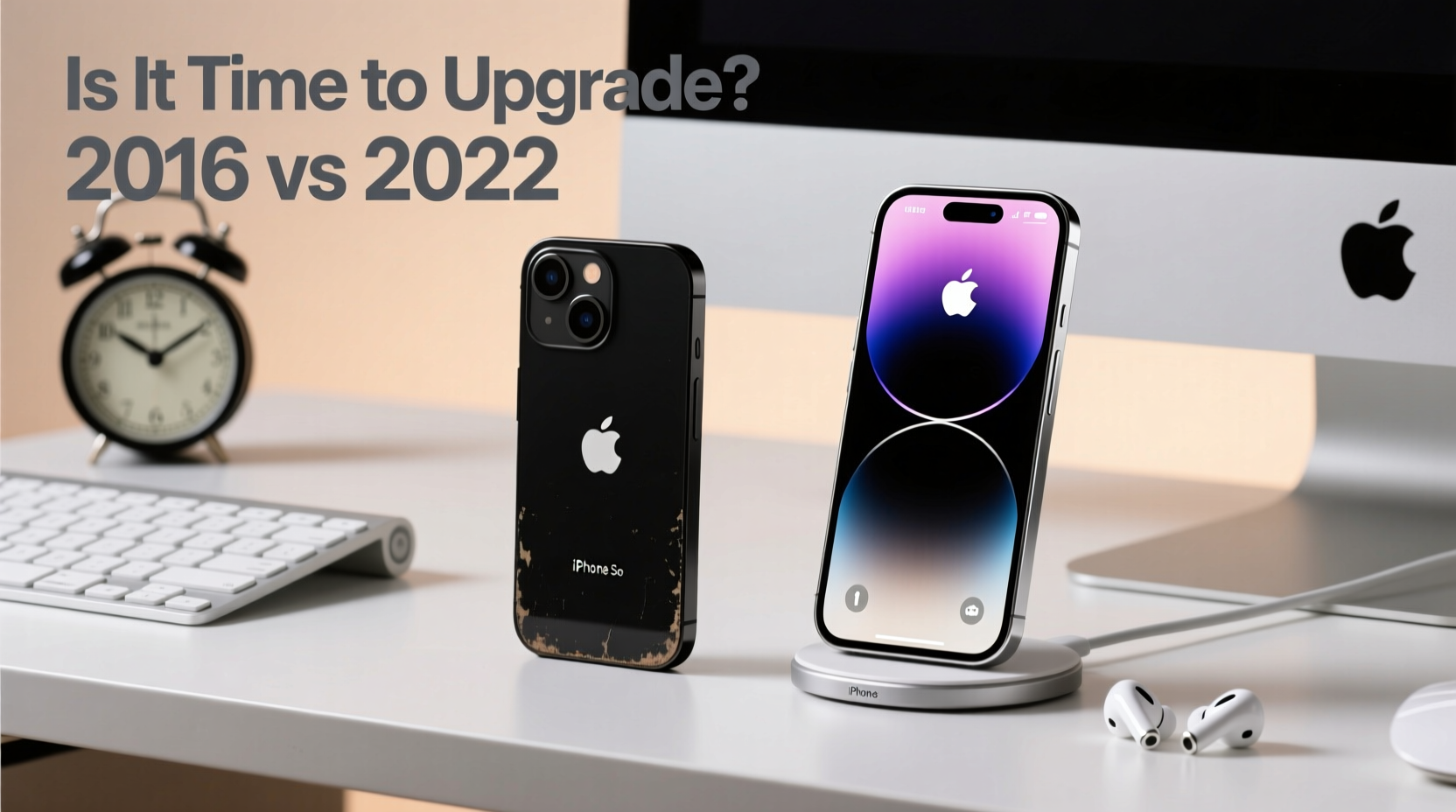
At first glance, the iPhone SE (2016) and (2022) look nearly identical. Both feature a 4.7-inch display, physical Home button with Touch ID, and a glass front with an aluminum back. The dimensions are almost the same, making them equally pocketable. However, subtle differences exist.
The 2022 model uses tougher glass (Ceramic Shield front) and improved water resistance (IP67 vs IP66 on the 2016). While neither can survive prolonged submersion, the newer model handles splashes and spills better. The antenna lines on the back are also less pronounced, giving the 2022 version a slightly more refined appearance.
Performance: A Quantum Leap Forward
This is where the 2022 model pulls ahead dramatically. The original SE used the A9 chip, which was impressive in 2016 but now struggles with modern iOS versions. By contrast, the 2022 SE features the A15 Bionic chip—the same processor found in the iPhone 13 series. This means significantly faster app launches, smoother multitasking, and better efficiency.
In real-world terms, the 2022 SE handles photo editing, gaming, and augmented reality apps with ease. Apps that lag or crash on the 2016 model run fluidly on the new one. Even basic tasks like scrolling through social media or switching between apps feel snappier.
“Upgrading from an iPhone SE (2016) to the 2022 model is like swapping a reliable sedan for a sports car—you’re still driving the same route, but the experience is entirely different.” — Marcus Lin, Mobile Tech Analyst at GadgetInsight
Camera Comparison: More Than Just Megapixels
The 2016 SE has a 12MP rear camera with f/2.2 aperture and no optical image stabilization. It captured decent photos in daylight but struggled in low light. The front-facing camera is 1.2MP, limiting selfie quality.
The 2022 SE improves on every front: same 12MP sensor but with f/1.8 aperture, optical image stabilization, and support for Portrait mode via software processing. Night mode is now available, dramatically improving low-light shots. The front camera jumps to 7MP and supports Smart HDR and Portrait mode.
| Feature | iPhone SE (2016) | iPhone SE (2022) |
|---|---|---|
| Rear Camera | 12MP, f/2.2, no OIS | 12MP, f/1.8, OIS, Night mode |
| Front Camera | 1.2MP | 7MP, Smart HDR, Portrait mode |
| Video Recording | 4K up to 30fps | 4K up to 60fps, Dolby Vision HDR |
| Low-Light Performance | Poor | Significantly improved |
If you take photos regularly—especially indoors or at night—the 2022 model offers a tangible upgrade. Videos are sharper, stabilized, and now support cinematic effects thanks to Dolby Vision recording.
Battery Life and Charging: Small Gains, Big Impact
Apple doesn’t publish official battery capacities, but real-world usage shows the 2022 SE lasts noticeably longer. Users report up to 1.5x more screen-on time, thanks to the energy-efficient A15 chip and slight battery improvements. You can expect around 10–12 hours of mixed use, compared to 6–8 on the aging 2016 model.
Charging gets two key upgrades: faster wired charging (up to 50% in 30 minutes with a 20W adapter) and support for MagSafe and Qi wireless charging. The 2016 model only supports slow 5W wired charging and lacks wireless capability altogether.
Software Support and Future-Proofing
This may be the most compelling reason to upgrade. The iPhone SE (2016) stopped receiving iOS updates with iOS 15. While it still functions, it lacks security patches, new features, and app compatibility. Many newer apps either don’t install or run poorly.
The 2022 SE launched with iOS 15 but supports iOS 16, 17, and is expected to receive updates through at least 2027. That means access to advanced privacy tools, Live Text, iCloud Shared Photo Library, and continued app compatibility. For users who rely on banking, productivity, or social apps, staying current matters.
Mini Case Study: Sarah’s Upgrade Journey
Sarah, a teacher from Portland, used her iPhone SE (2016) for six years. She loved its size and durability but began facing daily frustrations: apps crashing, slow email loading, and poor photo quality during school events. After upgrading to the 2022 model, she noticed immediate improvements. “I didn’t realize how much time I wasted waiting for things to load,” she said. “Now my calendar syncs instantly, and I can actually take clear photos of student projects. It feels like getting a whole new assistant.”
Checklist: Should You Upgrade?
Use this checklist to evaluate whether the 2022 SE makes sense for you:
- ✅ Is your 2016 battery draining within half a day?
- ✅ Do apps frequently freeze or fail to update?
- ✅ Are you unable to use newer iOS features (e.g., Focus modes, Live Text)?
- ✅ Do you want better camera quality, especially in low light?
- ✅ Do you value wireless charging or faster charging speeds?
- ✅ Are you planning to keep your phone for 3+ more years?
If you answered yes to three or more, the upgrade is likely worth it.
Frequently Asked Questions
Can the iPhone SE (2022) run the latest apps smoothly?
Absolutely. Thanks to the A15 Bionic chip and 3GB of RAM, the 2022 SE runs all current iOS apps—including graphics-intensive games and video editors—without issue. Most apps are optimized for this device.
Is the screen too small by today’s standards?
It depends on preference. While most smartphones now have 6-inch+ displays, the 4.7-inch screen remains ideal for one-handed use, compact pockets, and reduced eye strain. Many users intentionally choose smaller phones for ergonomics and focus.
Will my accessories work with the 2022 model?
Most cases and screen protectors designed for the iPhone 8 or SE (2020) fit the 2022 SE. However, older 2016 cases may not align perfectly due to minor dimensional changes and the relocated front microphone. Lightning cables remain compatible, though faster charging requires a newer adapter.
Step-by-Step Guide to Upgrading Smoothly
- Back up your 2016 SE: Use iCloud or iTunes to create a full backup.
- Transfer data: During setup of the 2022 SE, choose \"Restore from iCloud Backup\" or \"Restore from Mac/PC.\"
- Update immediately: Install the latest iOS version after restore for optimal security and performance.
- Set up Face ID alternatives: Since both models use Touch ID, no change is needed—but ensure fingerprint registration is clean.
- Optimize settings: Enable Low Data Mode, Auto-Brightness, and Background App Refresh limits to extend battery life.
Conclusion: Time Has Come
The iPhone SE (2016) was a milestone device—affordable, powerful for its era, and remarkably long-lasting. But technology moves forward, and so should your tools. The 2022 SE isn’t just a refresh; it’s a complete internal overhaul wrapped in a nostalgic shell.
If you’ve been holding onto your 2016 model out of habit or hesitation, now is the moment to reconsider. With vastly superior performance, better cameras, longer battery life, and years of software support ahead, the 2022 SE offers real, lasting value. It proves that sometimes, the most meaningful upgrades come in familiar packages.




 浙公网安备
33010002000092号
浙公网安备
33010002000092号 浙B2-20120091-4
Comments
No comments yet. Why don't you start the discussion?