
For years, the iPhone SE 2020 has been a favorite among budget-conscious Apple users who still want reliable performance and iOS integration. Compact, affordable, and powered by the same A13 Bionic chip found in the iPhone 11 series, it offered exceptional value. But with the release of the iPhone 15 Pro—featuring a titanium frame, advanced A17 Pro chip, and pro-grade camera system—the gap between entry-level and flagship iPhones has never been wider. If you’re still holding onto your iPhone SE 2020, you might be wondering: is it finally time to make the leap?
The answer depends on your priorities: Are you chasing cutting-edge photography, gaming performance, or long-term software support? Or are you satisfied with core functionality and don’t need the latest bells and whistles? Let’s break down the key differences to help you make an informed decision.
Design and Build Quality: From Functional to Premium
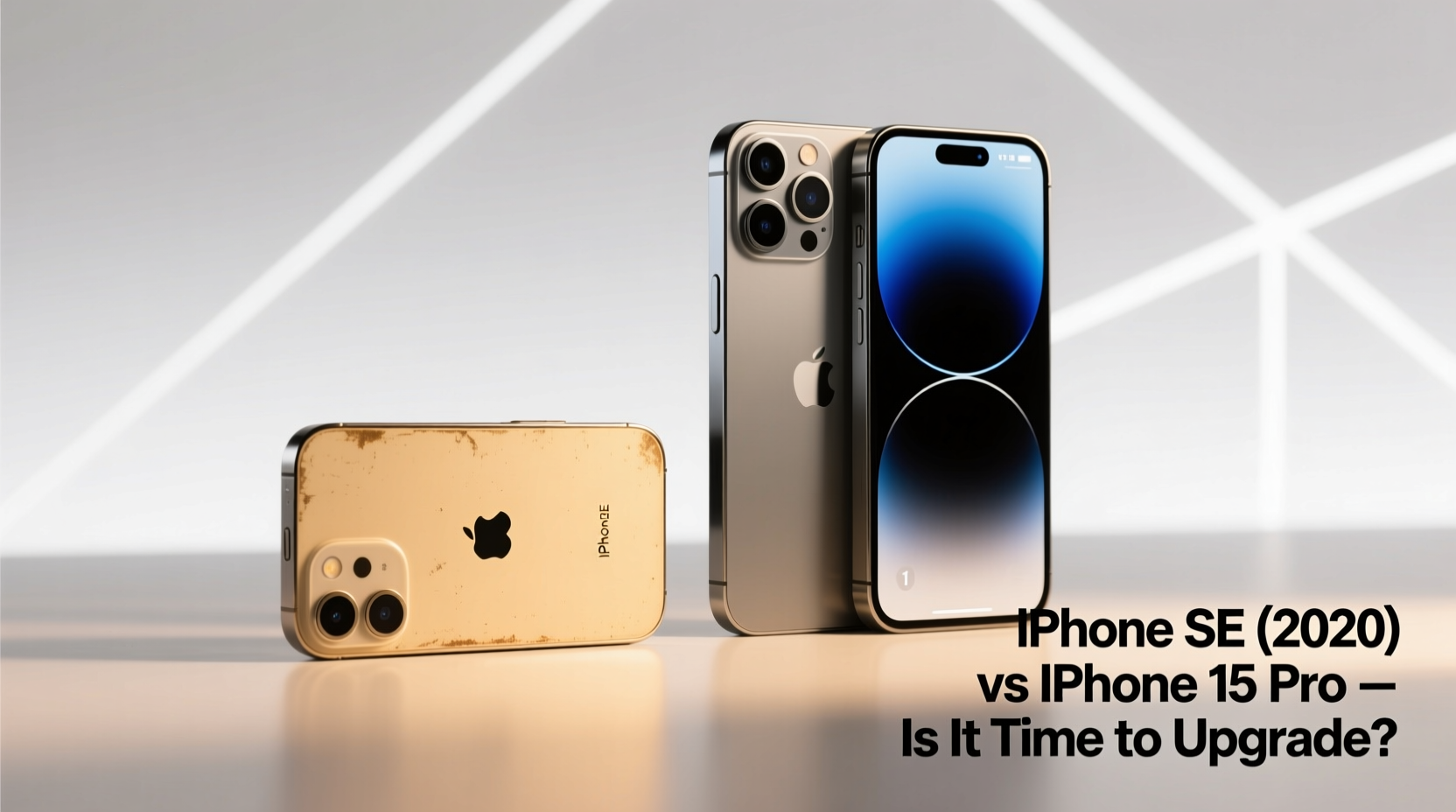
The iPhone SE 2020 embraces a utilitarian design reminiscent of the iPhone 8. It features a 4.7-inch LCD display, thick bezels, a home button with Touch ID, and an aluminum back with glass sandwich construction. While durable, it feels outdated compared to modern smartphones. Its compact size remains a plus for one-handed use, but the screen-to-body ratio is significantly lower than today’s standards.
In contrast, the iPhone 15 Pro marks a major evolution. It sports a sleek titanium frame—lighter and stronger than stainless steel—making it Apple’s most premium-feeling phone yet. The 6.1-inch Super Retina XDR OLED display delivers deeper blacks, higher brightness (up to 2000 nits), and smoother scrolling at 120Hz with ProMotion. The flat edges return, but now with contoured edges for better ergonomics. Face ID replaces Touch ID, and the Action Button adds customizable functionality.
Performance and Future-Proofing: Two Generations Apart
The heart of any smartphone is its processor, and here the difference is staggering. The iPhone SE 2020 runs on the A13 Bionic chip—a powerful processor in its day, capable of handling everyday tasks smoothly. However, it was released in 2019, and while iOS updates continue, app developers are increasingly optimizing for newer architectures.
The iPhone 15 Pro introduces the A17 Pro chip, built on a 3nm process. This isn’t just an incremental upgrade; it brings up to 2x faster CPU and GPU performance. More importantly, it supports console-quality gaming via titles like Resident Evil Village and Death Stranding, thanks to hardware-accelerated ray tracing and MetalFX upscaling. Machine learning tasks, AR experiences, and video editing are also dramatically faster.
“Devices more than four years old will struggle with next-gen apps, especially those leveraging AI and real-time rendering.” — David Liu, Mobile Hardware Analyst at TechInsight Group
If you plan to keep your phone for another 3–4 years, the A17 Pro offers far better longevity. Apple typically supports iPhones with iOS updates for 5–6 years, meaning the 15 Pro could receive updates until 2029 or beyond. The SE 2020, already five years old, may see support taper off sooner, limiting access to future iOS features.
Camera Capabilities: Night and Day Difference
The iPhone SE 2020 has a single 12MP rear camera. It performs decently in daylight and supports Portrait Mode through software tricks, but low-light performance is weak, and there’s no optical zoom, night mode for videos, or macro photography. The front-facing 7MP camera lacks Center Stage or Deep Fusion.
The iPhone 15 Pro transforms mobile photography. It features a triple-camera system: a 48MP main sensor (with sensor-shift stabilization), a 12MP ultrawide, and a 12MP telephoto with 5x optical zoom. Computational photography enhancements like Smart HDR 5, Photonic Engine, and Next-Gen Night Mode produce stunning results in all lighting conditions. You can now shoot in RAW (ProRAW), record ProRes video directly to external drives via USB-C, and capture spatial video for Apple Vision Pro.
For creators, travelers, or anyone who values high-quality photos, this leap is transformative. Even casual users benefit from better autofocus, reduced blur, and richer color accuracy.
Detailed Comparison Table
| Feature | iPhone SE 2020 | iPhone 15 Pro |
|---|---|---|
| Display | 4.7\" Retina HD (LCD) | 6.1\" Super Retina XDR (OLED, 120Hz) |
| Chipset | A13 Bionic | A17 Pro (3nm) |
| Rear Cameras | 12MP wide | 48MP main, 12MP ultrawide, 12MP telephoto (5x zoom) |
| Front Camera | 7MP | 12MP with Autofocus & Center Stage |
| Battery Life | Up to 13 hours video playback | Up to 23 hours video playback |
| Charging | Lightspeed (wired), Qi wireless | USB-C (faster data & charging), MagSafe, Qi2 |
| Storage Options | 64GB, 128GB, 256GB | 128GB, 256GB, 512GB, 1TB |
| Water Resistance | IP67 (1m for 30 mins) | IP68 (6m for 30 mins) |
| Starting Price | $399 (at launch) | $999 |
Real-World Example: Sarah’s Upgrade Journey
Sarah, a freelance photographer based in Portland, used her iPhone SE 2020 for work and personal life. She loved its simplicity and battery efficiency but began noticing limitations. Low-light shots were grainy, she couldn’t shoot in ProRes for client reels, and editing 4K footage lagged. After upgrading to the iPhone 15 Pro, her workflow transformed. She captured sharp wildlife close-ups using the 5x telephoto lens, recorded cinematic slow-motion clips in HDR, and transferred large files over USB-C in seconds. “It’s not just a phone,” she said. “It’s become my primary content creation tool.”
When Should You Upgrade? A Step-by-Step Decision Guide
Not everyone needs the latest iPhone. Here’s a practical timeline to help you evaluate whether now is the right time:
- Assess current performance: Is your SE 2020 slowing down during multitasking, app launches, or iOS updates? Frequent crashes or overheating suggest hardware strain.
- Evaluate camera needs: Do you regularly take photos in challenging lighting or need better zoom? If yes, the 15 Pro’s system is a game-changer.
- Consider future use: Will you keep your phone beyond 2026? The A17 Pro ensures smoother performance for upcoming AI-powered iOS features.
- Check repair costs: If your SE 2020 needs a battery or screen replacement, factor in that cost (~$69–$149) versus trade-in value (~$100–$150).
- Review budget: Can you afford $999+ upfront or through financing? Trade-in programs can reduce the price significantly if you include accessories.
Frequently Asked Questions
Can the iPhone SE 2020 still run the latest iOS?
Yes, as of iOS 17, the iPhone SE 2020 is supported. However, it misses some advanced features like StandBy mode, improved autocorrect, and certain AI tools optimized for newer chips.
Is the iPhone 15 Pro worth double the price of the SE 2020?
It depends on usage. For power users, creatives, or those planning to keep the device for 4+ years, yes. Casual users who mainly browse, message, and call may find the SE (3rd gen) or iPhone 14 more cost-effective.
Does the iPhone 15 Pro have Touch ID?
No. All recent flagships use Face ID exclusively, even in masks. Some users miss Touch ID, especially when wearing masks or lying in bed.
Conclusion: Time to Move Forward?
The iPhone SE 2020 was a remarkable device in its time—proof that great performance doesn’t require a high price. But five years later, technology has moved on. The iPhone 15 Pro isn’t just faster; it redefines what an iPhone can do. From professional photography and desktop-class processing to enhanced durability and connectivity, it represents a generational shift.
If you're still satisfied with basic functionality and don’t mind older design cues, sticking with the SE 2020—or upgrading to the newer SE (2022)—might suffice. But if you want a device that will handle tomorrow’s apps, deliver stunning media quality, and last for years without feeling obsolete, the iPhone 15 Pro is a compelling upgrade.




 浙公网安备
33010002000092号
浙公网安备
33010002000092号 浙B2-20120091-4
Comments
No comments yet. Why don't you start the discussion?