
The iPhone SE 2020 and the iPhone XS represent two distinct philosophies in Apple’s smartphone lineup. One is a budget-friendly powerhouse wrapped in an older design; the other is a premium flagship from a previous generation. At first glance, the newer model should win — but does it? Or is it simply a case of Apple offering less for more savings? The answer isn’t as straightforward as specs suggest.
Released just a year apart, these phones serve different audiences. The iPhone XS, launched in 2018, was positioned as a luxury device with cutting-edge features. The iPhone SE 2020, released in 2020, brought flagship-level internals into a compact, affordable body. But when comparing them side by side, real-world usability often matters more than release dates.
Performance: Power vs. Practicality
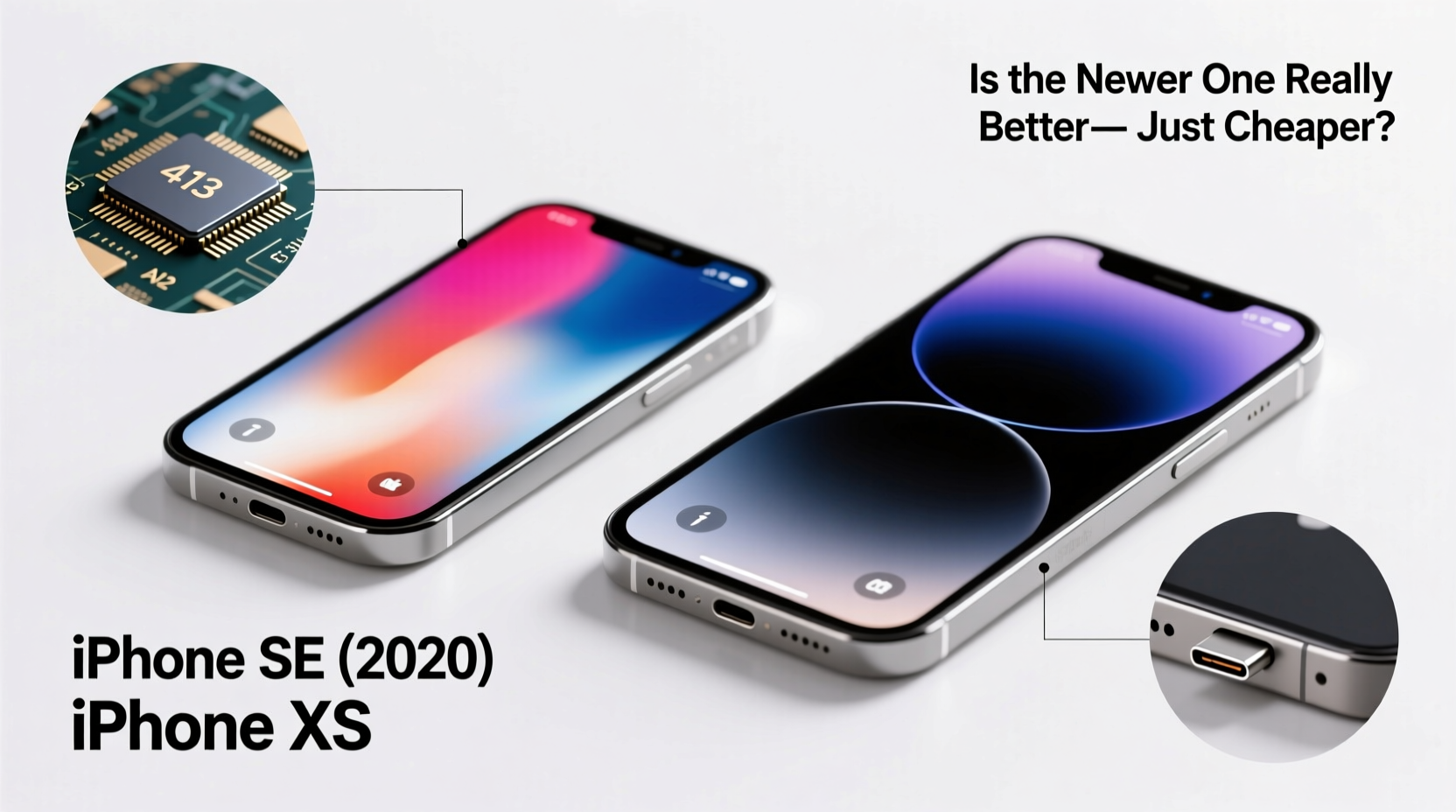
The iPhone SE 2020 packs the same A13 Bionic chip found in the iPhone 11 series — the same processor family that powered Apple’s top-tier devices at the time. In contrast, the iPhone XS uses the A12 Bionic, a capable chip but a generation behind.
Benchmarks confirm this gap. The A13 delivers around 20% better CPU performance and up to 30% faster GPU speeds. For everyday tasks like browsing, messaging, and streaming, both phones feel snappy. However, under heavy load — such as gaming, photo editing, or multitasking with multiple apps — the SE 2020 pulls ahead noticeably.
Apple’s optimization ensures both devices run iOS smoothly, but the SE 2020 benefits from being newer hardware during iOS updates. It received support for iOS 17, while the iPhone XS topped out at iOS 16. This gives the SE 2020 a clear edge in longevity.
Design and Display: Old School vs. Modern Minimalism
This is where the trade-offs become visible. The iPhone XS features a sleek, all-glass design with a 5.8-inch OLED Super Retina display and minimal bezels. It introduced Face ID and gesture-based navigation, marking Apple’s shift toward modern smartphone ergonomics.
The iPhone SE 2020, meanwhile, reuses the chassis of the iPhone 8. That means a 4.7-inch LCD Retina HD display, thick top and bottom bezels, and a physical Home button with Touch ID. While durable and compact, the design feels dated next to the XS.
OLED offers superior contrast, deeper blacks, and better outdoor visibility. The smaller LCD on the SE is functional but lacks vibrancy. However, some users still prefer the tactile feedback of Touch ID, especially with masks or wet fingers — a point that became particularly relevant during the pandemic.
“Sometimes progress isn’t linear. The SE proves that old designs can house new power — but not everyone wants to go back to bezels.” — David Lin, Mobile Tech Analyst at GadgetInsight
Camera Comparison: Megapixels Don’t Tell the Whole Story
The iPhone XS has a dual-camera system: 12MP wide and 12MP telephoto, enabling 2x optical zoom and Portrait mode on more subjects. The SE 2020 sticks with a single 12MP wide lens, relying on software for depth effects.
In daylight, both capture sharp, well-balanced photos with natural color reproduction. The XS holds an advantage in versatility — zooming without quality loss and better low-light portraits thanks to its second sensor. However, the SE 2020 leverages the A13’s Neural Engine to deliver Smart HDR and improved noise reduction, narrowing the gap significantly.
For video, both support 4K at 30fps, but the XS includes extended dynamic range for video up to 60fps, offering smoother motion and better highlight preservation. If you frequently shoot video or use Portrait mode, the XS remains superior.
Camera Feature Breakdown
| Feature | iPhone SE 2020 | iPhone XS |
|---|---|---|
| Rear Cameras | Single 12MP (Wide) | Dual 12MP (Wide + Telephoto) |
| Portrait Mode | Yes (software-based) | Yes (hardware-assisted) |
| Optical Zoom | No | 2x |
| Video Recording | 4K @ 30fps | 4K @ 60fps (extended dynamic range) |
| Front Camera | 7MP | 7MP (with Portrait Mode) |
Battery Life and Charging: Efficiency Over Endurance
The iPhone SE 2020 has a smaller battery than the XS — approximately 1,821 mAh versus 2,658 mAh. Yet real-world usage tells a different story. Due to the smaller screen and efficient A13 chip, the SE often lasts a full day with moderate use.
Apple rated the XS for up to 20 hours of video playback; the SE for about 13 hours. Still, actual user reports show both struggle under heavy loads, and neither supports always-on display or ultra-fast charging without additional accessories.
Both lack USB-C, using Lightning ports. Fast charging is possible with a 18W adapter (not included), but wireless charging works on both — a feature retained despite the SE’s lower price.
Value Proposition: Who Should Choose Which?
The iPhone SE 2020 launched at $399; the iPhone XS started at $999. Even in the used market, the price difference remains significant. So who benefits most from each?
- Choose the iPhone SE 2020 if: You want strong performance on a budget, prefer a compact phone, or need reliable future iOS updates.
- Choose the iPhone XS if: You value display quality, advanced camera features, a modern design, and don’t mind paying more for legacy premium status.
Resale value also plays a role. The XS depreciated faster due to its high initial cost and lack of headphone jack. The SE, meanwhile, became a cult favorite among minimalists and secondary-device users.
Mini Case Study: Sarah’s Upgrade Dilemma
Sarah, a freelance photographer, needed a secondary phone for client communication and quick social media posts. Her old iPhone 7 was slowing down. She considered the SE 2020 for its speed and low cost but worried about the camera limitations.
After testing both in-store, she chose the refurbished iPhone XS. Though older, its dual cameras allowed her to capture portrait-style shots for Instagram without carrying her DSLR. The OLED screen also made editing previews more accurate. Despite slower app launches over time, the display and camera flexibility justified the extra $200.
Meanwhile, her brother, a college student, bought the SE 2020. He valued battery efficiency, durability, and fast performance for note-taking and streaming. The compact size fit his backpack lifestyle perfectly. For him, the “cheaper” phone was actually the smarter choice.
Checklist: How to Decide Between iPhone SE 2020 and iPhone XS
- ✅ Assess your budget: Can you spend $200+ more for premium features?
- ✅ Prioritize display: Do you watch videos or edit photos regularly?
- ✅ Evaluate camera needs: Do you take portraits or zoom often?
- ✅ Consider size: Do you prefer small phones or larger screens?
- ✅ Think long-term: Will you keep the phone for 3+ years? (SE wins here)
- ✅ Test biometrics: Do you prefer Face ID or Touch ID?
Frequently Asked Questions
Is the iPhone SE 2020 faster than the iPhone XS?
Yes, in raw processing power. The SE 2020 uses the A13 Bionic chip, which outperforms the XS’s A12. Apps launch slightly faster, and multitasking is smoother, especially in newer iOS versions.
Can the iPhone SE 2020 replace a flagship phone?
For most users, yes. It handles daily tasks, social media, productivity apps, and even light gaming with ease. Only those needing advanced photography or large displays will miss flagship features.
Does the iPhone XS have better build quality?
Subjectively, yes. Its stainless steel frame and curved glass feel more premium than the SE’s aluminum body. However, both have IP67 water resistance, so durability in drops and spills is comparable.
Conclusion: Better Isn’t Always Newer — It’s About Fit
The iPhone SE 2020 isn’t “better” than the iPhone XS in every way — but it is smarter for many users. It proves that innovation doesn’t always mean bigger screens or facial recognition. Sometimes, it’s about delivering powerful technology in accessible forms.
If you define “better” by performance per dollar, future-proofing, and compact utility, the SE 2020 wins. But if you value display quality, camera depth, and modern aesthetics, the iPhone XS still holds relevance — especially at discounted prices.
Technology choices aren’t one-size-fits-all. The real question isn’t whether the newer phone is better, but whether it’s better for you.




 浙公网安备
33010002000092号
浙公网安备
33010002000092号 浙B2-20120091-4
Comments
No comments yet. Why don't you start the discussion?