
The debate between compact power and expansive display real estate continues to shape smartphone preferences. When comparing the iPhone SE (2020 or later models) and the iPhone 6s Plus, one central question emerges: is the significantly larger screen of the 6s Plus truly worth the trade-offs? At first glance, more screen seems better—ideal for videos, multitasking, and reading. But screen size alone doesn’t define user experience. Real-world usability, performance longevity, battery efficiency, and portability all play critical roles.
This isn’t just about nostalgia versus innovation. The iPhone 6s Plus was a flagship device in its time, offering a then-revolutionary 5.5-inch display. The iPhone SE, especially the second and third generations, brings modern processing power into a classic, compact form. To determine whether the 6s Plus’s screen advantage holds up, we need to examine how each device performs across key metrics in 2024 and beyond.
Design and Usability: Size vs. Practicality
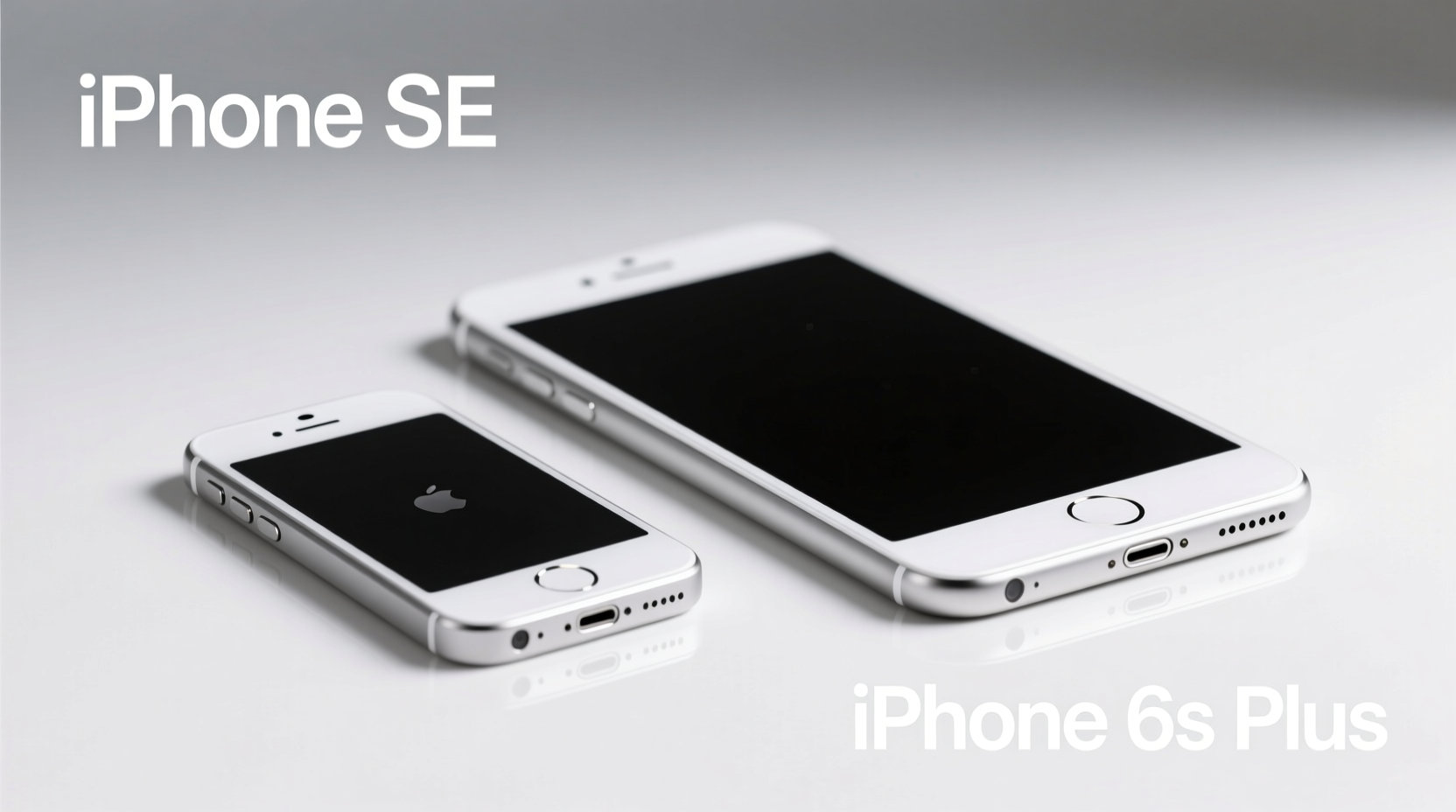
The most immediate difference between the two phones is physical. The iPhone 6s Plus measures 158.2 x 77.9 x 7.3 mm and weighs 192 grams, making it noticeably large and heavy by today’s standards. In contrast, the iPhone SE (3rd gen) is 138.4 x 67.3 x 7.3 mm and weighs just 144 grams. It fits comfortably in one hand and slips easily into pockets—a major advantage for users who prioritize convenience.
The 6s Plus’s 5.5-inch LCD screen offers 1920x1080 resolution, which was sharp in 2015. However, viewed side-by-side with modern Retina HD displays, the pixel density and color accuracy feel dated. The iPhone SE, while smaller at 4.7 inches, uses Apple’s advanced Liquid Retina technology with improved brightness, contrast, and True Tone support. Despite the size difference, the visual clarity often feels superior on the SE.
Performance: Modern Chipset vs. Aging Hardware
Beneath the surface, the gap widens dramatically. The iPhone SE (3rd gen) runs on the A15 Bionic chip—the same processor found in the iPhone 13 series. This gives it exceptional speed, app responsiveness, and future-proofing for iOS updates likely through 2027 or later. The 6s Plus, powered by the A9 chip, struggles with many current apps. Multitasking is sluggish, app launches are slow, and background refresh often fails under load.
In practical terms, the SE handles high-end games, AR experiences, and video editing with ease. The 6s Plus may open Instagram or Safari, but prolonged use leads to overheating and crashes. Even basic tasks like loading maps or streaming HD video expose its limitations.
| Feature | iPhone SE (3rd Gen) | iPhone 6s Plus |
|---|---|---|
| Processor | A15 Bionic | A9 |
| RAM | 4GB | 2GB |
| Storage Options | 64GB, 128GB, 256GB | 16GB, 32GB, 64GB, 128GB |
| iOS Support | Up to iOS 17+, likely iOS 18 | Last supported: iOS 15 |
| App Performance | Smooth, modern app compatibility | Frequent lag, app rejection |
“Performance isn't just about speed—it's about reliability over time. A fast device that can't run current software is functionally obsolete.” — David Lin, Mobile Systems Analyst
Screen Experience: Is Bigger Always Better?
The 6s Plus does offer a larger canvas, and there’s no denying that watching YouTube, reading e-books, or browsing web pages benefits from extra screen space. Its 1080p resolution provides good detail, and the widescreen format suits media consumption. However, advancements in display technology have redefined what “good” means. The SE’s smaller screen compensates with higher pixel density, better color calibration, and superior outdoor visibility.
Moreover, modern app design favors gesture navigation and efficient UI layouts that don’t require massive screens. Most social media, messaging, and productivity apps are optimized for single-thumb operation. On the 6s Plus, reaching corners requires constant hand adjustments, reducing ergonomics despite the larger viewable area.
For users with vision challenges, the larger text and icons on the 6s Plus might seem appealing. But the SE supports the same accessibility features—including zoom, bold text, and dynamic font scaling—allowing users to customize readability without sacrificing portability.
Real-World Example: Daily Commuter Use
Consider Sarah, a city commuter who uses her phone during subway rides. She initially preferred the 6s Plus for its screen size when catching up on news articles and podcasts. Over time, however, she found herself frustrated by slow app switches, frequent crashes on crowded transit Wi-Fi, and difficulty managing the phone with gloves on in winter. After switching to the iPhone SE, she gained faster access to messages, reliable GPS navigation, and easier handling—even though the screen was smaller. The performance gains outweighed the visual real estate loss.
Camera and Battery: Trade-Offs in Legacy Devices
Camera quality reflects generational progress. The 6s Plus features a 12MP rear camera with 4K video capability—an impressive spec for its era. But it lacks optical image stabilization, Portrait mode, Smart HDR, and Night mode. Low-light photos are noisy, and autofocus is inconsistent. The iPhone SE (3rd gen), while retaining a single-lens setup, includes computational photography enhancements,深度融合 (Deep Fusion), and better noise reduction algorithms. In head-to-head tests, the SE consistently produces sharper, more balanced images.
Battery life tells a mixed story. The 6s Plus has a larger battery capacity (2750 mAh vs. 2018 mAh), but its aging lithium-ion cell degrades significantly after years of use. Even with replacement, the inefficient A9 chip drains power quickly under modern workloads. The SE’s optimized A15 chip and iOS power management deliver longer effective usage per charge in real conditions—especially with moderate screen-on time.
Checklist: Choosing Between SE and 6s Plus
- ✅ Need modern app performance and iOS updates? → iPhone SE
- ✅ Prioritize one-handed use and pocketability? → iPhone SE
- ✅ Watching lots of videos on a budget device? → 6s Plus (if functional)
- ✅ Want reliable camera performance in varied lighting? → iPhone SE
- ✅ Using phone for productivity or multitasking? → iPhone SE
- ✅ Already own a working 6s Plus and resist upgrading? → Consider SE for longevity
FAQ: Common Questions Answered
Can the iPhone 6s Plus still be used in 2024?
Limited functionality. It runs only up to iOS 15, so many newer apps won’t install or update. Security patches have ended, making it vulnerable. While usable for calls and basic browsing, it’s not recommended for daily driving or sensitive tasks like banking.
Is the iPhone SE too small for modern apps?
No. Most apps are designed for 4.7-inch displays due to backward compatibility. Features like Reachability make top-of-screen navigation easy. Users accustomed to larger phones may need an adjustment period, but most find the size efficient within days.
Does the 6s Plus screen justify keeping it over newer models?
Rarely. While the screen is larger, its age affects brightness, touch responsiveness, and color accuracy. Burn-in and dead pixels are common in older units. The marginal benefit isn’t enough to offset poor performance and lack of support.
Conclusion: Value Beyond Screen Size
The allure of a bigger screen is understandable, but it shouldn’t overshadow core functionality. The iPhone 6s Plus was groundbreaking in 2015, but nearly a decade later, its hardware limits compromise every aspect of usability. The iPhone SE, though compact, delivers a contemporary smartphone experience—snappy performance, reliable camera, ongoing software support, and excellent build quality.
Choosing between them isn’t just about screen dimensions; it’s about deciding what kind of experience you want. Do you value momentary visual comfort over long-term reliability, security, and efficiency? For most users, the answer leans strongly toward the iPhone SE. Technology evolves not just in size, but in intelligence, efficiency, and integration. Sometimes, smaller isn’t lesser—it’s smarter.




 浙公网安备
33010002000092号
浙公网安备
33010002000092号 浙B2-20120091-4
Comments
No comments yet. Why don't you start the discussion?