
When choosing a smartphone on a budget, performance and price are important—but so is how long the device will last. Longevity isn’t just about hardware durability; it’s also shaped by software support, update frequency, and ecosystem integration. The iPhone SE stands as Apple’s most affordable entry into the iOS world, while Android offers a broad range of budget phones from brands like Samsung, Google, Motorola, and OnePlus. But when it comes to long-term value, which platform truly wins in longevity and software updates?
This article breaks down the real-world implications of choosing between the iPhone SE and Android budget phones, focusing on software lifespan, update reliability, hardware resilience, and user experience over time.
Software Updates: The Lifeline of Longevity
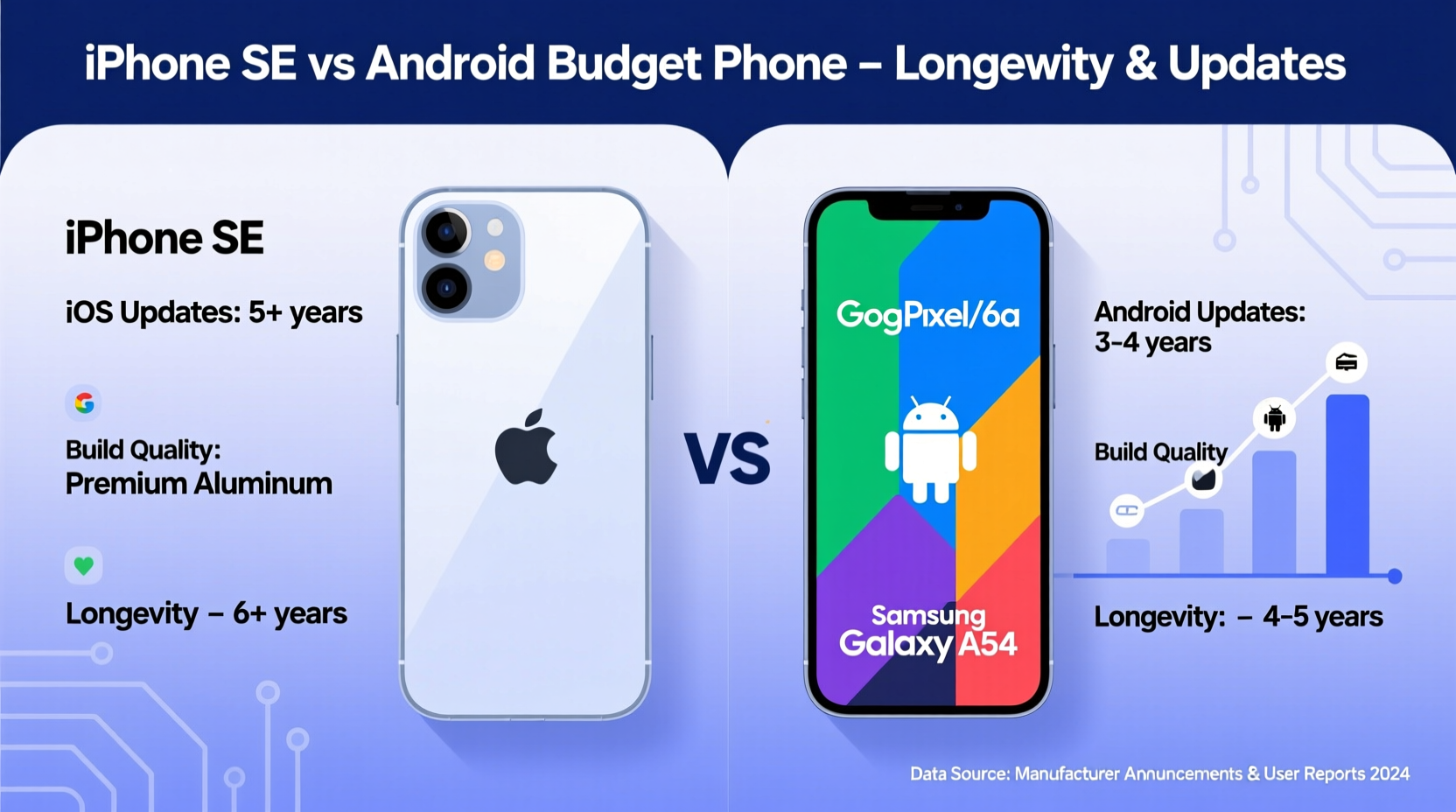
One of the most critical factors in a phone’s longevity is how long it receives operating system and security updates. These updates fix bugs, improve performance, patch security vulnerabilities, and sometimes introduce new features—keeping your phone functional and safe years after purchase.
Apple leads the industry in update consistency. iPhones typically receive five to seven years of iOS updates. For example, the first-generation iPhone SE (2016) was supported until 2022 with iOS 15, giving it six years of major OS updates. The current iPhone SE (3rd generation, 2022) is expected to be supported through at least 2027, possibly longer.
In contrast, most Android budget phones receive only two to three years of major OS updates and three to four years of security patches. Even flagship models from major brands often fall short of Apple’s update timeline. For instance, Samsung’s Galaxy A-series budget phones get four years of security updates but only two OS upgrades. Google’s Pixel 7a, though not strictly budget, offers three years of OS updates and five years of security updates—a rare exception among mid-range devices.
“Apple’s unified hardware-software model allows them to push updates faster and support devices longer than nearly any Android OEM.” — David Pierce, Editor-at-Large, The Verge
Hardware Longevity: Build Quality and Real-World Durability
While software keeps a phone functional, hardware determines how well it holds up physically and performance-wise over time. The iPhone SE uses aerospace-grade aluminum and glass construction, matching the build quality of premium iPhones. It also includes water resistance (IP67), which is uncommon in budget Android phones.
Many Android budget phones use polycarbonate (plastic) bodies and cheaper displays to cut costs. While this makes them lighter and less prone to cracking from drops, plastic can feel less durable over time and may yellow or scratch easily. Mid-tier OLED screens on some budget Androids outperform the iPhone SE’s LCD Retina display in brightness and color accuracy, but the SE compensates with superior color calibration and True Tone technology.
Battery life is another key consideration. The iPhone SE has a modest battery capacity, but iOS optimization often delivers surprisingly good endurance—especially for light to moderate users. However, heavy users may find themselves charging twice a day. Most Android budget phones offer larger batteries (4,500–5,000 mAh), translating to longer screen-on time, but aggressive background app behavior can reduce real-world efficiency.
Over time, battery degradation affects all smartphones. Apple provides transparent battery health metrics and official replacement services. On Android, third-party battery replacements are often easier and cheaper, but lack standardized diagnostics across brands.
Update Reliability and Ecosystem Integration
Apple pushes iOS updates directly to all supported devices simultaneously. Every iPhone SE owner gets the latest version of iOS on day one, ensuring consistent security and feature parity.
Android fragmentation remains a challenge. Even when manufacturers commit to updates, rollout timing varies by region, carrier, and model. A budget Samsung phone might get Android 14 months after its release, while a Pixel gets it immediately. Some brands, like Nokia and Xiaomi, have inconsistent track records, with certain models receiving updates and others abandoned early.
Additionally, Android skins (like Samsung’s One UI or Motorola’s My UX) add layers that must be updated alongside the base OS. This slows development and testing, delaying updates. In contrast, the iPhone SE runs stock iOS with no bloatware or interface modifications, streamlining the update process.
Ecosystem integration also plays a role in perceived longevity. If you own other Apple devices—an iPad, Mac, or AirPods—the iPhone SE benefits from seamless Handoff, iCloud sync, iMessage, and Continuity features. These integrations improve usability over time, making the phone feel more capable than its specs suggest.
Android offers similar ecosystem perks with Google services (Google Photos, Assistant, Chrome sync), but they’re less tightly integrated across hardware. Only Pixel phones guarantee full access to all Google features, leaving budget Android users with partial functionality.
Comparative Overview: iPhone SE vs Top Budget Android Phones
| Device | OS Updates | Security Updates | Battery Capacity | Build Quality | Eco Integration |
|---|---|---|---|---|---|
| iPhone SE (2022) | 5–7 years (expected) | 5+ years | 2,018 mAh | Aluminum & Glass (IP67) | Excellent (iCloud, AirPods, etc.) |
| Samsung Galaxy A14 5G | 2 OS upgrades | 4 years | 5,000 mAh | Plastic body | Good (Samsung Cloud, Wearables) |
| Google Pixel 7a | 3 OS upgrades | 5 years | 4,385 mAh | Recycled aluminum (IP67) | Very Good (Google services) |
| Motorola Moto G Power (2023) | 1 OS upgrade | 3 years | 5,000 mAh | Plastic body | Fair (basic Google integration) |
| OnePlus Nord N30 | 2 OS upgrades | 3 years | 5,000 mAh | Plastic frame, glass front | Fair (OxygenOS cloud limited) |
The table highlights a clear trend: while Android budget phones often win on battery size and initial specs, they lag significantly in update duration and ecosystem cohesion. The iPhone SE, despite lower RAM and older design language, is built to last longer in terms of software relevance.
Real-World Example: Two Users, Three Years Later
Consider two users who bought phones in 2021: Maria chose the iPhone SE (2020), and James opted for the Samsung Galaxy A32. Both used their phones daily for messaging, browsing, photos, and social media.
By 2024, Maria’s iPhone SE had received iOS 14, 15, 16, and 17—each bringing new features like Live Text, StandBy mode, and improved privacy tools. Her phone still runs smoothly, supports the latest apps, and receives monthly security patches. She replaced the battery once at an Apple Store for $69, restoring near-original performance.
James received Android 11 on his Galaxy A32, then upgraded to Android 12 and 13. However, the rollout was delayed by six months, and the phone began slowing down after Android 13 due to heavier system demands. By late 2023, app compatibility started degrading—some newer versions of TikTok and Instagram ran poorly. Security updates ended in early 2024. Though the hardware still functions, James feels compelled to upgrade for safety and usability reasons.
This scenario reflects a common pattern: iPhones remain functionally relevant longer, even when running older hardware.
Actionable Checklist: Choosing for Longevity
- ✅ Prioritize devices with at least four years of promised OS updates
- ✅ Check manufacturer update policy before purchasing (e.g., Samsung/Google support sites)
- ✅ Opt for phones with IP-rated water and dust resistance for durability
- ✅ Consider battery replaceability and service cost
- ✅ Evaluate ecosystem needs—do you use Apple or Google services heavily?
- ✅ Avoid phones with only one promised OS upgrade
- ✅ Look for clean software experiences (stock Android or iOS) to reduce bloat and lag
Frequently Asked Questions
Can I extend the life of an Android budget phone with custom ROMs?
Yes, technically. Enthusiasts install custom ROMs like LineageOS to keep older Android phones updated. However, this requires technical skill, voids warranties, and may introduce security risks. It’s not practical for average users and doesn’t guarantee app compatibility.
Is the iPhone SE worth it if I mostly use Android apps?
Absolutely. The iPhone SE runs all major apps (WhatsApp, Google Maps, YouTube, etc.) and integrates well with Google services. You won’t lose functionality, and you gain longer support and smoother performance over time. The only limitation is iMessage’s green bubbles in group chats with iPhone users.
Do budget iPhones hold resale value better than Android phones?
Yes. Even after three years, a well-maintained iPhone SE retains significantly more resale value than comparable Android budget phones. This is due to longer software support, brand loyalty, and global demand. Selling or trading in an old iPhone often offsets the cost of upgrading.
Conclusion: Long-Term Thinking Wins
Choosing between the iPhone SE and a budget Android phone isn’t just about price or camera specs—it’s about how long your investment will pay off. While Android offers more variety and often stronger hardware on paper, the iPhone SE consistently outperforms in software longevity, update reliability, and ecosystem value.
If your goal is to keep a phone for four or more years without slowdowns, security concerns, or app incompatibility, the iPhone SE is the smarter long-term choice. It may lack modern design flourishes, but its core strengths—iOS updates, build quality, and seamless integration—ensure it stays useful far longer than most Android counterparts.
For those committed to Android, the best path to longevity is choosing brands with strong update policies: Google Pixel (even mid-tier), select Samsung Galaxy A models, and OnePlus Nord phones with clear support timelines. But even then, none match Apple’s seven-year horizon.




 浙公网安备
33010002000092号
浙公网安备
33010002000092号 浙B2-20120091-4
Comments
No comments yet. Why don't you start the discussion?