
For years, the iPhone 6 has been a reliable companion for millions. Launched in 2014, its sleek design and solid iOS integration made it a favorite. But technology moves fast. Apple’s iPhone SE—especially the second and third generations—offers modern power in a familiar form. If you're still holding onto your iPhone 6, the question isn’t just whether you *can* upgrade, but whether you *should*. In today’s app-heavy, security-conscious mobile landscape, the answer leans heavily toward yes—but let’s break down why.
Performance: A Night-and-Day Difference
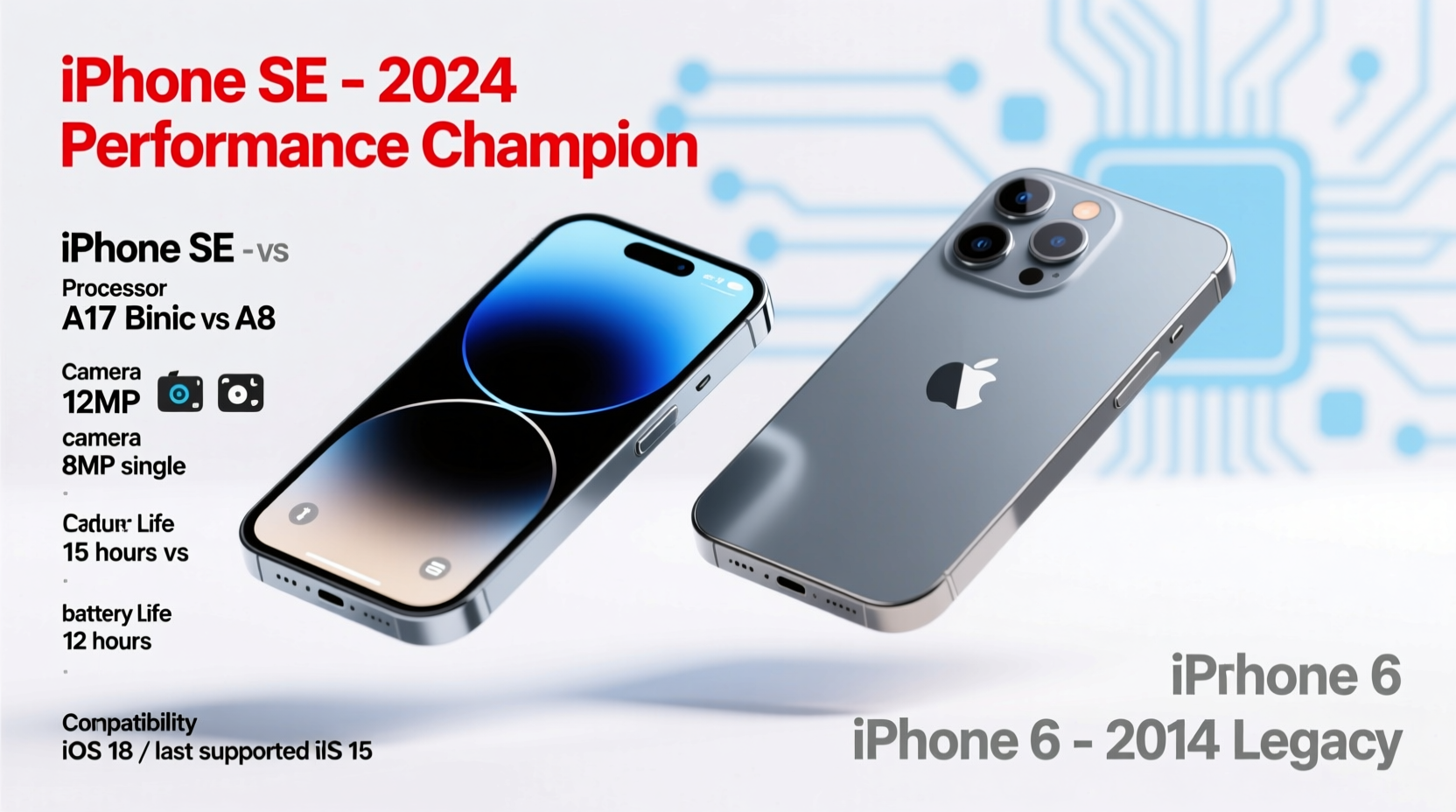
The iPhone 6 runs on the Apple A8 chip with 1GB of RAM. At launch, it was powerful. Today, it struggles with basic tasks. Multitasking is sluggish, app launches take seconds longer than they should, and background refresh often fails. The latest iPhone SE (3rd generation, 2022) uses the A15 Bionic chip—the same processor found in the iPhone 13 series. This isn't just an incremental upgrade; it's a generational leap.
Real-world implications are immediate: apps open instantly, Face ID and Touch ID respond without delay, and iOS updates install smoothly. Most importantly, the iPhone SE supports iOS 17 and will likely receive updates through 2026. The iPhone 6 stopped receiving updates after iOS 12, leaving it vulnerable to security threats and incompatible with modern apps.
Camera Capabilities: From Basic to Competitive
The iPhone 6 features an 8MP rear camera with no optical image stabilization and weak low-light performance. Video tops out at 1080p at 30fps. By today’s standards, it's underwhelming. The iPhone SE (3rd gen) packs a 12MP main sensor with Portrait mode, Smart HDR 4, Deep Fusion, and 4K video recording at up to 60fps.
You don’t need to be a photography enthusiast to notice the difference. Whether capturing memories, scanning documents, or joining video calls, the SE delivers sharper images, better dynamic range, and more consistent color accuracy. Features like Night mode mean usable photos in dim lighting—something the iPhone 6 simply cannot do.
“Even budget smartphones now outperform legacy devices in computational photography. The software enhancements alone make older cameras obsolete.” — David Lin, Mobile Imaging Analyst at TechPulse Weekly
Detailed Comparison: iPhone SE vs iPhone 6
| Feature | iPhone 6 | iPhone SE (3rd Gen) |
|---|---|---|
| Release Year | 2014 | 2022 |
| Processor | A8 Chip | A15 Bionic |
| RAM | 1GB | 4GB |
| Rear Camera | 8MP, 1080p video | 12MP, 4K60 video, Night mode |
| Front Camera | 1.2MP | 7MP, Retina Flash |
| Battery Life | ~14 hours talk time | ~17 hours talk time |
| iOS Support | Max: iOS 12 | Supports iOS 17+, future updates |
| Storage Options | 16/32/64/128GB | 64/128/256GB |
| Water Resistance | None | IP67 (up to 1m for 30 mins) |
| Starting Price (New) | Discontinued | $429 |
Real-World Example: Sarah’s Upgrade Journey
Sarah, a freelance writer based in Portland, used her iPhone 6 daily for emails, note-taking, and occasional photography. By 2023, she noticed her phone freezing during Zoom calls and failing to load Google Docs properly. She delayed upgrading due to cost concerns and emotional attachment to her device. After purchasing a refurbished iPhone SE for $299, her workflow transformed. Apps loaded instantly, her notes sync reliably across devices via iCloud, and she finally started using voice-to-text efficiently. “It felt like getting a new brain,” she said. “I didn’t realize how much mental energy I was wasting waiting for my old phone.”
Her experience reflects a broader trend: aging phones don’t just slow down—they actively hinder productivity and increase digital stress.
Battery and Longevity: Beyond Just One Day
The iPhone 6’s battery, even when replaced, rarely lasts a full day with moderate use in 2024. Background processes, push notifications, and screen-on time all strain the aging lithium-ion cell. The iPhone SE, while not class-leading in battery life, handles modern usage patterns far better. With optimized power management from the A15 chip and support for faster charging (with adapter), it consistently delivers a full day—even with heavy social media, navigation, and messaging.
Moreover, the SE includes IP67 water resistance—a critical feature if you’ve ever spilled coffee near your desk or walked in the rain. The iPhone 6 offers zero protection, making it fragile in everyday situations.
Step-by-Step Guide to Upgrading Smoothly
Moving from an iPhone 6 to a modern device requires careful data migration. Follow this timeline for a seamless transition:
- Back up your iPhone 6: Connect to Wi-Fi and go to Settings > [Your Name] > iCloud > iCloud Backup > Back Up Now. Alternatively, back up via iTunes on a computer.
- Verify the backup: Check iCloud settings to confirm the backup completed successfully.
- Set up your new iPhone SE: Power on, follow setup prompts, and choose “Restore from iCloud Backup” when prompted.
- Wait for restoration: This may take 30 minutes to several hours depending on data size and internet speed.
- Update apps and re-authenticate services: Some apps (banking, email, two-factor accounts) will require re-login.
- Test key functions: Make a call, send a message, take a photo, and open frequently used apps to ensure everything works.
Frequently Asked Questions
Can the iPhone 6 still be used safely in 2024?
No, not securely. Without iOS updates, the iPhone 6 lacks critical security patches. It’s vulnerable to malware, phishing, and unpatched browser exploits. Even basic web browsing poses risks. Using it as a primary device is strongly discouraged.
Is the iPhone SE too powerful for basic users?
Not at all. While the A15 chip exceeds what most users need, that excess power ensures longevity. The phone won’t slow down over time, and future app updates won’t cripple performance. For light users, this means years of smooth operation without needing another upgrade soon.
Does the iPhone SE feel like the iPhone 6?
In hand, yes—especially if you prefer smaller phones. Both have flat edges and compact builds. However, the SE has a stronger glass front, aluminum frame, and a more responsive display. It’s lighter, sturdier, and feels more modern despite the nostalgic design.
Final Verdict: Yes, Upgrade—And Sooner Than Later
Upgrading from the iPhone 6 to the iPhone SE isn’t just about better specs—it’s about reclaiming reliability, security, and peace of mind. The iPhone 6 served millions well, but its technological lifespan ended years ago. Continuing to rely on it means accepting constant lags, compatibility issues, and exposure to online threats.
The iPhone SE brings you into the present: secure software, capable hardware, and access to modern apps and services. At around $300–$400 for a new or certified refurbished model, it’s one of the most cost-effective upgrades available. You’re not just buying a new phone—you’re investing in years of dependable use.




 浙公网安备
33010002000092号
浙公网安备
33010002000092号 浙B2-20120091-4
Comments
No comments yet. Why don't you start the discussion?