
As Apple continues to release new models every year, older flagships like the iPhone XS find themselves compared not just to current devices but also to newer budget options like the iPhone SE. Released in 2018, the iPhone XS was once at the top of Apple’s lineup—boasting premium design, advanced camera systems, and powerful internals. The third-generation iPhone SE, launched in 2022, carries a much lower price tag while packing a surprisingly capable punch. So, nearly six years after its debut, is the iPhone XS still a worthwhile choice in 2024?
The answer depends on what you value most: raw performance, long-term software support, camera quality, or cost efficiency. Let’s break down both phones across key categories to help you decide whether holding onto—or buying—an iPhone XS makes sense today.
Performance and Hardware Longevity
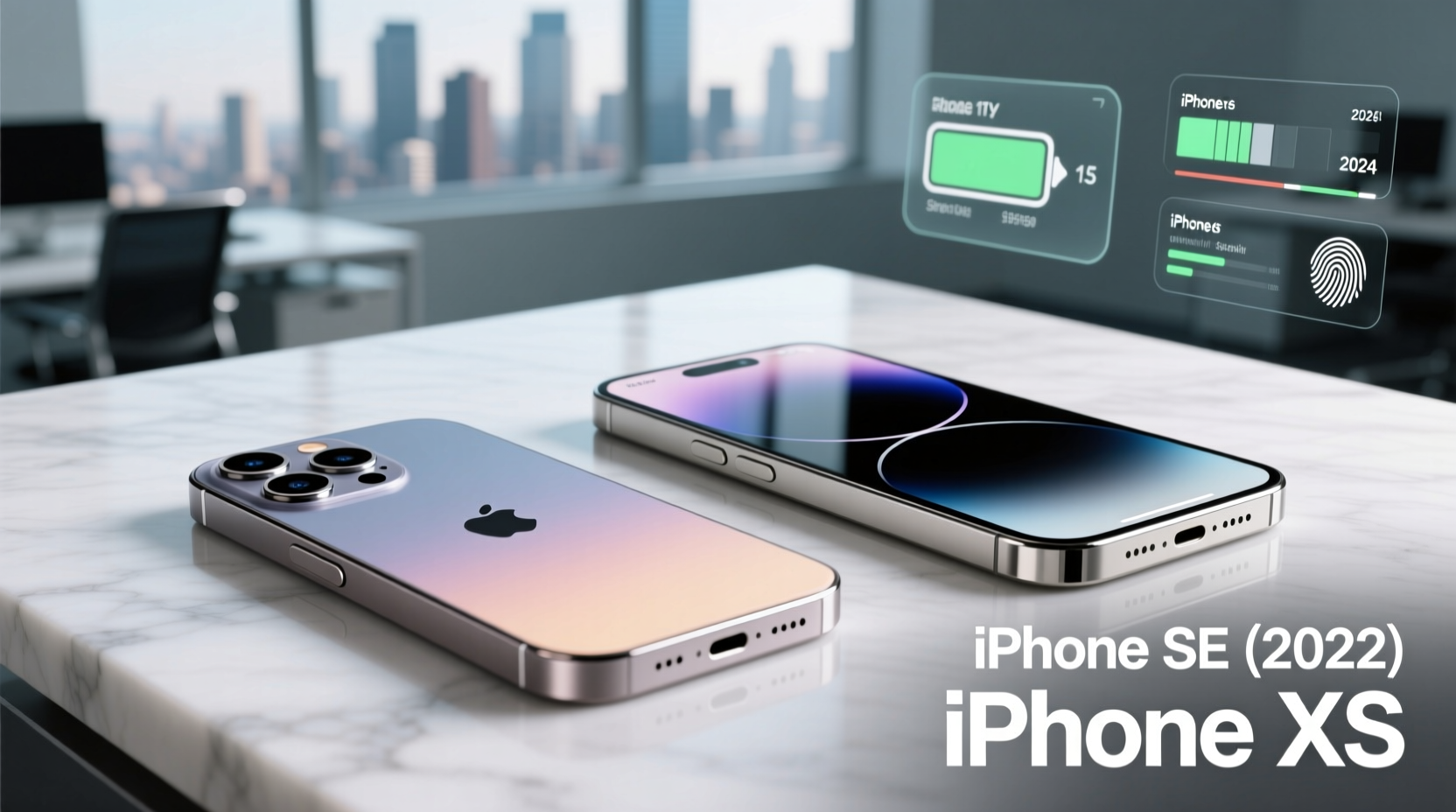
The iPhone XS runs on Apple’s A12 Bionic chip, which was groundbreaking in 2018. At the time, it offered desktop-class performance and efficient machine learning capabilities. Fast forward to 2024, and while the A12 still handles everyday tasks like web browsing, messaging, and social media with ease, it shows signs of aging under heavier loads—especially when multitasking or running modern games and AR applications.
In contrast, the iPhone SE (2022) uses the A15 Bionic chip—the same processor found in the iPhone 13 series. This gives it a massive advantage in CPU and GPU performance, making it significantly faster in app launches, photo processing, and gaming. In benchmarks, the A15 outperforms the A12 by over 50% in single-core and more than double in multi-core tasks.
However, iOS optimization remains one of Apple’s strongest suits. Even with older hardware, iPhones tend to remain responsive longer than Android counterparts. The iPhone XS still receives app updates and can run iOS 17, though some features like StandBy mode are excluded due to hardware limitations.
Camera Capabilities: Still Competitive?
The iPhone XS features a dual-camera system: 12MP wide and 12MP telephoto lenses with optical image stabilization on the main sensor. It supports Portrait Mode, Depth Control, and Smart HDR. For its era, this setup delivered excellent dynamic range and color accuracy.
Fast-forward to 2024, and the iPhone SE relies on a single 12MP wide lens. While it lacks a telephoto or ultra-wide option, it benefits from the superior A15 processor, enabling computational photography features like Smart HDR 4 and improved low-light performance through Deep Fusion. However, without a second lens, zooming is purely digital, leading to quality loss beyond 2x magnification.
In side-by-side daylight comparisons, the XS holds up remarkably well. Its images are slightly warmer and less processed, which some photographers prefer. But in low light, the SE often produces cleaner, brighter photos thanks to newer image signal processing.
“Even five-year-old iPhones can take great photos, but lighting conditions and processing matter more than megapixels.” — David Kim, Mobile Photography Instructor
Design and Display Experience
The iPhone XS introduced Apple’s stainless steel frame and OLED Super Retina display—a major upgrade from previous LCD models. With a resolution of 2436 x 1125 pixels and true blacks enabled by OLED technology, the screen remains vibrant and sharp even by today’s standards. Its compact 5.8-inch size fits comfortably in one hand, appealing to users who dislike oversized devices.
The iPhone SE, on the other hand, sticks with a traditional 4.7-inch LCD IPS display and thick bezels. It’s functional but feels outdated next to modern edge-to-edge screens. Touch ID replaces Face ID, which some users still prefer for convenience—especially when wearing masks or lying down.
If you value display quality and immersive viewing, the XS wins decisively. But if you like smaller phones and don’t mind an older interface, the SE’s design offers familiarity and durability in a simpler package.
Detailed Comparison Table
| Feature | iPhone XS (2018) | iPhone SE (2022) |
|---|---|---|
| Chipset | A12 Bionic | A15 Bionic |
| Display | 5.8\" OLED (Super Retina) | 4.7\" LCD (Retina HD) |
| Resolution | 2436 x 1125 | 1334 x 750 |
| Rear Cameras | Dual: 12MP Wide + 12MP Telephoto | Single: 12MP Wide |
| Front Camera | 7MP TrueDepth (Face ID) | 7MP (Touch ID) |
| Biometrics | Face ID | Touch ID |
| Battery Life (Video Playback) | Up to 14 hours | Up to 15 hours |
| iOS Support (Expected End) | ~2025 (iOS 18 likely last) | ~2027–2028 (A15 supported longer) |
| Newest Compatible OS | iOS 17 | iOS 17 |
| Starting Storage | 64GB | 64GB |
Real-World Example: Daily Use After Five Years
Consider Sarah, a freelance writer who bought an iPhone XS at launch in 2018. She upgraded her storage to iCloud and avoided heavy gaming. By 2023, she noticed slower app launches and occasional stutters in Safari with multiple tabs open. Her battery health dropped to 78%, requiring a midday charge. She considered switching to the iPhone SE for its modern chip and lower price.
After testing both, she kept the XS for its superior screen and camera versatility but replaced the battery. For her workflow—mostly writing, email, and video calls—the XS remained sufficient. However, had she used photo editing apps or relied on augmented reality tools, the SE’s A15 would have made a noticeable difference.
This scenario illustrates that longevity isn’t just about specs—it’s about usage patterns. Light users may stretch an XS further; power users will benefit from the SE’s modern foundation.
Software Support Outlook
Apple typically supports iPhones with major iOS updates for 5–6 years. The iPhone XS launched with iOS 12 and currently runs iOS 17. Given Apple’s pattern, iOS 18 in 2025 will likely be its final update. Beyond that, security patches may continue for a short time, but no new features.
The iPhone SE (2022), with its A15 chip, is expected to receive updates until at least 2027, possibly into 2028. That extra three years of software relevance matters for long-term ownership, especially as apps become more demanding.
Frequently Asked Questions
Can the iPhone XS run all current apps smoothly?
Most everyday apps work fine, but newer games, AR experiences, and professional photo/video apps may lag or lack compatibility. Apps optimized for newer chips might not perform optimally on the A12.
Is the iPhone SE better value than the XS in 2024?
Yes, for most buyers. The SE offers newer performance, longer software support, and 5G connectivity at a lower price point. Unless you specifically want Face ID or a better display, the SE is the smarter investment.
Should I repair my iPhone XS or upgrade?
If your XS has battery issues or cracked glass, repairs cost $100–$300 depending on damage. Weigh that against spending $429 for a new iPhone SE. If you're planning to use the phone for more than two years, upgrading is usually more cost-effective in the long run.
Checklist: Should You Keep or Replace Your iPhone XS?
- ✅ Is your battery health above 80%?
- ✅ Does it run iOS 17 without major lag?
- ✅ Are you satisfied with the camera for daily shots?
- ✅ Do you need Face ID or prefer the OLED screen?
- ✅ Will you only use it lightly for another 1–2 years?
If you answered “yes” to most, keeping the XS is reasonable. If not, moving to the SE—or even a newer budget model—will deliver a noticeably smoother experience.
Final Verdict: Is the iPhone XS Still Worth It?
The iPhone XS was a landmark device in Apple’s history. In 2024, it’s no longer a flagship, but it’s not obsolete either. For casual users who appreciate premium build, Face ID, and a high-quality OLED display, it remains functional—especially with a battery replacement.
Yet, the iPhone SE (2022) presents a compelling alternative. With a far more powerful chip, longer software support, and a starting price under $500, it offers future-proofing that the XS simply can’t match. Unless you’re emotionally attached to the XS design or need its dual-camera flexibility, the SE is the logical choice for anyone seeking reliable iPhone performance on a budget.
Technology evolves quickly, but Apple’s ecosystem ensures even older devices retain usefulness. Choosing between them comes down to priorities: nostalgia and display quality versus speed, longevity, and value.




 浙公网安备
33010002000092号
浙公网安备
33010002000092号 浙B2-20120091-4
Comments
No comments yet. Why don't you start the discussion?