
For years, iPhone users have enjoyed a tightly integrated ecosystem—seamless syncing across devices, consistent software updates, and a polished user experience. But as Samsung's Galaxy series continues to evolve, many longtime Apple fans are asking: is switching to the Galaxy S10 actually worth it? The Galaxy S10, though not the latest model, still holds strong with powerful hardware, advanced features, and greater customization than iOS allows. However, changing ecosystems isn’t just about specs—it’s about lifestyle compatibility, long-term usability, and personal priorities.
This article breaks down the key considerations for an iPhone user contemplating the leap to the Galaxy S10. From software flexibility to ecosystem lock-in, we’ll examine whether the upgrade delivers enough value to justify leaving Apple behind.
Performance and Hardware: A Closer Look
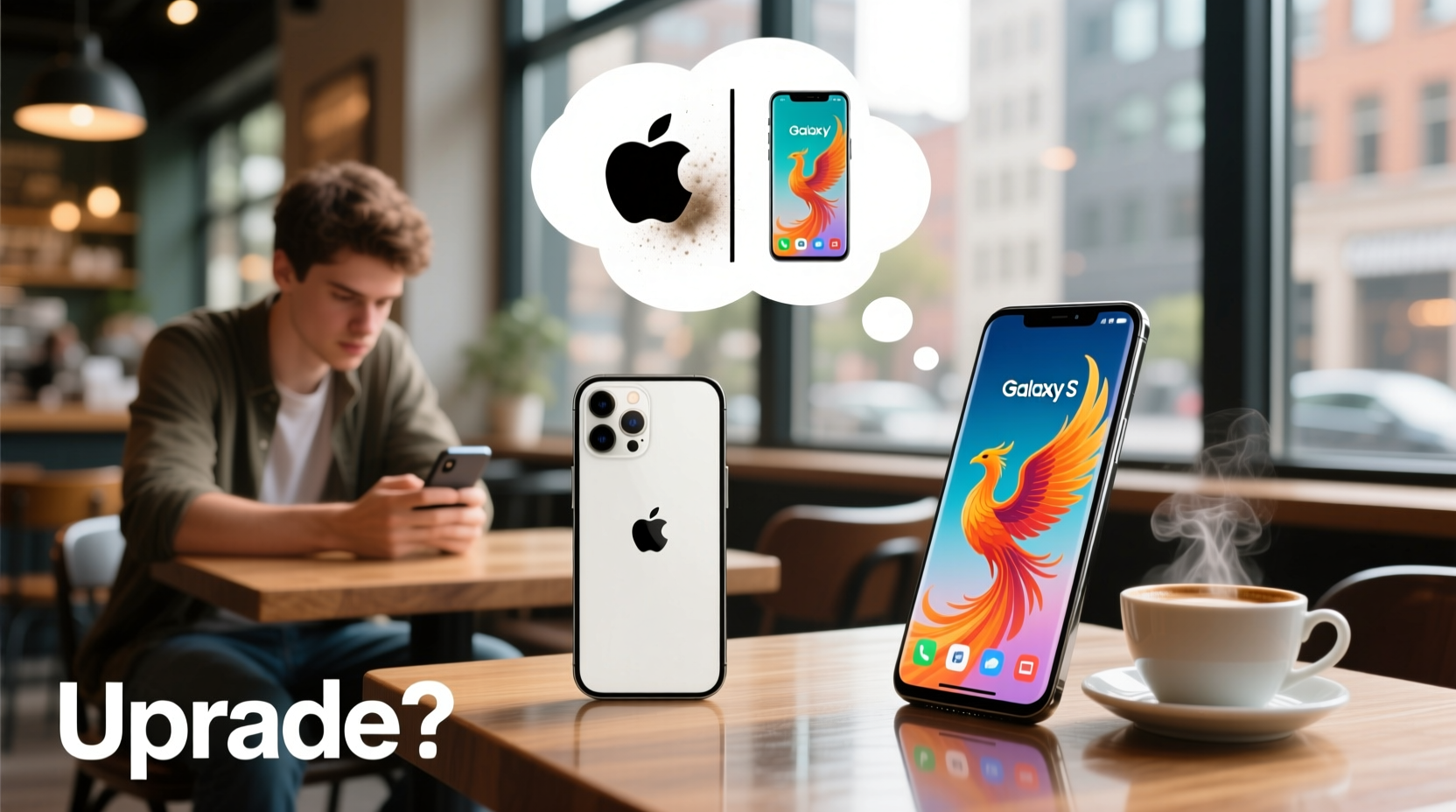
The Galaxy S10 launched in 2019 with flagship-tier components, including Samsung’s Exynos 9820 or Qualcomm Snapdragon 855 (depending on region), 8GB of RAM, and UFS 2.1 storage. While newer phones have surpassed it, the S10 still handles everyday tasks with ease—browsing, multitasking, and even gaming remain smooth under normal use.
In contrast, iPhones from the same era, like the iPhone XS, used Apple’s A12 Bionic chip, which excelled in single-core performance and app optimization. However, Android’s advantage lies in raw multitasking potential and background processing flexibility—something power users often appreciate.
The S10 also introduced an ultrasonic fingerprint sensor embedded in the display—a first for Samsung—and a dynamic AMOLED screen with HDR10+ support. Its 6.1-inch curved display offers vibrant colors and deep blacks, rivaling the iPhone’s Super Retina XDR displays. Additionally, the S10 supports expandable storage via microSD (up to 512GB), a feature absent on all iPhones.
Ecosystem Lock-In: Can You Really Leave Apple?
One of the biggest hurdles for iPhone users isn’t the phone itself—it’s the ecosystem. iCloud, iMessage, FaceTime, AirDrop, and seamless Handoff between Mac, iPad, and Apple Watch create a frictionless environment that’s hard to replicate.
Switching to Android means losing native iMessage support, which degrades message quality when texting other iPhone users (green bubbles vs. blue). Group chats can become fragmented, and features like Memoji or Animoji don’t carry over. Similarly, file sharing via AirDrop is replaced by slower alternatives like Bluetooth or third-party apps such as Samsung Quick Share.
“Ecosystem loyalty is stronger than brand loyalty. People don’t leave Apple because they love the logo—they stay because everything just works together.” — David Chen, Mobile Ecosystem Analyst at TechInsight Group
That said, Google has made strides in cross-device integration. With a Chromebook, Pixel Buds, and Android phone, you can achieve similar continuity. For users who already rely on Gmail, Google Drive, or YouTube, the transition is smoother. Samsung also offers its own suite of tools—Samsung DeX for desktop-like productivity, Smart Switch for easy migration, and Samsung Notes for stylus-based jotting.
Camera Comparison: Quality vs. Flexibility
The Galaxy S10 features a triple rear camera setup: a 12MP main sensor, a 12MP telephoto lens, and a 16MP ultra-wide lens. This gives it a distinct edge over most iPhones of its time, which lacked ultra-wide options. The ability to capture more in a single shot—especially in landscapes or tight indoor spaces—is a tangible benefit.
iPhones, on the other hand, prioritize computational photography. They produce more natural color tones, better dynamic range in challenging lighting, and superior video stabilization. If you frequently record vlogs or shoot in low light, the iPhone’s consistency might matter more than the S10’s versatility.
| Feature | Galaxy S10 | iPhone XS (Comparable Model) |
|---|---|---|
| Main Camera | 12MP, f/1.5–2.4 variable aperture | 12MP, f/1.8 |
| Ultra-Wide Lens | Yes (16MP) | No |
| Telephoto Lens | Yes (2x optical zoom) | Yes (2x optical zoom) |
| Front Camera | 10MP + 8MP depth sensor | 7MP |
| Video Recording | 4K at 60fps | 4K at 60fps |
The S10 also supports features like Live Focus for portrait mode, HDR10+ video recording, and customizable scene optimizer. While these add fun and functionality, they don’t always translate to better photos—just more options. iPhone users accustomed to point-and-shoot excellence may find the abundance of settings overwhelming.
Real-Life Transition: A Mini Case Study
Sarah, a graphic designer from Portland, used iPhones exclusively from 2012 to 2021. She relied heavily on iMessage for client communication, synced notes across her iPad and MacBook, and used AirDrop daily. When her iPhone 8 started slowing down, she considered the Galaxy S10 after seeing its screen quality and multi-lens camera praised online.
She made the switch using Samsung Smart Switch, which migrated contacts, photos, and messages. However, she quickly noticed gaps: iMessages turned into SMS, disrupting group threads; her Apple Watch no longer worked; and syncing files with her Mac required Dropbox instead of iCloud Drive.
After three months, Sarah returned to iPhone. “The camera was great, and I loved the screen,” she said. “But I spent more time troubleshooting than creating. For me, workflow harmony beats hardware variety.”
Step-by-Step Guide: How to Test the Switch Safely
If you’re unsure, try a phased approach before fully committing:
- Borrow or rent a Galaxy S10 for a week to test daily use without financial risk.
- Migrate non-critical data using Smart Switch—photos, music, contacts—but keep your iPhone active.
- Test core workflows: sending messages, taking photos, using navigation, and connecting to smart devices.
- Check app availability: Some banking or enterprise apps may lack full Android support or behave differently.
- Evaluate battery life and charging: The S10 supports wireless and reverse wireless charging—try powering up earbuds or a friend’s phone.
- Decide within two weeks: Emotional attachment fades; practical fit matters more.
FAQ
Can I transfer my WhatsApp chats from iPhone to Galaxy S10?
Yes, but only partially. WhatsApp now supports transferring chat history from iOS to Android using a direct transfer tool via cable or Wi-Fi. However, media files may not migrate completely, and backups must be recent.
Will my AirPods work with the Galaxy S10?
Yes, AirPods function as standard Bluetooth headphones on Android. However, features like automatic switching, spatial audio, and battery level pop-ups won’t work. For full integration, consider Samsung’s Galaxy Buds.
Is the Galaxy S10 still supported with updates?
Samsung provided four years of major Android OS upgrades and security patches. As of 2024, the S10 is no longer receiving official updates, which could pose long-term security and app compatibility risks.
Final Verdict: Is the Upgrade Worth It?
The Galaxy S10 offers compelling advantages: a superior screen, expandable storage, ultra-wide camera, and deeper customization. For tech-savvy users frustrated by iOS limitations, it represents freedom—both literal and functional.
But for those deeply embedded in Apple’s ecosystem, the trade-offs are significant. Losing iMessage, breaking device continuity, and adapting to new workflows can outweigh the benefits of better hardware. The S10 is no longer cutting-edge, and its lack of future updates makes it a short-term solution at best.
If you’re upgrading from an older iPhone (pre-iPhone X) and want a fresh experience, the S10 might feel like a revelation. But if you’re on an iPhone 11 or newer, the upgrade isn’t transformative—and leaving Apple should be about more than specs. It should be about values: Do you prioritize control and choice, or consistency and integration?
Conclusion
Switching from iPhone to Galaxy S10 isn’t just a device change—it’s a lifestyle recalibration. Weigh the tangible benefits against the invisible costs of ecosystem disruption. Try before you buy, test your critical workflows, and remember: the best phone is the one that disappears into your day, not the one that demands your attention.




 浙公网安备
33010002000092号
浙公网安备
33010002000092号 浙B2-20120091-4
Comments
No comments yet. Why don't you start the discussion?