
The iPhone X and iPhone XR share a similar design language—flat edges, glass backs, and Face ID—but they are not identical devices. When the XR launched, many users noticed its larger size compared to the X and wondered: can I use my iPhone X case on my new XR? It might seem like a clever way to reuse an old accessory, but the reality is more nuanced. While it may appear to fit at first glance, subtle differences in dimensions, camera placement, and button layout create real-world consequences.
This decision isn’t just about aesthetics—it affects device protection, usability, and even resale value. Whether you're trying to save money, reduce waste, or simply love a particular case, understanding the compatibility trade-offs is essential.
Size & Fit: The Core Challenge
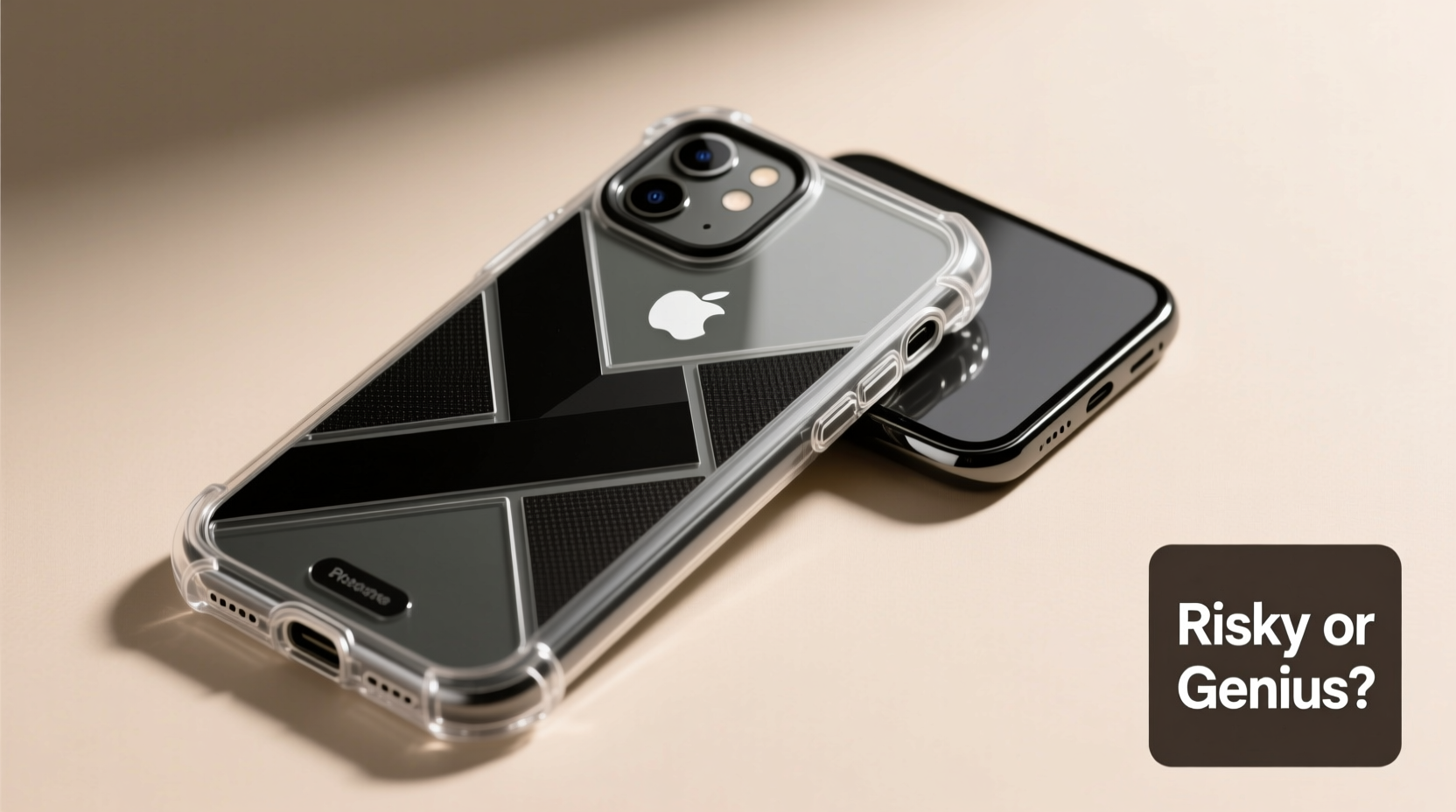
The most critical factor in case compatibility is physical dimensions. Despite both phones featuring a 5.8-inch display (on paper), the iPhone XR has a slightly different footprint due to its screen technology and internal structure.
| Model | Height | Width | Thickness |
|---|---|---|---|
| iPhone X | 143.6 mm | 70.9 mm | 7.7 mm |
| iPhone XR | 150.9 mm | 75.7 mm | 8.3 mm |
The XR is taller, wider, and thicker than the X. This means an iPhone X case will be too small to accommodate the XR properly. Attempting to force the phone into the case can cause stress on the frame, misalignment of ports, and potential damage to the screen or back glass during insertion.
Even if the phone slides in, gaps around the edges compromise shock absorption. A loose fit defeats the primary purpose of a case—protection from drops and impacts.
Camera & Port Alignment: Functionality at Risk
One of the most overlooked aspects of cross-compatibility is cutout precision. Cases are designed with exact openings for cameras, speakers, charging ports, and buttons. Even a 1mm offset can interfere with functionality.
- Camera Cutout: The iPhone X features a dual-camera system aligned vertically. The XR has only a single lens, but its position differs slightly. An X case may obstruct part of the XR’s camera or leave it under-protected.
- Speaker & Microphone Grills: Misaligned speaker cutouts muffle sound quality and reduce microphone sensitivity, affecting call clarity and voice recording.
- Charging Port: If the bottom lip of the case extends past the XR’s longer body, it could block the Lightning port or put pressure on the cable during charging.
Over time, constant friction from a poorly fitting case can wear down the finish around buttons and ports, leading to cosmetic degradation and reduced water resistance.
“Precision engineering matters in mobile accessories. A case that doesn’t align perfectly can accelerate wear and compromise everyday usability.” — David Lin, Mobile Hardware Analyst at TechDurability Labs
Risk vs. Reward: Is It Worth It?
Using an iPhone X case on an XR comes with tangible risks, but some users still attempt it for practical reasons. Let’s weigh the pros and cons.
| Aspect | Advantage (Genius?) | Risk (Risky?) |
|---|---|---|
| Cost Savings | Reusing an old case avoids new purchase | Poor fit leads to damaged phone or case |
| Eco-Friendliness | Reduces electronic waste | May shorten phone lifespan due to lack of protection |
| Aesthetic Preference | Loved design unavailable for XR | Unbalanced look; phone protrudes awkwardly |
| Immediate Use | No waiting for delivery | Temporary solution becomes permanent out of convenience |
In most cases, the risks outweigh the benefits. The illusion of savings vanishes if your phone suffers avoidable damage. True cost-efficiency includes longevity and performance—not just upfront price.
Real-World Example: Sarah’s Short-Term Fix
Sarah upgraded from an iPhone X to an XR and kept her favorite minimalist leather case, believing the similar design would suffice. At first, the phone fit “mostly,” though she had to press firmly to close the back flap. Within three weeks, she dropped her phone while hiking. The case shifted on impact, exposing the corner. The screen cracked, and Apple support noted that the third-party case may have contributed to uneven force distribution.
She later calculated that the $25 saved by reusing the case cost her $149 in screen repair—and another $35 for a proper XR-compatible case. More importantly, her confidence in daily use diminished after the incident.
Sarah’s experience illustrates how minor compromises can lead to significant consequences when protection fails at a critical moment.
What to Do Instead: A Smart Upgrade Path
If you’re attached to your current case but own an XR now, consider these smarter alternatives:
- Check for Universal or Adjustable Cases: Some brands offer modular designs that fit multiple iPhone models through interchangeable frames or stretchable materials.
- Look for Recycled Material Options: Eco-conscious brands like Pela and Nimble make compostable or recyclable cases specifically for the XR, reducing environmental impact without sacrificing fit.
- Sell or Donate Your Old Case: List your iPhone X case online. Many collectors or repair shops seek OEM accessories for refurbishments.
- Invest in Drop-Tested Protection: Prioritize cases rated for military-grade drop protection (MIL-STD-810G) and verified for your exact model.
Frequently Asked Questions
Can an iPhone X case damage my XR?
Yes. Forcing the phone into a smaller case can scratch the finish, stress the frame, and weaken structural integrity over time. Poor alignment also increases the risk of internal component damage during drops.
Are there any iPhone X cases that fit the XR?
Generally, no. Due to dimensional differences, even flexible silicone cases may not provide full coverage or secure fit. Some third-party \"universal fit\" cases claim compatibility, but they often sacrifice precision for stretchiness, which reduces protection.
Why do the X and XR look so similar but aren’t compatible?
Apple maintained a consistent design language across both models for brand continuity, but optimized the XR for affordability and battery life, resulting in a larger chassis. The screens differ in type (OLED vs. LCD) and physical mounting, contributing to size variance despite similar advertised screen sizes.
Conclusion: Choose Protection Over Convenience
While using an iPhone X case on an XR might seem like a clever shortcut, it ultimately undermines the very purpose of owning a protective accessory. The slight differences in size, camera layout, and port alignment make this combination more risky than resourceful. Real protection comes from precise engineering, not improvisation.
Your smartphone is a significant investment. Protecting it properly ensures better performance, longer lifespan, and peace of mind. Rather than stretching compatibility beyond limits, choose a case designed for your specific device. That’s not just smart—it’s genuinely genius.




 浙公网安备
33010002000092号
浙公网安备
33010002000092号 浙B2-20120091-4
Comments
No comments yet. Why don't you start the discussion?