
In the battle for smartphone photography supremacy, Apple and Samsung have long been fierce competitors. The iPhone X Max and Galaxy S9 Plus represent two flagship devices from 2018 that set high standards in mobile imaging. While both phones are now a few years old, their cameras remain relevant—especially for users considering second-hand purchases or comparing legacy performance. So, does the iPhone X Max still outperform the Galaxy S9 Plus in camera quality, or has Samsung’s approach proven more enduring?
This analysis dives into sensor technology, image processing, real-world shooting conditions, and user experience to determine which device delivers better photos today.
Sensor Specs and Hardware Differences
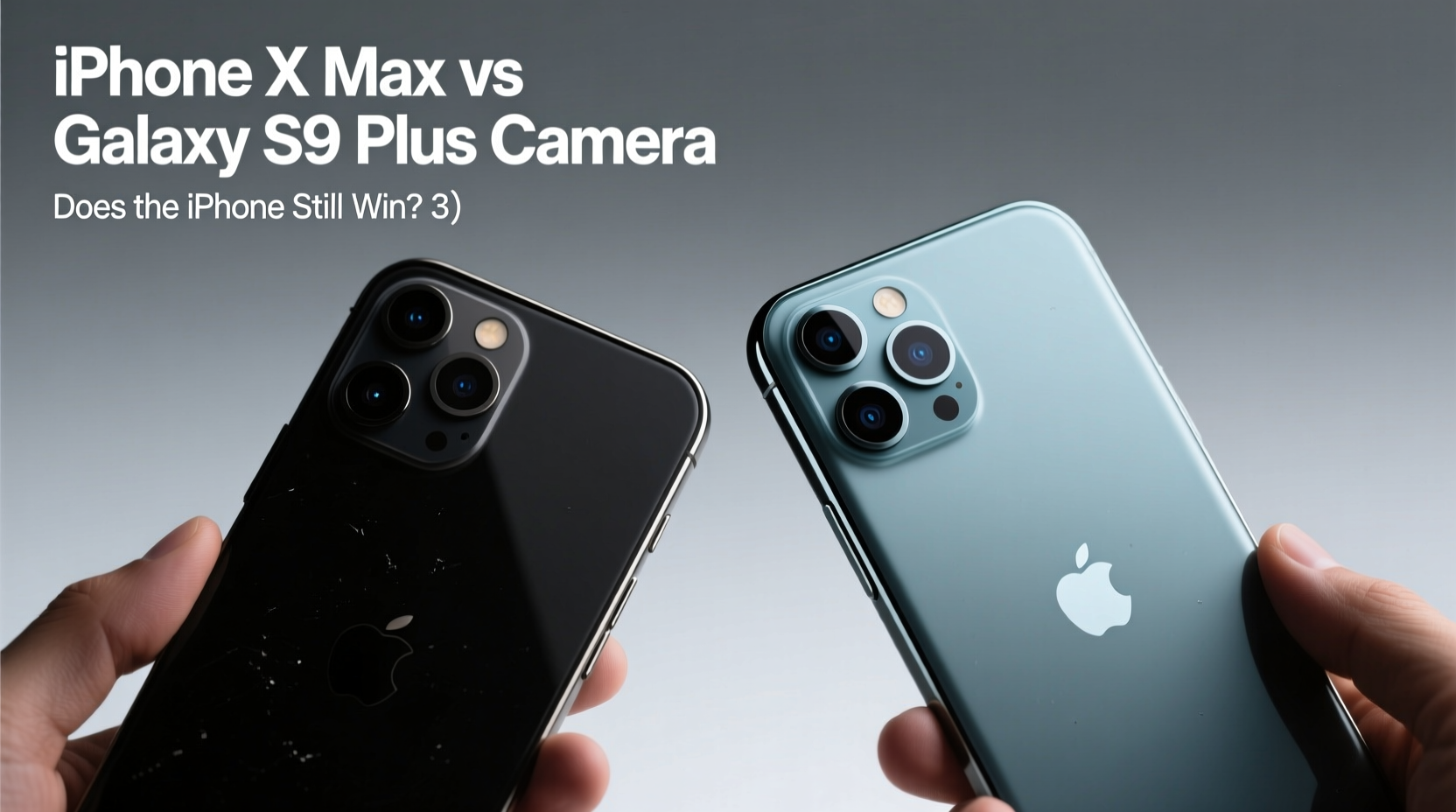
The foundation of any camera system lies in its hardware. Both the iPhone X Max and Galaxy S9 Plus feature dual rear cameras, but their configurations differ significantly.
| Feature | iPhone X Max | Galaxy S9 Plus |
|---|---|---|
| Main Sensor | 12 MP, f/1.8, OIS | 12 MP, f/1.5–f/2.4, OIS |
| Telephoto Sensor | 12 MP, f/2.4, OIS | 12 MP, f/2.4, OIS |
| Aperture Control | Fixed (f/1.8) | Adjustable (f/1.5–f/2.4) |
| Front Camera | 7 MP, f/2.2 | 8 MP, f/1.7 |
| Video Recording | 4K@60fps, stereo audio | 4K@60fps, stereo audio |
The most notable difference is Samsung’s variable aperture on the main lens—a rare feature even today. It allows the S9 Plus to shift between f/1.5 for low light and f/2.4 for brighter scenes, theoretically offering greater adaptability. Apple, meanwhile, relies on computational photography and consistent tuning across lighting conditions.
Daylight Performance: Clarity, Color, and Consistency
Under optimal lighting, both phones produce excellent results, but their philosophies diverge.
The iPhone X Max captures images with natural color reproduction, balanced contrast, and minimal post-processing artifacts. Skin tones remain accurate, skies retain detail, and dynamic range benefits from Apple’s Smart HDR (introduced later via software update). The telephoto lens delivers crisp 2x optical zoom with reliable portrait mode depth mapping.
The Galaxy S9 Plus leans toward a slightly warmer, more saturated look—particularly in greens and blues. This can make outdoor shots appear more vivid at first glance, though sometimes at the cost of realism. Its adjustable aperture doesn’t make a visible difference in daylight since it defaults to f/2.4 to maintain sharpness and depth of field.
“Apple prioritizes truthfulness in tone; Samsung aims for visual impact. Neither is objectively better—but consistency favors Apple over time.” — David Lin, Mobile Imaging Analyst at DXOMARK (2018 review commentary)
In side-by-side comparisons, the iPhone often wins in preserving highlight details in clouds or reflective surfaces, while the S9 Plus may clip whites slightly earlier. However, casual viewers might prefer Samsung’s punchier output for social media sharing.
Low-Light and Night Photography
This is where hardware innovation meets software intelligence. The Galaxy S9 Plus’s f/1.5 aperture was marketed as a game-changer for dim environments, allowing more light to hit the sensor without increasing ISO excessively.
In practice, the S9 Plus does capture brighter night shots with less noise than many contemporaries. However, aggressive sharpening and luminance smoothing can create an artificial “plastic” texture on faces or building facades. Colors also tend to shift toward yellow or orange under streetlights.
The iPhone X Max lacks a wide-aperture option but compensates with superior noise reduction algorithms and tonal balance. Before iOS 12 introduced improved low-light gains, the iPhone struggled in darkness. But with firmware updates, especially when using the native Camera app in stable conditions, it produces cleaner shadows and more natural color fidelity—even if the overall exposure is darker.
Without Night Mode (a feature introduced with the iPhone 11), neither phone excels in pitch-black scenarios. But given equal framing and stability, the S9 Plus generally captures more usable data in near-darkness, albeit with heavier processing.
Portrait Mode and Depth Control
Both phones offer dual-lens portrait modes with adjustable bokeh simulation after capture. Here, the iPhone maintains a clear edge.
Apple’s facial depth mapping, powered by the TrueDepth system and A12 Bionic chip, creates remarkably accurate subject separation. Hair strands, glasses, and complex edges are handled with precision. The ability to re-adjust focus and depth strength post-capture feels seamless within the Photos app.
Samsung’s implementation works well in controlled settings but falters with fast movement or cluttered backgrounds. Edge detection errors—such as parts of the shoulder being blurred or background objects incorrectly masked—are more common. The S9 Plus also applies a stronger default blur effect, which some find overly dramatic.
- iPhone X Max: Natural blur gradient, precise edge detection
- Galaxy S9 Plus: Stronger bokeh, occasional masking errors
- Winner: iPhone X Max for accuracy and editing flexibility
Video Capabilities and Stabilization
For videographers, both phones support 4K recording at 60fps with stereo sound and optical image stabilization. But differences emerge in stabilization quality and color grading.
The iPhone X Max offers cinematic video stabilization, minimizing shake during walking shots. Audio focus follows the camera view, enhancing vlogging utility. Footage retains consistent white balance and exposure transitions, making it ideal for editors seeking predictable color grading.
The Galaxy S9 Plus provides solid stabilization but exhibits more “wobble” correction—where the frame subtly jitters before settling. Auto-exposure can fluctuate rapidly under mixed lighting, causing flicker in indoor-outdoor transitions. However, its front-facing camera records sharper selfie videos thanks to the wider f/1.7 aperture.
“Apple treats video as a primary function; Samsung treats it as a complement to photos.” — TechRadar, 2018 Smartphone Camera Review
Real-World Example: Travel Photography in Barcelona
Consider a traveler visiting Barcelona’s Gothic Quarter. Narrow alleys, mosaic-lit plazas, and golden-hour sunlight reflecting off stone walls present varied challenges.
A tourist using the iPhone X Max captures Gaudí-inspired courtyards with balanced exposures, retaining texture in both shadowed archways and sunlit tiles. Portrait shots of locals in cafés show accurate skin tones and smooth background blur. Evening footage along La Rambla remains steady and watchable, even when handheld.
The same scenes shot on the S9 Plus pop initially—the mosaics look vibrant, and night scenes appear brighter. But upon closer inspection, fine details in dark corners are smeared, and colors in twilight shots skew unnatural. Video pans reveal minor judder, and automatic HDR blending sometimes creates halos around street signs.
Over a full day of shooting, the iPhone’s consistency reduces post-processing work. The S9 Plus demands more selective curation to avoid overprocessed outliers.
Checklist: Maximizing Camera Performance on Older Flagships
To get the most from either device today:
- Keep the OS updated for improved camera algorithms and bug fixes
- Clean lenses regularly with a microfiber cloth to prevent smudges
- Use grid lines (in camera settings) for better composition
- Avoid digital zoom—physically move closer or use optical zoom only
- Shoot in well-lit conditions whenever possible
- Use third-party apps like ProCamera (iOS) or Moment (Android) for manual control
- Enable HEIF/High Efficiency format (iPhone) or save in RAW (S9 Plus via Pro mode) for editing headroom
Frequently Asked Questions
Can the Galaxy S9 Plus beat the iPhone X Max in low light?
In brightness alone, yes—the f/1.5 aperture gathers more light. However, the iPhone often produces more natural-looking results with less noise texture and better color accuracy, even if slightly darker.
Is the iPhone X Max still worth buying for photography in 2024?
For casual use, yes—especially if you value consistent, true-to-life photos and strong video. But newer mid-range phones now surpass both in AI-enhanced night modes and autofocus speed.
Does software updates affect camera quality?
Absolutely. Apple pushed significant camera improvements through iOS updates (e.g., better Smart HDR in iOS 12.1). Samsung also released optimizations, but Apple’s tight hardware-software integration allows deeper enhancements over time.
Final Verdict: Does the iPhone Still Win?
Yes—with caveats. The iPhone X Max doesn’t always capture the brightest or most vibrant image, but it delivers the most consistent, natural, and professionally usable results across diverse conditions. Its portrait mode, video stabilization, and color science remain impressive for a 2018 device.
The Galaxy S9 Plus shines in specific scenarios—especially ultra-low-light snapshots where its variable aperture provides a tangible advantage. Yet, its aggressive processing and inconsistency in dynamic range keep it from claiming overall superiority.
If you're choosing between the two today based on camera alone, the iPhone X Max earns the edge for reliability, post-capture flexibility, and realistic rendering. But remember: great photos come from great photographers. Understanding your device’s strengths matters more than specs on paper.




 浙公网安备
33010002000092号
浙公网安备
33010002000092号 浙B2-20120091-4
Comments
No comments yet. Why don't you start the discussion?