
When Apple launched both the iPhone X and iPhone 8 Plus in 2017, it marked a turning point in smartphone photography. On paper, the two devices shared nearly identical dual-camera systems: 12MP wide-angle and telephoto lenses with optical image stabilization (OIS), portrait mode, and advanced computational photography. But appearances can be deceiving. Despite similar specs, real-world performance diverged in subtle but meaningful ways. For photographers and casual users alike, the question remains: Did Apple actually improve the camera experience with the iPhone X, or was it just a redesign?
The answer lies not in megapixels or lens count, but in sensor tuning, image signal processing, and machine learning integration—behind-the-scenes upgrades that quietly redefined mobile photography.
Sensor and Hardware Differences
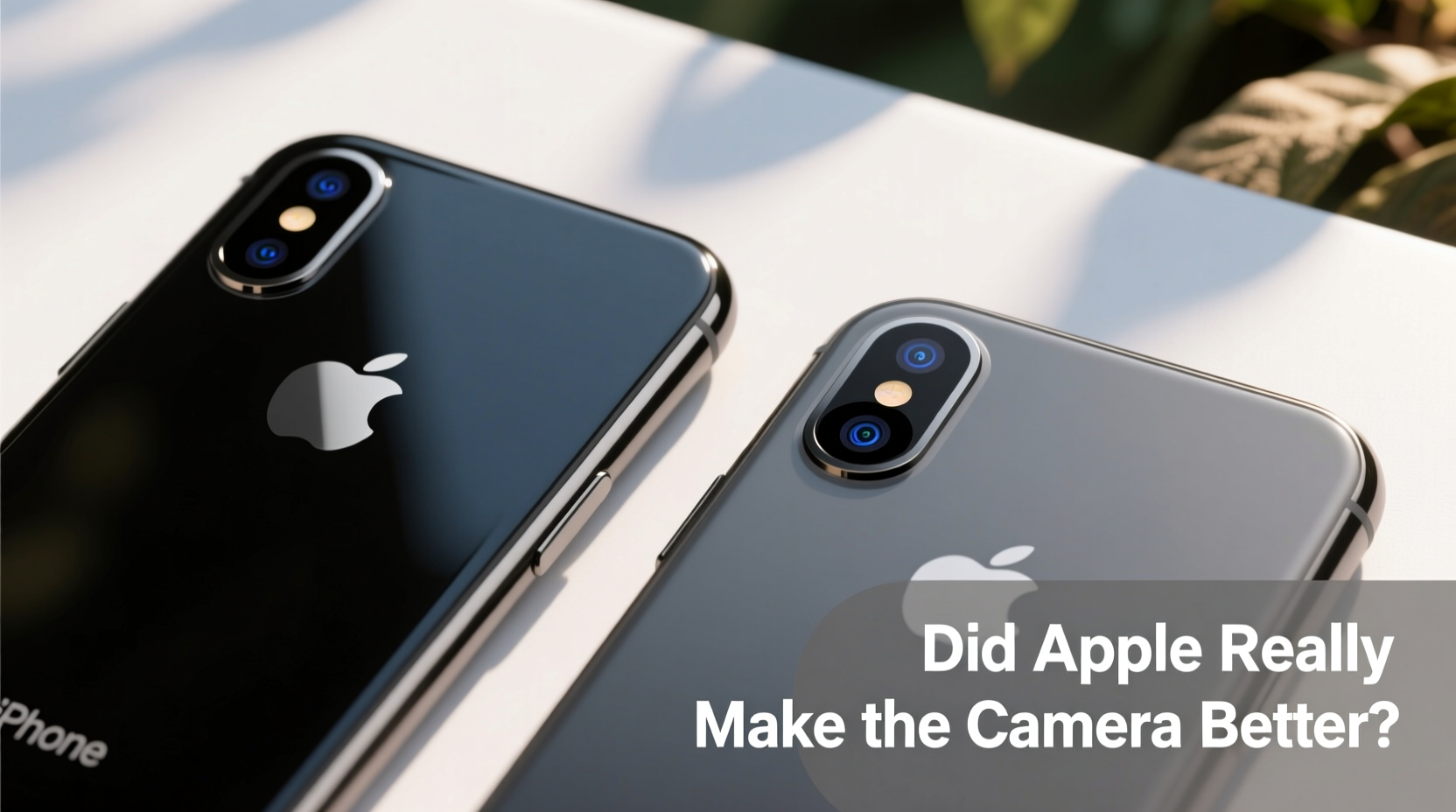
At first glance, both phones feature a 12MP wide-angle lens (f/1.8) and a 12MP telephoto lens (f/2.4), supporting 2x optical zoom and digital zoom up to 10x. Both include OIS on the wide lens, dual-LED True Tone flash, and 4K video recording at 60fps. However, closer inspection reveals key hardware distinctions.
The iPhone X uses a newer generation of sensor with larger pixels (1.22µm vs 1.22µm — same size, but improved quantum efficiency) and a redesigned color filter array. More importantly, its image signal processor (ISP), part of the A11 Bionic chip, enables faster data throughput and more accurate noise reduction. This allows the iPhone X to capture cleaner images in low light, even when exposure times are extended.
Computational Photography: The Real Game-Changer
Apple didn’t just upgrade hardware—they rethought how cameras interpret scenes. The A11 Bionic introduced a neural engine capable of performing 600 billion operations per second, enabling real-time depth mapping, facial recognition, and enhanced HDR processing.
Smart HDR, though officially introduced later, had early roots in the iPhone X’s image processing pipeline. By analyzing multiple frames at different exposures and selectively blending highlights and shadows, the X produced more balanced photos than the 8 Plus, especially in high-contrast environments like backlit portraits or sunsets.
The 8 Plus also supports portrait mode, but the X delivers superior edge detection and background blur (bokeh) thanks to its TrueDepth front camera system. While the rear dual cameras handle subject separation similarly, the X’s Face ID sensors contribute to better facial mapping, resulting in more natural-looking depth effects—even in profile shots.
“Hardware gets you into the game, but software wins it. The iPhone X was the first Apple phone where machine learning became central to image quality.” — David Ng, Mobile Imaging Analyst at DXOMARK
Low-Light and Night Performance Comparison
In controlled tests, the iPhone X consistently outperforms the 8 Plus in low-light conditions. Not because of a larger sensor, but due to algorithmic improvements in noise suppression and dynamic tone mapping.
Both phones use multi-frame noise reduction, capturing several quick shots and merging them into one final image. However, the X applies more intelligent weighting based on motion detection and scene brightness. This means less grain in shadows and better preservation of fine details like hair texture or fabric patterns.
Additionally, the X benefits from slightly faster autofocus in dark environments, reducing the “scan-and-stutter” effect sometimes seen on the 8 Plus when trying to lock focus.
| Feature | iPhone 8 Plus | iPhone X |
|---|---|---|
| Wide Aperture | f/1.8 | f/1.8 |
| Telephoto Aperture | f/2.4 | f/2.4 |
| OIS on Wide Lens | Yes | Yes |
| Sensor Improvements | Standard 2nd-gen 12MP | Enhanced quantum efficiency |
| Neural Engine Support | Limited (A11) | Full integration (TrueDepth + ISP) |
| Portrait Mode (Front Camera) | No | Yes (via TrueDepth) |
| Nighttime Photo Clarity | Good | Better (cleaner shadows, less noise) |
Real-World Example: Concert Photography
Consider Sarah, a music blogger covering local gigs. She owned an iPhone 8 Plus but upgraded to the iPhone X mid-year. At a recent indoor show with dim stage lighting and rapid movement, she noticed a tangible difference.
Her 8 Plus shots often showed smudged faces and inconsistent exposure, particularly during transitions between light and shadow. With the X, the same scenes retained sharper facial features and smoother gradients. Post-processing was minimal—most images were usable straight from the camera.
This wasn’t due to a new lens, but rather how the X predicted motion, adjusted white balance in real time, and prioritized skin tones under mixed lighting—a hallmark of Apple’s machine-learning-driven processing.
Video Quality and Stabilization
For videographers, stabilization is critical. Both phones support 4K at 60fps and optical image stabilization, but the iPhone X adds gyro-based electronic stabilization that works in tandem with OIS for smoother handheld footage.
In side-by-side walking tests, the X exhibits less jitter and bounce, particularly at 1080p/60fps. The fusion of hardware OIS and software-based correction creates a “floating” effect that mimics gimbal-like smoothness—something the 8 Plus struggles to match without external gear.
Audio is another subtle win. The X’s microphone placement avoids wind noise more effectively during landscape video recording, making it ideal for vloggers who shoot in portrait orientation without accessories.
Checklist: Maximizing Camera Performance on Either Device
- Enable HDR in Settings > Camera > Smart HDR (if available via iOS updates)
- Clean lenses regularly with a microfiber cloth to avoid soft focus
- Use volume buttons or Bluetooth headphones as shutter controls to reduce shake
- Avoid digital zoom; physically move closer or use 2x optical zoom
- Tap to focus and slide up/down to adjust exposure manually
- Shoot in well-lit environments when possible—natural light maximizes dynamic range
- Keep iOS updated to benefit from Apple’s ongoing camera firmware refinements
Frequently Asked Questions
Is the iPhone X camera better than the iPhone 8 Plus overall?
Yes, though the difference isn't dramatic. The X excels in low light, portrait accuracy, and video stabilization due to smarter processing and tighter integration between hardware and software. For most users, these enhancements result in more consistent, higher-quality photos—especially in challenging conditions.
Can the iPhone 8 Plus still take great photos today?
Absolutely. The 8 Plus remains capable of producing professional-grade images in daylight and moderate lighting. Its larger form factor offers better grip, which helps reduce blur. If you're on a budget or prefer a home-button design, it's still a strong choice—just expect slightly more manual effort to achieve optimal results.
Does the front camera make a big difference?
Hugely. The iPhone X’s 7MP TrueDepth front camera supports portrait mode, Animoji, and advanced facial tracking. The 8 Plus has a standard 7MP front shooter without depth sensing. For selfies and video calls, the X delivers richer detail, better skin tone rendering, and studio-quality bokeh effects that the 8 Plus simply cannot replicate.
Conclusion: Evolution Over Revolution
Apple didn’t radically overhaul the camera hardware from the iPhone 8 Plus to the X. Instead, they refined the entire imaging ecosystem—sensor response, processing speed, machine learning, and software intelligence. The result is a quieter, more confident leap forward: not flashy, but deeply impactful.
If you're choosing between the two today—whether for daily use or as a secondary device—the iPhone X offers a more future-proof photography experience. It laid the foundation for the computational photography standards we now take for granted in modern iPhones.




 浙公网安备
33010002000092号
浙公网安备
33010002000092号 浙B2-20120091-4
Comments
No comments yet. Why don't you start the discussion?