
The iPhone X was a landmark device—Apple’s first with Face ID, an edge-to-edge OLED display, and the removal of the home button. Released in 2017, it redefined smartphone design. Fast forward to 2022, and the iPhone 14 Pro arrived with a Dynamic Island, a 48MP main camera, and the powerful A16 Bionic chip. For users still on the iPhone X, the leap to the 14 Pro may seem inevitable—but is it truly worth the upgrade?
This isn’t just about specs. It’s about real-world usability, longevity, cost, and whether the improvements translate into meaningful benefits for your daily life.
Design and Build: Evolution of Form
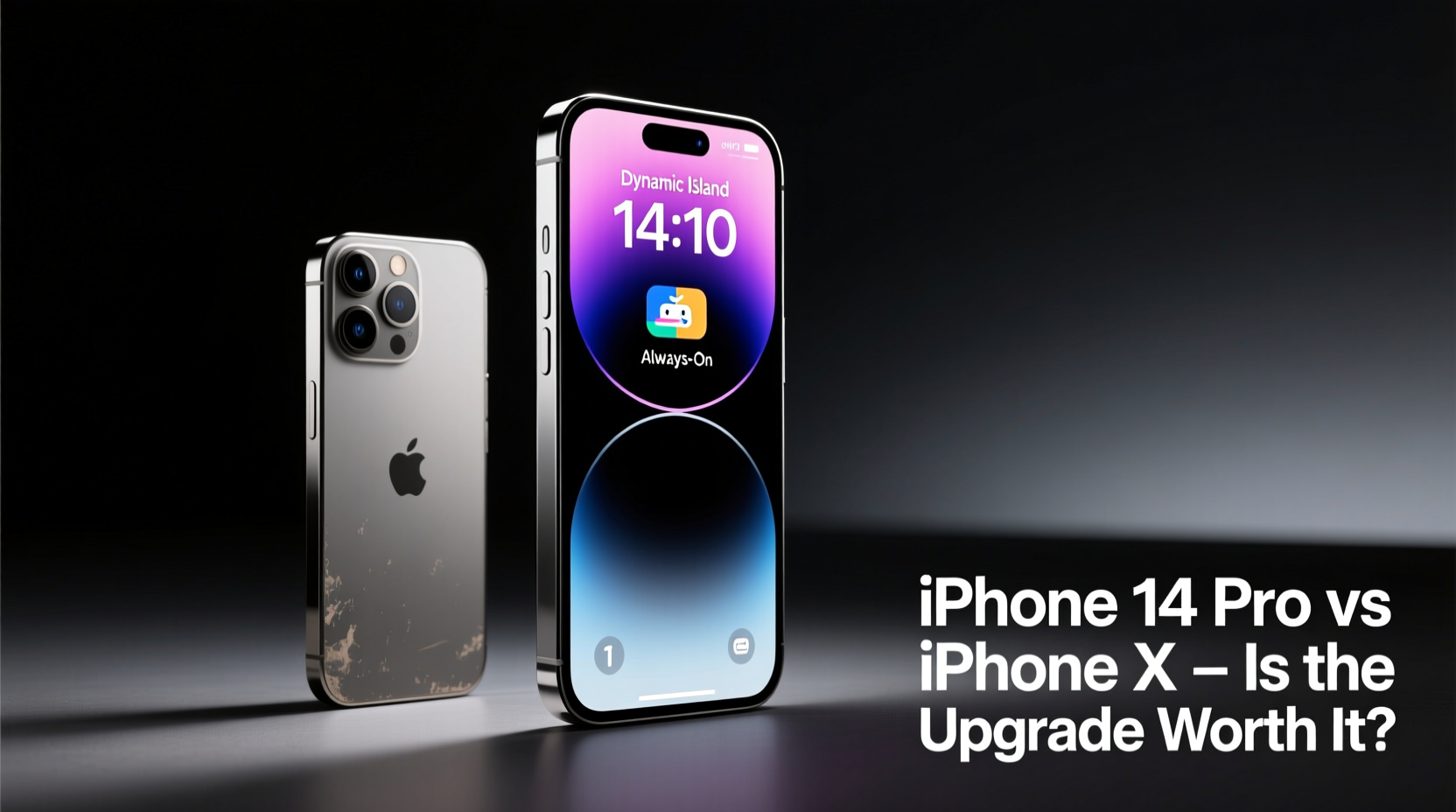
The iPhone X introduced a stainless steel frame with a glass back, supporting wireless charging—a first for Apple at that scale. Its 5.8-inch Super Retina OLED display was stunning for its time, with slim bezels and a notch housing Face ID.
The iPhone 14 Pro keeps the premium build but refines every detail. It uses stronger Ceramic Shield front cover, a more durable stainless steel band, and a slightly heavier feel (206g vs 174g), which adds to perceived quality. The biggest visual change is the Dynamic Island—a pill-shaped cutout replacing the notch. It’s not just cosmetic; it dynamically expands to show live activities like music playback, timers, or Uber tracking.
Performance: Night and Day Difference
The iPhone X runs on the A11 Bionic chip—an impressive processor in 2017 but now significantly outpaced. By today’s standards, multitasking slows down, app launches take longer, and newer iOS updates can feel sluggish.
In contrast, the iPhone 14 Pro features the A16 Bionic, built on a 4nm process. It delivers up to 40% better CPU performance and 35% faster GPU speeds compared to the A11. More importantly, it handles machine learning tasks, AR apps, and video editing with ease. Apps open instantly, games run smoothly at max settings, and background processing is seamless.
“Upgrading from an iPhone X to a 14 Pro is one of the most dramatic performance jumps Apple has ever offered.” — Mark Gurman, Bloomberg Senior Reporter
Camera Comparison: From Good to Professional Grade
The iPhone X featured a dual 12MP rear system (wide and telephoto) with optical image stabilization and 4K video recording. It was excellent in daylight but struggled in low light and lacked advanced computational photography.
The iPhone 14 Pro revolutionizes mobile imaging with a 48MP main sensor (using pixel binning for 12MP default shots), a next-gen telephoto lens with 3x optical zoom, and a vastly improved ultra-wide. Smart HDR 5, Photonic Engine, and Night mode work across all lenses. The result? Sharper details, better dynamic range, and dramatically improved low-light performance.
| Feature | iPhone X | iPhone 14 Pro |
|---|---|---|
| Main Camera | 12MP f/1.8 | 48MP f/1.78 |
| Telephoto Lens | 12MP f/2.4 (2x) | 12MP f/2.8 (3x) |
| Low Light Performance | Moderate Night mode | Advanced Night mode + Photonic Engine |
| Video Recording | 4K@60fps | 4K@60fps + Cinematic Mode (4K HDR) |
| Front Camera | 7MP f/2.2 | 12MP f/1.9 + Autofocus |
If you frequently capture memories, shoot videos, or share content on social media, the 14 Pro’s camera system offers professional-level results that the iPhone X simply can’t match.
Battery Life and Charging: Real-World Gains
The iPhone X offered around 12–13 hours of mixed usage. While decent in 2017, that’s modest by today’s standards. It supports 18W fast charging (with a separate adapter) and Qi wireless charging.
The iPhone 14 Pro packs a larger battery and far more efficient hardware. Apple claims up to 23 hours of video playback. In real-world testing, most users get through a full day—even heavy users—without needing a midday charge. It also supports 20W+ fast charging and remains compatible with MagSafe accessories.
- iPhone X: ~13 hours video, ~6 hours internet over Wi-Fi
- iPhone 14 Pro: ~23 hours video, ~12 hours internet over Wi-Fi
The jump in endurance is substantial, especially if you travel, commute, or rely on your phone for navigation and communication.
Software and Longevity: Future-Proofing Your Device
The iPhone X launched with iOS 11 and received updates through iOS 16. As of 2024, it no longer receives major OS updates, limiting access to new features, security patches, and app compatibility. Many newer apps are optimized for devices with A12 chips or later.
The iPhone 14 Pro launched with iOS 16 and is expected to receive updates through at least 2029. This means six or more years of security updates, feature enhancements, and app support—critical for both functionality and resale value.
Mini Case Study: Sarah’s Upgrade Decision
Sarah used her iPhone X for five years—longer than expected. By 2023, she noticed apps crashing, slow photo processing, and frequent battery anxiety. She considered buying a used iPhone 11 or waiting for the 14 Pro.
After researching, she upgraded directly to the iPhone 14 Pro. “The difference was shocking,” she said. “My photos look like they were taken on a DSLR, Face ID is faster, and I don’t have to charge twice a day anymore.” Though the price was steep, she financed it over 24 months and now plans to keep it for at least four years—making the long-term cost per year reasonable.
Is the Upgrade Worth It? A Practical Checklist
Before spending $999+, ask yourself the following:
- Is your current phone slowing down? – Frequent lag, app reloads, or long boot times signal hardware limits.
- Do you struggle with battery life? – If you carry a power bank daily, better endurance could improve your lifestyle.
- Do you value photography? – The 14 Pro’s camera is a generational leap, especially in low light and video.
- Are you missing key features? – Always-on display, Dynamic Island, emergency SOS via satellite—these aren’t available on the X.
- Can you afford it without financial strain? – Consider trade-ins, carrier deals, or installment plans to reduce upfront cost.
Frequently Asked Questions
Can the iPhone X still handle everyday tasks in 2024?
Yes, but with caveats. Basic tasks like calling, texting, email, and light browsing still work. However, newer apps load slower, multitasking is limited, and iOS updates have ended, making it less secure over time.
How much faster is the iPhone 14 Pro than the iPhone X?
In benchmark tests, the A16 Bionic is roughly 3.8x faster in CPU performance and over 5x in graphics than the A11. Real-world usage reflects this: smoother animations, instant app switching, and faster photo processing.
Should I wait for the iPhone 15 instead?
If you can wait, yes—the iPhone 15 Pro brings USB-C, titanium design, and further camera improvements. But if your iPhone X is struggling now, the 14 Pro still offers massive gains and will remain supported for years.
Final Verdict: To Upgrade or Not?
For iPhone X owners, upgrading to the 14 Pro isn’t just a refresh—it’s a transformation. You’re moving from a phone designed in the early era of modern smartphones to one at the cutting edge of mobile technology.
The decision hinges on your needs. If your iPhone X still meets your daily demands and you’re comfortable with its limitations, hold off. But if you want better photos, longer battery life, faster performance, and years of future software support, the upgrade is absolutely worth it.
Technology evolves, and so do our expectations. The iPhone 14 Pro doesn’t just meet today’s standards—it sets them.




 浙公网安备
33010002000092号
浙公网安备
33010002000092号 浙B2-20120091-4
Comments
No comments yet. Why don't you start the discussion?