
In 2017, the iPhone X and Samsung Galaxy S8 Plus represented the pinnacle of smartphone innovation. Apple introduced Face ID and a notch display with its first all-screen iPhone, while Samsung refined its Infinity Display and set new standards for Android flagships. Fast forward to 2024, and both devices are over six years old—far beyond the typical smartphone lifecycle. Yet, some users still rely on them daily. So, which of these once-cutting-edge phones remains usable today?
This isn’t just a nostalgic comparison. For budget-conscious buyers, secondhand enthusiasts, or those seeking a minimalist device, understanding how these two stack up in 2024 matters. We’ll examine build quality, performance, software support, camera capabilities, battery life, and real-world usability to determine which aging flagship still has legs.
Design and Build Quality
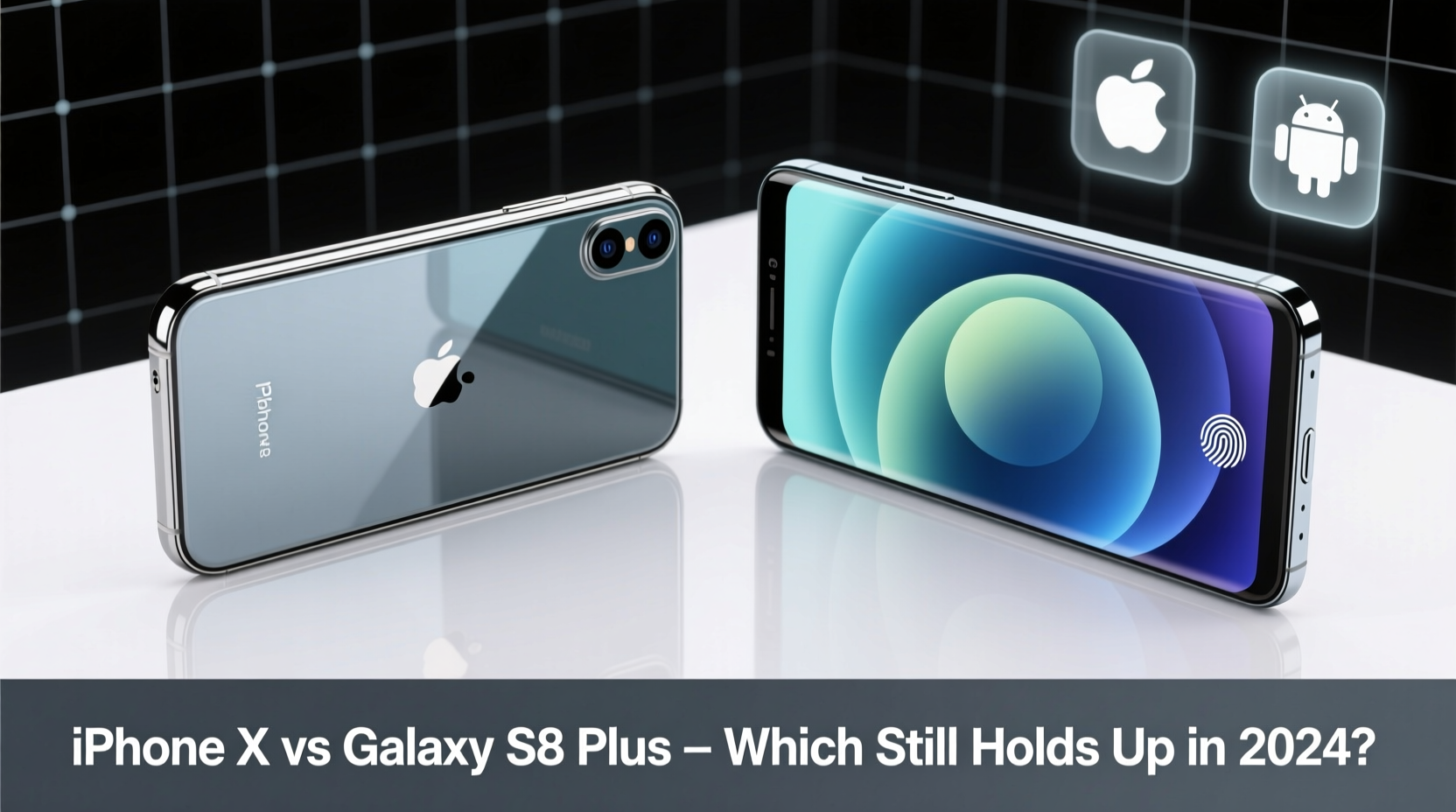
The iPhone X and Galaxy S8 Plus both embraced glass-and-metal designs, signaling a shift toward premium aesthetics. The iPhone X features a stainless steel frame with front and back glass, giving it a sleek, compact feel despite its 5.8-inch OLED display. Its flat edges offer tactile feedback, making it easier to grip than modern curved models.
The Galaxy S8 Plus takes a different approach. With a 6.2-inch curved edge-to-edge display, it feels more immersive and futuristic. The aluminum frame and glass back provide a luxurious feel, though the curves make it slightly more prone to accidental touches and drops.
Both phones are rated IP68 for water and dust resistance—a rare feature at the time. However, after years of use, seals degrade. Realistically, neither should be submerged today without risk.
Performance and Software Support
Under the hood, the iPhone X runs Apple’s A11 Bionic chip, while the Galaxy S8 Plus uses either the Qualcomm Snapdragon 835 or Exynos 9810, depending on region. In their prime, both were top-tier processors. Today, the difference is stark.
Apple’s iOS updates have kept the iPhone X functional far longer than expected. It launched with iOS 11 and was supported through iOS 16—six major updates. As of 2024, it cannot run iOS 17, meaning no new security patches or feature upgrades. Still, iOS 16 remains surprisingly smooth for basic tasks: messaging, email, web browsing, and even light social media use.
Samsung’s update policy wasn’t as generous in 2017. The S8 Plus received three major Android updates (up to Android 9 Pie) and limited security patches until 2020. Today, it runs an outdated version of One UI on aging firmware. Apps like Instagram, Google Maps, and banking services may load slowly or crash due to compatibility issues.
“iOS longevity is unmatched. Even five-year-old iPhones can handle core functions better than similarly aged Androids.” — David Kim, Mobile Systems Analyst
Camera Comparison: Then vs. Now
In 2017, both phones delivered class-leading photography. The iPhone X featured a dual 12MP rear system (wide and telephoto) with optical image stabilization and Portrait Mode. The S8 Plus had a single 12MP sensor with Dual Pixel autofocus and adaptive aperture.
Today, the iPhone X’s camera software optimization gives it an edge. Apple’s computational photography—HDR, Smart HDR, and noise reduction—still produces balanced, natural-looking photos in daylight. Low-light performance is weak by modern standards, but usable in moderate conditions.
The S8 Plus struggles more. While its sensor was excellent for its time, lack of software updates means no Night Mode, poor dynamic range, and inconsistent color rendering. Third-party apps like ProShot or Open Camera can help, but they can’t compensate for hardware limitations.
| Feature | iPhone X | Galaxy S8 Plus |
|---|---|---|
| Rear Camera | Dual 12MP (f/1.8 + f/2.4) | Single 12MP (f/1.7) |
| Front Camera | 7MP TrueDepth | 8MP |
| Video Recording | 4K@60fps | 4K@30fps |
| Portrait Mode | Yes (dual lens) | No (software-only simulation) |
| Low-Light Performance (2024) | Moderate | Poor |
Battery Life and Charging
Battery degradation is inevitable after six years. The iPhone X came with a 2,716mAh battery; the S8 Plus had a larger 3,500mAh unit. On paper, Samsung wins. In practice, real-world endurance depends heavily on usage and battery health.
Most iPhone X units today show 70–80% battery capacity if well-maintained. iOS 16’s efficiency helps, but screen-on time rarely exceeds 4–5 hours. The S8 Plus often suffers worse degradation—many units now dip below 60% health, leading to sudden shutdowns.
Charging is another divergence. The iPhone X supports fast charging (with a USB-C to Lightning cable and 18W+ adapter) and Qi wireless charging. The S8 Plus also supports both, including fast wireless charging—an advantage if you own a compatible pad.
Real-World Usability in 2024: A Mini Case Study
Consider Mark, a freelance writer who’s used his iPhone X since 2018. He upgraded to iOS 16 in 2022 and hasn’t updated since. His daily routine includes checking email, writing in Notes, browsing Safari, and occasional WhatsApp calls. He avoids heavy apps like TikTok or video editors. After replacing the battery in 2023, he reports “it still works fine for what I need.”
In contrast, Lisa held onto her Galaxy S8 Plus for as long as possible. By 2023, she noticed Chrome freezing, her banking app refusing to load, and frequent reboots. She switched to a lightweight browser and disabled background processes, but ultimately replaced it with a mid-range Android in early 2024.
The takeaway? The iPhone X remains functional for minimalists. The S8 Plus requires more workarounds and is less reliable in daily use.
Checklist: Is Your Old Flagship Still Viable?
- ✅ Can it run the latest OS it supports without constant lag?
- ✅ Are critical apps (banking, messaging, maps) functioning reliably?
- ✅ Has the battery been replaced or tested above 75% health?
- ✅ Does it connect smoothly to Wi-Fi and Bluetooth devices?
- ✅ Are security updates still available, even if infrequent?
If three or more apply, your device may still serve as a secondary or backup phone.
Frequently Asked Questions
Can the iPhone X run iOS 17?
No. The iPhone X is not compatible with iOS 17. The last supported version is iOS 16.7.10, released in late 2023. This means no future security patches or feature updates.
Is the Galaxy S8 Plus still secure to use in 2024?
Not ideally. It hasn’t received a security patch since 2020. Using it for sensitive tasks like online banking or shopping carries higher risk due to unpatched vulnerabilities.
Which phone holds better resale value?
The iPhone X retains slightly more value due to Apple’s brand loyalty and longer software support. However, both are worth under $50 in used condition today.
Final Verdict: Which Phone Holds Up Better?
The iPhone X wins this comparison—not because it was superior in 2017, but because it remains more usable in 2024. Apple’s extended software support, consistent performance, and robust ecosystem allow it to function as a basic smartphone for light users. The Galaxy S8 Plus, while groundbreaking at launch, suffers from shorter update cycles and faster software obsolescence.
That said, neither should be your primary phone unless necessary. App developers optimize for newer hardware, and emerging technologies like 5G, improved biometrics, and AI-powered assistants are absent. However, for a backup device, a digital detox experiment, or a kid’s first phone with restrictions, the iPhone X is the safer bet.
If you’re considering buying one secondhand, proceed with caution. Inspect battery health, ensure it’s unlocked, and verify it isn’t iCloud or Samsung Knox locked. And always replace the battery immediately—it’s the single best upgrade for longevity.




 浙公网安备
33010002000092号
浙公网安备
33010002000092号 浙B2-20120091-4
Comments
No comments yet. Why don't you start the discussion?