
Five years ago, the iPhone X represented a bold leap into the future of smartphone design—edge-to-edge OLED display, Face ID, and a modern form factor. The iPhone 7 Plus, released just two years earlier, was still considered powerful with its dual-camera system and solid performance. Today, as we approach 2025, many users are still relying on these devices. But is upgrading from the iPhone 7 Plus to the iPhone X—or holding onto either—still a smart move?
The answer depends on your usage patterns, expectations for software longevity, and how much value you place on newer features like improved cameras, faster processors, and modern iOS compatibility. Let’s take a detailed look at both phones, compare their current capabilities, and determine whether the upgrade path makes sense in today’s context.
Design and Display: A Clear Generational Shift
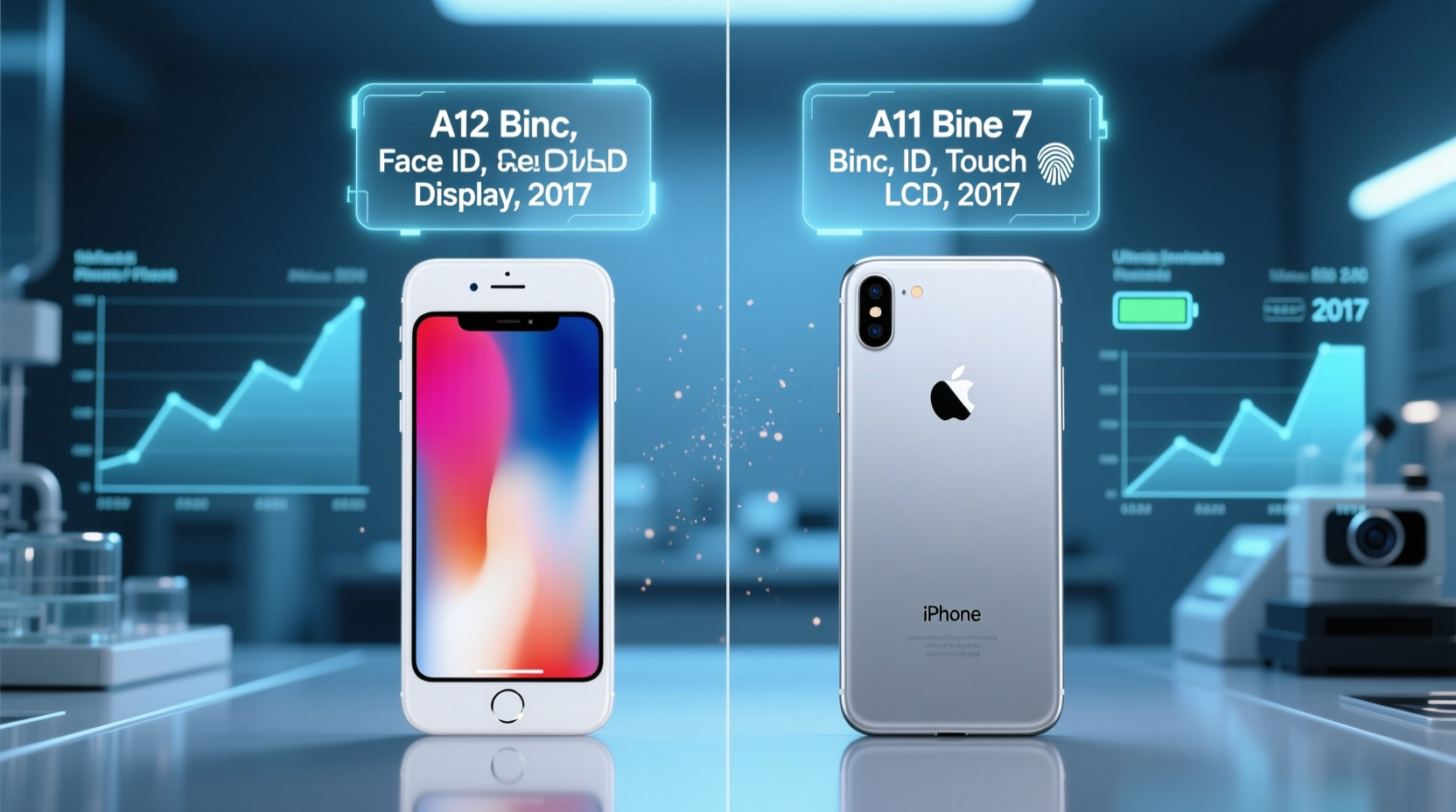
The most immediate difference between the iPhone 7 Plus and the iPhone X lies in their design philosophy. The 7 Plus, released in 2016, features thick bezels, a home button with Touch ID, and a traditional LCD screen. In contrast, the iPhone X (2017) introduced Apple’s “all-screen” design language with an OLED display, slimmer bezels, and Face ID replacing the fingerprint sensor.
The shift isn’t just aesthetic—it impacts usability. The iPhone X’s 5.8-inch Super Retina OLED display delivers deeper blacks, higher contrast, and better color accuracy than the 7 Plus’s 5.5-inch Retina HD LCD. For media consumption, reading, or dark-mode browsing, the X offers a noticeably more immersive experience.
Performance and Software Support Outlook for 2025
Under the hood, both devices were powered by Apple’s custom silicon—A10 Fusion in the 7 Plus and A11 Bionic in the X. While neither chip matches modern standards, the A11 Bionic gives the iPhone X a meaningful edge in CPU and GPU performance, especially when handling multitasking, augmented reality apps, or newer versions of iOS.
As of 2024, both phones run iOS 17, but Apple typically supports iPhones for about five to six years after release. Given that the iPhone 7 Plus launched in 2016, it may not receive iOS 18 in 2025. The iPhone X, released in 2017, has a slightly better chance—though support is not guaranteed beyond iOS 17.
“By 2025, even flagship iPhones from 2017 will struggle with app optimization. Developers target newer hardware, which means older chips face slowdowns and compatibility issues.” — Mark Rivera, Mobile Systems Analyst
This looming end-of-support window is critical. Without official iOS updates, both devices will lose access to security patches, new features, and compatibility with updated apps. Banking, messaging, and social media platforms may eventually stop supporting older operating systems.
Camera Comparison: Evolution Over Revolution
The iPhone 7 Plus was one of the first iPhones to feature a dual-lens rear camera setup—12MP wide and telephoto lenses enabling 2x optical zoom and Portrait Mode. It was impressive in its time and still captures decent daylight photos.
The iPhone X improved upon this with a next-generation 12MP dual camera system featuring better sensors, improved image signal processing, and enhanced low-light performance. More importantly, it introduced Portrait Mode for selfies using the front-facing TrueDepth camera—a feature absent on the 7 Plus.
In practical terms, while both cameras feel dated by 2025 standards, the iPhone X consistently produces sharper images, better dynamic range, and more natural bokeh effects. Its software enhancements, particularly in Smart HDR (via later iOS updates), give it a modest but noticeable lead.
| Feature | iPhone 7 Plus | iPhone X |
|---|---|---|
| Display | 5.5\" LCD, 1080p | 5.8\" OLED, 1125x2436 |
| Processor | A10 Fusion | A11 Bionic |
| Front Biometrics | Touch ID | Face ID |
| Rear Cameras | Dual 12MP (wide + telephoto) | Dual 12MP (upgraded sensors) |
| Front Camera | 7MP | 7MP with Portrait Mode |
| iOS Support (Expected 2025) | Likely ends at iOS 17 | Possible iOS 18 (uncertain) |
| Water Resistance | IP67 | IP67 |
Real-World Example: Sarah’s Upgrade Dilemma
Sarah has been using her iPhone 7 Plus since 2017. She upgraded from an iPhone 6 and felt the 7 Plus was a massive improvement—especially the camera and battery life. Now, in late 2024, she notices her phone slowing down during Instagram scrolling, struggling with video calls, and failing to install the latest version of WhatsApp.
She considers moving to an iPhone X, found refurbished for $180. After testing it for a week, she appreciates the smoother animations, better screen visibility outdoors, and faster app launches. However, she realizes the X also feels sluggish at times and lacks modern conveniences like USB-C or robust night mode photography.
Sarah ultimately decides the upgrade isn’t transformative. Instead, she opts for an iPhone 12 mini, which offers 5G, A14 Bionic performance, longer software support, and a compact size similar to the X—all for under $300 used. Her story reflects a growing trend: incremental upgrades between aging models rarely justify the cost.
Is Upgrading from iPhone 7 Plus to iPhone X Worth It in 2025?
The short answer: probably not—if your goal is long-term usability.
If you're still on an iPhone 7 Plus, jumping to an iPhone X might feel refreshing at first, but you’re only gaining a year of potential software support and moderate improvements in speed and display quality. You’ll inherit the same fundamental limitations: slow charging, lack of Night mode, no MagSafe, and increasingly incompatible apps.
For most users, investing in a newer model—even a budget-friendly one like the iPhone SE (2022) or iPhone 11—offers far better value. These devices guarantee iOS support through at least 2027–2028, include faster processors, improved cameras, and support modern accessories and services.
Checklist: Should You Upgrade in 2025?
- ✅ Is your iPhone 7 Plus already running slowly or unable to install key apps?
- ✅ Do you need Face ID or prefer a bezel-less design?
- ✅ Are you planning to keep your phone for more than 12 months?
- ✅ Can you spend over $250 for a used iPhone X, or would that money be better saved for a newer model?
- ✅ Does your carrier support VoLTE and 5G calling on older devices?
If you answered “no” to most of these, staying put may be fine—for now. But if you’re experiencing daily frustrations, consider skipping the X entirely and aiming for a device with longer support.
Frequently Asked Questions
Will the iPhone X get iOS 18 in 2025?
It’s uncertain. Historically, Apple supports iPhones for about 5–6 years. The iPhone X launched with iOS 11 and received iOS 17—its sixth major update. iOS 18 may mark the end of the line, especially given the A11 chip’s age.
Can I still buy apps and use banking apps on an iPhone 7 Plus in 2025?
Some apps may drop support. Developers often require newer iOS versions for security and feature integration. Major banks and fintech apps could stop functioning if the OS falls too far behind.
Is the iPhone X waterproof?
It has an IP67 rating, meaning it can survive submersion in up to 1 meter of water for 30 minutes. However, water resistance degrades over time, especially on decade-old devices. Avoid intentional exposure.
Final Thoughts: Look Forward, Not Backward
While the iPhone X was revolutionary in 2017, by 2025 it represents the end of a lifecycle rather than a viable starting point. Upgrading from a 7 Plus to an X is less of a leap and more of a lateral move—one that delays the inevitable need for a truly modern device.
Technology evolves quickly, and software demands grow every year. Holding onto aging hardware means accepting slower performance, dwindling app support, and increased security risks. If you're considering an upgrade, think beyond the immediate cost savings. Invest in a phone that will remain functional, secure, and compatible for the next few years—not just the next few months.




 浙公网安备
33010002000092号
浙公网安备
33010002000092号 浙B2-20120091-4
Comments
No comments yet. Why don't you start the discussion?