
In 2017, two flagship smartphones reshaped mobile technology: the Apple iPhone X and the Samsung Galaxy Note 8. One marked a radical departure for Apple with its edge-to-edge OLED display and Face ID; the other represented Samsung’s confident return after the Note 7 crisis, doubling down on stylus functionality and dual cameras. Consumers faced a pivotal decision—iOS or Android, minimalist elegance or productivity powerhouse. But looking back today, did users make the right call? Were the trade-offs worth it? This analysis reevaluates both devices through the lens of innovation, usability, ecosystem loyalty, and longevity.
The Design Revolution: A Clash of Philosophies
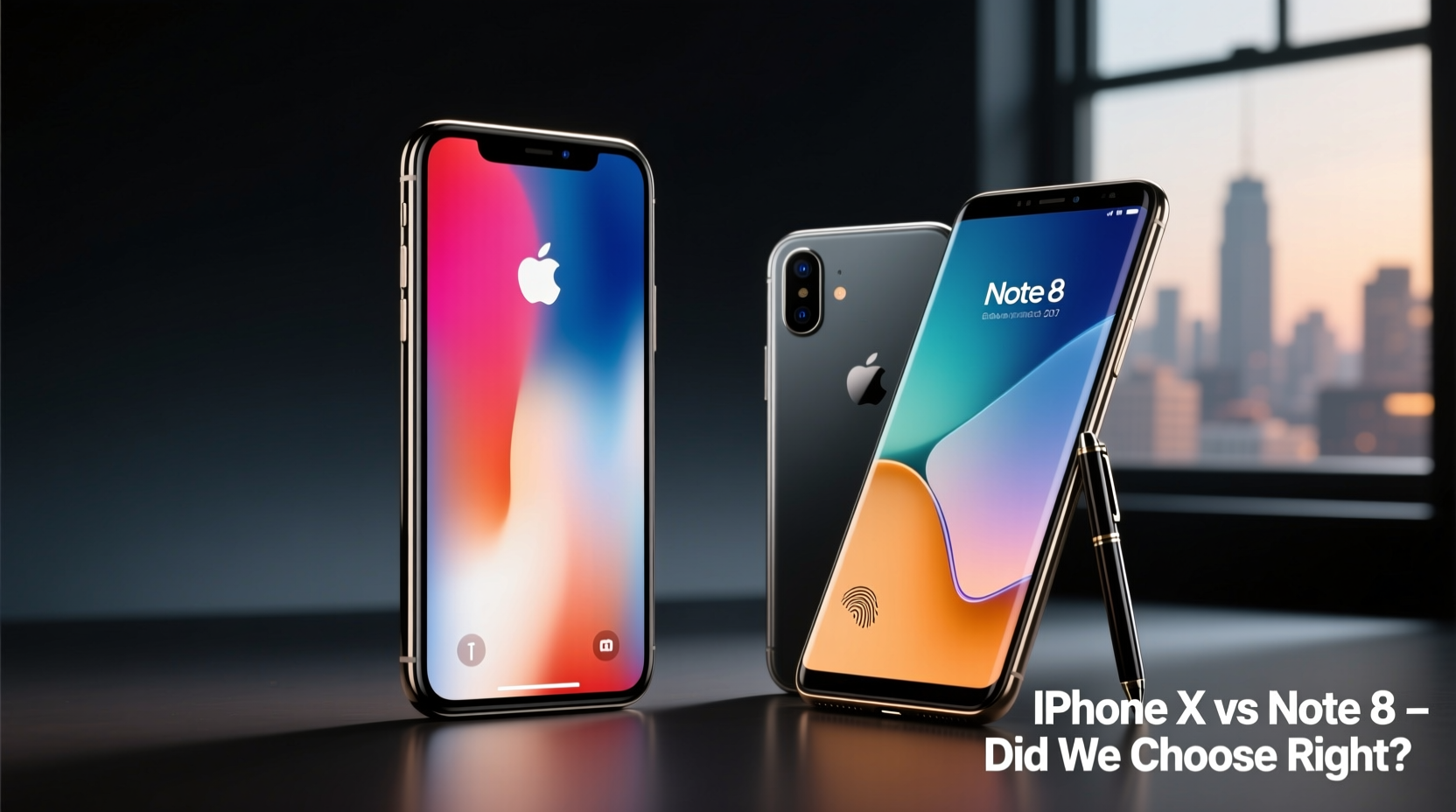
The iPhone X introduced Apple’s first bezel-free design, eliminating the home button and embracing a 5.8-inch Super Retina OLED display. Its stainless steel frame and glass back signaled premium craftsmanship, while the notch became an instant talking point—controversial at first, but eventually adopted across the industry.
Samsung’s Note 8 took a different path. With a slightly larger 6.3-inch Quad HD+ Infinity Display, it offered more screen real estate within a sleek, symmetrical design. Unlike the iPhone X, it retained physical navigation keys (on-screen by default but customizable) and featured a headphone jack—a small but meaningful omission that Apple had already made in the iPhone 7.
Both phones used glass and metal builds, but their ergonomics differed. The iPhone X felt compact despite its screen size due to narrower width, while the Note 8 catered to users who preferred expansive displays for multitasking and media consumption. The S Pen gave the Note 8 a functional edge for creatives and professionals taking notes or editing documents on the go.
Performance and Software: Longevity in Practice
Under the hood, both devices were powered by top-tier hardware. The iPhone X ran on Apple’s A11 Bionic chip, which outperformed the Snapdragon 835 (or Exynos 9810 in some regions) found in the Note 8 in raw processing benchmarks. More importantly, iOS optimization allowed the iPhone X to receive five major OS updates, supporting it until iOS 16—nearly six years of software support.
The Note 8, running Android Nougat at launch, received three major OS upgrades (up to Android 9 Pie) and security patches until late 2020. While Samsung has improved update policies since, back then, this was standard—and notably shorter than Apple’s commitment.
“Apple’s tight integration between hardware and software gives iPhones a longer usable lifespan.” — David Liu, Tech Analyst at Mobile Insights Group
This difference in update cycles significantly impacted long-term user experience. An iPhone X from 2017 could still run modern apps smoothly into 2023, whereas the Note 8 began showing lag and compatibility issues much earlier, especially with newer AR applications and camera-heavy software.
Camera Showdown: Portrait Mode and Beyond
Both phones pushed mobile photography forward with dual-lens rear cameras and advanced portrait modes. The iPhone X featured a 12MP wide and telephoto setup, introducing Depth Control and studio lighting effects via software. Its color science and dynamic range quickly set new standards for natural-looking photos.
The Note 8 also sported dual 12MP sensors—one wide, one telephoto—with optical image stabilization on both lenses, a rarity at the time. It offered live focus adjustments pre- and post-capture and excelled in low-light conditions thanks to aggressive noise reduction algorithms.
| Feature | iPhone X | Note 8 |
|---|---|---|
| Front Camera | 7MP, Face ID dot projector | 8MP, fixed focus |
| Rear Cameras | Dual 12MP (OIS on wide) | Dual 12MP (OIS on both) |
| Portrait Mode | Face & object detection | Live focus adjustment |
| Video Recording | 4K @ 60fps, stereo audio | 4K @ 30fps, mono mic emphasis |
| Low Light Performance | Good, conservative processing | Strong, high brightness boost |
While both delivered excellent results, the iPhone X’s consistency across lighting conditions and superior video capabilities gave it an edge for content creators. However, the Note 8’s flexibility with manual controls and S Pen annotation on photos appealed to power users.
User Experience and Ecosystem Lock-In
One often overlooked factor in the “right choice” debate is ecosystem inertia. By 2017, most buyers weren’t switching platforms—they were upgrading within them. iCloud integration, iMessage, AirPods, and later FaceTime links created sticky advantages for iPhone users.
Android users benefited from Google’s AI-driven features like Smart Reply and Google Lens (later), along with greater file system access and customization. The Note 8’s DeX mode even allowed desktop-like experiences when connected to a monitor—an innovative feature ahead of its time.
For enterprise users, the Note 8’s Knox security platform and S Pen integration with Microsoft Office made it a productivity tool beyond just a phone. Meanwhile, the iPhone X focused on seamless personal experiences: Animojis, ARKit apps, and tighter app ecosystem cohesion.
Mini Case Study: Sarah Cho, Freelance Designer
Sarah upgraded from a Galaxy S6 to the Note 8 in 2017, drawn by the S Pen for sketching mockups directly on her screen. She used Samsung Notes synced with Dropbox and appreciated the multi-window workflow. However, by 2020, app crashes increased, and she missed newer Android features available on Pixel devices. In 2021, she switched to an iPhone 12 Pro, citing better long-term reliability and cross-device continuity with her MacBook. “I loved the Note 8’s creativity tools,” she said, “but I couldn’t ignore how much smoother the Apple ecosystem felt over time.”
Was the Choice Justified? A Balanced Verdict
Looking back, neither device was objectively “better”—each served distinct priorities.
- iPhone X succeeded as a vision of the future: gesture navigation, facial recognition, and a developer-ready AR platform. It laid the foundation for all subsequent iPhones and aged gracefully.
- Note 8 proved Samsung’s engineering resilience and commitment to niche functionality. It was arguably the best Android phone of 2017 for multitaskers and stylus enthusiasts.
However, when judging based on long-term satisfaction, resale value, and software longevity, the iPhone X emerges as the more future-proof investment. Used iPhone X models held value significantly longer, and many remained functional daily drivers into the early 2020s. In contrast, the Note 8’s rapid obsolescence reflected broader Android fragmentation challenges of the era.
Checklist: What to Evaluate When Choosing Between Flagships
- How many years of OS updates does the manufacturer guarantee?
- Does the device integrate well with your existing tech (laptop, tablet, watch)?
- Are critical features (camera, battery, stylus) optimized for your daily tasks?
- What is the typical second-hand depreciation curve for each model?
- Is repairability supported (modular parts, official service networks)?
- Does the UI prioritize simplicity or customization?
Frequently Asked Questions
Did the iPhone X have a better battery life than the Note 8?
No. Despite a smaller battery (2,716 mAh vs. 3,300 mAh), the Note 8 generally lasted longer per charge due to larger capacity and adaptive battery management. The iPhone X required daily charging for moderate to heavy use.
Why did Apple remove the home button on the iPhone X?
To maximize screen space and enable Face ID. The home button had defined iPhone interaction for a decade, but Apple bet that swipe gestures and facial authentication would offer a more immersive, secure experience—which ultimately proved correct.
Is the S Pen essential, or just a gimmick?
For many, it was transformative. Students, architects, and note-takers valued precise input and palm rejection. Even casual users enjoyed translating text or cropping images mid-air. It wasn't essential for everyone, but for those who used it, it added tangible utility.
Final Thoughts: Learning from the Past to Make Smarter Choices Today
The iPhone X vs. Note 8 debate wasn’t just about specs—it was a referendum on philosophy. Apple championed simplicity, longevity, and ecosystem harmony. Samsung emphasized versatility, innovation, and user control. Both approaches had merit.
Back in 2017, choosing the Note 8 made sense if you prioritized screen size, stylus input, and Android openness. Opting for the iPhone X aligned with those valuing seamless updates, strong resale value, and future-facing biometrics. Given how each device aged, iPhone owners likely experienced fewer frustrations over time.
Today’s buyers can learn from this moment: short-term excitement shouldn’t overshadow long-term usability. As phone lifespans extend and sustainability becomes crucial, choosing a device that receives consistent updates and integrates smoothly into your digital life matters more than ever.




 浙公网安备
33010002000092号
浙公网安备
33010002000092号 浙B2-20120091-4
Comments
No comments yet. Why don't you start the discussion?