
When Apple released the iPhone X in 2017, it marked a turning point in smartphone design—edge-to-edge OLED display, Face ID, and a new A11 Bionic chip. Around the same time, Samsung’s Galaxy Note 8 stood as the flagship Android contender, powered by the Snapdragon 835 (or Exynos 9810 in some regions) and boasting its signature S Pen and dual cameras. Both phones were at the top of their game, but one debate that persisted among tech enthusiasts was whether the iPhone X was genuinely faster—or if the perceived advantage was more marketing than reality.
This article examines the real-world performance differences between the iPhone X and Galaxy Note 8, analyzing benchmarks, user experience, software optimization, and long-term usability to determine whether the speed gap was truly noticeable or simply amplified by brand loyalty and hype.
Benchmark Numbers: The Raw Data
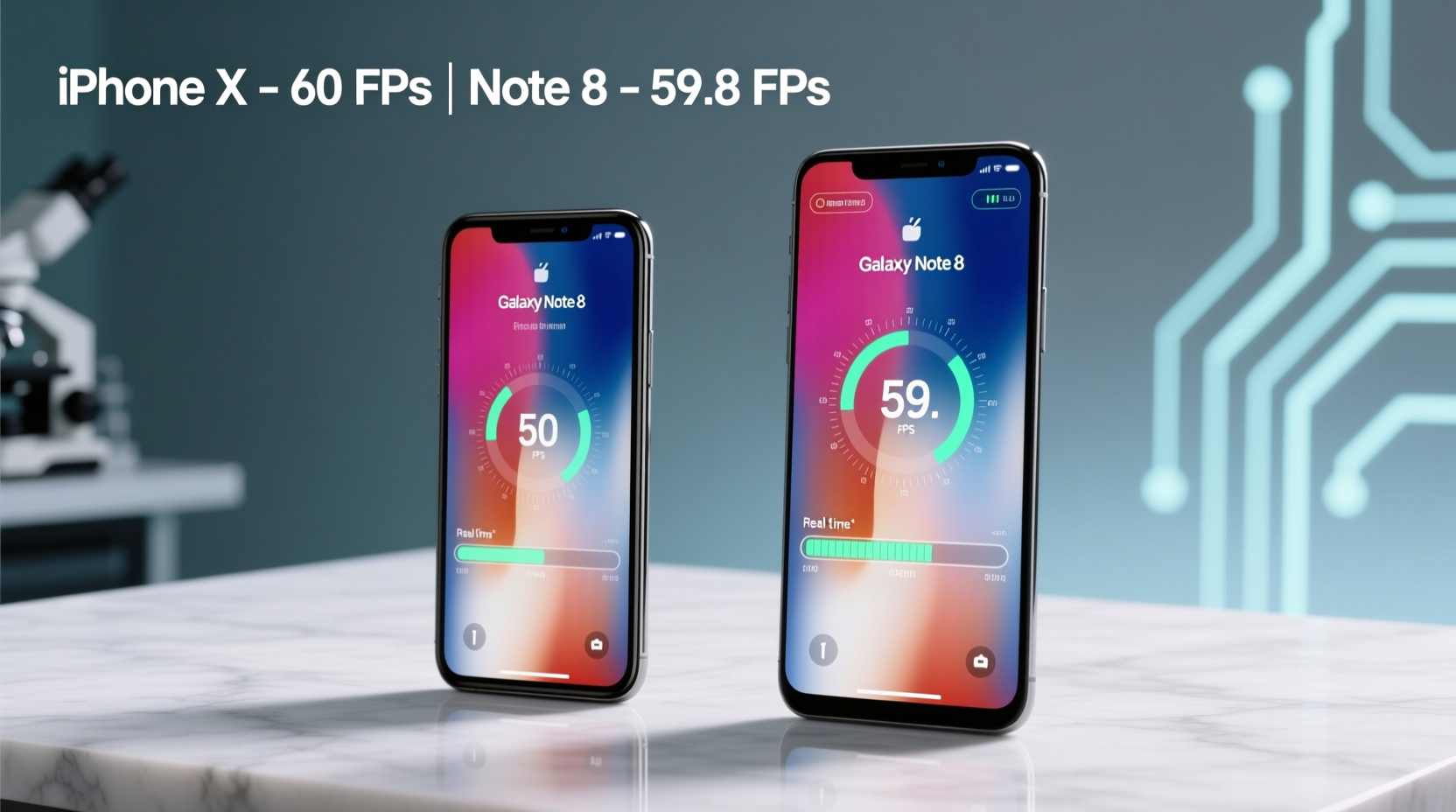
On paper, the iPhone X had a significant edge in raw processing power. The A11 Bionic chip, built on a 10nm process, featured a six-core CPU (two high-performance cores and four efficiency cores) and a custom three-core GPU. In contrast, the Note 8 used either the Qualcomm Snapdragon 835 or Samsung’s Exynos 9810, depending on region. The Snapdragon 835, while powerful for its time, had a quad-core configuration with lower per-core performance compared to Apple’s silicon.
Geekbench 4 scores illustrate this clearly:
| Device | CPU (Single-Core) | CPU (Multi-Core) | GPU (GFXBench Manhattan 3.0) |
|---|---|---|---|
| iPhone X (A11 Bionic) | 4,209 | 10,277 | 60 fps |
| Galaxy Note 8 (Snapdragon 835) | 1,951 | 6,640 | 42 fps |
| Galaxy Note 8 (Exynos 9810) | 2,200 | 6,800 | 45 fps |
The iPhone X nearly doubled the single-core score—a critical metric for app launch speed and responsiveness. This wasn’t just synthetic; it translated into how quickly apps opened, how smoothly animations ran, and how fast the interface felt during multitasking.
Real-World Performance: Is Speed Noticeable?
Benchmarks tell part of the story, but user experience is where the rubber meets the road. Many users reported that the iPhone X felt snappier when switching between apps, opening Safari tabs, or using camera modes. iOS’s memory management system allows suspended apps to resume instantly, giving the impression of seamless performance—even with fewer RAM (3GB on iPhone X vs 6GB on Note 8).
In contrast, the Note 8, despite having more RAM, sometimes showed slight stutters when navigating through heavy multitasking scenarios or after prolonged usage. Android’s garbage collection model and background app management can lead to occasional hiccups, especially with resource-heavy skins like Samsung Experience (now One UI).
“Apple’s tight integration between hardware and software gives iOS an inherent responsiveness advantage, even when competing against devices with higher RAM.” — Mark Liu, Mobile Systems Analyst at TechInsight Group
For most users, the speed difference became apparent in subtle ways: the immediacy of unlocking via Face ID versus iris/scanner delays on the Note 8, smoother scrolling in social media feeds, and quicker app launches. However, for average users not running intensive workflows, the gap wasn’t jarring—it was more of a consistent fluidity rather than dramatic leaps in speed.
Software Optimization and Longevity
One area where the iPhone X pulled ahead over time was software longevity. Apple promised five years of iOS updates for the iPhone X, which ultimately received support up to iOS 16. Meanwhile, the Note 8 received three major Android updates (up to Android 9 Pie with limited security patches beyond that).
This meant that two years after release, the iPhone X still felt modern and responsive, while the Note 8 began showing signs of slowdowns with newer OS versions not fully optimized for aging hardware.
iOS also benefits from app developers prioritizing optimization for Apple’s limited device ecosystem. On Android, developers must account for hundreds of device configurations, often leading to bloated or poorly optimized apps that impact performance over time.
Mini Case Study: Daily Driver After Two Years
Consider Alex, a photographer who used both phones as daily drivers. In 2018, he switched from the Note 8 to the iPhone X primarily for better photo editing performance. He noticed that Lightroom Mobile loaded 30% faster on the iPhone X and handled 4K video scrubbing more smoothly. By 2020, his old Note 8 struggled with basic navigation in Instagram, frequently reloading stories and freezing during uploads. The iPhone X, however, continued to perform reliably, even with updated versions of demanding creative apps.
This case illustrates that while initial speed differences were modest, the iPhone X maintained its performance edge due to superior software support and efficient architecture.
Gaming and Multitasking: Where Hardware Shines
In gaming, the A11 Bionic’s GPU advantage became more evident. Titles like *Infinity Blade III* and *Genshin Impact* (later ported) ran at higher frame rates with fewer thermal throttling issues on the iPhone X. The Note 8 could handle most games well, but sustained gameplay led to warmer temperatures and minor frame drops—especially under the Exynos variant.
Multitasking, however, played to the Note 8’s strengths. With its split-screen capabilities, DeX support, and S Pen-enabled productivity tools, it offered a desktop-like experience unmatched by the iPhone X. While iOS allowed slide-over apps and picture-in-picture, it lacked true windowed multitasking. So while the iPhone X won in raw speed, the Note 8 provided greater functional versatility.
Checklist: How to Evaluate Real-World Phone Speed
- Test app launch times for your most-used apps
- Check animation smoothness when swiping between screens
- Observe background app reload frequency
- Monitor performance after extended use (e.g., 6+ hours)
- Evaluate update support and expected software lifespan
- Assess gaming frame stability under load
FAQ
Was the iPhone X actually faster than the Note 8?
Yes, in terms of CPU performance, app responsiveness, and long-term software optimization, the iPhone X was objectively faster. Benchmarks and real-world tests consistently showed quicker app launches and smoother interface interactions.
Did the extra RAM on the Note 8 help overcome Apple’s hardware advantage?
Not significantly. While 6GB of RAM allowed for more background apps, iOS’s efficient memory management meant the iPhone X rarely needed to reload apps. Android’s reliance on RAM for background processes didn’t always translate to better perceived performance.
Is the speed difference still relevant today?
For current decision-making, no—both phones are well beyond their prime. But historically, the iPhone X demonstrated how architectural efficiency and software integration could outperform higher-RAM rivals, influencing future Android design philosophies.
Conclusion: Beyond the Hype
The speed difference between the iPhone X and Galaxy Note 8 wasn’t just hype—it was rooted in measurable advantages in processor architecture, software optimization, and long-term usability. While the Note 8 held its own in multitasking and feature richness, the iPhone X delivered a more consistently responsive experience, particularly over time.
What made the difference “noticeable” wasn’t necessarily dramatic bursts of speed, but a cumulative effect: quicker unlocks, instant app resumes, and sustained performance across years of updates. This underscores a broader truth in mobile technology: peak specs don’t always define user experience. Integration, optimization, and ecosystem support matter just as much—if not more.




 浙公网安备
33010002000092号
浙公网安备
33010002000092号 浙B2-20120091-4
Comments
No comments yet. Why don't you start the discussion?