
The iPhone XR remains one of Apple’s most enduringly popular models—its balance of performance, price, and design has kept it in circulation years after its release. As a result, demand for compatible accessories like cases remains high. One common question among users is whether a universal case can truly replace a model-specific iPhone XR case. At first glance, universal cases seem like a budget-friendly, convenient option. But do they deliver on fit, function, and protection?
The answer isn’t as simple as “yes” or “no.” While some universal cases may physically fit your iPhone XR, subtle differences in dimensions, button placement, camera cutouts, and material quality can significantly impact usability and safety. Understanding these nuances helps you make an informed decision—one that protects your device without compromising daily convenience.
Understanding the Design Differences
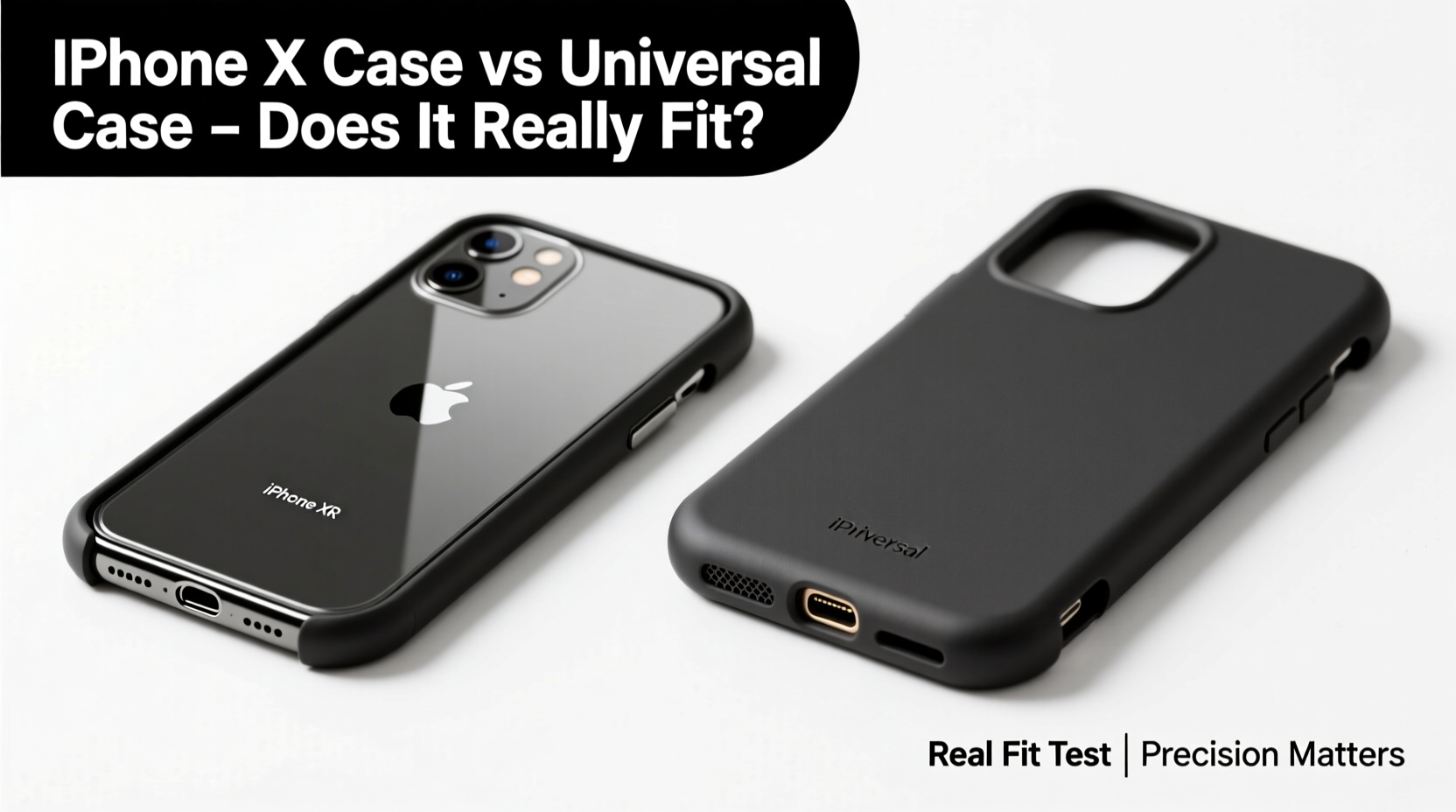
The iPhone XR has specific physical characteristics: a 6.1-inch display, rounded corners, asymmetrical bezels, and a single rear camera positioned slightly off-center. Apple designs its official cases—and many third-party brands—to match these exact specifications. A case made specifically for the iPhone XR includes:
- Precise speaker and charging port cutouts
- Ergonomic button covers that align perfectly with volume and power buttons
- A raised lip around the screen and camera lens for drop protection
- Optimal thickness for grip without bulk
In contrast, universal cases are designed to accommodate multiple phone models within a size range—typically 5.8 to 6.5 inches. They often use stretchable materials like TPU (thermoplastic polyurethane) or soft silicone with flexible edges. While this flexibility allows them to fit various phones, it also introduces potential issues.
Fitness Test: Can a Universal Case Really Fit the iPhone XR?
Technically, many universal cases *can* fit the iPhone XR. The device measures approximately 150.9 x 75.7 x 8.3 mm, which falls within the standard range for \"large smartphones.\" However, \"fitting\" doesn’t mean \"functioning optimally.\" Here’s where compromises arise:
1. Loose or Tight Fit
Because universal cases rely on elasticity, they may feel too loose (sliding on the phone) or too tight (difficult to install and risking screen pressure). A loose fit increases the chance of internal movement during drops, reducing shock absorption.
2. Misaligned Cutouts
Universal cases often feature oversized or centered cutouts. On the iPhone XR, this means:
- The camera lens may not be fully protected
- Speaker sound can be muffled due to partial blockage
- Buttons may be hard to press or overly recessed
3. Inconsistent Edge Protection
Model-specific cases have contoured edges that sit just above the screen. Universal cases rarely achieve this level of precision, leaving the display vulnerable when placed face-down.
“Even a 1mm gap between the case lip and screen can allow micro-scratches over time. Precision matters more than most users realize.” — David Lin, Mobile Device Engineer at TechShield Labs
Comparison Table: iPhone XR Case vs Universal Case
| Feature | iPhone XR-Specific Case | Universal Case |
|---|---|---|
| Exact Fit | ✅ Perfect alignment with all ports and buttons | ⚠️ May shift or bind; inconsistent alignment |
| Camera Cutout | ✅ Precisely sized and positioned | ❌ Often too large or centered incorrectly |
| Screen & Lens Protection | ✅ Raised edges prevent contact with surfaces | ❌ Rarely includes proper lip design |
| Button Responsiveness | ✅ Crisp tactile feedback | ⚠️ Muffled or stiff response |
| Durability | ✅ Engineered for long-term wear | ⚠️ Stretchable materials degrade faster |
| Price Range | $10–$50 | $5–$20 |
Real-World Example: Sarah’s Experience
Sarah bought a universal case for her iPhone XR after her original case cracked. Priced at $7.99 and marketed as “fits most 6-inch phones,” it slid onto the device with moderate resistance. Initially satisfied, she noticed issues within days:
- The volume buttons required extra force to activate
- Her wireless charger didn’t work consistently—interference from thick material
- After two weeks, the case began to warp slightly, creating a gap at the bottom edge
During a commute, she dropped her phone on tile flooring. Though the screen survived, the corner of the case had split open, exposing the aluminum frame. She replaced it with a brand-name iPhone XR case and immediately noticed better sound clarity, smoother button access, and confidence in daily use.
Step-by-Step Guide: Choosing the Right Case
If you’re deciding between options, follow this practical sequence:
- Measure your phone – Confirm dimensions match the case specs (150.9 x 75.7 x 8.3 mm).
- Check product title and description – Look for “Designed for iPhone XR” or “Compatible with iPhone XR.” Avoid vague terms like “fits most iPhones.”
- Review cutout details – Read customer photos and reviews focusing on camera, speaker, and button alignment.
- Assess material quality – Rigid polycarbonate + TPU hybrids offer better protection than soft-only universal cases.
- Test return policy – Buy from retailers with easy returns if the fit isn’t perfect.
When a Universal Case Might Work
There are limited scenarios where a universal case could suffice:
- You need temporary protection while traveling and forgot your regular case
- You're using the phone minimally and prioritize cost over functionality
- The universal case includes adjustable inserts or modular fittings (rare but available)
Even then, long-term use is not recommended. Over time, stretched materials lose structural integrity, increasing vulnerability to damage.
Frequently Asked Questions
Will a universal case affect my iPhone XR’s wireless charging?
Yes, especially if the case is thick or made with metal-reinforced materials. Most universal cases add bulk that creates distance between the phone and charger coil, reducing efficiency or preventing charging altogether.
Can I use a universal case if it claims compatibility with the iPhone XR?
Marketing claims like “compatible with iPhone XR” don’t guarantee a precise fit. Always verify through user reviews and detailed photos. True compatibility includes functional access—not just physical enclosure.
Are universal cases bad for my phone’s warranty?
No, using a third-party case—universal or model-specific—does not void Apple’s warranty. However, damage caused by poor fit (e.g., trapped debris scratching ports) won’t be covered.
Final Recommendation
While a universal case might technically fit your iPhone XR, it sacrifices precision, protection, and usability. For a device that likely holds personal data, communication tools, and daily utilities, investing in a properly engineered case makes financial and practical sense. The marginal savings of a $5 universal case disappear quickly when replacing a cracked screen or dealing with degraded performance.
Apple-certified and reputable third-party manufacturers spend months engineering cases to match the iPhone XR’s contours. That attention to detail translates into better sound transmission, responsive controls, reliable charging, and real drop protection. In the long run, a dedicated iPhone XR case offers superior value.




 浙公网安备
33010002000092号
浙公网安备
33010002000092号 浙B2-20120091-4
Comments
No comments yet. Why don't you start the discussion?