
When Apple released the iPhone XR in 2018, it filled a gap between premium models and more affordable options. One major point of debate since then has been its camera system compared to the older iPhone 8 Plus. Both phones feature portrait mode, smart HDR, and advanced image processing—but they approach photography differently. The iPhone 8 Plus has a dual-lens setup, while the XR relies on a single lens enhanced by machine learning and software tricks. So, is the iPhone XR truly an upgrade over the 8 Plus in terms of camera performance? Let’s break down the facts.
Camera Hardware: Dual Lens vs Smart Software
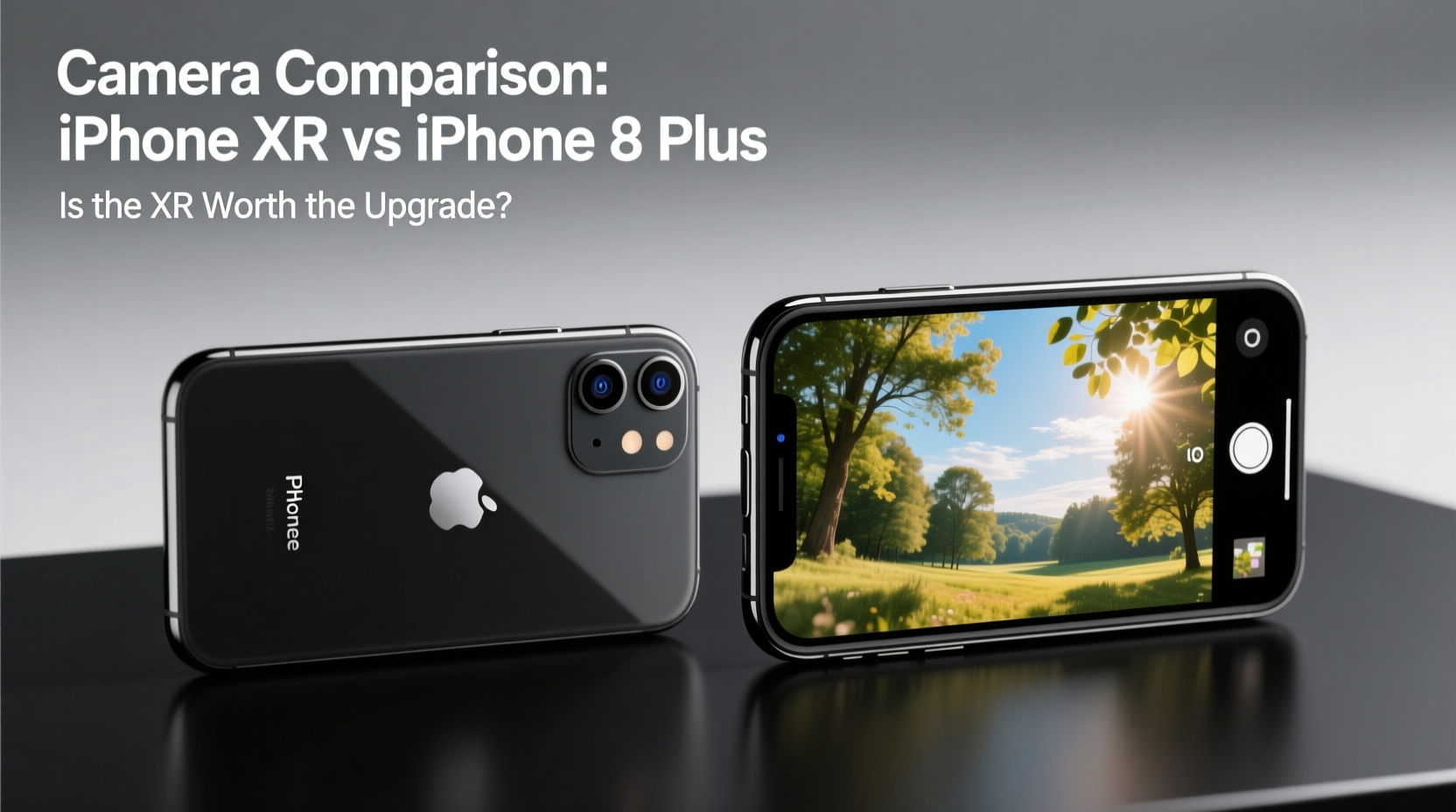
The most obvious difference lies in hardware. The iPhone 8 Plus comes with two rear cameras: a 12MP wide-angle lens (f/1.8) and a 12MP telephoto lens (f/2.8), allowing for 2x optical zoom and true depth sensing for portrait shots. This dual-camera system gives photographers flexibility—especially when capturing distant subjects or experimenting with background blur.
In contrast, the iPhone XR only has one rear camera: a 12MP wide-angle sensor (f/1.8), the same aperture as the primary lens on the 8 Plus. However, Apple compensated for the lack of a second lens with advanced computational photography. Using the A12 Bionic chip, the XR simulates depth data through software algorithms, enabling portrait mode and adjustable bokeh after shooting.
While hardware purists may favor the physical advantages of dual lenses, the XR proves that intelligent software can close the gap significantly—especially in everyday conditions.
“Software-driven depth mapping has reached a point where casual users can’t tell the difference between synthetic and optical depth.” — Mark Lin, Mobile Imaging Analyst at TechVision Labs
Image Quality in Real-World Conditions
Under good lighting, both phones deliver excellent results. Photos from the iPhone 8 Plus tend to have slightly better edge detection in portraits due to actual stereo vision from two sensors. However, the XR’s faster processor enables Smart HDR, which balances highlights and shadows more effectively than the 8 Plus’s standard HDR.
In low-light environments, the story shifts. The XR benefits from larger pixel sizes, improved noise reduction, and next-gen tone mapping. Its single lens captures brighter images with less grain. Meanwhile, the 8 Plus struggles slightly in dim settings, producing noisier photos and slower shutter response.
Video quality is another area where the XR pulls ahead. It supports 4K video recording at up to 60fps, extended dynamic range for video (up to 30fps), and better audio stabilization. The 8 Plus records 4K at 30fps and lacks some of the newer cinematic enhancements introduced with iOS 12 and later.
Detailed Comparison Table: Key Camera Features
| Feature | iPhone XR | iPhone 8 Plus |
|---|---|---|
| Rear Cameras | Single 12MP f/1.8 (wide) | Dual 12MP: f/1.8 (wide) + f/2.8 (telephoto) |
| Portrait Mode | Yes (software-based depth) | Yes (dual-sensor depth) |
| Optical Zoom | No | 2x optical zoom |
| HDR Technology | Smart HDR (A12-powered) | Standard HDR |
| Low-Light Performance | Better noise control, brighter output | Noticeable noise in dark scenes |
| Video Recording | 4K@60fps, EIS, extended dynamic range | 4K@30fps, basic stabilization |
| Fron tCamera | 7MP TrueDepth (supports Portrait Mode) | 7MP (no Portrait Mode) |
Real Example: Portrait Photography Test
A freelance photographer, Sarah Tran, switched from the iPhone 8 Plus to the XR for her street portraiture work. She initially doubted the single-lens system but conducted a side-by-side test in Golden Gate Park during golden hour. Shooting the same model under identical conditions, she found:
- The 8 Plus produced sharper background separation in complex scenes (e.g., hair strands against trees).
- The XR delivered smoother skin tones and better exposure balance thanks to Smart HDR.
- The front-facing camera on the XR allowed her to take high-quality selfies in portrait mode—an option unavailable on the 8 Plus.
Sarah concluded that while the 8 Plus had a slight edge in technical accuracy, the overall user experience and post-processing flexibility made the XR her preferred choice for daily use.
Step-by-Step Guide: How to Maximize Your iPhone Camera Output
Whether you’re using an 8 Plus or upgrading to an XR, these steps will help you get the most out of your device’s camera:
- Enable Smart HDR (XR only): Go to Settings > Camera > Smart HDR and make sure it’s turned on for balanced exposures.
- Use Portrait Mode wisely: On the XR, avoid busy backgrounds or backlit subjects unless using Night Mode or sufficient fill light.
- Clean your lens regularly: Smudges affect focus and clarity, especially on the single-lens XR.
- Tap to focus and adjust exposure: Press and hold to lock AE/AF, useful in inconsistent lighting.
- Edit within Photos app: Use natural sliders to tweak light, color, and sharpness without overprocessing.
- Shoot in Pro formats when possible: Third-party apps like Halide allow manual control over ISO, shutter speed, and RAW capture.
Checklist: Should You Upgrade?
Ask yourself these questions before deciding whether to move from the 8 Plus to the XR:
- ✅ Do you value better low-light performance?
- ✅ Are you interested in portrait selfies (TrueDepth front camera)?
- ✅ Do you record videos frequently and want 4K at 60fps?
- ✅ Do you prefer smarter photo processing over optical zoom?
- ❌ Do you rely heavily on 2x optical zoom for candid or wildlife shots?
- ❌ Are you attached to the home button and Touch ID?
If most of your answers are “yes” to the first four, the XR is likely a worthwhile upgrade—even with just one rear lens.
Frequently Asked Questions
Can the iPhone XR do 2x zoom like the 8 Plus?
No, the XR does not have optical zoom. It uses digital zoom, which crops the image and can reduce quality. While decent for minor adjustments, it doesn't match the clarity of the 8 Plus’s 2x optical zoom.
Is portrait mode better on the 8 Plus or XR?
The 8 Plus has a slight advantage in edge detection due to true depth sensing from two lenses. However, the XR catches up quickly in good lighting and offers more post-capture editing options, including adjusting bokeh strength after taking the photo.
Does the XR’s single camera limit future software updates?
Not significantly. Apple continues to support the XR with new camera features like Night Mode (added via iOS 13) and improved machine learning models. Its powerful chipset ensures compatibility with current and near-future imaging enhancements.
Final Verdict: Is the Upgrade Worth It?
The iPhone XR isn’t objectively superior to the 8 Plus in every camera aspect, but it represents a shift in Apple’s philosophy—from hardware dependency to software intelligence. If you prioritize modern features like Smart HDR, improved low-light performance, front-facing portrait mode, and smoother video capabilities, the XR delivers tangible improvements.
For users who frequently shoot portraits, travel in mixed lighting, or enjoy sharing high-quality social media content, the XR is absolutely worth the upgrade. Yes, you lose optical zoom. But you gain a smarter, faster, and more versatile camera system powered by one of the most advanced mobile chips of its time.
Ultimately, photography today isn’t just about lenses—it’s about how well a phone understands light, depth, and context. In that regard, the iPhone XR doesn’t just keep pace with the 8 Plus; in many ways, it moves ahead.




 浙公网安备
33010002000092号
浙公网安备
33010002000092号 浙B2-20120091-4
Comments
No comments yet. Why don't you start the discussion?