
The smartphone market moves fast. Apple’s iPhone XR, released in 2018, was once a flagship-level device praised for its balance of price and performance. Fast forward to 2022, and Samsung’s Galaxy A53 5G enters the scene as a mid-range contender with modern features like 5G, a higher refresh rate display, and a more advanced camera system. But does the newer model automatically win? For users weighing an upgrade or choosing between used and new devices, the decision isn’t always straightforward.
This comparison dives deep into real-world usability, longevity, software support, and overall value—beyond just specs on paper. Whether you’re holding onto your iPhone XR or considering a switch to Android, understanding where each phone excels—and where it falls short—is key to making a smart choice.
Design and Build: Durability Meets Modern Aesthetics
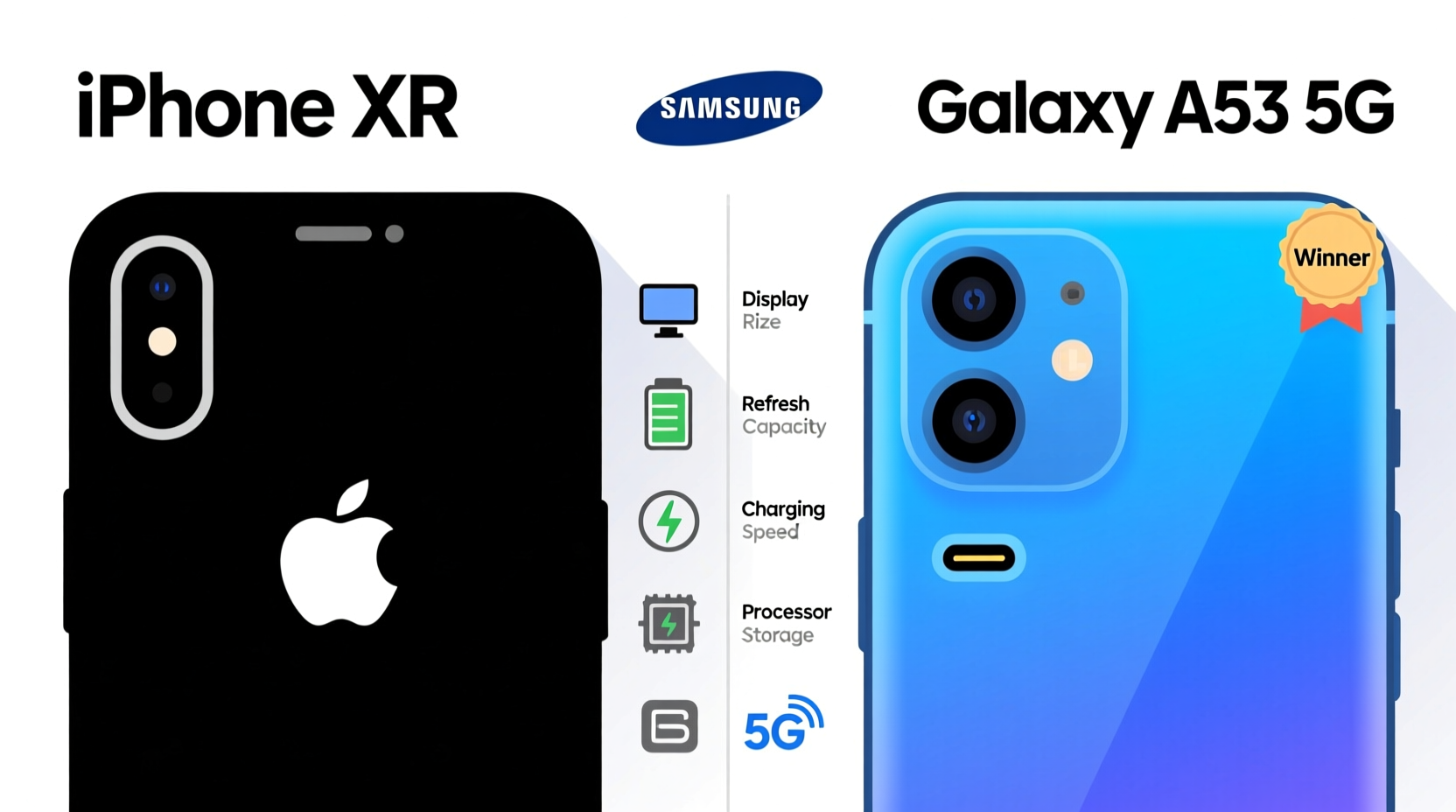
The iPhone XR features Apple’s signature aerospace-grade aluminum frame and glass back, offering a premium feel despite its polycarbonate back panel—a rarity in Apple’s lineup. It’s IP67 rated, meaning it can survive brief submersion in up to 1 meter of water for 30 minutes. Its 6.1-inch LCD “Liquid Retina” display, while not OLED, delivers accurate colors and solid brightness for everyday use.
In contrast, the Galaxy A53 5G embraces a more contemporary design language. It uses a plastic frame and back but feels sturdy thanks to its IP67 rating and Corning Gorilla Glass 5 protection. The standout feature here is the 6.5-inch Super AMOLED display with a 120Hz refresh rate. This makes scrolling, animations, and gaming noticeably smoother than the iPhone XR’s 60Hz screen.
While the iPhone XR remains compact and easy to handle with one hand, the A53 5G trades some portability for a larger, more immersive display. Both phones are durable, but the A53's modern bezel design and hole-punch front camera give it a fresher look in 2024.
Performance and Software Experience
Under the hood, the iPhone XR runs on Apple’s A12 Bionic chip—an older processor by today’s standards, but still remarkably capable. iOS optimization ensures smooth multitasking, responsive app launches, and long-term software support. Apple guarantees at least five years of OS updates, and many users report reliable performance even after four years of daily use.
The Galaxy A53 5G uses Samsung’s Exynos 1280 (or Snapdragon 750G in some regions), paired with 6GB or 8GB of RAM. While not a flagship-grade chip, it handles everyday tasks like web browsing, video streaming, and social apps without issue. However, intensive applications or heavy gaming may expose limitations compared to Apple’s silicon.
“Even older iPhones tend to age better than similarly aged Android devices due to tighter hardware-software integration.” — David Lin, Mobile Analyst at TechPulse Weekly
iOS offers a consistent, secure, and ad-free experience. Samsung’s One UI 5 (upgradable to newer versions) brings customization and useful multitasking features, but comes with occasional bloatware and longer update cycles. The A53 is promised four major Android OS upgrades and five years of security patches—matching Apple’s commitment—but delivery timing often lags behind iOS.
Camera Comparison: Quality vs. Versatility
The iPhone XR features a single 12MP rear camera with optical image stabilization, Smart HDR, and Portrait mode using software-based depth mapping. In good lighting, it produces natural color tones, excellent dynamic range, and reliable autofocus. Low-light performance is acceptable but lacks night mode until later iOS updates improved it through computational photography.
The Galaxy A53 5G counters with a quad-camera setup: a 64MP main sensor, 12MP ultra-wide, 5MP macro, and 5MP depth sensor. The high-resolution main shooter captures more detail, and Samsung’s Night Mode significantly enhances low-light shots. The ultra-wide lens adds creative flexibility, though edge distortion is noticeable. Video recording tops out at 4K@30fps, matching the XR, but lacks advanced stabilization features like Cinematic Mode.
| Feature | iPhone XR | Galaxy A53 5G |
|---|---|---|
| Rear Cameras | 12MP (Single) | 64MP + 12MP + 5MP + 5MP |
| Front Camera | 7MP | 32MP |
| Video Recording | 4K@60fps | 4K@30fps |
| Night Mode | Limited (via software) | Yes (dedicated) |
| Portrait Mode | Yes (software-based) | Yes (dual-sensor assist) |
In practice, the iPhone XR delivers more consistent photo quality across conditions, especially in video. The A53 offers greater versatility with multiple lenses and stronger night photography, appealing to casual photographers who want options.
Battery Life and Charging: All-Day Endurance Differently Achieved
The iPhone XR packs a 2,942mAh battery. Despite its modest capacity, efficient hardware and software allow it to last a full day for most users—around 12–14 hours of mixed usage. It supports 18W fast charging (with adapter sold separately) and Qi wireless charging, a feature absent on the A53.
The Galaxy A53 5G houses a larger 5,000mAh battery, easily pushing two days of light use or solid 1.5-day performance under heavy load. It supports 25W fast charging (charger included in some regions), but no wireless charging. For users who hate daily charging, the A53 holds a clear advantage.
Real Example: Daily Use Scenario
Sophia, a freelance graphic designer, used her iPhone XR for nearly five years. She appreciated its reliability but grew frustrated with slow charging and dimmer screen in sunlight. After switching to the Galaxy A53 5G, she found the brighter AMOLED display easier on her eyes during outdoor client meetings. The longer battery life meant she could edit photos on the go without carrying a power bank. However, she missed iOS’s seamless integration with her MacBook and had to relearn app workflows on Android.
Value and Longevity: Which Phone Makes More Sense in 2024?
Priced at launch around $749, the iPhone XR now sells secondhand for $150–$220 depending on condition. Meanwhile, the Galaxy A53 5G launched at $449 and currently retails for $250–$300 new. On paper, the Samsung offers newer tech for only slightly more—but context matters.
- Resale Value: iPhones retain value better. An iPhone XR in good condition still attracts buyers.
- Software Updates: The XR received iOS 16 and may get iOS 17, impressive for a 2018 device.
- Future-Proofing: The A53’s 5G support, larger RAM, and longer official update path suggest better longevity through 2027.
Checklist: Choosing Between iPhone XR and Galaxy A53 5G
- ✅ Need 5G connectivity? → Choose A53 5G
- ✅ Prefer smooth scrolling and modern displays? → Choose A53 5G
- ✅ Already in the Apple ecosystem (Mac, iPad, AirPods)? → Stick with iPhone XR
- ✅ Want longer battery life without charging breaks? → Choose A53 5G
- ✅ Prioritize video quality and portrait consistency? → iPhone XR remains strong
- ✅ Budget under $250? → Refurbished XR might be sufficient
Frequently Asked Questions
Is the Galaxy A53 5G faster than the iPhone XR?
Not necessarily. While the A53 has more RAM and a newer architecture, the iPhone XR’s A12 Bionic with iOS optimization often feels snappier in daily tasks. For sustained performance and multitasking, the A53 has an edge due to better thermal management and memory allocation.
Can the iPhone XR still run modern apps smoothly?
Yes. Most current apps—including Instagram, WhatsApp, banking apps, and streaming services—run well on the XR. However, some newer games or AR-heavy applications may struggle or lack support moving forward.
Which phone will get updates longer?
Both are supported through 2025–2027. Apple typically delivers updates simultaneously to compatible devices, while Samsung rolls them out gradually. The A53 has a longer *potential* support window due to its 2022 release, but Apple’s track record for extending support gives the XR surprising staying power.
Final Verdict: Newer Isn’t Always Better—But It Helps
The Galaxy A53 5G brings meaningful upgrades: a vibrant 120Hz display, superior battery life, modern camera versatility, and built-in 5G. For users upgrading from an older iPhone or entering the Android world, it represents excellent value in the mid-range segment.
Yet, the iPhone XR refuses to fade. Its build quality, iOS ecosystem benefits, strong resale value, and continued software support make it a compelling option for budget-conscious buyers who don’t need cutting-edge features.
The answer depends on your priorities. If you want future-ready hardware, longer official support, and a smoother visual experience, the A53 5G is the better investment. But if you're already invested in Apple’s ecosystem and prefer simplicity, reliability, and better video capabilities, holding onto the iPhone XR—or buying one used—still makes sense in 2024.




 浙公网安备
33010002000092号
浙公网安备
33010002000092号 浙B2-20120091-4
Comments
No comments yet. Why don't you start the discussion?