
When the iPhone XR and Samsung Galaxy Note 9 were released in 2018, they represented two very different philosophies in smartphone design. One prioritized simplicity, iOS integration, and Apple’s ecosystem. The other offered power, customization, and a stylus-driven productivity suite. For users caught between these devices—especially those considering an upgrade—the decision wasn’t just about specs. It was about lifestyle, usability, and long-term value. So, was switching from one to the other truly worth it?
This article dives deep into the real-world differences between the iPhone XR and Galaxy Note 9, analyzing key areas like performance, camera quality, battery life, software experience, and upgrade satisfaction. Whether you're still using one of these phones or reflecting on a past switch, this breakdown will help clarify whether the leap delivered meaningful improvements—or just incremental changes.
Design and Build: Two Approaches to Premium
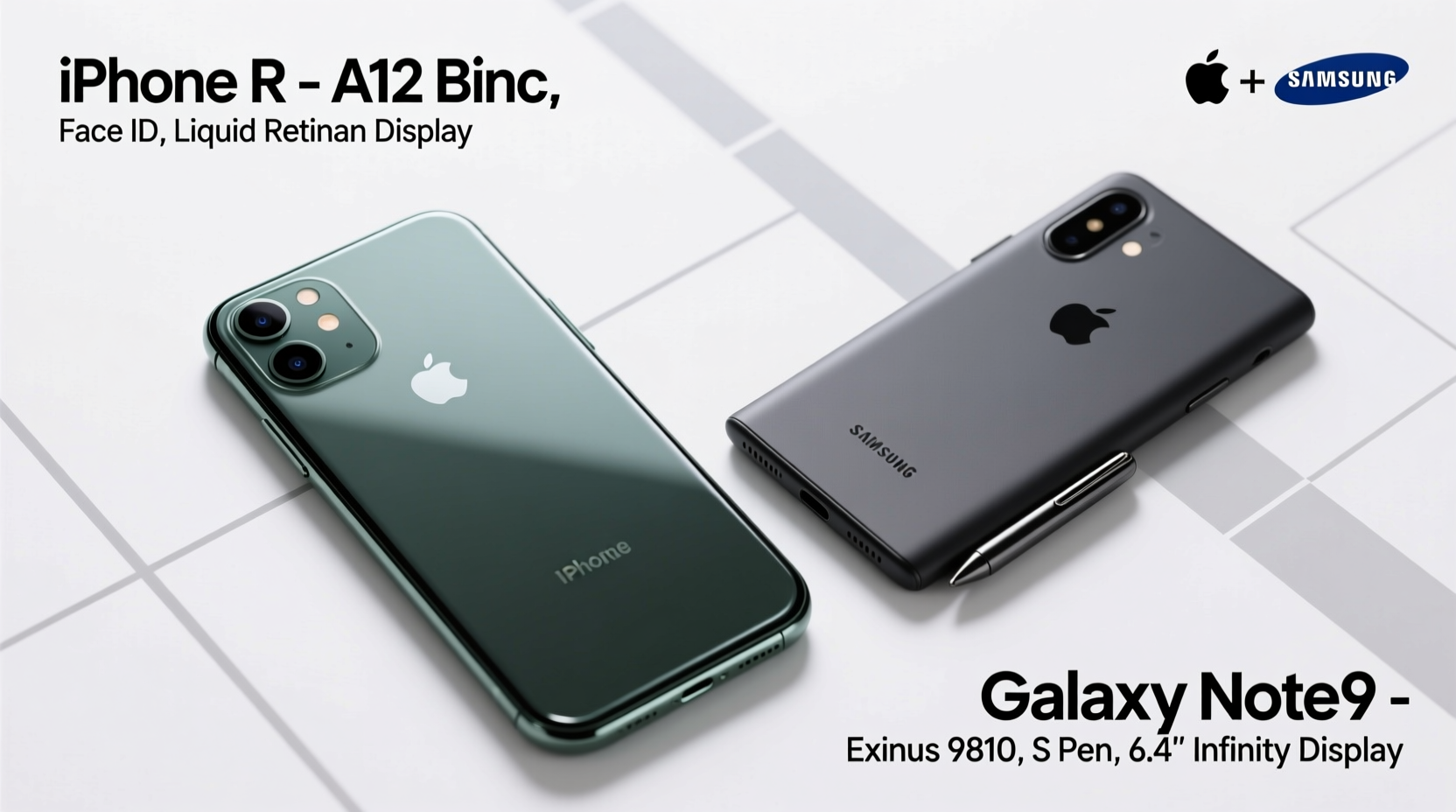
The iPhone XR and Galaxy Note 9 couldn't be more different in form. Apple opted for a single-lens rear camera and a bold, colorful polycarbonate back, departing from the glass bodies of its higher-end siblings. The result was a lightweight, durable phone with a modern edge-to-edge display, though the thick bezels around the screen felt dated compared to competitors.
In contrast, the Note 9 embraced a premium aesthetic with a glass-and-metal construction, curved AMOLED display, and a sleek fingerprint sensor relocated below the camera module—a fix for the awkward placement on the Note 8. Its larger size (6.4 inches) catered to multitaskers and media consumers, while the inclusion of the S Pen added a unique layer of functionality.
Performance and Software Experience
Under the hood, both phones were flagship-tier in 2018. The iPhone XR ran on Apple’s A12 Bionic chip—one of the fastest mobile processors at the time—delivering smooth multitasking, excellent app optimization, and long-term iOS support. Apps launched instantly, animations were fluid, and even years later, the XR remained capable of handling new iOS updates.
The Galaxy Note 9, powered by either the Snapdragon 845 or Exynos 9810 depending on region, was also a powerhouse. With up to 8GB of RAM and expandable storage via microSD, it offered flexibility that Apple didn’t match. However, Android’s fragmentation meant app performance varied more widely, and updates arrived slower than on iOS.
“Apple’s tight hardware-software integration gives the iPhone XR a responsiveness edge, even with less raw RAM. Samsung offers more configurability, but consistency depends heavily on usage patterns.” — David Lin, Mobile Systems Analyst
iOS provided a streamlined, intuitive interface with strong privacy controls and seamless integration across Apple devices. Features like Face ID were fast and reliable, though some missed the convenience of a physical home button.
Samsung’s One UI (then called Samsung Experience) brought useful additions: split-screen mode, DeX for desktop-like functionality, and always-on display. The S Pen introduced remote camera shutter, presentation control, and air actions—small features that became essential for power users.
Camera Comparison: Simplicity vs. Versatility
The iPhone XR featured a single 12MP wide-angle rear camera, relying on computational photography and Portrait Mode software to simulate depth effects. In good lighting, photos were vibrant, well-balanced, and true to color. Low-light performance lagged behind dual-sensor rivals, but Smart HDR improved dynamic range significantly.
The Note 9 had a dual 12MP rear setup—one wide, one telephoto—with variable aperture (f/1.5–f/2.4). This allowed better low-light capture and optical zoom up to 2x. Its AI-powered scene optimizer automatically adjusted settings based on what the camera saw, which worked well in most conditions but could over-process images.
| Feature | iPhone XR | Galaxy Note 9 |
|---|---|---|
| Rear Cameras | Single 12MP (wide) | Dual 12MP (wide + telephoto) |
| Aperture | f/1.8 fixed | f/1.5–f/2.4 variable |
| Zoom | Digital only | 2x optical, 10x digital |
| Low-Light Performance | Good (Night mode not available) | Excellent (adaptive aperture) |
| Front Camera | 7MP, Portrait Mode | 8MP, Auto Focus, Live Focus |
For casual photographers, the iPhone XR’s point-and-shoot reliability was appealing. For enthusiasts who wanted manual control, zoom, and better night shots, the Note 9 had the edge. Video recording was stronger on the iPhone, supporting 4K at 60fps with superior stabilization.
Battery Life and Charging Realities
The Galaxy Note 9 packed a 4,000mAh battery—among the largest in flagship phones at the time. With moderate use, it easily lasted 1.5 days. Heavy users still made it through a full day without anxiety. Fast charging and wireless charging were supported, along with reverse wireless charging (though limited in practicality).
The iPhone XR had a smaller 2,942mAh battery but benefited from efficient hardware and software optimization. Apple claimed up to 1.5 days of usage, and many users reported similar results. However, actual endurance depended heavily on network conditions and background activity.
Charging was a sore point for both. Neither included fast chargers in the box—the Note 9 required a separate purchase, and the iPhone XR shipped with a slow 5W adapter. USB-C was exclusive to Samsung, allowing faster data transfer and third-party accessory compatibility.
Real-World Upgrade Scenarios
Case Study: From iPhone 7 to Galaxy Note 9
Mark, a business consultant, upgraded from an iPhone 7 to the Galaxy Note 9 seeking better multitasking and note-taking capabilities. He used the S Pen extensively during client meetings, annotating PDFs and sketching ideas directly on his screen. The larger display improved his email and calendar management. However, he struggled initially with Android’s notification system and missed iMessage. After six months, he adapted but noted that syncing with his MacBook remained clunky. For him, the upgrade was “worth it” professionally, but came with ecosystem trade-offs.
Case Study: From Galaxy S8 to iPhone XR
Lena, a graphic designer, switched from the Galaxy S8 to the iPhone XR for better app stability and longer software support. She appreciated the clean iOS interface and improved Face ID security. While she missed the expandable storage and headphone jack, she found iCloud integration with her Mac seamless. The lack of a stylus wasn’t an issue since she used an iPad for drawing. Her verdict: “The upgrade wasn’t flashy, but it reduced friction in my daily workflow.”
Was Upgrading Really Worth It? A Checklist
Before making the switch between these two devices, consider the following:
- ✅ Do you rely heavily on Apple ecosystem services (iMessage, AirDrop, iCloud)? → Stay with iPhone XR.
- ✅ Do you need a stylus for notes, drawing, or presentations? → Galaxy Note 9 wins.
- ✅ Is expandable storage or a headphone jack important? → Choose Note 9.
- ✅ Do you prefer consistent, long-term OS updates? → iPhone XR has a 5+ year support advantage.
- ✅ Are you invested in Google services or use multiple platforms? → Android may integrate better.
- ✅ Do you record a lot of video? → iPhone XR offers superior stabilization and audio capture.
Frequently Asked Questions
Can the iPhone XR compete with the Note 9 in multitasking?
The iPhone XR supports slide-over apps and picture-in-picture video, but lacks true split-screen functionality. The Note 9 allows two apps side-by-side with drag-and-drop text and image sharing. For heavy multitaskers, the Note 9 is significantly more capable.
Which phone holds its value better over time?
The iPhone XR retained resale value better due to longer iOS support and high demand in the refurbished market. Even three years post-release, it continued receiving updates, unlike the Note 9, which stopped at Android 10 (One UI 2.5).
Is the S Pen worth the extra bulk?
If you take handwritten notes, annotate documents, or control your camera remotely, yes. The S Pen adds minimal weight and unlocks features no iPhone can match natively. For casual users, it may go underused.
Final Verdict: Value Beyond Specs
Upgrading from the iPhone XR to the Galaxy Note 9—or vice versa—wasn’t just about megapixels or processor speed. It was a shift in philosophy. The Note 9 offered versatility, power, and tools for productivity. The iPhone XR delivered simplicity, longevity, and ecosystem cohesion.
For creative professionals and enterprise users, the Note 9’s S Pen and multitasking justified the switch. For everyday users who valued reliability, consistent updates, and seamless integration with other Apple devices, the iPhone XR was often the smarter long-term choice.
In the end, “worth it” depends on how you use your phone. If your needs align with the strengths of the new device—and you’re willing to adapt to its ecosystem—then yes, the upgrade likely paid off. But if you switched just for novelty or minor improvements, the benefits may have faded quickly.




 浙公网安备
33010002000092号
浙公网安备
33010002000092号 浙B2-20120091-4
Comments
No comments yet. Why don't you start the discussion?