
In 2018, the iPhone XR and Samsung Galaxy Note 9 represented two distinct philosophies in flagship smartphone design. The XR brought Apple’s premium experience to a more accessible price, while the Note 9 doubled down on power, productivity, and innovation with its S Pen and massive battery. Today, nearly six years later, both phones are long past their prime release cycles. Yet, they still surface in secondhand markets and budget-conscious buyer discussions. So, which device has aged more gracefully? And more importantly, is either still worth purchasing in 2024?
Design and Build Quality: Built to Last?
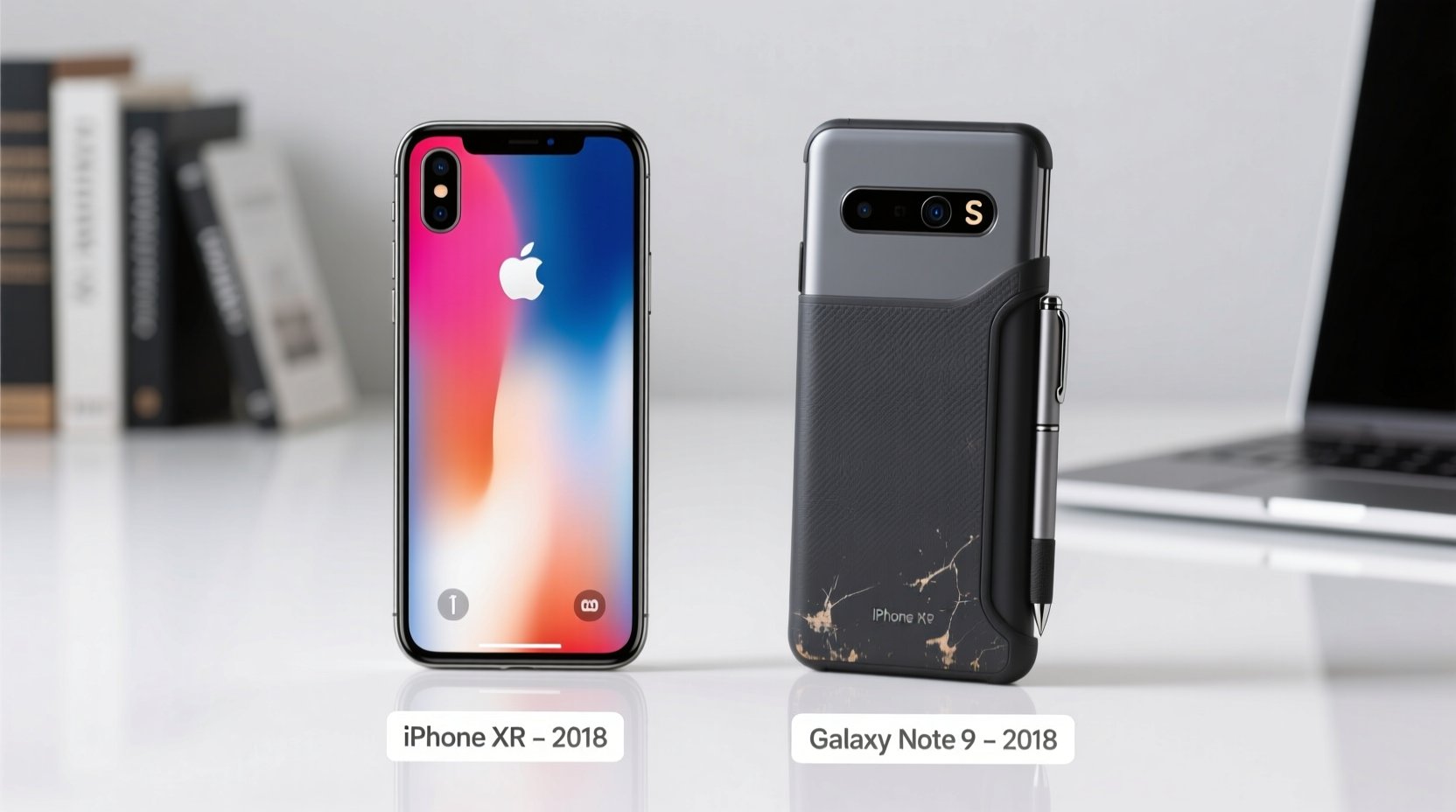
The iPhone XR features an aerospace-grade aluminum frame and glass back, supporting wireless charging. Its single-lens camera setup and wide bezels were criticized at launch for feeling outdated compared to Android flagships. However, Apple’s build consistency ensured durability, and the IP67 rating offered solid protection against dust and water.
In contrast, the Galaxy Note 9 was a full-fledged phablet—larger, heavier, and built with a glass front and back over an aluminum frame. It carried an IP68 rating, giving it superior water resistance (up to 1.5 meters for 30 minutes). The inclusion of the S Pen wasn’t just a gimmick; it introduced remote functions like camera shutter control and presentation toggling—a feature ahead of its time.
Over time, the Note 9’s larger size may deter modern users accustomed to slimmer devices, but its materials have held up well. Meanwhile, the XR’s polycarbonate (plastic) back, while durable, shows scratches more easily than glass and lacks the premium feel of its contemporaries.
Performance and Real-World Speed in 2024
At launch, the Note 9 shipped with either the Exynos 9810 or Snapdragon 845 (depending on region), paired with up to 8GB of RAM. The iPhone XR ran Apple’s A12 Bionic chip with 3GB of RAM. On paper, Samsung had the edge in multitasking, but iOS efficiency often closed that gap.
Fast forward to today: iOS 17 supports the iPhone XR, making it one of the longest-supported smartphones in history. This means access to current security updates, modern app versions, and ecosystem integration with AirPods, iCloud, and Apple Watch.
The Galaxy Note 9, however, maxed out at Android 10 and One UI 2.0. No official updates beyond that. While custom ROMs like LineageOS extend usability, they require technical know-how and sacrifice safety certifications and Google Play integrity.
In daily use, the XR handles messaging, browsing, email, and even light photo editing smoothly. Apps like WhatsApp, Instagram, and Google Maps run without major hiccups. The Note 9, while powerful at launch, now stutters on newer apps. TikTok, for example, loads slowly and crashes frequently due to outdated GPU drivers and lack of optimization.
“Software longevity is the true measure of how well a phone ages. Apple’s five-year update policy gives older iPhones surprising relevance.” — David Kim, Mobile Analyst at TechLifeline
Battery Life and Charging: Who Lasts Longer Now?
The Note 9 came with a 4,000mAh battery—the largest in any Galaxy flagship at the time. In 2018, it routinely lasted 1.5 to 2 days under moderate use. Fast charging (QC 2.0) and wireless charging were supported, though not as fast as modern standards.
The iPhone XR had a smaller 2,942mAh battery but benefited from iOS power management and the efficient A12 chip. It delivered solid all-day performance when new.
Today, battery degradation affects both models significantly. After five years, even well-maintained units rarely exceed 70% health. The Note 9’s larger capacity gives it a slight edge—if the battery is replaced. Unfortunately, third-party replacements vary in quality, and calibration issues are common.
Apple offers official battery replacements, which restore full functionality and optimize performance. Once replaced, the XR can regain near-original endurance. The Note 9 lacks such a streamlined service outside Samsung’s dwindling support network.
Charging Comparison (Current State)
| Feature | iPhone XR | Galaxy Note 9 |
|---|---|---|
| Battery Capacity | 2,942 mAh | 4,000 mAh |
| Current Avg. Battery Health | 65–75% | 60–70% |
| Replacement Availability | Official & Third-Party | Third-Party Only |
| Charge Speed (After Replacement) | Up to 50% in 30 min (with 20W+ adapter) | Up to 50% in 45 min (with QC adapter) |
| Wireless Charging | Yes (Qi compatible) | Yes (Qi + Fast Wireless) |
Camera Performance in 2024: Still Capable?
The iPhone XR featured a single 12MP f/1.8 rear camera with Smart HDR and Portrait Mode via software depth mapping. While limited by hardware, Apple’s computational photography ensured strong dynamic range and natural color reproduction. Front-facing Face ID camera enabled Animoji and solid selfie quality.
The Note 9 had a dual 12MP rear system—wide and telephoto—with variable aperture (f/1.5–f/2.4). This allowed better low-light shots and 2x optical zoom. Its camera interface was rich with manual controls, appealing to enthusiasts.
Now, both cameras struggle with modern expectations. Low-light performance is noisy, autofocus lags, and video stabilization is basic. However, the XR benefits from continued software enhancements through iOS updates. Night mode simulations and improved tone mapping make its photos more consistent than before.
The Note 9’s camera lacks algorithmic improvements. No AI scene optimizer, no night mode, and no portrait lighting effects added post-launch. Photos look flat compared to even mid-tier 2024 phones.
Is Either Phone Still Worth Buying in 2024?
This comes down to your needs, ecosystem preference, and willingness to compromise.
The **iPhone XR** remains surprisingly functional. With iOS 17 support, iMessage, FaceTime, and seamless integration with other Apple devices, it’s ideal for users already invested in the ecosystem. If you find one with a replaced battery and clean iOS install, it can serve as a reliable secondary phone, travel device, or starter smartphone for a teenager.
The **Galaxy Note 9**, while powerful in its day, is hamstrung by outdated software. Without security patches since 2021, it poses potential risks for online banking or sensitive data. The S Pen remains useful for note-takers, but app compatibility is declining. Unless you’re a tinkerer who enjoys rooting and flashing custom ROMs, the Note 9 is largely obsolete.
Mini Case Study: Maria’s Second-Hand Dilemma
Maria, a college student, needed a cheap phone for classes and part-time work. She considered both models after seeing them listed locally for $80 each. She chose the iPhone XR because it still received updates, worked with her existing AirPods, and could run the latest version of Zoom and Google Classroom smoothly. Six months later, she reports no slowdowns and appreciates the compact size. Her friend, who bought the Note 9, struggled with app crashes and eventually switched to a newer Android model.
Checklist: What to Verify Before Buying Either Phone
- ✅ Check iOS or Android version currently installed
- ✅ Confirm battery health (use CoconutBattery on Mac or Geekbench for iOS; AccuBattery for Android)
- ✅ Test all ports (charging, headphone if applicable), speakers, and microphones
- ✅ Inspect screen for burn-in, dead pixels, or discoloration
- ✅ Verify iCloud lock status (for iPhone) or FRP lock (for Samsung)
- ✅ Ensure camera focuses properly and flash works
- ✅ Test S Pen responsiveness (Note 9 only)
Frequently Asked Questions
Can the iPhone XR run iOS 17?
Yes, the iPhone XR is fully compatible with iOS 17, receiving all features and security updates released in 2023–2024.
Is the Galaxy Note 9 safe to use in 2024?
Not recommended for primary use. It hasn’t received security patches since 2021, making it vulnerable to exploits. Avoid using it for banking, shopping, or storing personal data.
Which phone holds resale value better?
The iPhone XR retains value better due to longer software support and consistent demand in emerging markets and among budget buyers.
Final Verdict: The iPhone XR Ages with Grace
While both phones were flagships in their time, the iPhone XR clearly ages better. Apple’s commitment to long-term software support transforms what could have been a dated device into a still-usable tool. The Galaxy Note 9, despite its superior specs and innovative S Pen, falls short due to abandoned software and security risks.
If you're considering either as a low-cost option, prioritize the iPhone XR—especially if it has a recently replaced battery and runs iOS 17. Avoid the Note 9 unless you plan to root it or use it offline.




 浙公网安备
33010002000092号
浙公网安备
33010002000092号 浙B2-20120091-4
Comments
No comments yet. Why don't you start the discussion?