
The iPhone XR and iPhone 11 are two of Apple’s most popular mid-tier smartphones, released just a year apart. The XR launched in 2018 as a budget-friendly alternative to the XS, while the iPhone 11 arrived in 2019 with notable improvements across the board. But if you already own an iPhone XR, is upgrading to the iPhone 11 truly worthwhile? For many users, the decision hinges on camera quality, processing power, battery life, and long-term usability. This detailed comparison cuts through marketing hype to deliver a practical analysis of whether the iPhone 11 justifies the switch.
Design and Build: Subtle Differences, Same Feel
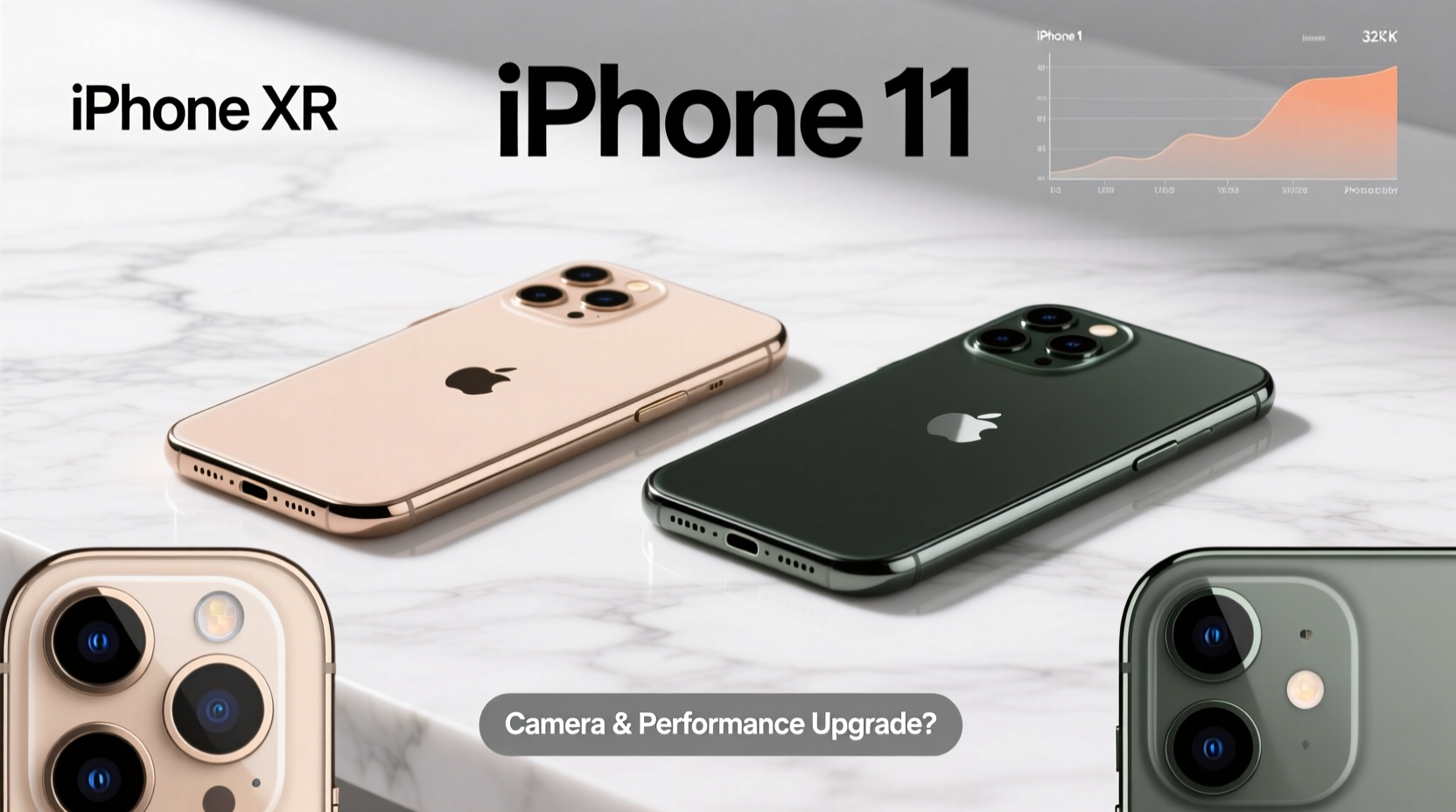
At first glance, the iPhone XR and iPhone 11 appear nearly identical. Both feature a 6.1-inch Liquid Retina LCD display, aluminum frame, glass back, and IP67 water resistance. They share the same dimensions and weight—making them equally comfortable to hold—and both come in vibrant color options. The design language remains consistent across the two models, so upgrading from the XR to the 11 won’t deliver a dramatic change in form or feel.
The primary visual difference lies in the rear camera setup. The iPhone XR has a single 12MP wide-angle lens, while the iPhone 11 introduces a dual-camera system with an additional 12MP ultra-wide lens. This addition subtly alters the camera module’s appearance, placing the lenses side by side instead of stacked vertically like on the XR.
Camera Comparison: Where the iPhone 11 Shines
The most significant upgrade between the two models lies in the camera system. While the iPhone XR delivers solid photo quality for its time, the iPhone 11 brings meaningful enhancements that affect everyday photography.
The XR features a single 12MP f/1.8 wide sensor with Smart HDR and Portrait mode (via software simulation). It captures well-balanced images in daylight but struggles in low light and lacks flexibility in framing due to the absence of an ultra-wide lens.
In contrast, the iPhone 11 adds a 12MP f/2.4 ultra-wide lens, enabling users to capture more in a single shot—ideal for landscapes, architecture, and group photos. More importantly, Apple improved computational photography with next-generation Smart HDR and Night mode, which automatically activates in dim environments. This results in brighter, clearer, and more detailed low-light photos compared to the XR’s often grainy or underexposed shots.
“Night mode on the iPhone 11 was a game-changer for mobile photography. It brought DSLR-like low-light capabilities to a mainstream device.” — David Kim, Mobile Photography Analyst at TechLens Weekly
Video recording also sees a boost. Both phones support 4K at 60fps, but the iPhone 11 offers extended dynamic range and better stabilization, especially when moving. For content creators or social media users who shoot frequently, this edge matters.
Camera Feature Comparison
| Feature | iPhone XR | iPhone 11 |
|---|---|---|
| Rear Cameras | 12MP Wide (f/1.8) | 12MP Wide (f/1.8) + 12MP Ultra-Wide (f/2.4) |
| Night Mode | No | Yes |
| Smart HDR | First-gen | Next-gen (improved tone mapping) |
| Front Camera | 7MP (f/2.2) | 12MP (f/2.2) with 4K video & Slofies |
| Deep Fusion | No | Yes (on supported scenes) |
Performance and Software Longevity
Under the hood, the iPhone 11 runs on Apple’s A13 Bionic chip, while the XR uses the A12 Bionic. Though both chips remain capable in 2024, the A13 delivers roughly 20% faster CPU performance and up to 30% better GPU efficiency. In real-world terms, this translates to smoother multitasking, quicker app launches, and better gaming performance—especially with graphics-intensive titles like Genshin Impact or Minecraft RTX.
Beyond raw speed, the A13’s architectural improvements enhance machine learning tasks, benefiting features like Face ID responsiveness, camera scene detection, and augmented reality apps. Over time, this extra headroom contributes to longer software support. As of 2024, the iPhone 11 continues to receive iOS updates (up to iOS 17), while the XR’s update path is nearing its end, likely concluding with iOS 18 or shortly after.
Battery Life and Charging
Battery endurance is another area where the iPhone 11 pulls ahead. Apple claims up to one additional hour of usage compared to the XR. Independent tests confirm this, showing the iPhone 11 lasting around 17 hours of mixed use versus the XR’s 15–16 hours. While not revolutionary, that extra screen-on time can make a difference during travel or busy days.
Both devices support Fast Charging (up to 50% in 30 minutes with an 18W adapter), but neither includes the charger in the box. Wireless charging is also identical, using Qi-compatible pads. However, the iPhone 11 benefits slightly from more efficient power management thanks to the A13 chip’s improved transistor design.
Real-World Example: Sarah’s Upgrade Decision
Sarah, a freelance photographer and part-time content creator, used her iPhone XR for over three years. She loved its color accuracy and ease of use but found herself frustrated when shooting in cafés or indoor markets—the lack of Night mode meant she relied heavily on external lighting. After testing a friend’s iPhone 11, she noticed immediate differences: sharper details in shadows, wider framing options, and smoother 4K video transitions.
She upgraded primarily for the camera but quickly appreciated the snappier interface and longer battery life during client meetings. “It felt like I got a new brain for my old habits,” she said. “The ultra-wide lens alone paid for itself in creative flexibility.”
Cost-Benefit Analysis: Is the Upgrade Worth It?
As of 2024, both phones are available secondhand or refurbished at similar price points—often within $50–$100 of each other. If you’re buying used, the iPhone 11 typically commands a slight premium, but it often proves the smarter investment due to its longer software lifespan and superior camera.
- If you're a casual user who makes calls, texts, browses, and takes occasional photos in good light, the iPhone XR remains perfectly functional.
- If you value photography, record videos, or want assurance of iOS updates into 2025 and beyond, the iPhone 11 is clearly the better choice.
- If you're on a tight budget and already own an XR, the upgrade may not justify the cost unless your current device is failing.
Upgrade Checklist
- Assess your current phone’s condition (battery health, storage space).
- Determine how much you rely on low-light or wide-angle photography.
- Check iOS version support projections for both models.
- Evaluate your budget for purchase or trade-in options.
- Test both devices in person if possible—compare camera output side by side.
Frequently Asked Questions
Can the iPhone XR take portrait mode photos with multiple people?
Yes, but only through software-based segmentation. The XR can simulate depth effects on group portraits, though edges may be less accurate than on dual-lens models.
Does the iPhone 11 have better audio recording during video?
Slightly. The iPhone 11 features directional audio capture with improved noise suppression, making voice recordings clearer, especially outdoors.
Is the screen quality the same on both phones?
Almost identical. Both use 6.1-inch LCD panels with True Tone and wide color (P3). The XR’s screen is excellent for an LCD, but neither matches OLED clarity found in Pro models.
Final Verdict: Who Should Upgrade?
The iPhone 11 isn’t a revolutionary leap from the XR, but it refines the experience in ways that matter over time. The dual-camera system, Night mode, A13 chip, and extended software support collectively make it a more future-proof device. For photographers, social media users, and anyone planning to keep their phone for several years, the upgrade is justified.
However, if your iPhone XR still performs well and meets your daily needs, holding onto it is both economical and environmentally responsible. There’s no urgent need to replace a functioning device solely for marginal gains.




 浙公网安备
33010002000092号
浙公网安备
33010002000092号 浙B2-20120091-4
Comments
No comments yet. Why don't you start the discussion?