
Choosing between the iPhone XR and iPhone 7 Plus isn’t just about comparing two phones—it’s about understanding how Apple’s evolution in design, performance, and software support affects real-world usability years after release. Both devices were once flagship contenders in their time, but now, as used or refurbished options, they occupy a similar price range in the secondhand market. So, which one offers better long-term value in 2024? The answer isn't as straightforward as specs might suggest.
Design and Display: Modern Simplicity vs Familiar Comfort
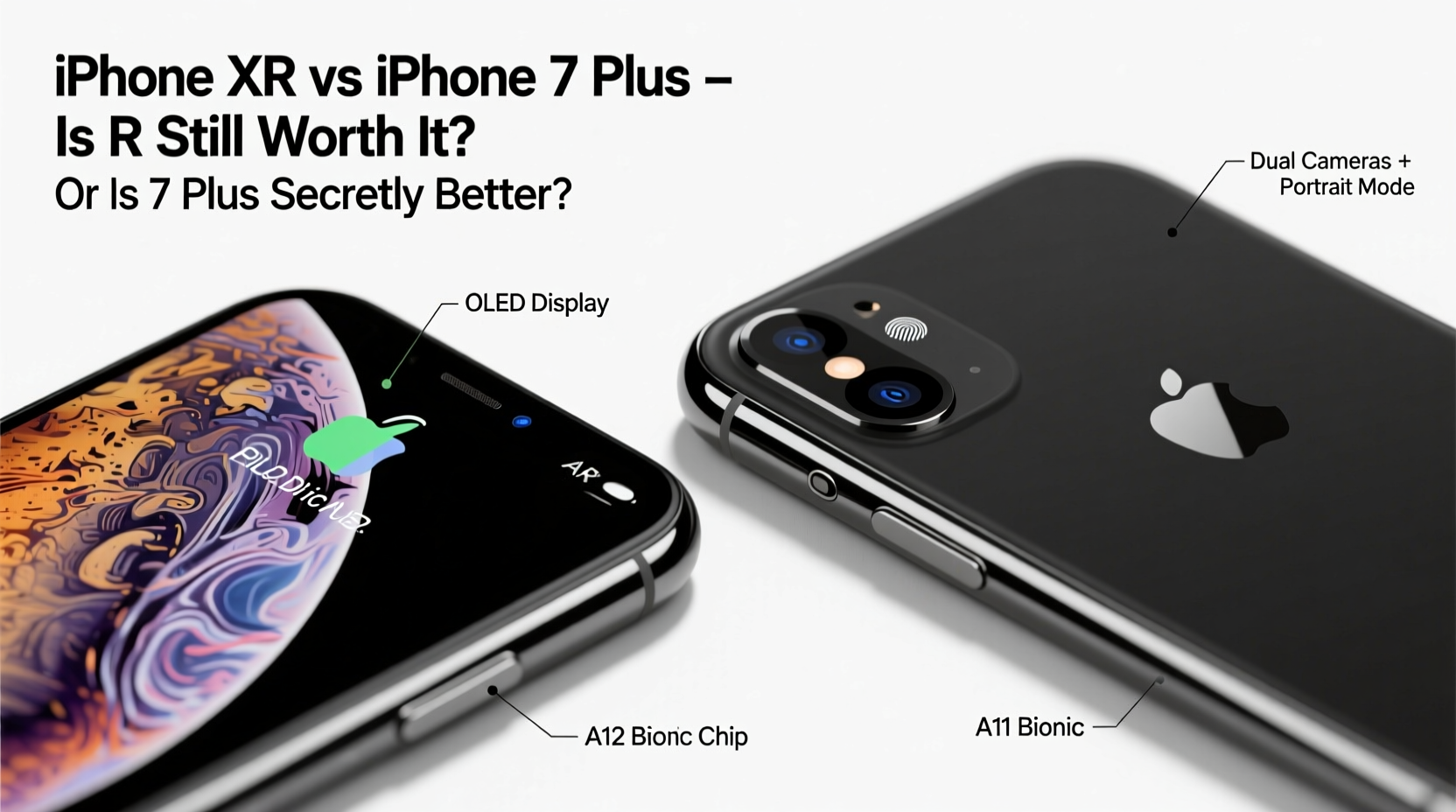
The iPhone XR introduced a new design language for Apple—edge-to-edge Liquid Retina display with slim bezels and a notch. It features a 6.1-inch LCD panel with a resolution of 1792x828 pixels. While not OLED, the screen delivers solid color accuracy and brightness, especially compared to older iPhones.
In contrast, the iPhone 7 Plus sticks to the classic Touch ID design with thick top and bottom bezels and a physical home button. Its 5.5-inch Retina HD display has a higher pixel density (1920x1080) than the XR, making text and images appear sharper. However, it lacks True Tone and Haptic Touch, features that enhance viewing comfort and interaction on the XR.
Performance and Software Longevity
This is where the iPhone XR pulls significantly ahead. Powered by the A12 Bionic chip—the first 7nm processor in any smartphone at the time—it was built for machine learning and AR performance. Even today, it handles iOS 17 smoothly, including multitasking, app launches, and background processes.
The iPhone 7 Plus, equipped with the A10 Fusion chip, was impressive in 2016 but now struggles with heavier apps and future iOS updates. As of 2024, it maxes out at iOS 15, meaning no security patches or feature upgrades beyond that. This lack of ongoing software support severely limits its lifespan and security.
“Software support is often more important than hardware when buying older iPhones. Without updates, even fast phones become vulnerable.” — Mark Chen, Mobile Security Analyst
For anyone planning to keep a phone for two years or more, the XR’s continued compatibility with current and upcoming iOS versions makes it a far safer investment.
Camera Comparison: Portrait Mode and Beyond
The iPhone 7 Plus was Apple’s first dual-camera phone, featuring a 12MP wide and 12MP telephoto lens. This allowed true 2x optical zoom and early versions of Portrait Mode. In good lighting, it still captures rich, detailed photos with natural depth effects.
The iPhone XR, despite having only a single 12MP wide lens, uses advanced software and the A12’s image signal processor to simulate depth sensing. Its Smart HDR and improved low-light performance produce noticeably better dynamic range and noise control. While it lacks optical zoom, digital zoom up to 5x is usable thanks to computational photography.
| Feature | iPhone XR | iPhone 7 Plus |
|---|---|---|
| Rear Cameras | 12MP Wide (f/1.8) | 12MP Wide + 12MP Telephoto (f/1.8 & f/2.8) |
| Portrait Mode | Yes (software-based depth) | Yes (dual-sensor depth) |
| Smart HDR | Yes | No |
| Front Camera | 7MP, supports Portrait Mode | 7MP, no Portrait Mode |
| Video Recording | 4K at 60fps | 4K at 30fps |
In practice, the XR produces more consistent results across lighting conditions. Its front-facing camera also supports Portrait Mode, giving it an edge for selfies. The 7 Plus wins in optical zoom and bokeh authenticity, but only if you’re shooting in daylight.
Battery Life and Charging Experience
The iPhone XR boasts up to 16 hours of video playback, outperforming the 7 Plus’s 13 hours. Real-world usage shows the XR lasting well into a second day with moderate use, while the 7 Plus typically needs daily charging.
Another key difference: the XR supports faster charging (up to 50% in 30 minutes with an 18W adapter) and Qi wireless charging—neither of which the 7 Plus offers. While Apple didn’t include a fast charger in the box, the capability is built-in, adding convenience for users with existing accessories.
Real-World Example: Sarah’s Upgrade Dilemma
Sarah, a freelance photographer assistant, needed a reliable backup phone under $200. She considered both models: the 7 Plus offered dual cameras and a headphone jack; the XR had Face ID and longer software support. She chose the XR.
Within months, iOS 16 rolled out critical privacy tools she relied on for client communications. Her colleagues using 7 Plus devices couldn’t install the update. Additionally, editing Lightroom presets on her XR was smoother due to the A12 chip. Though she missed the headphone jack, Bluetooth earbuds solved that. After 18 months, her XR still receives updates and performs reliably—proving that forward compatibility outweighed nostalgic features.
Step-by-Step: How to Decide Which iPhone Fits Your Needs
- Evaluate your iOS needs: Do you want access to the latest features and security updates? Choose XR.
- Assess camera priorities: Need optical zoom and traditional controls? 7 Plus. Prefer smarter processing and selfies? XR.
- Consider ergonomics: Do you like Touch ID and physical buttons? 7 Plus. Prefer gesture navigation? XR.
- Check battery expectations: If multi-day life matters, XR has the edge.
- Test both in person: Handling them reveals differences in weight, screen size, and responsiveness.
Frequently Asked Questions
Can the iPhone 7 Plus run iOS 17?
No. The 7 Plus supports up to iOS 15.4.1. It will not receive iOS 16 or later, meaning no new features or security patches released after early 2022.
Is the iPhone XR waterproof?
Yes. The XR has an IP67 rating, meaning it can survive submersion in up to 1 meter of water for 30 minutes. The 7 Plus also has IP67, so both are equally protected against spills and rain.
Does the iPhone XR have a headphone jack?
No. Like most post-iPhone 7 models, the XR uses Lightning for audio. You’ll need wireless headphones or a Lightning-to-3.5mm adapter for wired ones.
Final Verdict: Is the XR Still Worth It?
Despite being released in 2018, the iPhone XR remains a compelling option in the budget smartphone market. Its combination of the A12 chip, modern iOS support, superior display, and stronger camera processing gives it a longevity the iPhone 7 Plus simply can’t match. While the 7 Plus holds sentimental appeal and certain hardware advantages—like its headphone jack and dual rear lenses—it’s functionally outdated.
The “secretly better” argument for the 7 Plus only holds if you prioritize tactile buttons, avoid Face ID, or rely heavily on optical zoom in ideal conditions. But for most users, especially those who value security updates, app compatibility, and overall speed, the XR is clearly the better choice—even years later.
“The best phone isn’t always the newest—it’s the one that stays useful longest. The XR hits that sweet spot.” — Lena Park, Tech Reviewer at MobileInsight Weekly
Ready to Make the Right Choice?
If you're shopping secondhand or helping someone pick a reliable iPhone on a budget, skip the nostalgia. Go for the iPhone XR. It strikes the perfect balance between modern functionality and affordable pricing. Whether you're a student, a parent, or a professional needing a dependable device, the XR proves that thoughtful engineering ages better than raw specs. Don’t just buy a phone—invest in one that keeps working for you.




 浙公网安备
33010002000092号
浙公网安备
33010002000092号 浙B2-20120091-4
Comments
No comments yet. Why don't you start the discussion?