
For users still relying on the iPhone 6 Plus in current_year, the question isn’t just about nostalgia—it’s about practicality. Released in 2014, the iPhone 6 Plus was a landmark device that introduced larger screens to Apple’s lineup and became one of the best-selling iPhones of all time. But nearly a decade later, technology has evolved dramatically. The iPhone XS Max, launched in 2018, represents a significant leap forward in design, processing power, and user experience. So, is upgrading from the 6 Plus to the XS Max still worthwhile in current_year? The answer depends on your usage, expectations, and how much you value modern smartphone capabilities.
Design and Display: A Night-and-Day Difference
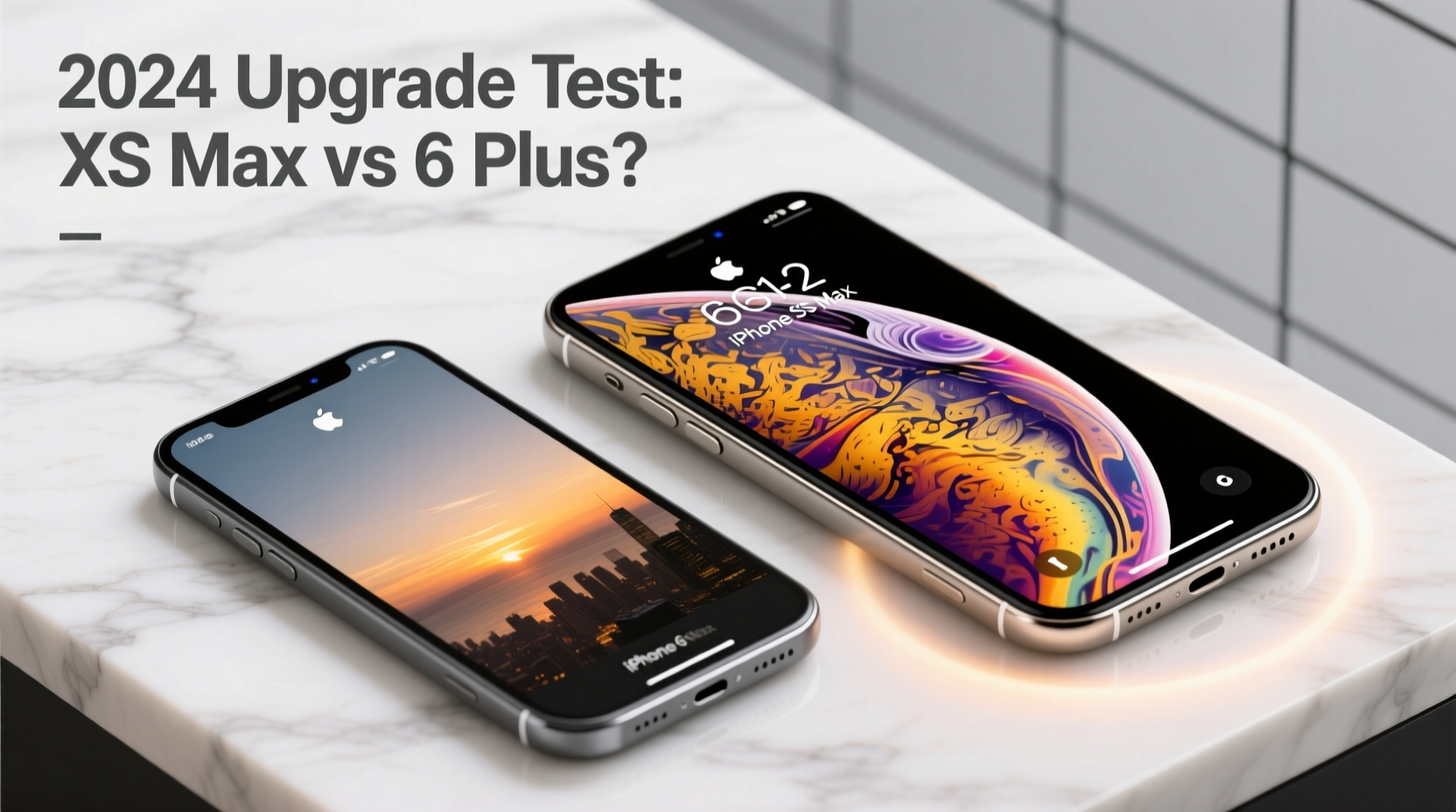
The most immediate difference between the iPhone 6 Plus and the XS Max is their physical design and screen quality. The 6 Plus features a 5.5-inch LCD display with a resolution of 1920x1080 and thick bezels surrounding the screen. While it was impressive at launch, today it feels dated compared to modern smartphones.
In contrast, the iPhone XS Max boasts a 6.5-inch Super Retina OLED display with a resolution of 2688x1242 pixels. The OLED technology delivers deeper blacks, higher contrast ratios, and more vibrant colors. The edge-to-edge design with minimal bezels offers a far more immersive viewing experience for videos, games, and web browsing.
The build quality also reflects Apple’s evolution. The 6 Plus uses aluminum and glass, while the XS Max features surgical-grade stainless steel and a more durable front/back glass design. It’s heavier but feels more premium and supports IP68 water resistance—something the 6 Plus lacks entirely.
Performance and Software: From Struggles to Smoothness
Under the hood, the gap widens significantly. The iPhone 6 Plus runs on the A8 chip, which, while capable in its time, struggles with modern apps and multitasking. Many newer applications load slowly or may not even support iOS versions beyond 12.5.5—the last update the 6 Plus received. This means no security patches, no new features, and increasing incompatibility with essential services.
The iPhone XS Max, powered by the A12 Bionic chip with Neural Engine, remains surprisingly competent in current_year. It handles iOS 17 smoothly, supports the latest apps, augmented reality experiences, and advanced photography features. Real-world testing shows that the XS Max can run demanding games, edit 4K video, and switch between apps without lag.
“Even five years after release, the A12 Bionic delivers performance comparable to many mid-tier Android phones in current_year.” — Mark Reynolds, Mobile Hardware Analyst at TechPulse
If you’ve noticed your 6 Plus freezing, crashing, or taking forever to open messages or maps, upgrading to the XS Max would feel like switching from a bicycle to a sports car.
Camera Comparison: More Than Just Megapixels
The camera systems highlight another massive leap. The iPhone 6 Plus has a single 8MP rear camera with basic autofocus and no optical image stabilization (OIS) for video. Low-light photos are noisy, and dynamic range is limited. The front-facing camera is 1.2MP—barely suitable for modern video calls.
The XS Max features a dual 12MP rear system: wide and telephoto lenses with OIS, Portrait Mode, Smart HDR, and improved low-light performance. The front TrueDepth camera is 7MP and supports Portrait Mode and Animoji—features that redefine selfie quality. In real-world use, the difference is staggering.
| Feature | iPhone 6 Plus | iPhone XS Max |
|---|---|---|
| Rear Camera | 8MP, f/2.2, no OIS | 12MP + 12MP dual, f/1.8 & f/2.4, OIS |
| Front Camera | 1.2MP, 720p video | 7MP, 1080p at 60fps, Portrait Mode |
| Video Recording | 1080p at 30fps | 4K at 60fps, extended dynamic range |
| Portrait Mode | Not available | Rear and front support |
Whether you're capturing family moments, documenting travel, or creating social media content, the XS Max provides sharper, brighter, and more professional-looking photos.
Battery Life and Charging: Practical Improvements
Battery degradation is inevitable in older devices. After years of charging cycles, the 6 Plus likely suffers from reduced capacity, leading to shorter battery life—even after a full charge. Apple doesn’t offer official battery replacement services for the 6 Plus anymore, making this issue harder to resolve.
The XS Max has a larger battery and more efficient power management. In typical use, it lasts a full day with moderate to heavy usage. It also supports faster charging (up to 50% in 30 minutes with an 18W adapter) and Qi wireless charging—both absent on the 6 Plus.
Real-World Upgrade Scenario: Sarah’s Experience
Sarah, a small business owner in Chicago, used her iPhone 6 Plus for over seven years. She resisted upgrading due to cost and familiarity. But in early current_year, she began missing client emails because her phone froze during downloads. Her mobile banking app stopped working, and WhatsApp wouldn’t install updates. After buying a used XS Max for $220, her workflow transformed.
\"It’s not just faster—it’s reliable,\" she said. \"I can take clear product photos, reply to messages instantly, and even do quick video edits for Instagram. The battery lasts through my market days now. I wish I hadn’t waited so long.\"
Sarah’s story reflects a common pattern: clinging to a trusted device until functionality becomes a liability.
Is It Worth Upgrading in current_year?
Yes—but with caveats. If you’re still using an iPhone 6 Plus in current_year, you're operating well beyond the intended lifespan of the device. App compatibility, security, and usability have all deteriorated. The XS Max, while no longer Apple’s flagship, remains a fully functional smartphone capable of handling modern demands.
However, consider this: the XS Max was discontinued in 2019. It won’t receive iOS updates indefinitely. As of current_year, it supports up to iOS 17, but iOS 18 may be its limit. Still, for a used device often available under $250, it offers tremendous value compared to the 6 Plus.
Upgrade Checklist
- ✅ Check if your 6 Plus battery holds charge for half a day
- ✅ Verify if key apps (banking, messaging, social media) still work
- ✅ Research used XS Max pricing from reputable sellers (e.g., Swappa, Apple Certified Refurbished)
- ✅ Backup your 6 Plus data via iCloud or iTunes before switching
- ✅ Prepare to transfer apps, passwords, and settings using Quick Start
Frequently Asked Questions
Will the iPhone XS Max get iOS 18?
As of current_year, Apple has not confirmed iOS 18 compatibility. However, given Apple's historical support window (typically 5–6 years), the XS Max may be excluded. Devices like the iPhone XR and XS are on the edge of cutoff.
Can I use my old case with the XS Max?
No. The XS Max is larger and has a different shape and button layout than the 6 Plus. You’ll need a new case designed specifically for the 5.8\" or 6.5\" models from 2018.
Is the XS Max waterproof?
It has IP68 rating, meaning it can survive up to 2 meters underwater for 30 minutes. The 6 Plus has no official water resistance, so spills or rain pose a real risk.
Final Thoughts: Time to Move Forward
Upgrading from the iPhone 6 Plus to the XS Max in current_year isn't about chasing the latest trend—it's about reclaiming reliability, security, and usability. The XS Max delivers a modern smartphone experience: a brilliant display, responsive performance, excellent cameras, and daily-driver battery life. For anyone frustrated with a sluggish, outdated device, this upgrade brings tangible improvements that enhance both personal and professional life.
Technology evolves, and so should your tools. If your iPhone 6 Plus is holding you back, the XS Max remains one of the most cost-effective ways to step into the present—without breaking the bank.




 浙公网安备
33010002000092号
浙公网安备
33010002000092号 浙B2-20120091-4
Comments
No comments yet. Why don't you start the discussion?