
For many long-time iPhone users, the iPhone 6s Plus remains a nostalgic device—a phone that defined reliability and longevity. But as we move deeper into 2024, Apple’s ecosystem has evolved significantly. The iPhone XS Max, released in 2018, sits several generations ahead of the 6s Plus. Yet, with both devices now outside Apple’s active support window, the question arises: Is upgrading from an iPhone 6s Plus to an iPhone XS Max still a worthwhile decision today?
The answer isn’t just about specs—it hinges on your usage patterns, software needs, and expectations for daily performance. This article breaks down the key differences between these two models and evaluates whether the upgrade delivers tangible benefits in the current mobile landscape.
Performance & Hardware: A Generational Leap
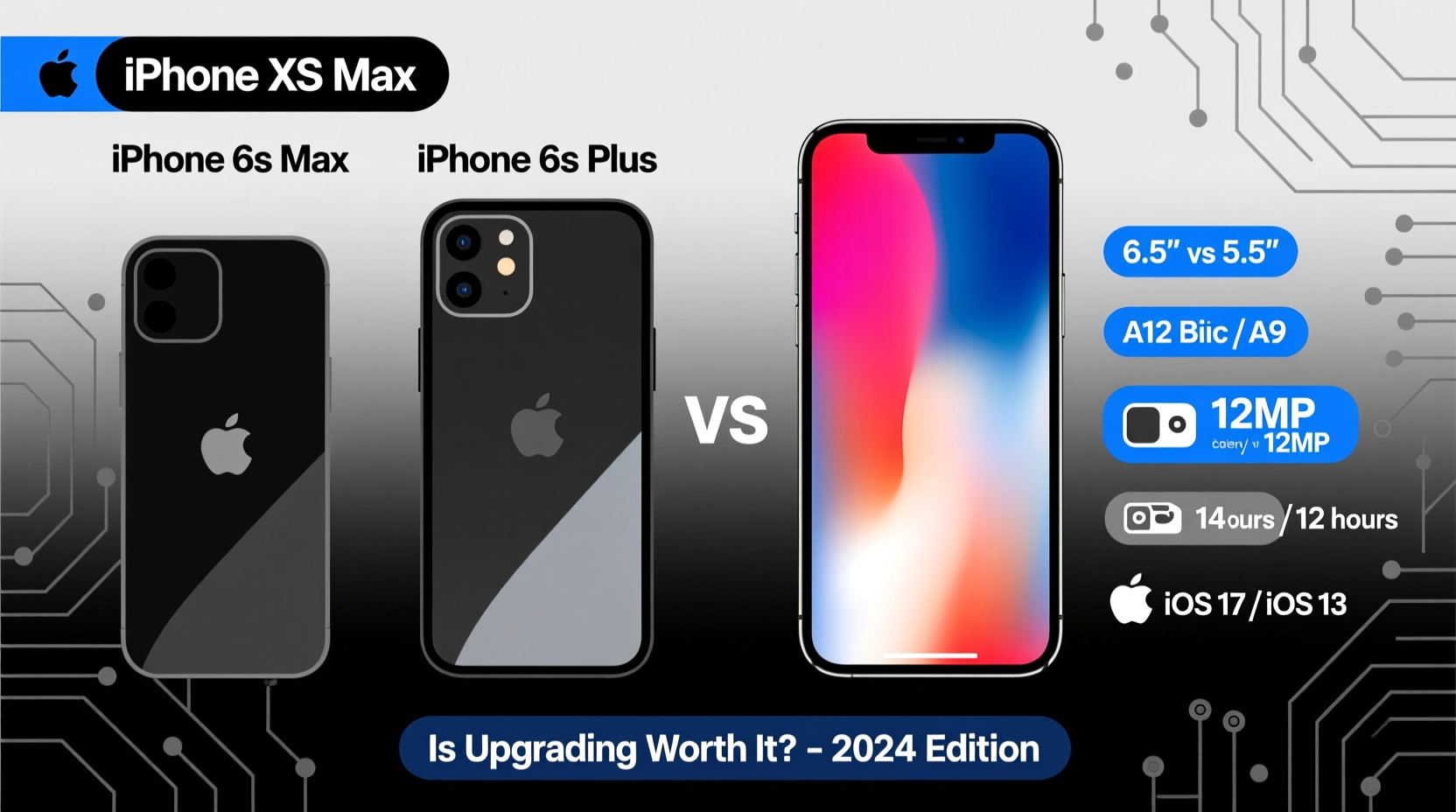
The gap between the iPhone 6s Plus and the XS Max spans nearly four years of technological advancement. At launch, the 6s Plus featured Apple’s A9 chip, which was groundbreaking in 2015. By contrast, the XS Max came equipped with the A12 Bionic chip—Apple’s first 7nm processor, offering dramatically improved efficiency and computational power.
In practical terms, this means:
- Multitasking: The XS Max handles multiple apps, split-screen workflows (on iPadOS-compatible tasks via Continuity), and background processes far more smoothly than the 6s Plus.
- Gaming: Modern iOS games either won’t run or will stutter on the 6s Plus due to GPU limitations. The XS Max can still handle most titles at medium settings.
- App Launch Speed: Apps open noticeably faster on the XS Max, even after years of use.
Display & Design: From Bezel-Heavy to Edge-to-Edge
The design philosophy shift between these two phones is stark. The iPhone 6s Plus features a 5.5-inch LCD display with thick bezels and a physical Home button. In contrast, the XS Max offers a 6.5-inch Super Retina OLED display with minimal bezels and Face ID authentication.
OLED brings deeper blacks, higher contrast ratios, and better outdoor visibility. For media consumption—especially streaming video or reading in low light—the XS Max provides a superior visual experience.
| Feature | iPhone 6s Plus | iPhone XS Max |
|---|---|---|
| Display Size | 5.5 inches | 6.5 inches |
| Display Type | LCD (IPS) | OLED (Super Retina) |
| Resolution | 1920x1080 | 2688x1242 |
| Biometrics | Fingerprint (Touch ID) | Face ID |
| Water Resistance | IP67 (1m for 30 mins) | IP68 (2m for 30 mins) |
The larger screen also enhances productivity. Tasks like email composition, web browsing, and photo editing benefit from the increased real estate. While some users prefer the compactness of the 6s Plus, the immersive nature of the XS Max display makes it feel more modern and engaging.
Camera Capabilities: Nighttime and Portrait Upgrades
Photography has seen one of the most dramatic improvements between these models. The 6s Plus introduced optical image stabilization to the Plus line, but its 12MP rear sensor lacks advanced processing. The XS Max, however, includes dual 12MP cameras (wide and telephoto), Smart HDR, Depth Control, and significantly better low-light performance.
Key camera advantages of the XS Max:
- Better dynamic range in backlit scenes
- Smoother portrait mode with adjustable bokeh post-capture
- Improved noise reduction in dim environments
- 4K video recording at 60fps (vs 30fps on 6s Plus)
“Even older iPhones like the XS Max outperform legacy devices in computational photography because of neural engine enhancements.” — David Lin, Mobile Imaging Analyst at TechPulse Weekly
If you regularly share photos on social media or value crisp detail in mixed lighting, the XS Max delivers visibly better results. However, casual photographers who primarily take well-lit daytime shots may not notice a drastic difference.
Battery Life & Charging: Real-World Endurance
Despite having a smaller battery capacity on paper (2,915 mAh vs 2,750 mAh), the XS Max typically lasts longer due to the energy-efficient A12 chip and optimized iOS 12–16 power management. Users report up to 7–8 hours of screen time under moderate use, compared to 4–5 hours on a worn 6s Plus.
Additionally, the XS Max supports fast charging (up to 50% in 30 minutes with an 18W adapter) and Qi wireless charging—features absent on the 6s Plus, which relies solely on Lightning cable charging at standard speeds.
Step-by-Step Guide: Evaluating Your Upgrade Need
- Assess Daily Performance: Does your 6s Plus freeze during calls, fail to load websites, or crash apps often?
- Check iOS Support: The 6s Plus maxed out at iOS 15; the XS Max supports up to iOS 16, with limited security updates continuing into 2024.
- Review App Compatibility: Try installing newer versions of apps like Instagram, Google Maps, or banking apps. If they don’t install or lag, hardware is holding you back.
- Evaluate Camera Needs: Are you frustrated by blurry night shots or poor zoom quality?
- Consider Resale Value: Selling your 6s Plus now might offset part of the cost of acquiring a used XS Max.
Real-World Example: Sarah’s Upgrade Decision
Sarah had been using her iPhone 6s Plus since 2016. By early 2023, she noticed her banking app would crash repeatedly, WhatsApp took over a minute to open, and FaceTime calls dropped frequently. She considered buying a new iPhone but found refurbished XS Max units for around $220.
After switching, she reported immediate improvements: apps launched instantly, video calls were stable, and her photos from family events looked sharper. Though the phone is no longer supported for new iOS versions, iOS 16 runs smoothly, and essential apps remain compatible through 2024.
For Sarah, the upgrade wasn’t about chasing the latest tech—it was about regaining usability. Her experience reflects what many legacy iPhone owners face: diminishing returns from aging hardware.
FAQ: Common Questions About This Upgrade Path
Can the iPhone XS Max still receive app updates in 2024?
Yes, most major apps—including social media, banking, and productivity tools—still support iOS 16, which the XS Max can run. However, future app updates may eventually drop support as developers target newer OS versions.
Is the iPhone 6s Plus obsolete in 2024?
Functionally, yes—for power users. It cannot install iOS versions beyond 15.7, lacks support for many new features (like App Library or Focus Modes), and struggles with modern app demands. As a backup or emergency phone, it remains usable.
Should I pay more for an XS Max instead of a newer budget phone?
Only if you already own both devices or find the XS Max at a steep discount. Newer options like the iPhone SE (3rd gen) or Android mid-rangers offer better long-term support, 5G, and updated software ecosystems.
Final Verdict: Is the Upgrade Worth It?
Upgrading from the iPhone 6s Plus to the XS Max in 2024 is less about cutting-edge innovation and more about escaping technological stagnation. If your 6s Plus is causing daily friction—slow performance, app instability, poor battery life—the XS Max offers a meaningful leap forward.
However, this upgrade makes sense only under specific conditions:
- You’re purchasing the XS Max secondhand at a low price (under $250).
- You don’t need multi-year software support.
- Your primary goal is improved responsiveness, not future-proofing.
For those seeking longevity, investing in a newer model—even an older iPhone 11 or 12—would be a smarter long-term move. But for users clinging to the 6s Plus purely out of loyalty or cost concerns, the XS Max represents a final, functional step into the modern iPhone experience.




 浙公网安备
33010002000092号
浙公网安备
33010002000092号 浙B2-20120091-4
Comments
No comments yet. Why don't you start the discussion?