
Three years after their launch, the iPhone XS Max and Samsung Galaxy Note 10 remain familiar names among users holding onto older flagships. Both were flagship powerhouses in 2018 and 2019, respectively—offering top-tier displays, cameras, and build quality. But as time passes and software demands grow, the question arises: if you're still using an iPhone XS Max, does upgrading to a used or refurbished Galaxy Note 10 make sense in 2024?
The answer isn't just about specs on paper. It's about real-world longevity, software support, ecosystem integration, and daily usability. Let’s break down how these two devices stack up today, beyond nostalgia and brand loyalty.
Performance and Longevity: Chipsets That Age Differently
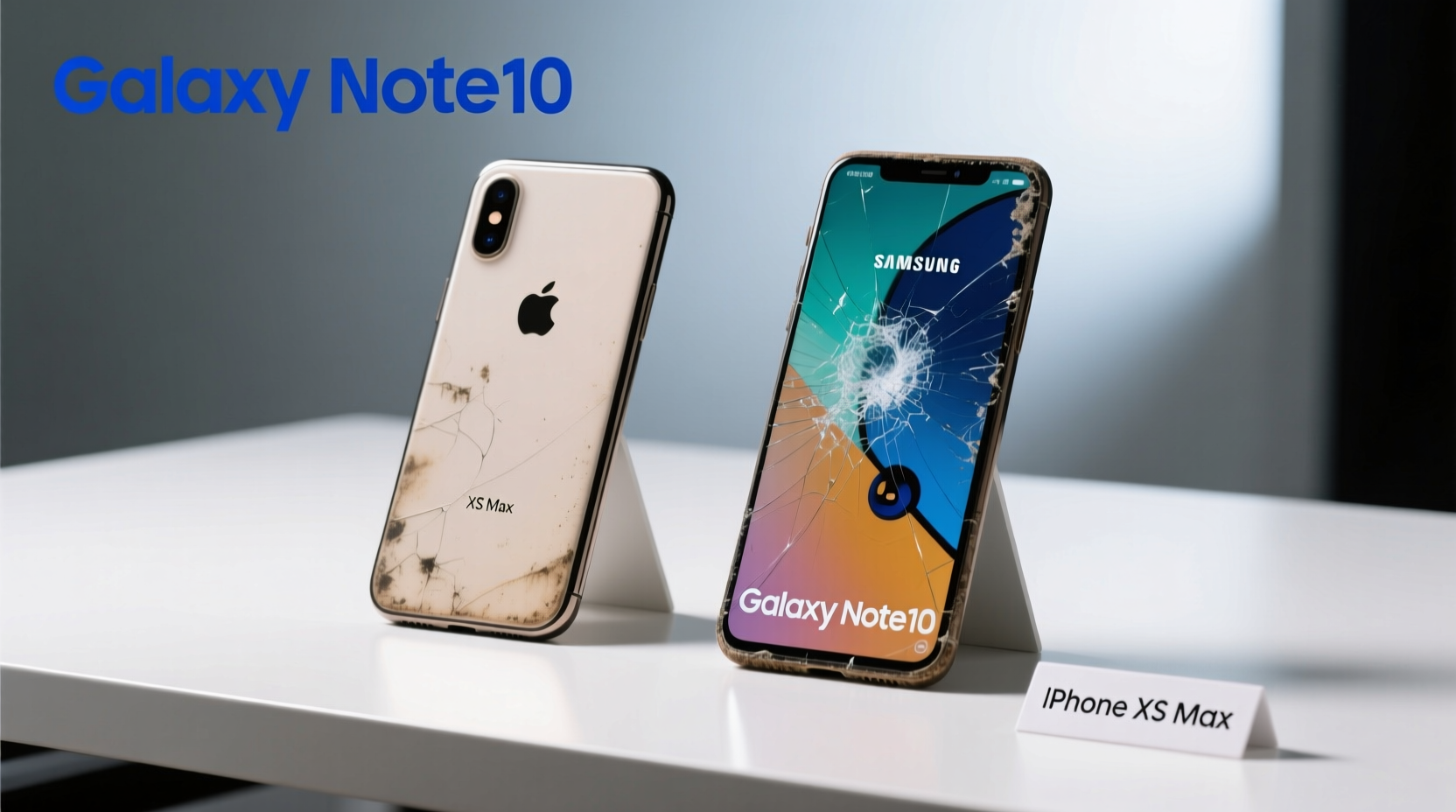
The iPhone XS Max runs on Apple’s A12 Bionic chip—an architecture known for its efficiency and long-term optimization. Even in 2024, iOS updates continue to support this device (up to iOS 17), which speaks volumes about Apple’s commitment to extended software life. While not the fastest by modern standards, the A12 handles everyday tasks like messaging, browsing, and social media with minimal lag.
In contrast, the Galaxy Note 10 launched with either the Exynos 9825 (in Europe) or Snapdragon 855 (in the U.S.), both of which were cutting-edge at the time. However, Android’s fragmented update cycle means that while the Note 10 received three major OS upgrades (up to Android 12), it no longer gets security patches from Samsung. This lack of ongoing support increases vulnerability and limits compatibility with newer apps.
In practical use, the Note 10 may feel slightly faster in app launches due to its higher RAM (8GB vs. 4GB), but iOS’s memory management often negates this advantage. Over time, especially with multitasking or photo editing, the iPhone’s optimized software keeps it surprisingly competitive despite lower hardware specs.
Display and Design: Premium Build Meets Functionality
Both phones feature premium builds—stainless steel and glass for the XS Max, aluminum frame with glass back for the Note 10—but their design philosophies differ. The iPhone feels heavier and more substantial, while the Note 10 offers a sleeker, more ergonomic profile with slimmer bezels and a hole-punch front camera.
The displays are both excellent, though different in technology. The XS Max uses a 6.5-inch OLED panel with True Tone and HDR10/Dolby Vision support, ideal for media consumption. The Note 10 counters with a 6.3-inch Dynamic AMOLED display featuring higher peak brightness (up to 1243 nits) and an ultrasonic fingerprint sensor embedded under the screen.
“After three years, screen burn-in remains a concern on early AMOLED panels, especially with static navigation bars.” — David Lin, Mobile Hardware Analyst
For long-term ownership, the iPhone’s conservative UI design—with fewer persistent on-screen elements—may reduce the risk of burn-in compared to Android’s always-visible status bar and navigation keys.
Camera Comparison: Software vs. Flexibility
Photography has evolved significantly since 2019, and computational photography now plays a central role. The iPhone XS Max features a dual 12MP rear system (wide and telephoto) with Portrait Mode and Smart HDR. Its strength lies in consistency—natural color science, reliable autofocus, and excellent dynamic range in daylight.
The Galaxy Note 10 introduced a triple-camera setup: 12MP wide, 12MP telephoto, and 16MP ultra-wide. The addition of the ultra-wide lens gives Samsung a clear edge in versatility. In low light, both struggle by today’s standards, but the Note 10’s Night Mode processes images more aggressively, sometimes oversharpening details.
Video recording favors Apple. The XS Max supports 4K at 60fps across all lenses, stereo audio, and advanced stabilization—features still unmatched on many mid-range phones. The Note 10 records 4K at 30fps only and lacks stereo sound capture.
| Feature | iPhone XS Max | Galaxy Note 10 |
|---|---|---|
| Rear Cameras | Dual 12MP (Wide + Telephoto) | Triple 12+12+16MP (Wide, Tele, Ultra-Wide) |
| Front Camera | 7MP TrueDepth | 10MP Dual Pixel |
| Video Recording | 4K@60fps, Stereo Audio | 4K@30fps, Mono Audio |
| Low-Light Performance | Moderate (no Night Mode) | Better (with Night Mode) |
If your priority is creative flexibility and wider framing options, the Note 10 wins. For filmmakers, vloggers, or those who value high-quality video, the XS Max remains relevant.
Battery Life and Charging: Real-World Endurance
Battery degradation affects both devices equally after three years, but original capacity varies. The XS Max packs a 3,174mAh battery; the Note 10 holds 3,500mAh. On paper, Samsung should last longer—but iOS optimization often closes the gap.
In practice, users report similar single-day performance under moderate use. However, the Note 10 supports 25W fast charging (though sold with a 15W charger), while the iPhone maxes out at 18W (with fast charging adapter sold separately). Wireless charging is available on both, but the Note 10 adds reverse wireless charging—a niche but useful feature for powering earbuds or smartwatches in a pinch.
Ecosystem and Upgrade Value
This is where personal context matters most. If you’re deeply invested in Apple’s ecosystem—using AirPods, Apple Watch, iCloud, or a Mac—the friction of switching to Android outweighs any hardware gains. iMessage continuity, Handoff, and seamless Bluetooth pairing create a cohesive experience Samsung can’t replicate.
Samsung offers strong alternatives: DeX for desktop-like productivity, S Pen integration for note-taking, and better file management. For professionals using stylus input or multitasking, the Note 10’s legacy features still hold appeal.
However, resale value tells a story. As of 2024, unlocked Galaxy Note 10 units sell for $100–$150 in good condition. Refurbished iPhone XS Max models command $180–$230, reflecting stronger long-term demand and perceived reliability.
Mini Case Study: Sarah’s Cross-Platform Switch
Sarah, a freelance designer, used her iPhone XS Max for four years before switching to a used Galaxy Note 10. She cited frustration with slow app loading times and wanted the S Pen for sketching client ideas. Initially thrilled with the upgrade, she soon missed iMessage syncing with her iPad and found Adobe apps less responsive on Android. After six months, she returned to iOS, trading up to an iPhone 13 mini. “The S Pen was cool,” she said, “but losing ecosystem cohesion cost me more time than I gained.”
Frequently Asked Questions
Is the Galaxy Note 10 still secure to use in 2024?
No longer receiving official security updates from Samsung, the Note 10 carries increased risks when handling sensitive data. While functional, it’s not recommended for online banking or storing confidential information without additional precautions like a trusted mobile antivirus.
Can the iPhone XS Max run iOS 17 smoothly?
Yes. Apple officially supports iOS 17 on the XS Max. While some features like Live Voicemail transcriptions may lag slightly, overall performance remains stable for daily tasks. Users report minor slowdowns during heavy multitasking or large photo library access.
Should I upgrade from iPhone XS Max to Galaxy Note 10?
Only if you specifically need the S Pen, ultra-wide camera, or prefer Android’s interface. Otherwise, the trade-offs—older software, no future updates, and ecosystem mismatch—make it a lateral move at best. Consider newer Android options like the Pixel 7a or iPhone 13 for meaningful improvements.
Action Checklist Before Upgrading
- Check current battery health (Settings > Battery on iPhone; third-party apps on Android)
- Back up all data to cloud or computer
- Verify app compatibility on target platform (e.g., banking, work tools)
- Test iMessage deactivation if switching from iPhone to Android
- Research local repair costs for battery or screen replacement
Final Verdict: Is the Samsung Still Worth It?
As of 2024, upgrading from an iPhone XS Max to a Galaxy Note 10 offers minimal tangible benefits. You gain a slightly larger battery, faster charging, and the S Pen—but lose long-term software support, ecosystem synergy, and future-proofing. Both devices are past their prime, but the iPhone maintains better longevity thanks to Apple’s extended update policy.
The Galaxy Note 10 was a bold innovation in its time, pushing boundaries with gesture controls, ultrasonic fingerprint sensors, and DeX functionality. Yet, three years later, its limitations become harder to overlook. Without security patches or OS updates, it’s increasingly vulnerable and incompatible with emerging digital services.




 浙公网安备
33010002000092号
浙公网安备
33010002000092号 浙B2-20120091-4
Comments
No comments yet. Why don't you start the discussion?